
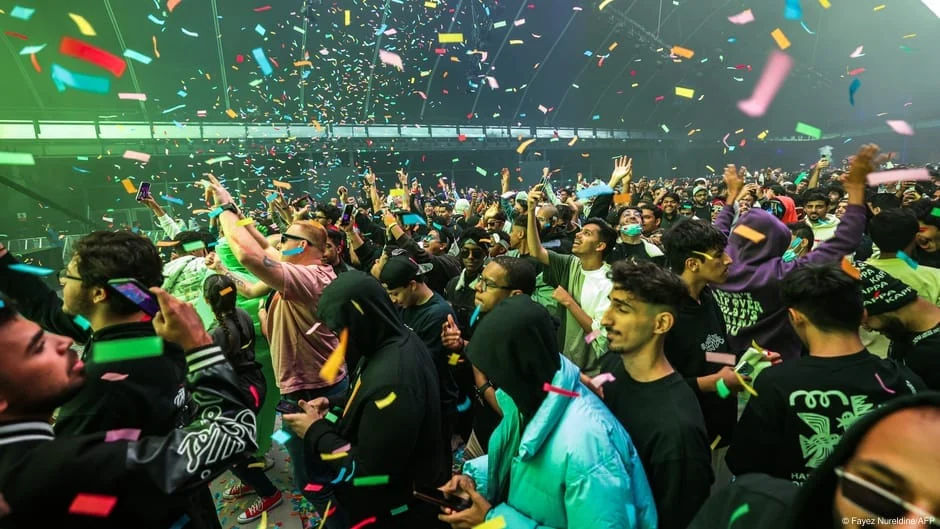
The landscape of Saudi Arabian popular music has undergone a seismic shift, transforming from a largely underground, clandestine pursuit into a state-sanctioned, multibillion-dollar industry. At the heart of this transition is the story of figures like Asayel Bishi, a rapper who once faced the threat of state-sanctioned detention for her artistic expression, only to later emerge as a flagship artist under the state-backed music giant, MDLBEAST. Her trajectory serves as a microcosm for a broader, more complex phenomenon occurring within the Kingdom: the rapid, top-down professionalization of a cultural sector that is simultaneously being liberated from social conservatism and absorbed into a state-managed economic framework.
The Evolution of a Cultural Paradigm
To understand the current state of Saudi music, one must examine the drastic shift in policy initiated by the Saudi government in 2016. The launch of Vision 2030, Crown Prince Mohammed bin Salman’s ambitious roadmap for economic diversification, sought to reduce the Kingdom’s reliance on oil revenue. Culture and entertainment were identified as key pillars of this new "experience economy."
For decades prior to this, public performance of music was severely restricted, driven by strict interpretations of religious and social norms. Musicians operated in the shadows, hosting private gatherings in gated compounds or remote beach resorts. The transformation began in earnest in 2017, when the government allowed the first officially sanctioned public concerts. By 2019, the establishment of MDLBEAST as a production entity marked the formalization of this sector. MDLBEAST has since evolved from a festival organizer—responsible for the massive "Soundstorm" event—into a multi-faceted conglomerate acting as a record label, talent agency, and regional media powerhouse.
A Chronology of Conflict and Co-optation
The transition was not without turbulence. In 2020, Bishi’s career faced a critical impasse. Following the release of her music video "Bint Mecca," which depicted youths dancing in a café in the holy city of Mecca, the provincial governor issued a directive for the arrest of her entire production crew, citing a breach of local customs and religious sensitivities. The incident highlighted the inherent tension between modern artistic expression and traditionalist oversight.
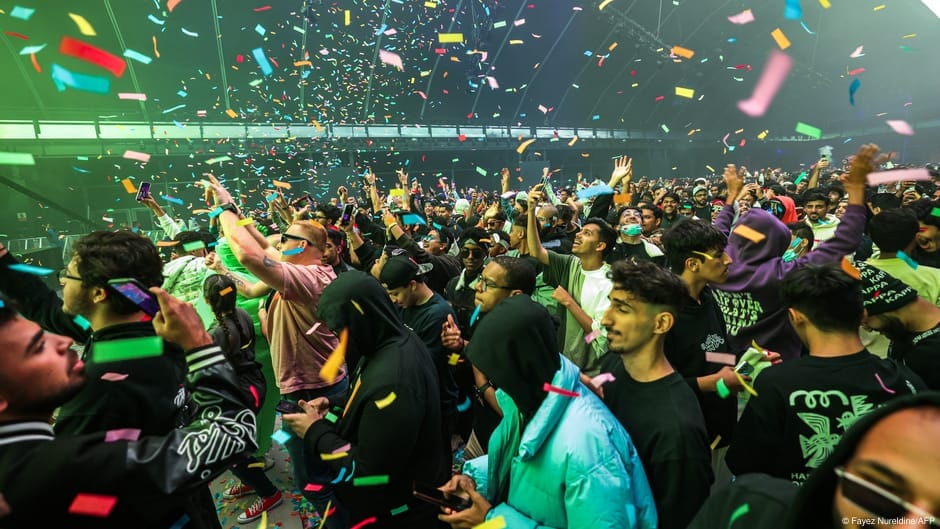
However, the resolution of this conflict—settled through a discussion regarding filming permits rather than criminal prosecution—signaled a changing approach. By 2023, Bishi had successfully transitioned into the mainstream, signing with MDLBEAST and accumulating hundreds of thousands of streams. This narrative arc illustrates the state’s evolving strategy: rather than merely suppressing non-conformist art, the current system seeks to integrate it, providing infrastructure and legitimacy in exchange for adherence to new, state-defined regulatory boundaries.
Economic Projections and Data Analysis
The scale of this shift is reflected in the financial and digital data emerging from the region. A recent report commissioned by the Saudi Music Commission projects that the domestic music sector could reach a valuation of $500 million by 2034. This growth is bolstered by a significant rise in local consumption. According to data from Spotify, streaming volume for Saudi-produced music within the Kingdom surged by 195% between 2020 and 2024.
Despite these gains, the market remains heavily influenced by international trends and artists. While domestic production is growing, the most-streamed content inside Saudi Arabia continues to be dominated by global superstars. This creates a competitive pressure for local artists to achieve "global" standards of production and branding, often incentivizing them to work within the professional ecosystems provided by state-aligned entities.
Structural Control and the "Top-Down" Model
Academic researchers, including Amr Abdelrahim of Sciences Po, argue that the development of the Saudi music scene is far from an organic grassroots movement. In a 2024 study, Abdelrahim characterized the phenomenon as a top-down mobilization where the state creates "clientelist networks." By providing funding, venues, and administrative support, the government has created an environment where the professional survival of an artist is tethered to the state’s cultural agenda.
This centralization has significant implications for artistic freedom. Critics, including spokespersons from the human rights organization ALQST, contend that while the "ban" on music has been lifted, a new, more subtle form of censorship has taken its place. Musicians, they argue, must be hyper-aware of "red lines." Failure to adhere to these unspoken rules—which often involve avoiding criticism of the state, religious institutions, or social policies—can lead to the revocation of performance permits or the loss of lucrative contracts.

Voices from the Underground
Not all artists have chosen to join this state-aligned ecosystem. The Saudi black metal band Al-Namrood serves as a stark contrast to the MDLBEAST model. Formed in 2008, the band has maintained anonymity for nearly two decades, never performing live within the Kingdom. Their music, which often incorporates sharp critiques of religious conservatism and political authority, remains strictly outside the bounds of what the state would sponsor.
"The exchange is clear: you want to perform, it has to be under our rules," says Mephisto, the band’s guitarist and bassist. For artists like Al-Namrood, the cost of entering the mainstream is the surrender of their critical voice. Their existence proves that while the state has successfully regulated the "pop" sphere, a segment of the artistic community remains committed to a model of total autonomy, even at the cost of being exiled from the country’s physical stages.
The Paradox of Liberalization
The current situation presents a sociological paradox: Saudi Arabia is experiencing a rapid "social liberalization"—where dress codes are relaxed, concerts are commonplace, and public life is increasingly integrated—without a corresponding "political liberalization."
Fannie Agerschou-Madsen, a researcher at the University of Roskilde, describes this as a delicate negotiation. While some musicians feel they are making history, akin to the cultural explosion in Berlin following the fall of the Wall, others view the industry as a tool for "commodifying fun" while sidestepping substantive discussions on political rights. For many young Saudis, attending a festival like Soundstorm is a transformative experience of agency and belonging. Yet, the broader structural reality remains that the space for dissent is shrinking as the space for government-sponsored entertainment expands.
Implications for the Future
The long-term impact of this state-led cultural development remains to be seen. If the goal of Vision 2030 is to foster a vibrant, creative society, the current reliance on state-centric entities like MDLBEAST may eventually prove to be a bottleneck. As the industry matures, the pressure for organic, independent, and perhaps even critical artistic output will likely grow.

The question remains whether the Saudi state will allow the music scene to evolve into a truly independent creative economy, or if it will continue to function as an extension of the state’s branding strategy. For now, the "Saudi Sound" is being carefully curated. Musicians like Asayel Bishi represent the new guard—professionals who have navigated the precarious transition from being perceived as "transgressive" to becoming symbols of the country’s modernization. Whether this new model of "official" music can sustain the interest of a generation increasingly connected to global digital culture will be the defining test for the Kingdom’s cultural policy in the coming decade.
As it stands, the Saudi music industry is a case study in the power of state capital to reshape cultural identity. By investing billions into festivals and infrastructure, the government has successfully rebranded its international image and provided a new outlet for its youth. However, the legacy of the artists who chose to remain outside this system, and the voices that are stifled within it, suggests that the "renaissance" of Saudi music is a complex, contested space where the boundaries of expression are being drawn, tested, and enforced in real-time.

