
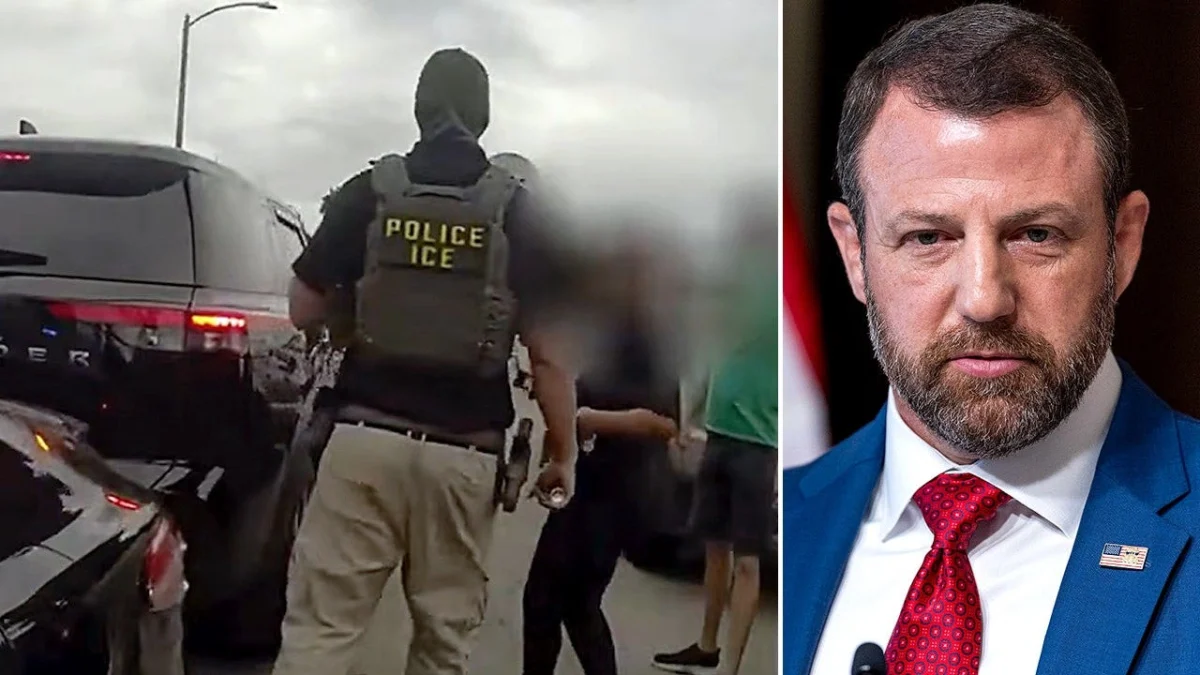
The Department of Homeland Security has renewed its fierce criticism of California’s sanctuary state framework following an intense confrontation in Long Beach on October 17, during which federal immigration enforcement officers were left isolated amid an aggressive crowd. Newly released bodycam footage from the incident has reignited a contentious national debate regarding intergovernmental cooperation, public safety, and the tangible operational risks faced by federal personnel operating within jurisdictions that restrict local law enforcement collaboration with immigration authorities.
The October 17 operation centered on the apprehension of a Mexican national wanted on an outstanding felony domestic violence charge. According to Department of Homeland Security (DHS) records, local law enforcement agencies had previously declined to honor an administrative immigration detainer requested by U.S. Immigration and Customs Enforcement (ICE) for the individual, necessitating a direct federal field operation.
As ICE agents moved in to execute the arrest, the situation rapidly deteriorated. According to federal accounts, a hostile crowd materialized, obstructing roadways with vehicles and debris to trap federal transport units. During the chaos, two individuals were taken into custody for allegedly vandalizing government vehicles. One of those individuals subsequently escaped after a bystander forced open the door of the transport vehicle.
Amid the escalating volatility, local police officers who had initially responded to calls regarding the disturbance withdrew from the scene. Newly published bodycam footage captures a Long Beach police officer approaching federal agents to deliver a direct message regarding the command directive.
"We’re being ordered to pull out. So you guys are going to be on your own," the officer states on the recording, attributing the mandate to a watch commander before adding, "I’m sure you’re used to it. Good luck."
Chronology of the Long Beach Incident and Subsequent Fallout
The events of October 17 unfolded in distinct phases, as documented by official reports from both federal agencies and local municipal departments:
- October 17: ICE agents conduct an operation in Long Beach to arrest a Mexican national with a felony domestic violence record. A hostile crowd gathers, blocking streets with vehicles and trash cans. Local police respond to emergency calls regarding property damage and a detainee requiring medical assistance. Police transport a bleeding, handcuffed suspect to a local fire station for paramedic evaluation, removing restraints to facilitate medical care.
- The Withdrawal: Responding Long Beach police officers receive an order from their watch commander to stand down and evacuate the immediate area. Federal agents are left surrounded by protestors. Following the local police departure, some ICE agents follow local units to a secure police station parking lot, where they are reportedly told to leave and directed to file a dispatch report for any vandalism claims.
- November 19: The Long Beach Police Department officially releases the body-worn camera footage to the public, accompanied by a formal statement defending the actions of its personnel.
- Subsequent DHS Announcements: Department of Homeland Security leadership highlights the incident during a broader policy briefing, utilizing the footage as evidence of the hazards generated by state-level sanctuary directives.
Official Responses and Conflicting Perspectives
The release of the bodycam footage has prompted sharp, polarized reactions from federal leadership and municipal law enforcement administrators.
Homeland Security Secretary Markwayne Mullin delivered a scathing rebuke of California’s sanctuary mandates, asserting that local policies actively compromise the security of federal personnel.
"The footage of what happened to our ICE officers in California is truly disturbing," Mullin said in a public statement. "As they were surrounded by an angry mob and being harassed and obstructed just for doing their job and going after dangerous criminals, the local police in Long Beach, California, were ordered to stand down and stop assisting them, leaving them to fend for themselves."
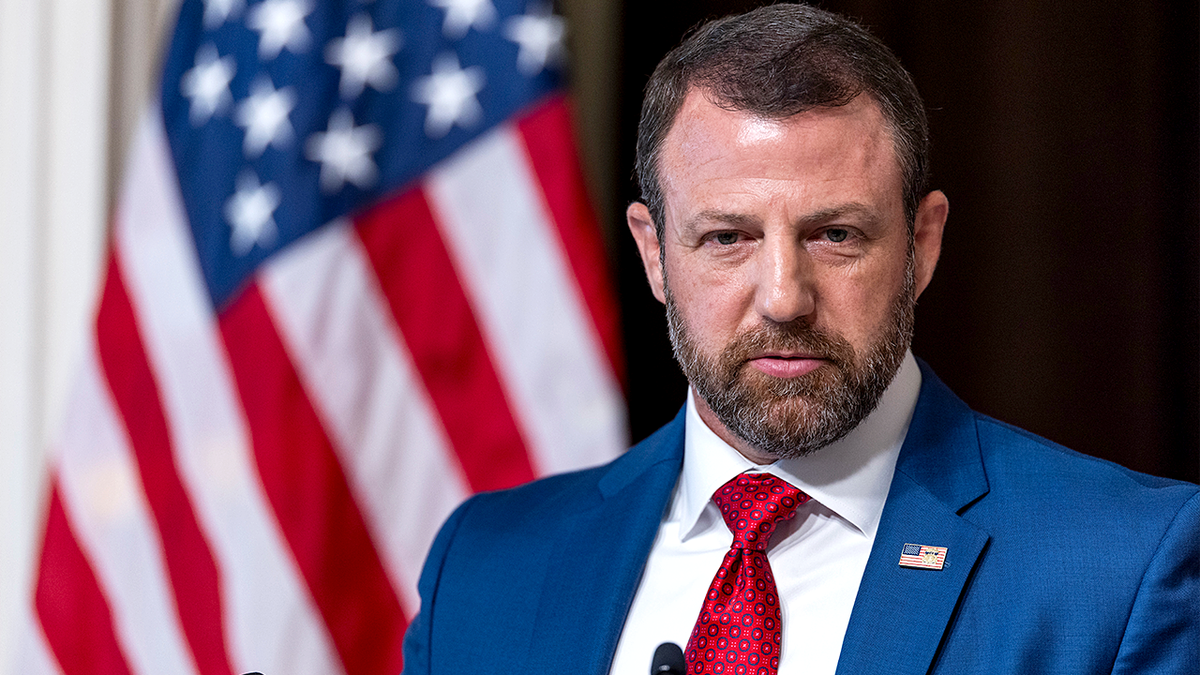
Mullin further contended that the incident reflects the predictable outcome of sustained political rhetoric directed against federal immigration enforcement. "This is the end goal of the hateful rhetoric from sanctuary politicians in California and across the country. They want to see our ICE officers harmed in the line of duty, or worse," he added.
Conversely, Long Beach Police Chief Wally Hebeish defended the conduct of his officers, emphasizing that their primary objective was to de-escalate an unstable environment and ensure general public safety. In statements accompanying the video release, Hebeish maintained that municipal officers acted in accordance with established departmental protocols and state legal guidelines.
"As my previous statement indicated, our primary role was to ensure the safety of everyone on scene, which is exactly what our police officers did," Hebeish stated. "When responding to calls of this nature, officers work to mitigate any immediate public safety threat, after which they return to standard service while maintaining heightened situational awareness in the general area."
The Long Beach Police Department reiterated that under California’s sanctuary laws, local law enforcement personnel are legally prohibited from enforcing civil immigration statutes or participating directly in federal immigration sweeps. However, the department acknowledged that state statute simultaneously bars local agencies from actively obstructing or interfering with federal enforcement operations.
Broader Context of Sanctuary Policies and Public Safety Debates
The clash in Long Beach occurs against a backdrop of ongoing friction between federal immigration authorities and sanctuary jurisdictions, a policy landscape defined by California’s Senate Bill 54 and related state statutes designed to limit local and state agency entanglement with federal immigration enforcement.

Federal officials argue that these statutory limitations create a dangerous regulatory vacuum, routinely resulting in the release of criminal non-citizens back into local communities rather than transferring them into federal custody upon the completion of local sentences or local encounters. To substantiate this claim, the Department of Homeland Security released a compilation of recent enforcement actions involving individuals with severe criminal histories who had prior contact with California judicial or correctional systems.
Among the cases highlighted by DHS is that of Jose Luis Rosales Ayala, an undocumented national from El Salvador and an alleged member of the MS-13 transnational criminal organization. Ayala was apprehended by federal authorities in California following international warrants related to homicide, extortion, and drug trafficking charges.
Federal authorities also pointed to the case of Mario Jesus Valdez-Flores, a five-time deported national from Mexico arrested in October. Valdez-Flores possessed a prior federal narcotics trafficking conviction alongside domestic arrests for first-degree robbery and assault with a deadly weapon.
Another prominent case cited by federal investigators involves Axel Eduardo Chavez-Marroquin, an undocumented national from El Salvador who was taken into custody in July in connection with the alleged murder of a military veteran in Utah. According to DHS files, California authorities had previously released Chavez-Marroquin on two separate occasions following domestic violence arrests, despite active ICE detainers lodged against him.
Beyond violent crime arrests, the federal critique extends to administrative and licensing procedures. DHS officials recently drew attention to non-citizens who obtained commercial driver’s licenses through the California Department of Motor Vehicles and were subsequently implicated in fatal multi-state traffic collisions. These incidents include an August 2025 illegal U-turn collision in Florida that resulted in three fatalities, a November 2025 jackknife crash in Oregon that claimed the life of a newlywed couple, and a September commercial vehicle accident in Ohio that caused a fatality.
Implications for Intergovernmental Relations
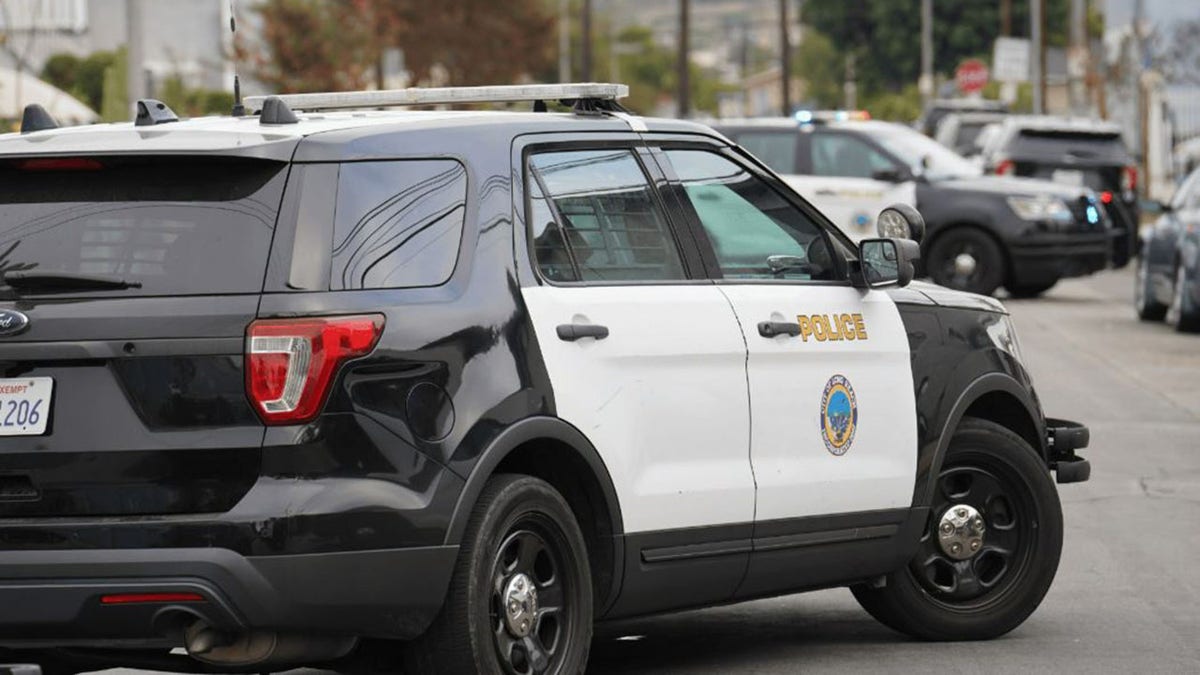
The Long Beach incident underscores the complex operational challenges inherent in a fragmented legal system where federal immigration mandates intersect with state-level sanctuary protections. Legal analysts note that while local police departments possess wide latitude to manage municipal emergency responses and prioritize community policing mandates, the physical separation of local and federal forces during active civil disturbances introduces acute tactical risks for officers in the field.
As the Department of Homeland Security continues to press for expanded interagency cooperation and threatens federal funding penalties against non-compliant jurisdictions, municipal leaders across California face mounting pressure to navigate the delicate balance between state legislative compliance, officer safety, and the management of volatile public demonstrations. The ongoing dialogue points to a persistent constitutional and operational standoff over the boundaries of federal authority and local autonomy in immigration enforcement.

