
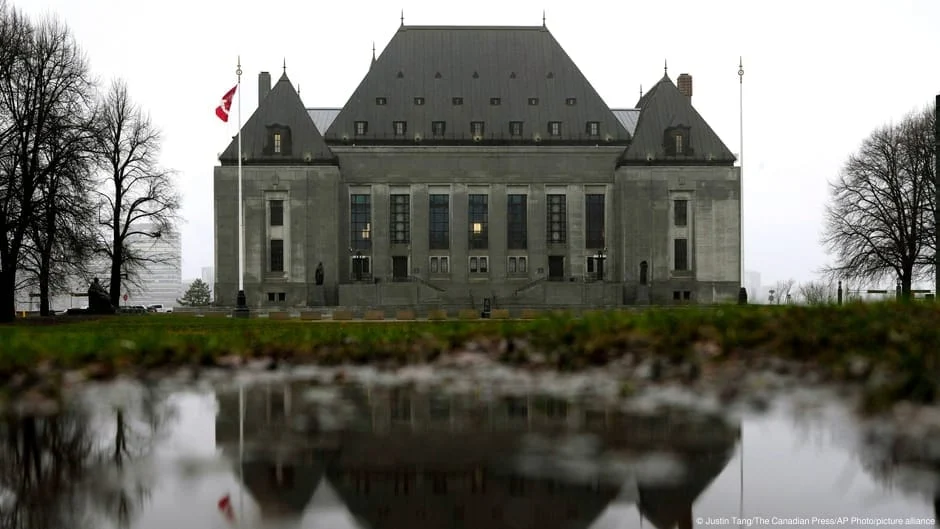
The decision, which concludes a years-long legal odyssey, affirms the power of the Quebec government to restrict public servants—including teachers, police officers, and lawyers—from wearing overt religious symbols such as hijabs, turbans, and yarmulkes while on duty. However, in a nuanced adjustment, the Court ruled that the provincial legislature itself must remain a space where the exercise of religious expression by elected officials is protected, effectively preventing the government from imposing the same dress codes on members of the National Assembly.
The Legislative Genesis of Bill 21
The roots of this judicial battle lie in the 2019 passage of Bill 21, formally titled "An Act respecting the laicity of the State." Introduced by the Coalition Avenir Québec (CAQ) government, the law was framed as a necessary measure to reinforce the neutrality of public institutions. The provincial government argued that the presence of overt religious symbols on individuals in positions of authority could be perceived as an endorsement of specific faiths, thereby compromising the state’s secular identity, a concept deeply embedded in Quebec’s historical transition away from the influence of the Catholic Church.
The law applies to a wide range of public sector roles, specifically targeting those who hold "positions of authority." For thousands of Quebecers, the implementation of the law created an immediate professional crisis, forcing a choice between their career paths and their sincerely held religious obligations.
A Timeline of Legal and Political Contention
The journey to the Supreme Court was marked by a series of high-stakes legal challenges and political maneuvers.
- June 2019: The National Assembly of Quebec passes Bill 21, immediately invoking the "notwithstanding clause" of the Canadian Charter of Rights and Freedoms. This clause allows provinces to override certain constitutional protections—specifically those related to freedom of religion and equality—for a renewable period of five years.
- 2021: A Quebec Superior Court judge issues a ruling that largely upholds the law but strikes down specific provisions that applied to English-language school boards, noting that those boards had constitutional protections that the provincial government could not override via the notwithstanding clause.
- 2022-2023: The case moves through appellate courts, with both opponents and supporters seeking a definitive interpretation of the balance between provincial sovereignty and individual constitutional rights.
- 2024: The Supreme Court of Canada hears the final appeal, focusing on the legitimacy of using the notwithstanding clause to bypass federal constitutional mandates regarding fundamental freedoms.
- 2025: The Court issues its final judgment, cementing the legality of the ban for civil servants while exempting elected members of the legislature.
Constitutional Implications: The "Notwithstanding" Precedent
The core of the legal dispute was not merely about religious dress, but about the constitutional integrity of Canada itself. By invoking Section 33 of the Constitution Act, 1982—the notwithstanding clause—Quebec effectively shielded the legislation from judicial scrutiny regarding Charter violations.
Legal scholars have long debated whether this use of the clause is an abuse of power or a legitimate exercise of provincial autonomy. Chief Justice Richard Wagner, in the Court’s opinion, noted that the law is "rooted in Quebec’s legitimate and historical commitment to ensuring the secularism of the state in a free and democratic society." The Court’s decision suggests that as long as a province follows the procedural requirements of the notwithstanding clause, the judiciary has limited authority to overturn the policy choices of a democratically elected legislature, even if those policies appear to infringe upon minority rights.
Societal Impact and Statistical Context
The practical impact of Bill 21 has been significant, particularly for minority communities in urban centers like Montreal. According to reports from advocacy groups such as the National Council of Canadian Muslims (NCCM), the legislation has created a "chilling effect" in the public sector.
Data provided by researchers at the University of Waterloo suggests that minority women, particularly those who wear the hijab, have faced disproportionate barriers to entry in the public sector. Surveys indicate that a notable percentage of teachers and prospective educators have opted to leave the province or abandon the profession entirely rather than comply with the ban. Critics emphasize that this creates a lack of representation in public institutions, arguing that a secular state should reflect the diversity of the citizenry it serves.
Conversely, proponents of the law, including members of the CAQ and the Parti Québécois (PQ), argue that the law is a victory for the "Quebec nation." They maintain that the state must remain neutral to foster a cohesive, shared identity. For these supporters, the law is not about exclusion, but about establishing a baseline of secularism that all public officials must adhere to, regardless of their personal faith.
Reactions from Stakeholders
The reaction to the Supreme Court ruling has been sharply polarized. Mathieu Levesque, representing the CAQ, hailed the decision as a vindication of the province’s right to self-determination. "This is a victory for the Quebec nation and for the government, whose actions have today been fully validated," Levesque stated following the announcement.
On the other side of the debate, civil rights organizations expressed profound disappointment. Stephen Brown, CEO of the NCCM, issued a stern warning regarding the precedent set by the ruling. "This decision is an unrestricted license for every government in this country to pass legislation taking away the fundamental freedoms and the legal rights of every Canadian," Brown argued. He suggested that the ruling effectively signals that constitutional rights are no longer absolute, but are subject to the political winds of provincial legislatures.
Emmett Macfarlane, a political science expert at the University of Waterloo, characterized the law as "Islamophobia as a state policy," suggesting that the narrow focus on symbols often associated with non-Christian faiths inherently discriminates against specific minority groups, despite the law’s stated goal of neutrality.
The Future of Secularism in Canada
The Supreme Court’s decision leaves the Canadian legal landscape in a state of flux. While the ruling provides clarity for the specific context of Quebec, it raises broader questions about the role of the notwithstanding clause in Canadian democracy.
If provinces are permitted to use this mechanism to override fundamental rights with relative ease, constitutional experts fear that other provinces may follow suit, potentially leading to a patchwork of rights across the country. The decision also places the onus on federal politicians to decide whether to challenge the use of the notwithstanding clause through political means, as the judicial path has largely been exhausted.
For the residents of Quebec, the debate over Bill 21 is far from over. While the highest court in the land has spoken, the societal division regarding what it means to be a "secular" state in a pluralistic society persists. The exemption for members of the National Assembly—allowing them to wear religious symbols—highlights the inherent contradiction that critics have pointed out since the bill’s inception: if religious symbols are deemed inherently incompatible with the neutrality of the state, why are they acceptable for those who craft the laws themselves?
As the political landscape in Quebec shifts, with the pro-independence Parti Québécois having formed government, the implementation of Bill 21 will likely remain a central pillar of the provincial identity. However, the ruling serves as a permanent reminder of the fragile balance between the collective desire for a secular state and the individual right to religious freedom, a tension that will continue to define Canadian political discourse for the foreseeable future.

