
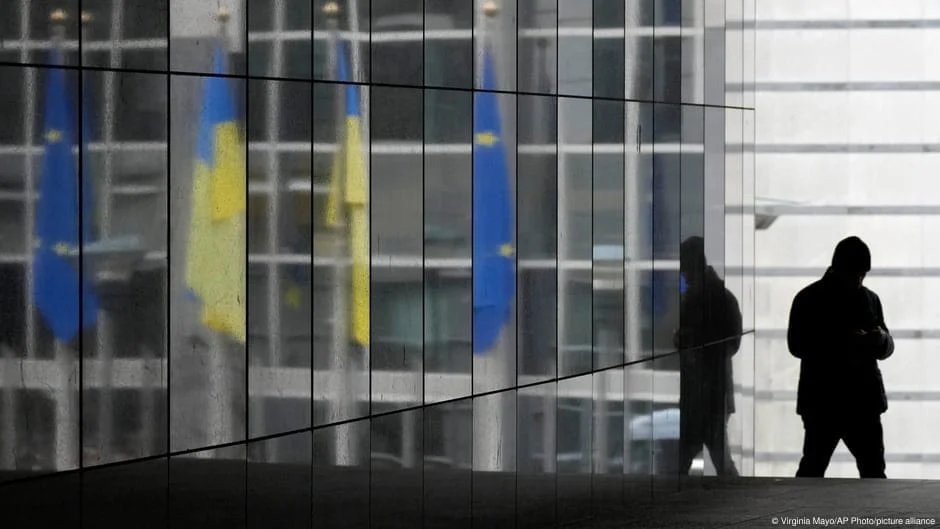
The European Union’s quest to finalize its multitrillion-euro budget for the 2028-2034 period has hit a significant roadblock, with leaders abandoning a summit in Brussels this week after less than 24 hours of acrimonious debate. What was intended to be a high-stakes negotiation over the bloc’s financial future instead devolved into a series of walkouts and public reprimands, forcing European Council President Antonio Costa to suspend the session without a deal. The failure to secure a breakthrough highlights a deepening ideological chasm between member states over how the EU should balance fiscal austerity with the urgent requirements of regional security, defense, and economic competitiveness.
The Breakdown of Diplomatic Order
The summit’s abrupt conclusion was marked by a palpable shift in the traditional "Brussels consensus." The crisis began when the prime ministers of Denmark, Sweden, Belgium, and Austria—key members of the "Sensible Seven" coalition—staged a coordinated walkout during smaller group sessions. These leaders, representing the bloc’s primary net contributors, argued that the negotiating atmosphere was not only unproductive but detached from the economic realities facing their respective taxpayers.
Hungarian Prime Minister Peter Magyar, a vocal critic of the proceedings, labeled the summit "completely unnecessary," placing the burden of failure on the European Council’s leadership. President Costa, tasked with the near-impossible role of mediator between 27 competing national interests, attempted to characterize the meeting as a diagnostic exercise rather than a total loss. "For me, it was very useful to figure out the parameters of a possible landing zone in December," Costa remarked in a post-summit briefing, though his optimism appeared isolated as the leaders departed the capital.
Chronology of the Budgetary Impasse
The current budget cycle is governed by a self-imposed deadline of late 2026, intended to ensure financial continuity for the 2028-2034 period. However, the path to consensus has been hindered by a series of escalating demands:
- Early 2026: Initial budget proposals are drafted, projecting a total expenditure of approximately €1.786 trillion.
- Spring 2026: German Chancellor Friedrich Merz sets a firm precondition for his government’s support: the inclusion of an additional €45 billion in military and economic aid for Ukraine through 2027.
- Mid-2026: The "Friends of Cohesion," led by France and Italy, push for increased regional development funds, conflicting with the "Sensible Seven" who demand significant spending cuts.
- Late November 2026: The Brussels summit begins with the hope of narrowing the gap; it collapses within 24 hours as disagreements over structural rebalancing become insurmountable.
The German Ultimatum and the Ukraine Question
At the heart of the standoff is Germany, which contributes roughly 25% of the total EU budget. Berlin has adopted a "no-deal" stance unless its partners agree to a massive, front-loaded support package for Ukraine. This has triggered a fierce backlash from nations including Hungary, the Czech Republic, Bulgaria, and Slovakia. Slovak Prime Minister Robert Fico characterized the German demand as "blackmail," arguing that financing the war through the EU budget sets a dangerous precedent and risks prolonging the conflict.
Chancellor Merz, speaking after the breakdown, emphasized that the EU must "exercise a sense of proportion." He noted that the original commission proposal of €1.786 trillion is still too high, despite having already been trimmed by €204 billion, or approximately 10.2%. Merz insisted that for Germany to continue its role as the bloc’s primary financier, the budget must prioritize "competitiveness, security, and defense" over traditional, broad-spectrum spending.
Structural Rebalancing: A Shifting Financial Landscape
The proposed budget reflects a fundamental pivot in the EU’s strategic priorities. Under the current draft, allocations for agriculture, fisheries, and cohesion—the bedrock of EU integration—are slated to fall from 59.1% to 42.4% of the total budget. Conversely, funding for economic competitiveness and defense is projected to rise from 17.7% to 27.7%.

This rebalancing is the primary wedge between the "Sensible Seven"—which includes Germany, the Netherlands, Denmark, Belgium, Sweden, Finland, and Austria—and the "Friends of Cohesion," a group of 17 states that argue the cuts will destabilize poorer regions. The tension is compounded by the fact that the "Sensible Seven" pay more into the collective pot than they receive, leading them to demand stricter fiscal discipline and a reduction in the overall size of the budget.
The Search for New Revenue Streams
Faced with domestic pressure to limit national contributions, the European Commission is exploring "own resources"—revenue generated directly by the EU. A centerpiece of this effort is a proposed 3% digital services tax (DST) on the revenue of major tech giants, including Google, Meta, Apple, and Microsoft. The proposal, championed by French President Emmanuel Macron, is expected to generate roughly €5 billion annually.
However, the plan faces stiff opposition from Ireland, which serves as the European headquarters for many of these global tech conglomerates. Prime Minister Micheal Martin has signaled that Ireland may exercise its veto, noting that such a tax sends a negative message to foreign investment. Furthermore, independent economic analyses suggest the revenue may be overstated. Cristina Enache, an economist at the Tax Foundation Europe, pointed to the experiences of nations like Spain, where actual tax collection significantly lagged behind initial projections. "The economic cost exceeds the revenue generated," Enache stated, calling the proposal "politically impossible."
Triple-A Risks and Market Stability
Beyond the internal squabbling, there is a systemic concern regarding the EU’s creditworthiness. The bloc currently carries approximately €860 billion in outstanding debt, largely from pandemic recovery efforts and Ukraine support programs. There is a growing fear that if the EU fails to establish a sustainable, independent revenue stream, its coveted triple-A credit rating could be compromised.

This risk is exacerbated by political instability in major member states. Analysts are closely watching the upcoming presidential election in France, where far-right challenger Marine Le Pen has campaigned on a platform of significantly reducing French financial contributions to the EU. "If the EU loses its triple-A rating, interest rate costs will go up," warned Jacob Funk Kirkegaard of the Bruegel think tank. "The burden of that debt would eventually fall on the net contributing countries, which is precisely why they are now showing more openness to new tax models than they have in the past."
Implications and the Path Ahead
The failure of this summit is not merely a procedural delay; it is a symptom of a bloc struggling to define its purpose in a post-US-hegemony world. As the EU faces a security vacuum, the need for a unified defense strategy is forcing a competition for resources that was largely ignored during the relative stability of the early 2000s.
The "political theater," as Kirkegaard termed it, is expected to continue as leaders prepare for a make-or-break meeting in late December. President Costa’s pledge to cut a further €220 billion to €230 billion from the next proposal will likely appease the "Sensible Seven" but risks alienating the "Friends of Cohesion" further.
Ultimately, the impasse underscores a deeper, more existential challenge: the EU is being forced to transition from an economic union into a more integrated security and defense entity, all while its internal fiscal mechanisms remain rooted in an era of expansion. Whether the bloc can reconcile these competing visions before the 2026 deadline will determine not only the budget of the next seven years but the future cohesion of the European project itself. The coming weeks will require a level of diplomatic flexibility that has thus far remained elusive in the hallowed halls of Brussels.

