
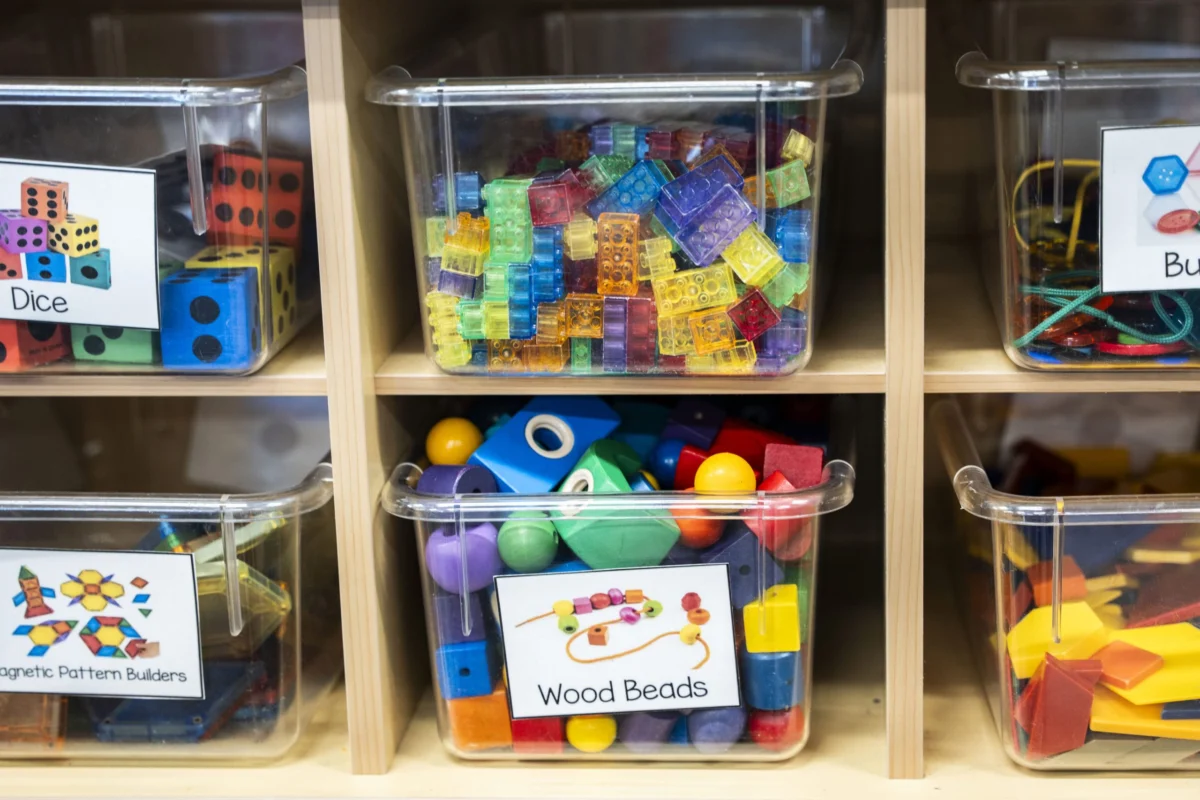
In a quiet classroom at Corinth Elementary School, four-year-old Vaughn Dodd meticulously arranges translucent Magna-Tiles to construct a miniature rocket ship. As she distinguishes between the geometric properties of a rhombus and the circular form of the sun, she is doing more than playing; she is engaging in the early stages of mathematical reasoning. This scene, replicated in classrooms across the Magnolia State, represents the front lines of an ambitious educational transformation. By August 2027, every state-funded pre-K program in Mississippi will be required to implement a unified, research-based mathematics curriculum known as Building Blocks. This mandate marks a significant milestone, as Mississippi becomes the first state in the nation to require a standardized, state-wide math curriculum for its preschool learners.
The Evolution of the Mississippi Model
The shift toward a formalized math curriculum is the latest chapter in Mississippi’s broader effort to reform its educational landscape. Following the widely acclaimed success of the "Mississippi Miracle"—a series of systemic literacy reforms that propelled the state from the bottom of national rankings to top-tier performance in reading—the state Department of Education is applying a similar rigor to mathematics.
The transition, often referred to by officials as the "Mississippi Marathon," began in 2022. The state identified that while literacy had received focused, evidence-based attention, early childhood mathematics was often treated as a peripheral subject. Educators frequently lacked the resources or training to move beyond rudimentary rote counting. To address this, the Mississippi Department of Education, under the leadership of the Office of Early Childhood, looked to successful models in other regions, eventually adapting the open-source "Focus on Pre-K" curriculum developed by the Boston Public Schools.

The rollout is strategic and phased, designed to ensure that by the 2027-2028 school year, the approximately 8,700 children currently served by state-funded pre-K—representing roughly one-quarter of the state’s four-year-old population—receive consistent, high-quality mathematical instruction.
Beyond Worksheets: A Hands-On Approach to Numeracy
The Building Blocks curriculum is fundamentally distinct from traditional, sedentary classroom models. It eschews the reliance on worksheets, which developmental experts argue are developmentally inappropriate for children at this stage. Instead, the curriculum centers on tactile, inquiry-based learning.
Kayla Wood, a pre-K teacher, emphasizes that math is woven into the fabric of the entire day rather than confined to a designated "math hour." Whether students are forming letters out of Play-Doh, identifying shapes in a picture book like "The Seven Chinese Sisters," or sorting objects during independent play, the objective is to build a vocabulary of precision. A triangle is not merely a shape; it is an object defined by three straight sides and three specific angles. This emphasis on "the language of precision" is a cornerstone of the curriculum, designed to move students toward abstract conceptualization.
Christina Weiland, a professor of education at the University of Michigan and a key advisor to the initiative, notes that the lack of an explicit curriculum often leads to neglect. "What we know from research is that without an explicit math curriculum, preschools spend very little time on math," Weiland explained. "Often it’s a pretty neglected part of the curriculum, and it often is very surface level, around basic counting activities." By providing a structured framework, Mississippi ensures that math is not only present but deep and meaningful.

The Human Element: Coaching as the Catalyst for Change
A critical component of this initiative is the deployment of specialized coaches. The state currently employs 32 early childhood regional coordinators, such as Robin Brand, who provide on-site and virtual support to teachers. This model recognizes that many educators, while expert in child development, may harbor their own anxieties regarding mathematics instruction.
The coaching model involves direct classroom observation, collaborative lesson planning, and the setting of specific, achievable pedagogical goals. For some teachers, this represents a significant shift in identity and practice. Robin Brand recounts instances where initial skepticism—teachers stating that they would continue their existing methods regardless of the new mandate—was eventually replaced by a collaborative, open dialogue as the teachers saw the tangible impact on student engagement.
Stephanie Bullard, a colleague of Wood’s at Corinth Elementary, initially felt trepidation about shifting away from the methods she had used for years. However, the consistent, non-punitive support from coaches helped her pivot her mindset. "A lot of us were a little confused when we started Building Blocks, but we’re slowly picking it up," Bullard noted. She now advocates for the interactive nature of the program, where students drive the direction of their exploration.
National Context and the Legislative Trend
Mississippi’s proactive stance on early childhood mathematics coincides with a broader national trend. According to recent data from Education Week, more than a dozen states have passed legislation requiring early intervention for math, similar to the reading-focused policies that became common over the last decade. Many states are now investing in math coaches for elementary schools or overhauling teacher-preparation programs to ensure that new educators are grounded in the latest research on how young children acquire numerical literacy.

The foundational skills targeted by these new curricula go beyond simple counting. They include subitizing—the ability to identify the number of items in a small set without counting them individually—and part-whole relationships, or the ability to understand how a number can be broken down into smaller components. These skills are critical precursors to the algebra and geometry that students will encounter in later grades.
Measuring Success and Future Implications
The long-term success of the Mississippi Marathon will be measured not just by immediate test scores, but by the trajectory of student confidence and proficiency as they transition into kindergarten and beyond. By focusing on human-centered coaching rather than over-reliance on technology or passive software, the state is attempting to build a sustainable culture of mathematical excellence.
The implications for the state’s workforce are also significant. While playing with Magna-Tiles is not a direct vocational training for Mississippi’s expanding aerospace sector, the foundational logic, spatial reasoning, and problem-solving skills fostered in these classrooms serve as the necessary "launching pad" for future STEM careers.
As the program moves toward full implementation by 2027, the focus remains on the daily classroom experience. In a classroom at Kossuth Elementary, when teacher Chassey Nelms asks her students to identify the number of pepperonis on a toy pizza without counting, she is fostering mental flexibility. When the students engage in their ritual call-and-response—"We can do… Hard things!"—they are adopting a growth mindset that is essential for long-term academic success.

By creating a bridge between early childhood play and formal mathematical language, Mississippi is signaling that its commitment to educational reform is as comprehensive as it is ambitious. The state is betting that by investing in the earliest years of a child’s development, it can secure a more prosperous and capable future for its next generation. Through a combination of evidence-based curriculum, persistent coaching, and a focus on human interaction, Mississippi is transforming the classroom from a place of mere instruction into an environment of discovery, setting a potential benchmark for other states looking to emulate its progress.

