
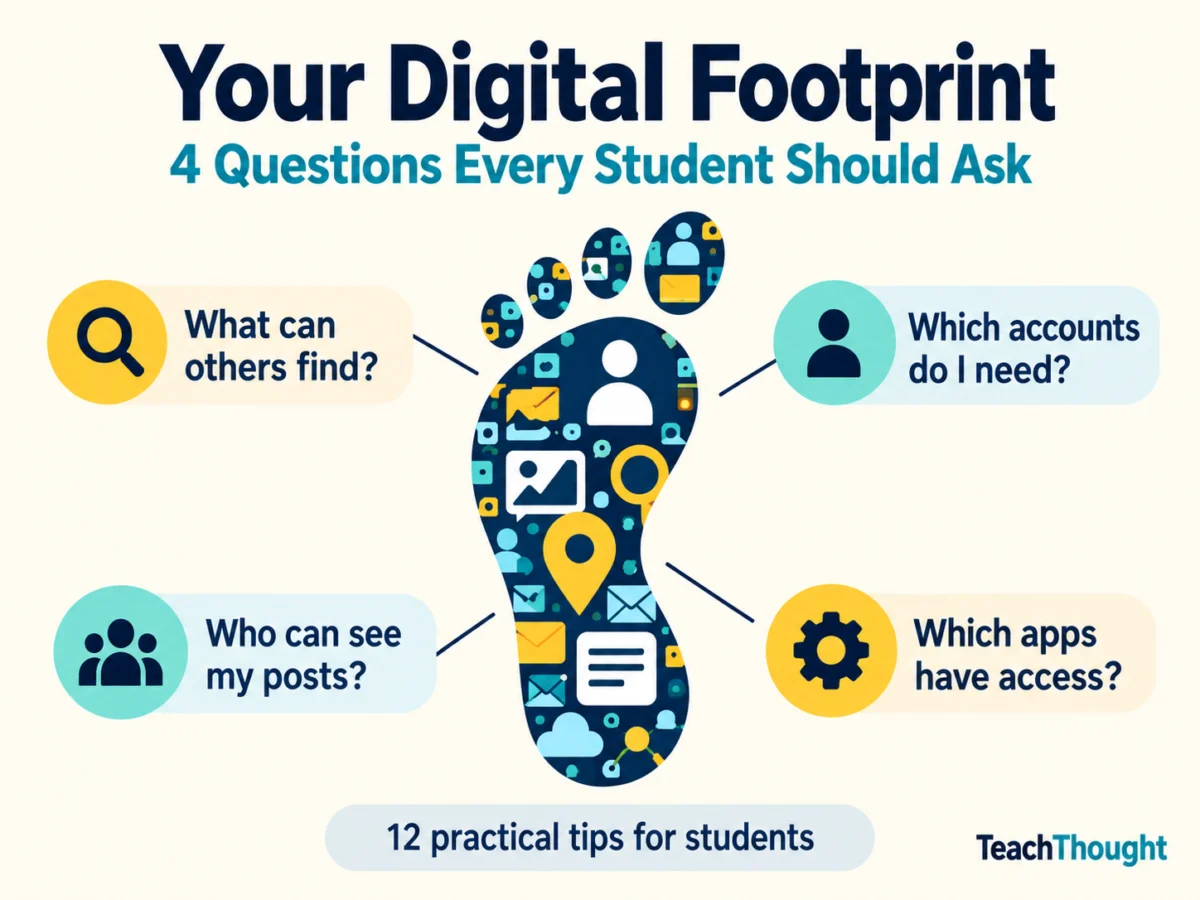
In an era where children and adolescents construct their identities concurrently in physical classrooms and sprawling virtual ecosystems, the traditional parental advice of simply "being careful what you post" has grown obsolete. Modern digital literacy requires a granular, highly analytical understanding of how information is generated, aggregated, interpreted, and monetized across diverse platforms. Educational experts, digital rights advocates, and cybersecurity professionals increasingly emphasize that a student’s digital footprint is no longer merely a collection of self-authored photographs and status updates. Instead, it is a complex mosaic comprising self-published content, involuntary disclosures made by peers, algorithmic tracking by commercial entities, and persistent data harvesting by applications designed to monitor user behavior.
Recent data compiled by consumer protection agencies and digital safety organizations underscore the urgency of redefining how schools approach digital citizenship. Studies on youth internet usage indicate that the average teenager maintains active presences across multiple social media platforms, messaging applications, and gaming environments long before graduating high school. Each interaction—ranging from casual photo tags and geotagged venue check-ins to permissive app-tracking allowances—contributes to a permanent, searchable dossier. When educational institutions fail to dissect these mechanisms systematically, students remain vulnerable to unwarranted surveillance, privacy breaches, context collapse, and the long-term professional or academic repercussions of uncurated online histories.
Main Facts and Core Concepts of Digital Footprints
To effectively navigate contemporary online spaces, students must first learn to deconstruct the anatomy of a digital footprint. Educational frameworks now categorize these footprints into three distinct pillars: content published directly by the student, content published about the student by third parties, and passive data collected invisibly by digital services during routine use. Each category demands a fundamentally different decision-making process. For instance, a public photograph uploaded by a student raises critical questions regarding audience boundaries and informed consent. Conversely, a screenshot of a private conversation shared without context highlights issues of textual distortion and the loss of interpersonal nuance. Meanwhile, an application requesting broad background location access forces users to weigh convenience against data sovereignty.
Educators advocating for advanced digital literacy argue that teaching students to isolate these variables transforms abstract fear into practical agency. Rather than enforcing a blanket policy of extreme reticence or mandatory account privacy—which often fails to account for legitimate public-facing activities such as academic portfolios or artistic showcases—curriculums must teach young people to assess specific exposures. By evaluating what is visible to external audiences, understanding how disparate details combine to reveal private routines, and recognizing the legal and social boundaries of consent, students develop the critical thinking skills necessary to protect their personal autonomy in the digital age.
Chronology and Evolution of Online Privacy Education
The pedagogical approach to internet safety has undergone a significant evolution over the past two decades. In the early 2000s, when social media was in its infancy and restricted primarily to desktop computers, safety initiatives focused heavily on threat avoidance: avoiding strangers, hiding real names, and never posting photographs online. As mobile technology proliferated in the 2010s, smartphones equipped with high-resolution cameras and global positioning systems transformed every student into a mobile publisher. This shift rendered traditional "stranger danger" models inadequate, as the primary privacy risks often originated not from anonymous predators, but from peers, algorithmic feeds, and data brokers.
By the late 2010s and early 2020s, privacy advocates and educational policymakers recognized that passive data collection and algorithmic profiling posed threats equal to, if not greater than, overt oversharing. Regulatory bodies such as the Federal Trade Commission (FTC) began issuing comprehensive guidelines addressing mobile applications, children’s privacy, and targeted advertising. Consequently, modern curricula have shifted from reactive prohibition to proactive management. Today, contemporary digital citizenship training incorporates active auditing of device permissions, understanding search engine indexing, and mastering the complex procedures required to request the removal of personal data from third-party platforms.
Auditing Visibility and External Perspectives
A fundamental challenge for student internet users is the cognitive bias known as the "imagined audience." Adolescents frequently conceptualize their online audience as a localized circle of trusted peers, failing to recognize that profile information, biographies, usernames, and public posts are often globally accessible to anyone with an internet connection. To counter this, digital literacy programs now incorporate systematic profile audits. Students are instructed to examine their online profiles from the perspective of an absolute stranger by utilizing public profile preview tools or performing independent search queries using quotation marks and frequently used usernames.
This audit process forces students to confront a specific, practical question: "Which details are visible to people I did not choose?" Educational frameworks emphasize that distinction over blanket privacy settings. For example, a student artist may intentionally choose to make an illustration portfolio completely public while simultaneously scrubbing their school name, personal email address, and daily athletic routine from their biography. By separating professional or creative visibility from private personal metadata, students learn to curate their digital presence with surgical precision rather than hiding behind indiscriminate privacy walls.
Context Collapse and the Dangers of Screenshot Culture
The phenomenon of "context collapse"—where information created for one specific audience is stripped of its original environment and presented to an entirely different group—represents one of the most volatile aspects of modern digital communication. Screenshots frequently isolate textual messages from the conversational arc that rendered them intelligible. A sarcastic reply exchanged between close friends can easily be misinterpreted as a malicious statement by an administrator, prospective employer, or unfamiliar peer. Similarly, a tentative opinion expressed during a brainstorming session can appear as a rigid, unyielding stance when the preceding questions, doubts, and subsequent revisions are abruptly deleted.
To demonstrate this dynamic in classroom environments, educators frequently employ comparative text exercises. By presenting a seemingly ambiguous statement—such as "Great. Exactly what we needed"—in isolation, and then placing it sequentially after contradictory preceding messages, instructors illustrate how text messaging relies heavily on shared contextual cues. Before forwarding or sharing a digital exchange, students are taught to evaluate what the subsequent reader will inevitably miss, including earlier messages, the specific interpersonal dynamics between the participants, and whether sharing the exchange violates the reasonable expectation of privacy held by other parties involved.
The Ethics of Consent and Digital Attribution
Navigating interpersonal relationships in digital spaces requires a nuanced understanding of consent that extends far beyond physical interactions. Agreeing to pose for a photograph in a casual setting does not constitute blanket permission for that image to be published publicly, tagged with a full legal name, or repurposed into a digital meme. Digital citizenship models emphasize that permission must explicitly match the intended use. Asking, "Can I take a picture?" fails to address the downstream consequences of publication, whereas asking, "Can I post this photo on our public club account and tag you?" provides the subject with clear, actionable agency.
This standard of consent is equally applicable to sharing peer-generated writing, recording casual conversations, or circulating screenshots of private messages. Educational institutions bear a responsibility to model these exact ethical standards when publishing student work, ensuring that faculty members clearly specify intended audiences, proper attribution, and necessary identifying details while strictly adhering to institutional consent protocols. When teachers transparently negotiate consent with their students, they establish a practical baseline for respectful digital behavior that counteracts the impulsive sharing culture promoted by many modern social platforms.
Decoupling Audience Settings from Data Collection Practices
A widespread misconception among adolescent and adult internet users alike is that configuring a post’s privacy settings to "private" or restricting it to a select group of friends simultaneously shields the user from commercial data collection. Digital safety experts stress that "Who can see my post?" and "What does this application collect?" are fundamentally distinct inquiries. Restricting audience visibility does not prevent mobile applications from harvesting device metadata, tracking geographical locations, monitoring microphone usage, or logging activity histories for advertising personalization.
To address this vulnerability, educational curricula require students to audit device permissions and account activity controls independently. For instance, a basic photo-editing application may legitimately require access to a single selected image to perform its designated task, but it rarely requires continuous, unrestricted access to an entire personal photo library. By systematically reviewing audience and tagging controls, device-level hardware permissions, and account activity retention policies, students learn to minimize their digital exhaust. Furthermore, resources provided by regulatory agencies and technology platforms—such as Google’s search privacy controls and the FTC’s guides on online tracking—serve as vital instructional references for understanding that private browsing modes do not inherently conceal online activity from internet service providers or network administrators.
Remediation Strategies and Content Removal
When inappropriate, outdated, or sensitive material enters the digital ecosystem, the directive to "delete it" is frequently inadequate. Content that originates on a personal account often multiplies across the internet via screenshots, search engine caching, and third-party aggregation, existing simultaneously in multiple distinct locations. Effective digital cleanup requires a targeted, multi-tiered remediation strategy tailored to where the information currently resides.
If the content remains on a student’s own account, standard editing, archiving, or deletion procedures—coupled with a comprehensive review of historical profiles for obsolete contact information—are usually sufficient. However, if the material has been republished on another user’s account, removal requires direct requests to the account owner or utilization of the host platform’s formal reporting mechanisms, keeping in mind that untagging a photo does not automatically delete the original post. When objectionable material appears in search engine results, addressing the source page is mandatory, alongside submitting removal requests to search engine operators. Because navigating harassment, cyberbullying, or unauthorized personal data exposure can be overwhelming, institutional safeguarding protocols must ensure that students are never forced to negotiate the removal of harmful content in isolation.
Official Responses and Institutional Perspectives
Educational policymakers, legal experts, and child advocacy groups universally support the integration of advanced digital footprint education into standard school curricula. Representatives from consumer protection agencies emphasize that as artificial intelligence and automated data scraping tools become increasingly sophisticated, early intervention is the single most effective defense against long-term digital identity theft and reputational damage. School administrators note that proactive education significantly reduces instances of online bullying, disciplinary infractions related to social media misuse, and unauthorized data disclosures within school networks.
Furthermore, legal analysts point out that evolving privacy legislation, such as the European Union’s General Data Protection Regulation (GDPR) and emerging state-level privacy laws in the United States, increasingly recognize the "right to be forgotten." Equipping students with the procedural knowledge to demand data removal and audit digital tracking aligns directly with modern legal standards of informational self-determination. By treating digital literacy as an essential life skill on par with financial literacy or physical health, educational systems are proactively preparing students to navigate an increasingly interconnected and data-driven global society with confidence, ethics, and security.

