
For generations, the promise of the American public university system has been rooted in a simple, foundational premise: tax-funded institutions exist to provide a high-quality, accessible education to the residents of the state that supports them. This social contract was designed to ensure that a student’s zip code or socioeconomic background would not serve as an insurmountable barrier to upward mobility. However, new data from the 2024 academic cycle reveals a stark departure from this ideal. In 34 states, the cost of attendance at a flagship public university—when accounting for tuition, room, board, and fees—remains prohibitively high for low-income families, frequently exceeding one-third of their total annual household income.
The Shrinking Safety Net of Public Higher Education
The concept of "net price"—the actual amount a student pays after accounting for federal, state, and institutional grants—has become the primary metric by which researchers measure true affordability. While public discourse often focuses on sticker price, the net price is what determines whether a student from a family earning less than $30,000 can realistically enroll.
In 2024, the discrepancy between the mission of public institutions and the financial reality faced by their students has widened. At more than 50 percent of four-year public colleges across the United States, students from the lowest income brackets are forced to navigate an impossible financial landscape. Even after exhausting federal student loans, which are capped at $5,500 for first-year undergraduates, these students are frequently left with a multi-thousand-dollar gap that must be covered by savings, additional high-interest loans, or increased labor hours that often come at the expense of their academic performance.
A Geography of Inequality: State-by-State Disparities
The affordability of public higher education is no longer a national standard but a regional lottery. The divide is perhaps best illustrated by comparing the experiences of students in Alabama and Florida.
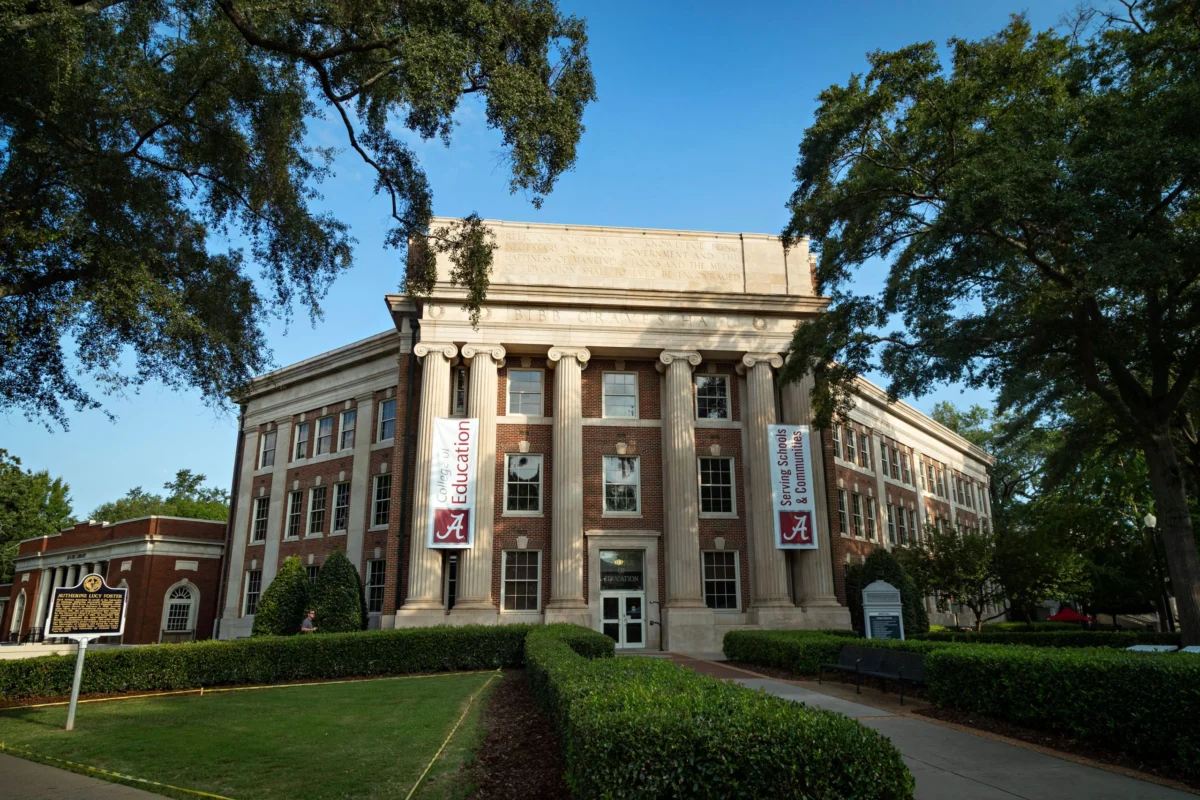
In Alabama, the flagship University of Alabama represents one of the most expensive public educational paths in the country for low-income residents. Families earning less than $30,000 annually have been expected to contribute upwards of $19,000 toward the net price of attendance. This puts the institution in the same tier as Pennsylvania State University, where similar financial burdens are placed on the state’s most vulnerable students.
Conversely, Florida has maintained a reputation for relative affordability. By consistently capping tuition increases and ensuring that state legislative funding remains prioritized for higher education, Florida has successfully kept its public university system accessible to a broader demographic. This disparity highlights a crucial trend: the cost of a degree is often more a reflection of state legislative policy and political will than the actual cost of instruction.
The Economic Context and the Wage Gap
The crisis of affordability is compounded by stagnant wage growth. While the net price of attendance has, in some instances, stabilized when adjusted for inflation, this technical stability ignores the lived reality of American households. Over the last decade, the costs of housing, food, and basic healthcare have risen at rates that far outpace the earnings of low-income families.
When a student from a household earning $30,000 must pay $10,000 or more in net costs, the math of college attendance breaks down. For these families, the "investment" in higher education becomes a high-stakes gamble. If the student drops out—a common occurrence when financial stress leads to burnout or the need to switch to full-time work—they are left with debt and no degree, the worst possible outcome for their financial future.
Institutional Responses and Defensive Measures
University administrators often point to their internal financial aid programs as evidence of their commitment to access. For instance, representatives from the University of Alabama noted that the average net price for families in the lowest income bracket decreased by approximately 6 percent for the 2024-25 academic year. While such reductions are positive, critics argue that these improvements are incremental and fail to address the core issue: the base cost of attendance remains fundamentally out of reach for a significant portion of the state’s population.

At many institutions, the rise in net price is attributed to declining state appropriations. As public funding has withered, universities have increasingly turned to tuition revenue and private housing developments to bridge budget gaps. This "privatization of public education" shifts the burden of funding directly onto the students and their families.
Broader Implications for the Workforce
The societal implications of this trend are profound. Flagship universities serve as the primary pipeline for the professional class, offering the highest graduation rates and the best access to high-paying employment. When these institutions become effectively closed to low-income students, the result is an entrenchment of class divisions. Instead of acting as a "great equalizer," the public higher education system risks becoming a gatekeeper that perpetuates the existing wealth gap.
The data shows that at nearly 300 public four-year colleges, the burden remains over $4,500 above the maximum federal loan for first-year students. This "unmet need" is the primary driver of student debt. For the 1 in 6 American households earning less than $30,000, and the 1 in 4 earning less than $50,000, the current trajectory is unsustainable.
Methodology and Data Integrity
The metrics used to analyze these trends are derived from the Integrated Post-Secondary Data System (IPEDS), the federal government’s authoritative source for higher education data. By focusing on "first-time, full-time, dependent students," researchers can establish a standardized baseline.
A critical distinction in this analysis is the exclusion of institutions where the primary output is associate degrees. By isolating four-year institutions where the majority of students are pursuing bachelor’s degrees, the data avoids the "noise" created by community colleges that may artificially lower cost averages. Even with this rigorous filtering, the conclusion remains clear: the cost to attend public universities has reached a critical threshold that threatens the viability of the American Dream for millions.
Moving Toward Solutions
What are the potential paths forward? Experts point to several legislative levers that could alter this landscape:
- Direct State Investment: Returning state appropriations to historical levels could allow universities to freeze or reduce tuition without sacrificing institutional quality.
- Targeted Grant Programs: States could follow the lead of institutions like the University of Michigan or the Florida university system by creating "last-dollar" grants that cover the remaining cost of attendance specifically for students from the lowest income quartiles.
- Efficiency and Cost Control: Regional public institutions have begun to explore ways to reduce the cost of books and digital materials, as well as finding ways to integrate commuter-friendly models that avoid the high costs of on-campus room and board.
The situation is not uniform. In New York City, the public university system has managed to maintain net prices under $1,600 for low-income students, largely because the urban environment allows students to bypass the exorbitant costs of residential living. However, this model is not easily replicated in rural or suburban states where the university is the primary housing provider.
Conclusion: The Future of the Public Good
The data confirms that the affordability of higher education is a direct result of political choice. As the gap between household income and the cost of a degree continues to widen, the pressure on state legislatures to re-evaluate their funding priorities will only increase. Without significant structural changes, the nation risks losing the very institutions that were created to build the middle class.
The goal of public education was always to provide a ladder for those seeking to climb out of poverty. When that ladder becomes too expensive to grasp, the entire society suffers the consequences of diminished human capital and increased social stratification. The findings presented here are more than just statistics; they are a warning that the foundational mission of public higher education is in urgent need of renewal.

