
Jamila Chambers, executive director of the Hameetman Career Center at Occidental College, remembers a time when the path from graduation to professional employment was paved with intentionality. Not long ago, recruiters from top-tier financial firms and tech giants regularly visited campus with a singular, stated mission: to build a workforce that reflected the country’s demographic reality. They hosted affinity sessions for BIPOC students, launched shadowing programs for first-generation undergraduates, and offered internships explicitly designed to bridge the opportunity gap. Today, those pathways have largely vanished. According to Chambers, the pipelines that once connected underrepresented talent to high-growth sectors have effectively dried up, leaving a void that educators and students are struggling to navigate.
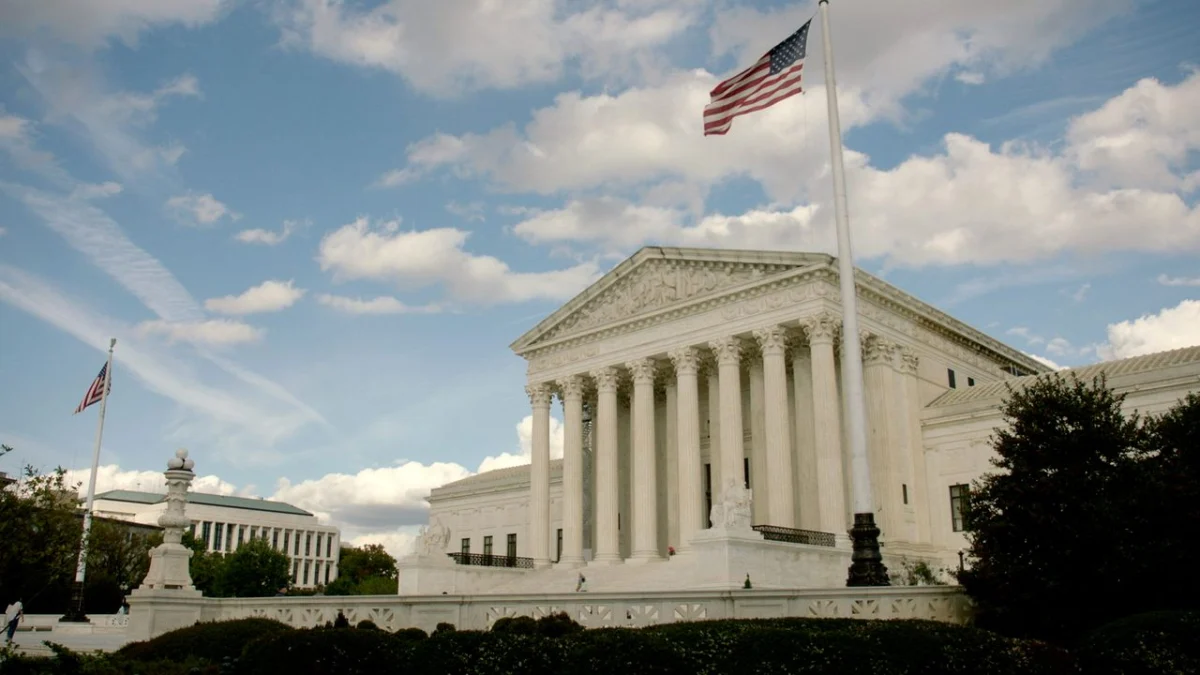
The transformation of the American corporate recruiting landscape is the downstream effect of a shifting legal and political tide that began in the halls of the Supreme Court and gained momentum through executive action. While the 2023 Supreme Court decision to gut race-conscious admissions in higher education was technically limited to academia, the psychological and practical ripple effects have permeated the private sector, creating a new, more restrictive reality for diversity, equity, and inclusion (DEI) initiatives.
A Chronology of the Shift
The current climate is the result of a multi-year convergence of legal challenges and political mandates. The timeline of this retreat is critical to understanding the present environment:
- June 2020: In the wake of the murder of George Floyd, a vast majority of Fortune 500 companies pledged to address systemic racism, resulting in an unprecedented surge in corporate DEI commitments, hiring goals, and university recruiting partnerships.
- June 2023: The U.S. Supreme Court issues its ruling in Students for Fair Admissions v. Harvard/UNC, effectively ending race-conscious admissions. While the ruling did not legally apply to private employers, it emboldened conservative legal activists to challenge workplace DEI programs.
- January 2025: President Donald Trump, in one of the initial acts of his second term, issues an executive order targeting DEI programs across federal agencies and government contractors, framing them as "illegal discrimination."
- 2025–2026: A wave of corporate retrenchment follows. Major firms, fearing litigation and political scrutiny, begin stripping diversity language from their websites, dismantling mentorship programs, and abandoning targeted recruitment at non-elite universities.
Data-Driven Decline in Opportunity
The impact of this retreat is quantifiable. Research from the Burning Glass Institute, which tracked the career trajectories of 300,000 college graduates between 2023 and 2025, reveals a narrowing of the professional funnel. Over that period, the proportion of hires coming from a small, exclusive group of elite colleges increased by nearly one-third. This shift favors students from institutions with shrinking diversity profiles, effectively institutionalizing a "prestige bias" that disproportionately excludes first-generation and minority applicants who are not already well-connected to elite social networks.
Further evidence comes from Veris Insights, a recruitment research firm. Their data indicates that in 2022, approximately 60% of major employers explicitly prioritized diversity as a key metric for determining where to deploy their campus recruiting teams. By 2025, that figure had plummeted to 31%. Simultaneously, the proportion of major companies focusing their recruiting efforts exclusively on a narrow, pre-selected list of "target schools" rose from 17% to 26%.

The internship market, a critical gateway for early-career success, has seen a similar contraction. Data from the National Association of Colleges and Employers (NACE) shows that the percentage of white interns in corporate programs rose from roughly 50-53% in the 2021-2024 period to 59% during the 2024-2025 cycle. While labor market fluctuations and the rise of artificial intelligence play a role in hiring trends, experts suggest these figures reflect a broader retreat from proactive inclusion.
The Fear Factor: Why Employers Are Pulling Back
The primary driver behind this sudden reversal is not necessarily a change in corporate values, but a pervasive fear of legal and political exposure. A Columbia Business School study found that nearly half of HR professionals surveyed mistakenly believed the Supreme Court’s college admissions ruling applied directly to their hiring policies. Even among those who understood the distinction, the threat of lawsuits from conservative legal groups and the prospect of being targeted by the federal government under the Trump administration’s recent executive order have forced a defensive posture.
"Companies are seeing the writing on the wall," says Matt Sigelman, president of the Burning Glass Institute. "They are looking at the political climate and the guidance they’re getting—or perceiving—from the Department of Labor, and in many cases, they are opting to play it safe by retreating from any stated diversity goals."
This retrenchment is visible on college campuses, where career centers are undergoing a quiet rebranding. At San Jose State University, for example, staff were forced to rename a "diversity job fair" to "October Fest" following the shift in federal guidance. Similar changes are occurring at private institutions across the country, where career counselors report that federal agencies and private firms alike have signaled they can no longer participate in programs that explicitly target diversity.
Perspectives on the Impasse
The debate over these programs remains polarized. Critics of DEI, such as Frederick Hess, director of education policy studies at the American Enterprise Institute, argue that focusing on race as a primary factor in hiring is a misguided proxy for diversity. "Businesses can’t pretend that selecting employees based on skin color is a good proxy for all of the rich differences that they say they want to attend to," Hess stated. He advocates for a definition of diversity that includes socioeconomic background, geographic origin, and political perspective.
Conversely, proponents of these initiatives argue that the removal of such programs eliminates the only mechanism that historically countered unconscious bias and institutionalized exclusion. For students like Winnie Tuban, a first-generation graduate from San Jose State, the removal of diversity initiatives sends a chilling message. "When you hear that they’re ‘going to war on DEI,’ it makes it feel like you’re not welcome in that space," Tuban noted.

Long-Term Implications for the American Workforce
The full scale of these policy shifts will not be fully realized until the cohort of students admitted under the post-affirmative action regime enters the workforce in 2028. However, the current trends suggest a significant hardening of social mobility barriers. By limiting recruiting to a smaller subset of elite institutions, corporations are inadvertently narrowing their talent pools and potentially exacerbating the lack of representation in leadership roles for years to come.
Sociology professor Natasha Warikoo of Tufts University views the current trend as a direct, and often reactionary, rejection of the racial justice movement that followed the 2020 social unrest. "Previously, a focus on racial justice felt like a moral imperative," Warikoo said. "What we are seeing now is a systematic dismantling of that momentum."
While some observers suggest that the current political landscape could face pushback from Congress—particularly if legislative bodies choose to challenge the administration’s anti-DEI efforts—the immediate reality is one of silence. Major corporations, once vocal about their commitment to equity, have largely gone quiet, declining to comment on their current recruiting strategies.
For educators like Jamila Chambers, the task is now to prepare students for a landscape that is less hospitable than the one they were promised. She keeps a portrait of Ruby Bridges in her office—a reminder of the history of integration and the cyclical nature of progress. "It is a challenge," Chambers said of the current environment. "But we’re up for it." As the academic and corporate sectors continue to grapple with the legacy of these legal and political decisions, the ultimate consequence will be a reshaped workforce where the definition of "merit" is increasingly tied to the exclusivity of one’s alma mater rather than the breadth of one’s experience.

