
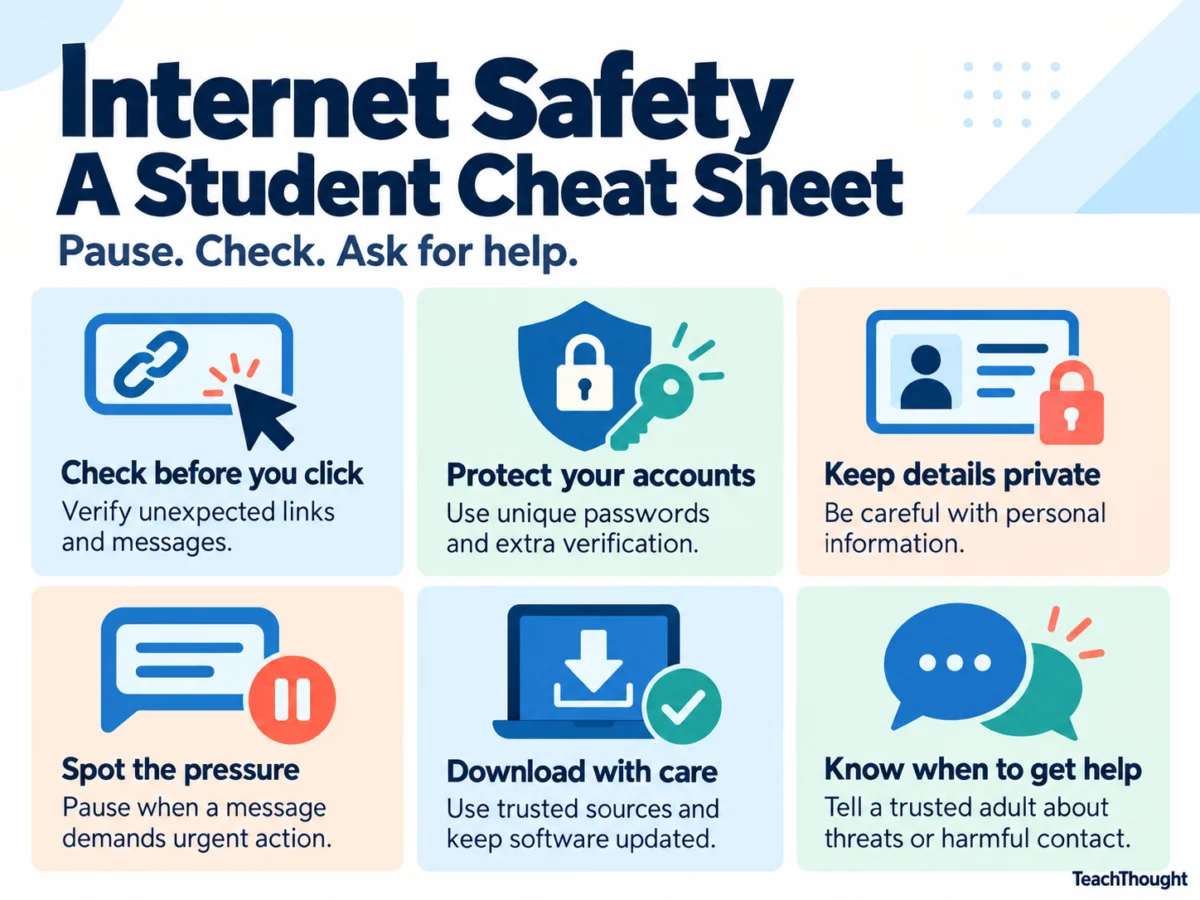
The modern educational landscape demands a fundamental shift in how schools approach student internet safety. No longer confined to basic warnings about strangers in chat rooms, digital safety education must now equip students with the critical-thinking skills required to navigate sophisticated phishing campaigns, AI-generated deepfakes, complex peer harassment, and invasive data-harvesting tools. As classrooms increasingly rely on cloud-based applications, collaborative group chats, and immersive digital learning environments, educators face the urgent challenge of teaching students not just how to use technology, but how to evaluate the hidden risks embedded within everyday digital interactions.
Background Context and the Evolution of Digital Threats
Over the past decade, the integration of technology into daily learning has accelerated dramatically. While this digital transformation has unlocked unprecedented educational resources, it has concurrently exposed students to a rapidly mutating array of cyber threats. Cybersecurity authorities, including the Cybersecurity and Infrastructure Security Agency (CISA), have consistently emphasized that today’s digital hazards rarely resemble the simplistic internet dangers of the early 2000s.
Instead, modern threats are engineered to exploit human psychology through deceptive social engineering, algorithmic manipulation, and trusted communication channels. Accounts belonging to peers, educators, and school services are frequently compromised, allowing bad actors to distribute malicious links and execute targeted phishing schemes. Furthermore, the advent of generative artificial intelligence has lowered the technical barrier for creating convincing synthetic media, including fabricated images and simulated relationships, complicating the digital ecosystem for impressionable youth. In response to these escalating complexities, educational thought leaders and child safety organizations are advocating for actionable, decision-based frameworks rather than abstract behavioral rules.
Core Pillars of Modern Internet Safety Frameworks
To effectively mitigate these risks, contemporary safety guidelines focus on eight distinct operational pillars, shifting the educational paradigm from passive prohibition to active risk management.
Checking the Request, Not the Sender
A prevailing vulnerability among students is the assumption that familiarity equals safety. Cybercriminals routinely spoof familiar names, profile pictures, and institutional logos to deceive targets. Security experts stress that correct spelling and recognizable branding do not validate the legitimacy of a message.
When a communication demands urgent action—such as entering credentials, submitting a verification code, or downloading an unverified file—students must be trained to pause and independently verify the request. Standard protocol dictates navigating directly to the official service via a saved bookmark or established application rather than interacting with the links or contact information provided in the suspicious message.
Account Protection and Hygiene
Robust digital hygiene forms the bedrock of individual cybersecurity. Educational programs now advocate for the routine use of long, unique passwords managed through secure password managers, alongside the implementation of multifactor authentication (MFA) wherever permitted by school policies.
Crucially, cybersecurity experts warn against treating password-sharing as a metric of peer trust. Students must understand the protocols for account recovery that do not involve disclosing credentials to classmates, thereby preventing unauthorized access and subsequent account compromise.
Contextualizing Personal Information
Traditional admonitions to "never share anything online" often fail because they contradict the requirements of legitimate educational platforms. A more pragmatic approach evaluates data disclosure based on necessity: Does the service or individual genuinely require this specific piece of information to fulfill its intended function?
Educators are encouraged to scrutinize new digital tools prior to classroom introduction, assessing whether tasks can be accomplished with minimal data exposure. Students similarly practice identifying overreaching data requests, such as games demanding residential addresses or public posts revealing routine schedules.
Recognizing Manipulation and Coercion
Unsafe digital contact frequently begins not with overt threats, but with manufactured rapport, compliments, in-game rewards, or offers of assistance. Recognizing behavioral shifts in online interactions is paramount.
For older demographics, specialized curricula address severe violations such as sextortion—the coercion of individuals through threats to distribute intimate images. Organizations like the National Center for Missing & Exploited Children (NCMEC) emphasize that victims must seek immediate institutional and parental help, reassuring students that prior voluntary engagement does not forfeit their right to support and protection.
Responding to Harassment Without Escalation
Digital harassment often compounds when private conflicts spill into public group chats. Bystander participation—such as forwarding humiliating screenshots, joining pile-ons, or sharing geographical locations—magnifies the psychological harm inflicted on victims.
Effective safety protocols instruct students to halt the redistribution of harmful material, utilize built-in platform reporting mechanisms, and involve trusted adults. When documenting incidents for administrative review, students are advised to preserve usernames, dates, and message links safely, while strictly avoiding the downloading or forwarding of illicit imagery involving minors.
Navigating Downloads and Permissions
Free software modifications, browser extensions, study aids, and mandatory updates frequently request excessive permissions to access device hardware, including microphones, cameras, files, and location data. Educational institutions stress that students must adhere to approved installation pathways, maintain software updates, and seek technical assistance when confronted with unexpected installation prompts or requests to bypass device security protocols.
Addressing Artificial Intelligence and Synthetic Media
The integration of artificial intelligence into daily workflows introduces novel safety considerations. Educators must explicitly address the creation and dissemination of fabricated or altered images of peers, noting that such actions inflict genuine psychological harm. Target students require immediate institutional support without the undue burden of proving the malicious content’s fabrication. Guidance from regulatory bodies, such as the Australian eSafety Commissioner, underscores the importance of addressing privacy risks and the psychological implications associated with AI companions and simulated relationships.
Establishing Post-Incident Response Protocols
Preventative education remains incomplete without a clear, actionable response plan for when security breaches occur. Standard operating procedures dictate specific immediate actions for various scenarios:
- Compromised Credentials: Prompt notification of trusted adults or IT staff, coupled with the execution of official account recovery procedures.
- Suspicious Downloads: Immediate cessation of file usage and consultation with technical support, avoiding secondary "fix" installations.
- Coercive Messages: Immediate reporting to adult authorities without complying with demands for financial compensation or additional media.
- Disturbing Content: Immediate disengagement from the platform and notification of support personnel, eliminating the necessity for prolonged exposure to verify harm.
Official Responses and Institutional Implications
Educational administrators, policymakers, and child advocacy groups increasingly view digital citizenship not merely as an extracurricular elective, but as a core competency equivalent to traditional literacy. According to statements from digital safety advocates, schools bear a shared responsibility with families to transition internet safety instruction from theoretical compliance to practical scenario-based rehearsal.
By utilizing short, structured discussions centered on fictionalized scenarios—such as evaluating an ambiguous permission request or managing a pressured group chat—educators can foster critical decision-making skills without requiring students to disclose personal trauma or sensitive experiences. Furthermore, strict adherence to institutional reporting pathways, including the utilization of reporting entities like NCMEC’s CyberTipline for suspected child exploitation, ensures that schools remain compliant with legal mandates while safeguarding student welfare.
Broader Impact and Future Outlook
As digital ecosystems continue to evolve with advancements in artificial intelligence and decentralized communication networks, the framework for student internet safety must remain dynamic. The overarching implication for educational institutions is clear: proactive, continuous, and context-aware instruction is essential to mitigating online risks. By prioritizing critical thinking, robust account hygiene, and transparent reporting channels, schools can foster resilient digital citizens capable of navigating an increasingly complex technological horizon safely and responsibly.

