
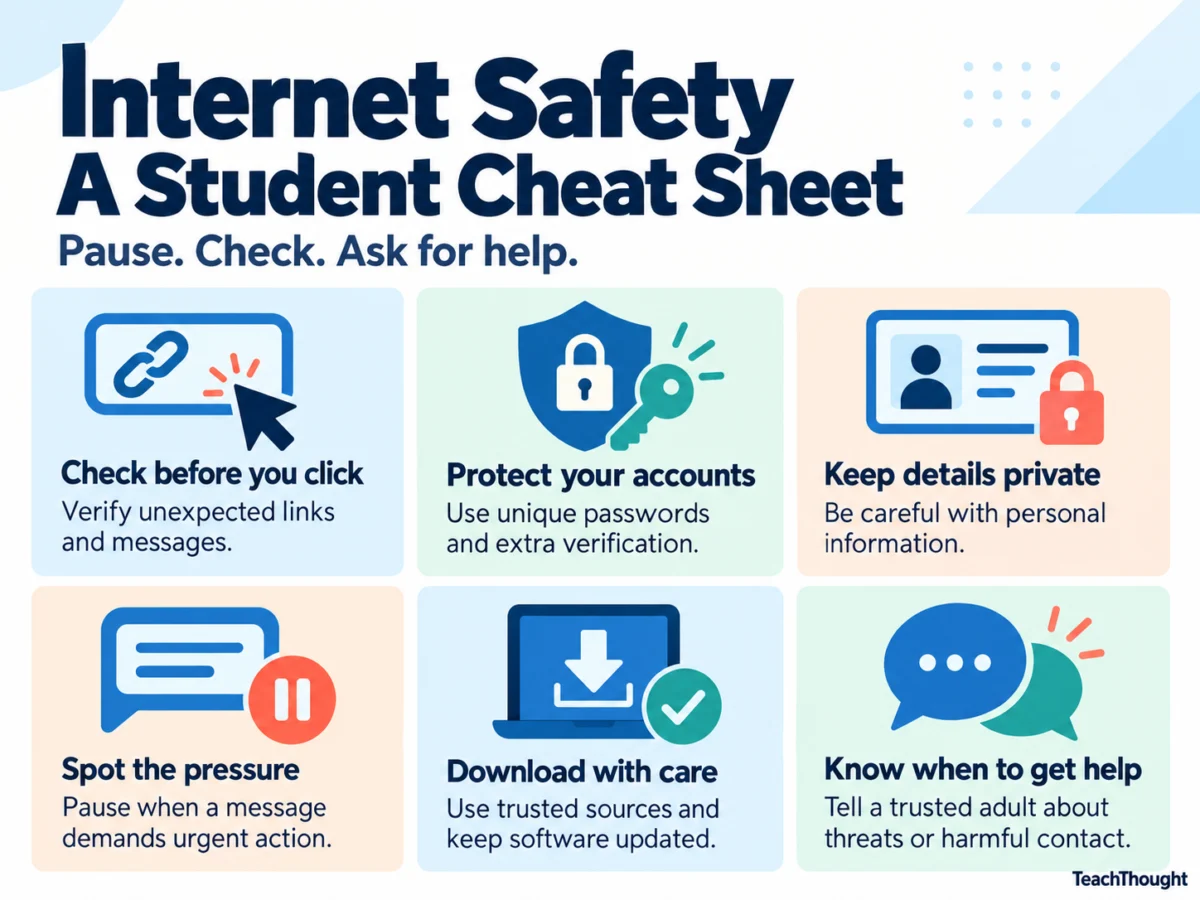
The modern educational ecosystem is inextricably linked to the digital sphere, transforming how students learn, socialize, and interact with the world around them. Internet safety is no longer a peripheral topic confined to occasional computer lab seminars; it is a fundamental life skill defined by the ability to recognize risky digital situations, make safer choices, and secure immediate assistance when anomalies arise. For contemporary students, these split-second decisions occur across a vast array of interfaces, including school-managed learning portals, multiplayer gaming environments, dynamic group chats, search engine results, public social media platforms, and emerging generative artificial intelligence tools.
Historically, digital literacy campaigns focused primarily on basic hardware operation and elementary typing skills. However, the proliferation of sophisticated online threats has necessitated a dramatic shift toward behavioral psychology, critical thinking, and proactive risk management. Today, simply knowing how to navigate an application does not equate to understanding when to trust a digital peer, an incoming message, or an automated request. As cyber threats evolve in complexity, educational institutions and policymakers worldwide are standardizing frameworks that treat digital safety as a core component of comprehensive digital citizenship—a broader practice that encompasses ethical online participation, respectful communication, and meaningful community contribution.
Main Facts and the Evolving Threat Landscape
Recent data from cybersecurity watchdogs and child advocacy organizations indicate a sharp rise in sophisticated online engineering tactics targeting minors and young adults. Phishing campaigns, credential harvesting, social engineering, and algorithmic manipulation have become increasingly difficult to distinguish from legitimate daily interactions. According to reports from the Cybersecurity and Infrastructure Security Agency (CISA), threat actors frequently exploit institutional domains, familiar user interfaces, and trusted communication channels to bypass the natural skepticism of young internet users.
The core challenge facing educators and parents is that deceptive messages no longer arrive exclusively from overt strangers. Instead, breaches frequently occur via compromised accounts belonging to classmates, teachers, or trusted gaming acquaintances. A message featuring flawless grammar, a recognized school logo, and an urgent deadline can easily trick a student into surrendering sensitive credentials or verification codes. Consequently, modern internet safety curricula emphasize that students must analyze the nature of the request rather than relying solely on the apparent identity of the sender.
Furthermore, the introduction of generative artificial intelligence tools and deepfake technology has complicated the verification process. Students now face scenarios involving fabricated imagery, simulated peer relationships, and synthetic voice cloning. These technological advancements underscore the urgency for structured, proactive educational interventions that move beyond abstract warnings and focus on concrete, actionable decision-making processes.
Chronology of Digital Safety Evolution in Education
To understand the current state of student digital safety, it is necessary to examine how educational policies and technological vulnerabilities have co-evolved over the past two decades.
Early 2000s: The advent of Web 2.0 and widespread classroom broadband prompted the introduction of basic internet safety rules. These foundational guidelines focused heavily on broad, absolute commands, such as never sharing personal information and strictly avoiding online strangers. While well-intentioned, these blanket rules frequently failed to prepare students for legitimate, collaborative educational platforms that required the submission of personal data for enrollment and grading.
Early 2010s: The proliferation of smartphones, mobile applications, and social media networks shifted the primary venue of digital risk from desktop computers to personal mobile devices. Schools began adopting Bring Your Own Device (BYOD) policies, exposing institutional networks to decentralized vulnerabilities. During this period, cyberbullying and group chat harassment emerged as prominent concerns, leading to the development of early anti-bullying policies and digital citizenship frameworks.
Late 2010s to 2020: The rapid transition to remote and hybrid learning necessitated by global health events radically accelerated students’ digital dependency. School accounts became the primary vectors for education, socializing, and administrative communication. Concurrently, cybercriminal syndicates began actively targeting K-12 and higher education institutions with ransomware and phishing attacks, increasing the visibility of institutional account security and multifactor authentication.
2023 to Present: The mainstream integration of generative artificial intelligence tools into daily student life marked a paradigm shift. Educators faced unprecedented challenges regarding academic integrity, data privacy, and the psychological impact of AI companions and synthetic media manipulation. Modern guidelines now incorporate explicit protocols for identifying AI-generated deception, managing digital footprints, and handling sophisticated coercion attempts, such as financial and image-based sextortion.
Supporting Data and Empirical Insights
Empirical research underscores the urgent need for comprehensive, institutionalized digital safety training. Data compiled by the National Center for Missing & Exploited Children (NCMEC) highlights a continuous upward trajectory in reports concerning online enticement, cyber-harassment, and the non-consensual sharing of intimate images among minors.
According to analyses by cybersecurity analysts, phishing and credential compromise remain the leading vectors for unauthorized access to educational platforms. In many instances, young users surrender access codes due to social pressure or peer influence rather than malicious intent. Research indicates that adolescents frequently underestimate the value of digital credentials, often treating passwords as casual tokens of friendship rather than critical security keys.
Furthermore, studies examining student engagement with artificial intelligence reveal a critical vulnerability: many young users struggle to differentiate between authentic human interaction and algorithmic simulation. As AI-driven chatbots and virtual companions become more sophisticated, the risk of emotional manipulation and data harvesting grows exponentially, prompting educational authorities to mandate explicit instructional units addressing synthetic media and digital manipulation.
Official Responses and Institutional Guidelines
In response to escalating digital threats, governmental bodies, international agencies, and educational non-profits have established rigorous frameworks to guide schools and families. The Cybersecurity and Infrastructure Security Agency (CISA), through its "Secure Our World" initiative, emphasizes four foundational behavioral pillars: recognizing and reporting phishing attempts, utilizing strong and unique passwords, implementing multifactor authentication (MFA) across all accounts, and routinely updating software to patch known vulnerabilities.
Similarly, child safety organizations, including NCMEC and the Australian eSafety Commissioner, have released specialized resources addressing modern risks such as AI-driven companionship and sextortion. These guidelines stress that educational institutions must establish clear, non-punitive reporting mechanisms. When students encounter coercive behavior, explicit content, or account compromise, the primary institutional response must focus on immediate support, containment, and professional intervention rather than punitive measures that might discourage reporting.
Educators are increasingly urged to implement practical, scenario-based training rather than relying on rote memorization of rules. By walking students through simulated phishing messages, permission requests, and group-chat conflicts, schools can cultivate critical thinking skills that translate directly into real-world resilience.
Broader Impact and Societal Implications
The implications of robust digital safety education extend far beyond the immediate protection of school-issued accounts and devices. In a broader societal context, the habits formed during adolescence dictate the cyber hygiene of the future adult workforce. As remote work and digital integration become permanent fixtures of the global economy, society relies on individuals who possess acute situational awareness, skepticism toward unverified digital requests, and a strong commitment to digital ethics.
Moreover, the psychological toll of unchecked online harassment and algorithmic manipulation underscores the intersection of digital safety and public health. Cyberbullying, public shaming, and digital coercion can lead to severe anxiety, depression, and long-term academic disengagement. By fostering environments where students feel empowered to report digital distress without fear of judgment or loss of privileges, educational institutions play a vital role in safeguarding both the digital infrastructure and the psychological well-being of the next generation.
Ultimately, navigating the digital landscape requires a collective commitment from educators, parents, policymakers, and technology developers. By replacing generalized prohibitions with specific, actionable decision-making frameworks, society can equip students not only to survive the complexities of the modern internet, but to thrive as responsible, secure, and digitally literate global citizens.

