
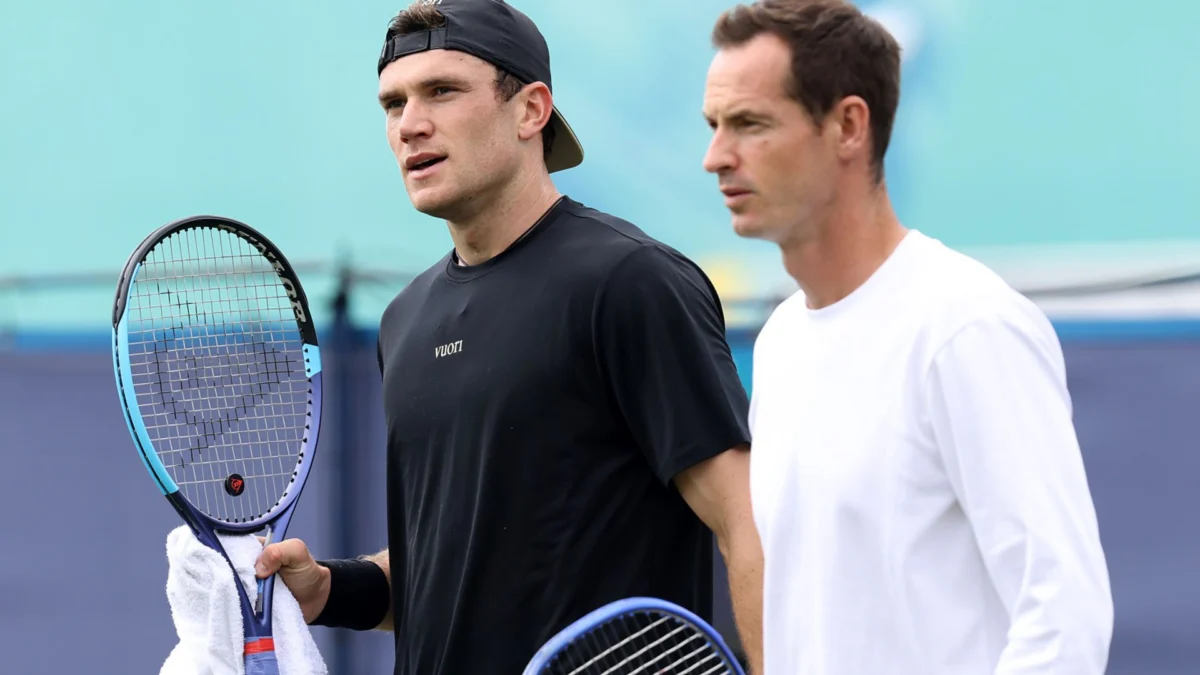
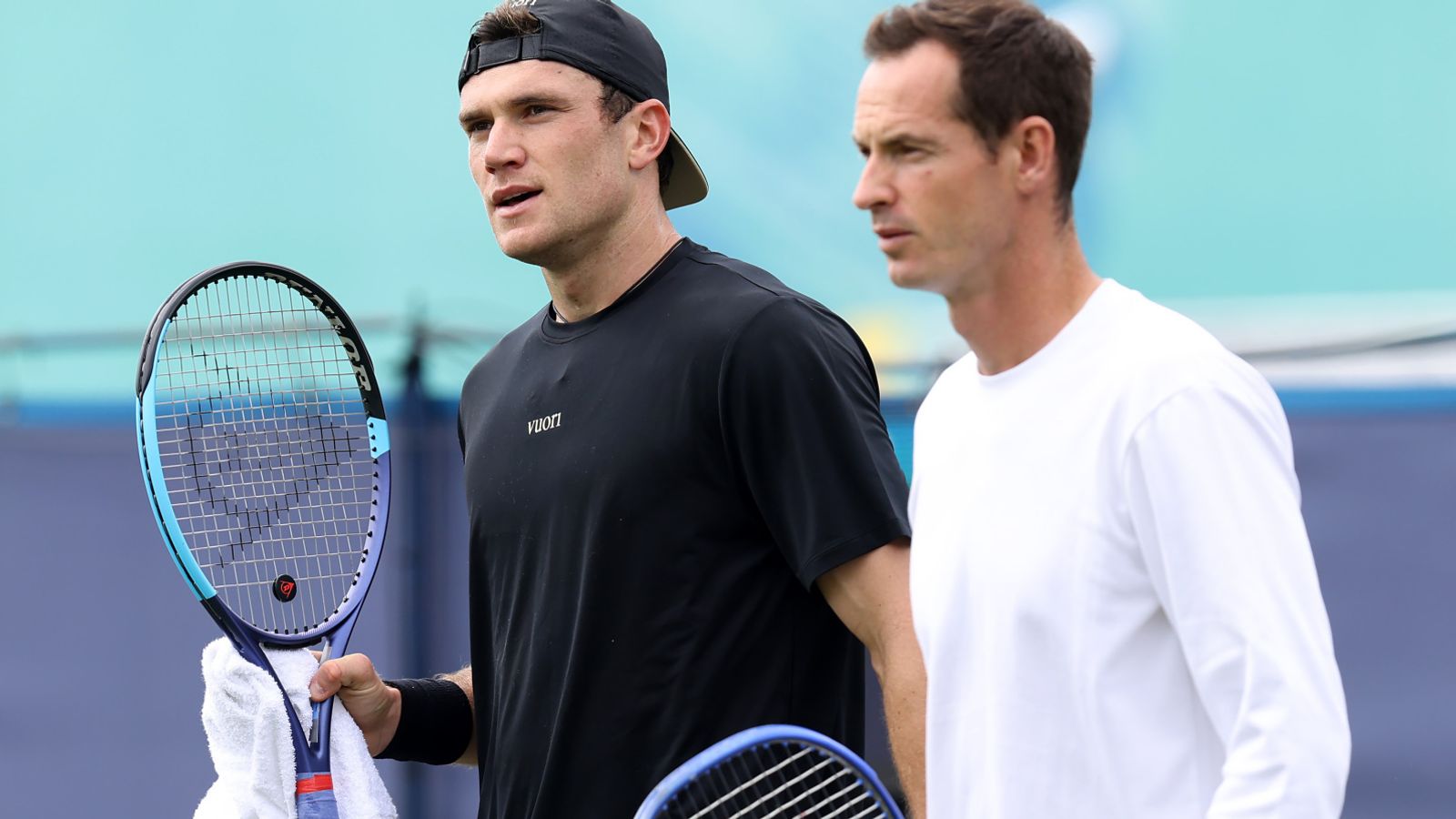
The landscape of British tennis witnessed a significant development this week as Jack Draper and Andy Murray were observed back on the practice courts together in Washington, D.C. The sighting confirms that the unique coaching arrangement between the two, which began earlier this spring, remains intact as Draper prepares for a crucial return to the ATP Tour at the Mubadala DC Open. Following a frustrating period on the sidelines that saw Draper miss the entirety of the grass-court season, including Wimbledon, the 24-year-old left-hander is now looking to salvage his season and climb back up the world rankings under the watchful eye of the three-time Grand Slam champion.
The collaboration first came to light in May, shortly after Draper announced his split from long-term coach Jamie Delgado—a figure who, incidentally, spent many years in Murray’s own player box. The move was seen as a bold step for Draper, who sought a fresh perspective to navigate the transition from a rising prospect to a top-tier contender. However, the partnership was established with clear boundaries. Murray, who remains an active competitor on the tour while balancing the demands of a young family, was candid about the limitations of his role. In a series of interviews, the former world number one emphasized that his involvement would be as a consultant and mentor rather than a full-time traveling coach.
The Terms of a Modern Mentorship
The specifics of the Murray-Draper agreement reflect the shifting priorities of Andy Murray’s late-career stage. Speaking to media outlets earlier this summer, Murray explained that he had imposed strict conditions on the coaching arrangement to ensure it did not interfere with his personal life. The Scottish veteran noted that he wanted to maintain his ability to perform daily parental duties, such as picking up his children from school, and was not prepared to commit to a grueling year-round travel schedule.
"I was very clear with Jack on what I could and couldn’t do," Murray stated. "I’m happy to help, but my family comes first, and I also have my own career to manage." Initially, the agreement was set to run through the grass-court swing, with no guarantees of a continuation beyond Wimbledon. However, Draper’s subsequent injury—a debilitating bone bruise in his left arm—forced a recalibration of their plans. The fact that Murray has traveled to Washington to assist Draper during his comeback suggests that the partnership has evolved into a more flexible, long-term support system.
During the training sessions at the William HG FitzGerald Tennis Center, observers noted a focused dynamic between the two. Murray was frequently seen positioned at the back of the court, offering tactical insights and technical adjustments, while Draper worked through high-intensity drills. The emphasis appeared to be on testing the durability of Draper’s left arm, which has been the primary source of his physical woes over the past twelve months.
A Chronology of Injury Setbacks
To understand the urgency of Draper’s current return, one must look at the turbulent trajectory of his last year on tour. Once ranked as high as world number 38, Draper’s ascent was halted by a series of physical breakdowns that have raised questions about his long-term durability on the demanding ATP circuit.
The sequence of setbacks began in earnest during the 2022 US Open. After a promising start, Draper was forced to withdraw in the second round against Karen Khachanov due to an injury to his left arm. This injury proved to be the precursor to a season defined by absence.
- January 2023: Draper was forced to skip the Australian Open, the season’s first Major, as he struggled to find match fitness following a stop-start pre-season.
- May 2023: Despite showing flashes of brilliance in early-season hard-court events, the transition to clay proved difficult. He ultimately withdrew from the French Open, citing persistent physical discomfort.
- June 2023: The most significant blow came just weeks before the start of the grass-court season. Draper was diagnosed with bone bruising in his left arm—a condition that requires significant rest to avoid a full stress fracture. This diagnosis forced his withdrawal from the Queen’s Club Championships and Wimbledon, depriving him of the chance to compete in front of a home crowd.
This sequence of events has meant that Draper has competed in only six ATP Tour tournaments this season. For a player who relies on rhythm and physical presence, the lack of match play has been devastating for his professional standing.
The Ranking Fallout and the Road to the US Open
The mathematical consequences of Draper’s absence are stark. Having been unable to defend the points he earned during his breakout 2022 season, Draper has seen his ranking plummet to world number 147. This decline has significant practical implications for his participation in the upcoming North American hard-court swing and the year’s final Grand Slam.
As the entry lists for the US Open are finalized, Draper’s current ranking falls well outside the threshold for direct entry into the main draw. Unless he receives a wildcard from the United States Tennis Association (USTA)—which is unlikely for a non-American player not involved in a reciprocal agreement—Draper will be forced to compete in the qualifying tournament. This would require him to win three consecutive matches just to reach the first round, a physically taxing prospect for a player only recently returned from injury.
The Mubadala DC Open, therefore, serves as a vital opportunity. As an ATP 500 event, it offers a substantial number of ranking points. A deep run in Washington could potentially propel Draper back toward the top 100, improving his chances for direct entry into future tournaments and providing a much-needed confidence boost.
Technical Analysis: The Murray Influence
The pairing of Murray and Draper is viewed by many analysts as a "tactical masterclass" in the making. Draper possesses raw, left-handed power and a formidable serve, but he has occasionally struggled with shot selection and point construction during high-pressure moments. Murray, widely regarded as one of the greatest tactical minds in the history of the sport, is uniquely positioned to refine these aspects of Draper’s game.
In Washington, the focus of their sessions has reportedly been on "efficient aggression." Given Draper’s history of injury, Murray appears to be encouraging a style of play that shortens points and reduces the physical load on his body. By improving his court positioning and anticipation—two hallmarks of Murray’s own game—Draper can theoretically maintain his effectiveness while minimizing the risk of further physical breakdown.
Furthermore, Murray’s presence provides a psychological anchor. Having undergone multiple hip surgeries and navigated his own career-threatening injuries, Murray understands the mental toll of rehabilitation. His mentorship offers Draper a blueprint for resilience, a quality that will be essential as he attempts to rebuild his career from outside the top 100.
Reactions from the British Tennis Community
The reunion of Murray and Draper has been met with widespread approval within the British tennis hierarchy. With the "Golden Era" of British tennis—led by Murray and Johanna Konta—fading into the past, the LTA (Lawn Tennis Association) is eager to see the next generation take the mantle.
Draper has long been hailed as the natural successor to Murray, a sentiment the young player himself has embraced. Speaking to Sky Sports, Draper expressed his gratitude for the arrangement. "He has always supported me," Draper said. "I’ve always had a great relationship with Andy. We spent some time together towards the back end of his career, and he’s been a great support to me ever since he stopped as well—or rather, as he transitioned into this phase. It felt like a really good time to get Andy in my team because he’s one of my biggest inspirations."
While Murray is still very much an active player, his willingness to step into a coaching capacity suggests a burgeoning interest in the strategic side of the sport post-retirement. For Draper, having a mentor who is still actively competing provides a contemporary edge that traditional coaches might lack.
Broader Implications for the ATP Tour
The return of Jack Draper is a significant storyline for the ATP Tour at large. The "Next Gen" of tennis is currently dominated by names like Carlos Alcaraz and Jannik Sinner, but a healthy Draper is widely considered to be in that same bracket of talent. His left-handed game provides a unique challenge to the top seeds, and his return adds depth to a tour that is currently undergoing a generational shift.
However, the primary concern remains his physical viability. The ATP Tour’s schedule is notoriously grueling, and the hard-court season is particularly taxing on the joints and tendons. The success of the Murray-Draper partnership will not just be measured in match wins, but in Draper’s ability to complete a full season without a trip to the treatment room.
As the Mubadala DC Open gets underway, all eyes will be on the practice courts of the William HG FitzGerald Tennis Center. The sight of Murray and Draper working in tandem is a potent image of British tennis’s past and future colliding. For Draper, the goal is clear: utilize the wisdom of a legend to reclaim his place among the world’s elite. For Murray, it is an opportunity to give back to the sport that defined his life, while still holding onto the family values that now define his present.
The upcoming weeks in Washington, Toronto, and Cincinnati will provide the ultimate litmus test for this partnership. If Draper can stay healthy and find his form, the "Murray Factor" could be the catalyst that transforms a season of disappointment into a comeback story for the ages. With the US Open looming on August 30, the clock is ticking for the British number six to make his move.

