

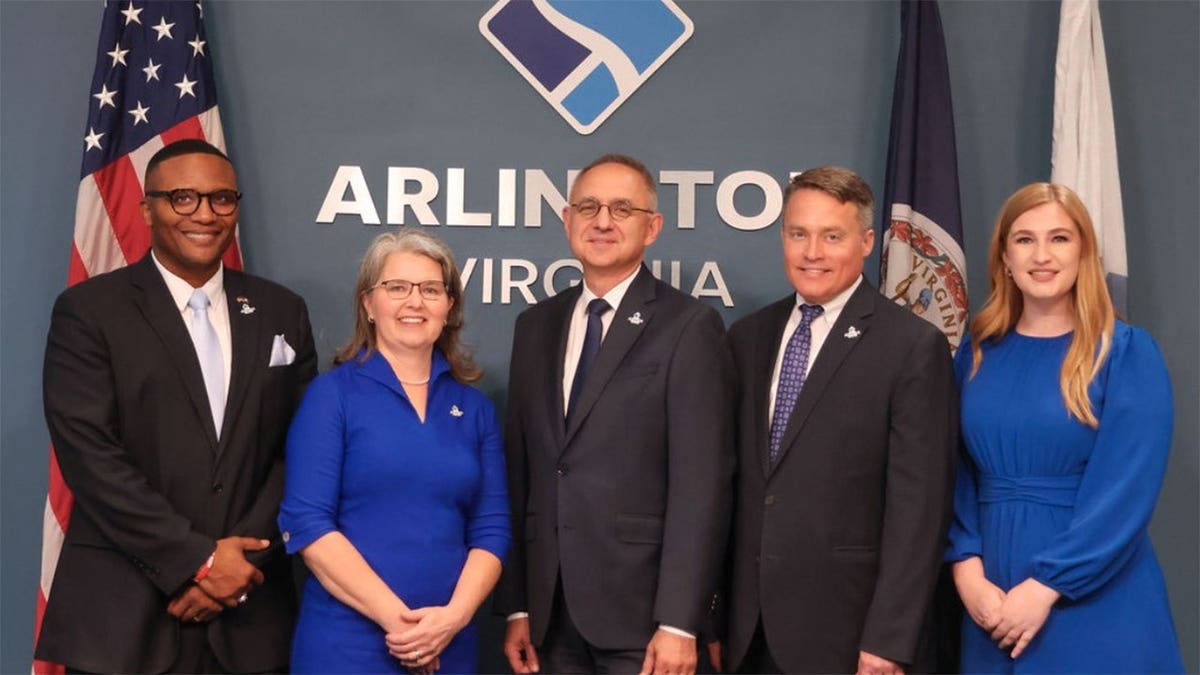
A significant political and fiscal controversy has erupted in Northern Virginia following the decision by the Arlington County Board to approve a $50,000 appropriation for a social safety net program designed to assist the families of undocumented immigrants who have been detained or deported by federal authorities. The initiative, which passed in a 4-0 vote on September 2, has sparked a fierce debate over the limits of local government spending, the role of municipal policy in national immigration enforcement, and the ethical responsibilities of jurisdictions that identify as sanctuary or immigrant-friendly communities.
The program, which will channel funds through the local nonprofit Arlington Thrive, provides direct grants of up to $2,000 per family to cover essential living expenses, including rent, utilities, and food. Proponents of the measure argue that the program is a necessary humanitarian intervention to prevent homelessness and instability among children and vulnerable residents who are often left without a primary wage earner due to federal enforcement actions. Critics, however, led by local Republican leadership, contend that the policy constitutes an inappropriate use of taxpayer money, characterizing the initiative as a political statement that undermines federal law and places an undue burden on local citizens.
The Legislative Context and Implementation
The decision to allocate the $50,000 was finalized during a special session of the Arlington County Board. While the program’s scale is relatively modest in the context of the county’s multi-million dollar annual budget, its symbolic weight is substantial. By partnering with Arlington Thrive—a long-standing organization that provides emergency financial assistance—the county has created a mechanism to distribute funds that bypasses some of the more rigid administrative requirements associated with direct government aid.
Matthew Hurtt, chairman of the Arlington County Republican Committee, has been the most vocal critic of the plan. In a series of public statements, Hurtt labeled the initiative a "slush fund" and argued that it serves as a deliberate counter-policy to the immigration enforcement priorities established by the current federal administration. According to Hurtt, the lack of traditional government oversight protocols—due to the use of a private nonprofit as the intermediary—raises concerns regarding financial transparency and accountability.

"This flies in the face of federal administration policy, and it is a detriment to taxpayers of Arlington, tens of thousands of whom are conservative and Republican and oppose this policy," Hurtt said. He further emphasized that the decision forces taxpayers to fund a program that effectively mitigates the impact of federal law enforcement, a move he believes is fundamentally misaligned with the role of local government.
Broader Immigration Enforcement Trends in the DC Region
The timing of this program is particularly sensitive given the heightened intensity of federal immigration enforcement in the Washington, D.C., metropolitan area. In recent months, U.S. Immigration and Customs Enforcement (ICE) has conducted a series of large-scale operations across Virginia and the broader National Capital Region. Reports indicate that over 1,300 individuals were arrested in a two-week period during a recent sweep, a figure that highlights the aggressive nature of current federal efforts to identify and remove undocumented individuals.
These enforcement actions have created a ripple effect in local communities. When a primary breadwinner is detained, the immediate economic fallout often falls upon the family members, many of whom may be legal residents or U.S. citizens. Advocates for the program, including Board Chair Matt de Ferranti, argue that the county has a moral obligation to support these families to maintain social stability.
"We stand with our immigrant families, and we will not stop doing so," de Ferranti stated during the September meeting. "We are valuing the families of those that have been displaced and removed."
A History of Local-Federal Friction
The current conflict is the latest chapter in a long-standing struggle between Northern Virginia jurisdictions and federal immigration authorities. Since the early years of the previous administration, Arlington and Fairfax counties have frequently sought to distance themselves from federal enforcement directives.

In January, for instance, county leadership explicitly urged residents to report the presence of ICE agents to local authorities. This policy of non-cooperation is a hallmark of the "sanctuary" philosophy adopted by many local governments in the region, which prioritizes the integration and safety of immigrant populations over assistance to federal deportation efforts.
Critics argue that this strategy creates a "pull factor" and complicates the work of federal law enforcement. They point to the Department of Justice’s recent legal actions against neighboring jurisdictions in Maryland, where federal authorities alleged that local policies amounted to an "active and deliberate effort" to obstruct the legal process of deportation. The Arlington GOP leadership views the current grant program as an extension of this obstructionist strategy, suggesting that the county is prioritizing the agendas of activists over the fiscal and legal stability of the region.
Economic and Political Implications
The debate also centers on the prioritization of public resources. Hurtt has pointedly contrasted the $50,000 allocation for this program with the hundreds of millions of dollars in bond measures that appear on the ballot every election cycle. These bonds, which require voter approval, are intended for essential services such as school infrastructure, road improvements, and public safety.
"Every single election cycle, the Arlington County board puts hundreds of millions of dollars on the ballot in the form of bond issues for basic services," Hurtt noted. "What that tells voters is that they aren’t prioritizing those projects—projects that they bond out and borrow dollar after dollar—but they’re prioritizing these far-left projects like a slush fund for illegal aliens."
This argument resonates with a segment of the electorate that feels local government has lost its focus on core municipal duties. By funding a program that serves a specific, politically polarizing demographic, critics argue that the County Board is exacerbating existing social divisions. Conversely, supporters view the investment as an essential component of a compassionate social safety net, arguing that the cost is negligible compared to the long-term societal costs of family separation and poverty.
Analysis of the Policy Impact
From a policy standpoint, the Arlington program represents a growing trend of municipal-level activism. As the federal government has historically struggled to reach a consensus on immigration reform, local governments have increasingly taken the initiative to fill the vacuum with their own localized approaches.
However, this decentralization of immigration policy carries inherent risks. When municipalities establish programs that explicitly counteract the goals of federal agencies, they create a fractured legal and social landscape. The lack of standardized protocols means that the support available to a family in one county may be non-existent in another, leading to disparities that can influence migration patterns and community demographics.
Furthermore, the reliance on nonprofit partners, while administratively efficient, does complicate the oversight process. While Arlington Thrive is a reputable organization, the delegation of public funds for purposes that are inherently political in nature poses a challenge to traditional audit frameworks. Public funds are generally subject to rigorous transparency requirements, but when those funds are transferred to a private entity, the degree of visibility into how those funds are distributed—and to whom—is often diminished.
Future Outlook and Legal Challenges
As the situation develops, the Arlington County Board faces the prospect of increased scrutiny. The Republican opposition is unlikely to drop the issue, and potential legal challenges regarding the misuse of taxpayer funds or the constitutionality of interfering with federal immigration enforcement remain possible.
The broader implications for Northern Virginia are significant. As the population grows and the region becomes increasingly diverse, the tension between local policies and national immigration enforcement will likely remain a focal point of local politics. The outcome of the current debate in Arlington may serve as a bellwether for how other jurisdictions in the region navigate similar pressures in the coming years.

For now, the $50,000 program stands as a symbol of the deep ideological divide regarding the role of local government in the immigration debate. While the County Board maintains that it is fulfilling a humanitarian mandate, opponents continue to view the expenditure as a misuse of public authority and an affront to the rule of law. As the debate continues, the residents of Arlington are left to weigh the costs and the ethics of a policy that reflects the complexities of a nation struggling to reconcile its values with its laws.

