
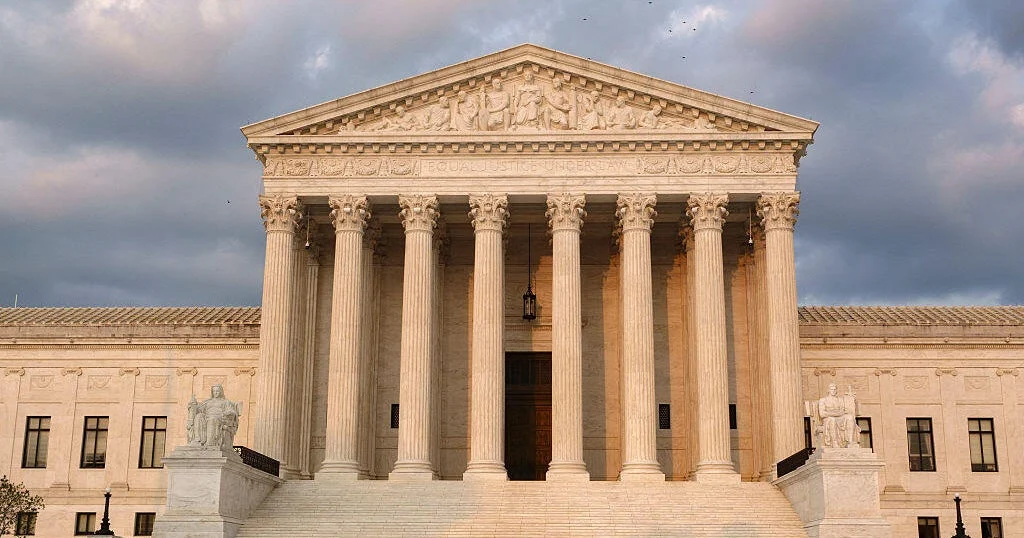
The legal landscape surrounding Missouri’s congressional elections descended into unprecedented uncertainty on Tuesday when a federal judge ordered the state to temporarily utilize a newly redrawn Republican-leaning map, just hours after the United States Supreme Court declined to interfere with a conflicting ruling from the Missouri Supreme Court. The cascading series of judicial decisions has thrust election administration into chaos, leaving state officials, candidates, and millions of voters uncertain about which boundaries will govern the upcoming general election.
The ongoing controversy highlights the high-stakes national battle over redistricting, as both major political parties fight fiercely for control of the slim majority in the U.S. House of Representatives. With the general election fast approaching, the legal friction between federal and state judiciaries has created an administrative puzzle that election authorities are scrambling to solve.
A Rapidly Escalating Legal Timeline
The road to the current jurisdictional standoff has been marked by hurried legislative maneuvers, signature-gathering drives, and rapid-fire court challenges.
Last year, prompted by urging from President Donald Trump, Republican Governor Mike Kehoe called the Missouri General Assembly into a special legislative session. The explicit goal was to redraw the state’s congressional boundaries to secure a more favorable map for the GOP ahead of the midterm elections. The resulting map targeted the 5th Congressional District, long held by Democratic Representative Emanuel Cleaver, by splitting Kansas City and extending the district deep into rural, traditionally conservative regions.
Following the legislative enactment of the map, a citizen-led coalition known as "People not Politicians" mobilized to challenge the changes. They gathered thousands of signatures for a statewide referendum petition to block the implementation of the new congressional districts.
The primary elections in August were successfully conducted using the newly drawn boundaries. However, the legal battle intensified immediately afterward. On the same day as the primary, Republican Secretary of State Denny Hoskins rejected the referendum petition, arguing that the Missouri Constitution does not permit referendums on congressional redistricting legislation.
A lower state court initially supported Hoskins’ decision, but the case quickly escalated to the Missouri Supreme Court. In a decisive ruling last week, the state’s highest court overturned the Secretary of State’s rejection. The state Supreme Court ruled that a constitutional provision permitting a referendum on "any act" of the Legislature explicitly applies to congressional redistricting. Furthermore, the court determined that because valid petition signatures had been submitted in December, the new districts were retroactively frozen and thus never formally took effect as law. The state was ordered to revert to the older congressional map adopted following the 2020 census and place the referendum on the November ballot as Proposition A.
The Federal and State Court Clash
Refusing to accept the state court’s mandate, Republican Missouri Attorney General Catherine Hanaway launched an emergency appeal to the U.S. Supreme Court. Hanaway argued that altering congressional districts between the primary and general elections would violate federal rights, cause severe administrative confusion, and render the August primary elections entirely meaningless.
"A federal-election-administration disaster is unfolding in Missouri," Hanaway warned in her emergency application, citing the potential for unprecedented chaos and questioning whether the state could successfully switch its governing map in time to administer a timely federal election.
On Tuesday afternoon, Justice Brett Kavanaugh rejected Hanaway’s application, leaving the Missouri Supreme Court’s ruling intact and seemingly cementing the return to the older map.
However, the legal narrative shifted dramatically later that same day. In a separate legal challenge initiated in federal court, U.S. District Judge Stephen Clark issued a temporary restraining order. Judge Clark sided with plaintiffs who argued that utilizing the older map at this late stage would inflict "irreparable harm" on voters, asserting that forcing citizens to cast general election ballots for candidates in districts where they had no nomination role violates their constitutional rights. Clark’s order effectively directed Missouri to use the new Republican-leaning map for the time being.
The swift developments continued into Wednesday. The group "People not Politicians" appealed Judge Clark’s temporary restraining order. The U.S. Court of Appeals for the 8th Circuit subsequently rejected a request for a temporary stay of Clark’s ruling, stating in its decision that the appellate court either lacked jurisdiction or that the necessary legal factors for a stay had not been met. Following this denial, the opponents of the new map immediately elevated their appeal back to the U.S. Supreme Court.
Ramifications for Voters and Candidates
The shifting judicial orders have left Missouri election officials in a bind. Secretary of State Denny Hoskins complied with the state supreme court’s order by officially assigning the redistricting referendum as Proposition A on the upcoming November ballot. Yet, the simultaneous federal court order requiring the use of the new map has complicated ballot preparation, voter registration data management, and candidate campaigning.
The district at the center of the storm is the 5th Congressional District. Under the newly drawn map enacted by the Legislature, the district was heavily altered. Portions of Kansas City were reassigned to neighboring Republican-leaning districts, while the remainder of Representative Cleaver’s district was stretched eastward into rural counties.
Representative Cleaver, a veteran Democrat who ran unopposed in the August Democratic primary under the new map’s boundaries, now faces profound uncertainty regarding which geographic constituency he is slated to represent. Meanwhile, State Senator Rick Brattin, who secured the Republican nomination in the reshaped district during the August primary, finds his campaign footing dependent on whether the federal or state judiciary ultimately prevails.
Presently, Missouri’s congressional delegation consists of six Republicans and two Democrats elected under the 2022 map boundaries. The redrawn map was explicitly designed to weaken Democratic representation in the state and bolster the national Republican party’s efforts to preserve its narrow majority in the House of Representatives.
Broader National Implications for Redistricting
Missouri is not an isolated battleground in the broader national strategy over congressional representation. The state was the second Republican-led administration, following Texas, to respond to President Trump’s nationwide push to redraw congressional districts prior to the midterms.
Across the country, Republicans hoped to secure up to 16 additional House seats through newly enacted maps in eight states: Texas, Missouri, North Carolina, Ohio, Florida, Tennessee, Louisiana, and Alabama. Conversely, Democratic counter-strategies, which faced notable judicial and legislative roadblocks in various states, aimed to net up to six additional seats through redistricting efforts in states like California and Utah.
Political analysts note that whether these aggressive redistricting efforts will yield the desired results for Republicans remains an open question. Historically, the party holding the White House frequently experiences headwinds and loses congressional seats during midterm election cycles. Furthermore, President Trump’s current national approval ratings present an additional variable that could complicate the paths of Republican candidates running in newly configured districts.
As legal briefs continue to fly between state tribunals and federal appellate courts, Missouri voters and election administrators remain caught in the crossfire. With the general election approaching, legal experts anticipate further emergency filings as both sides seek a definitive, final resolution on which map will ultimately dictate the balance of power in Missouri’s congressional delegation.

