
Australia’s political discourse is currently animated by a confluence of critical issues, ranging from the potential implementation of a gas export tax and the burgeoning influence of the One Nation party to the ongoing complexities of international relations in the Indo-Pacific. Prominent figures from both sides of the political spectrum have weighed in, highlighting deep-seated economic concerns, shifts in voter sentiment, and the challenges of navigating a volatile global environment.
The Growing Call for a Gas Export Tax
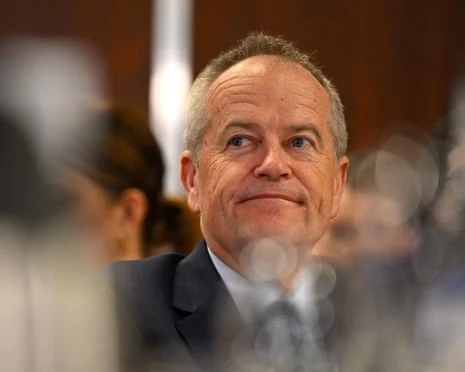
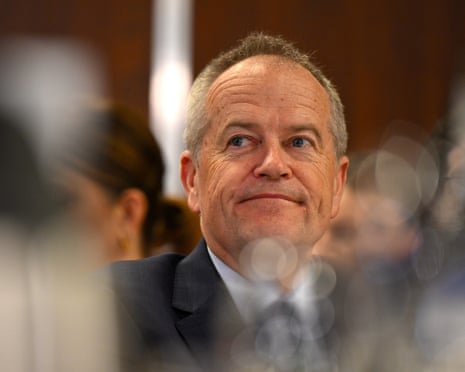
A significant economic debate has been rekindled with former Labor leader and current University of Canberra vice-chancellor, Bill Shorten, publicly endorsing a government-enacted tax on gas exports. Appearing on ABC’s 7.30 program, Shorten addressed "rumours" of Labor revisiting this "once very popular issue," asserting that the "time had arrived to consider reviewing the taxation on gas."
Shorten articulated a perceived "national appetite" for such a measure, drawing a stark contrast between government austerity, exemplified by "paring back on things like the NDIS," and the substantial profits reaped by gas companies. He questioned the fairness of the current system, stating, "Aussies are saying, how is it fair that gas companies are making such a big profit and why don’t they share more of it with the people?" While advocating for a future tax, he cautiously distinguished it from retrospective actions that might "rip up previous contracts," which he warned could constitute "sovereign risk."
The discussion around taxing gas exports is not new in Australia. Historically, debates around resource super profits taxes have surfaced, particularly during periods of high commodity prices. Proponents argue that a well-designed tax ensures that the nation benefits adequately from its finite natural resources, especially when global energy crises drive up prices and company revenues. Critics, however, often cite concerns about discouraging foreign investment and impacting the competitiveness of Australian industries. The manufacturing sector, as highlighted by a related union manifesto ahead of the Labor conference, has also voiced concerns about Australia’s tax system being "rigged," suggesting broader discontent with corporate taxation and its impact on local industries. The implications of such a tax are far-reaching, potentially impacting government revenue, energy prices, and Australia’s reputation as a stable investment destination for resource companies.
One Nation’s Electoral Threat and Labor’s Strategy
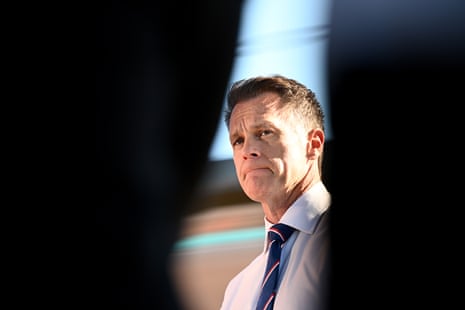
The rise of One Nation continues to be a focal point in Australian domestic politics, prompting strategic discussions within mainstream parties. New South Wales Premier Chris Minns explicitly stated that the state’s Labor party is "under threat" from One Nation, emphasizing the need to "fight for those votes." Minns, speaking on ABC Radio National, addressed the contentious question of whether One Nation is a "racist party." He differentiated between voters with legitimate concerns about immigration levels and the explicitly "racist" statements made by its leader, Pauline Hanson, particularly her assertion that "there’s no such thing as a good Muslim."
Minns outlined Labor’s approach to counter this threat, focusing on "pointing out that there are no easy answers in a difficult economic environment, particularly as a result of geopolitical fights around the world." He confirmed that NSW Labor is enacting "practical commonsense changes to policy" in an effort to appeal to disaffected voters. This strategic pivot underscores the perceived electoral vulnerability of traditional parties to populist movements capitalizing on economic anxieties and social grievances.
The concern over One Nation’s surge is shared across the political divide. Both former Labor leader Bill Shorten and former Liberal minister Christopher Pyne, despite their past political rivalries, concurred on ABC’s 7.30 program that while One Nation’s popularity has recently surged, likely in the wake of events such as the Bondi terror attack, their long-term electoral staying power remains questionable. Shorten suggested that the current 30% support indicated in some polls does not represent One Nation’s traditional "rusted-on hardline true believer vote" of 6% to 7%. He posited that many current supporters are "sick of the system" and "hurting," but would likely be "perturbed by dusting off the bones of a White Australia policy." Pyne echoed this sentiment, believing that "by election day, people will not be voting for One Nation in the numbers that are currently being seen in the polls."
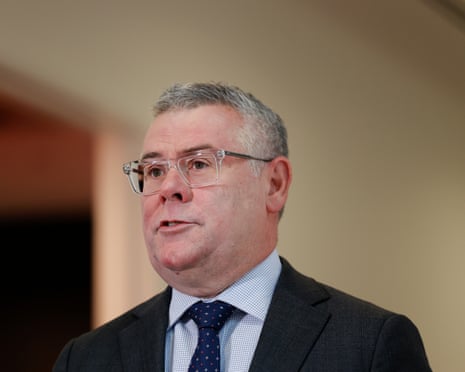
The actions of One Nation’s leader, Pauline Hanson, have also come under scrutiny. Senator Murray Watt, Minister for the Environment and Water, criticized Hanson’s "whirlwind trip to Europe and the UK" with billionaire Gina Rinehart, which reportedly included a fashion show and downtime in Sicily. Watt called for transparency regarding the funding of this "luxury trip," suggesting Hanson has a "guilty conscience" about it. More broadly, Watt argued that Hanson’s priorities, engaging in such a trip while "voting to cut the wages and cut cost-of-living relief for the battler she says she cares about," demonstrate that "she’s not on the side of working people." This highlights a tactical line of attack by Labor, aiming to portray One Nation as out of touch with its base.
Adding to the internal dynamics, the controversial appearance of One Nation MP Barnaby Joyce on ABC’s 7.30, during which he was seen "verbally assaulting" his dog, Stella, has further complicated the party’s public image. Joyce later offered an "incredibly sorry" apology on the Today Show, attributing his outburst to Stella "continually barking" while "right underneath my feet underneath the deck." Animal rights group PETA was swift to condemn the behavior, with executive agent Mimi Bekhechi noting that "dogs bark because it’s how they communicate, and screaming at them for doing so is a form of intimidation." This bizarre incident drew widespread media attention and became a viral moment, overshadowing some of the policy discussions.
Christopher Pyne further speculated on Barnaby Joyce’s political future, suggesting that "nothing would surprise me – if he went back to the National party, especially now that David Littleproud is not the leader." This comment hints at potential realignments within conservative politics if One Nation’s more "less mainstream comments" continue to cause friction or if Joyce finds his current political home untenable.
Economic Headwinds: Construction Costs and Tobacco Excise
Beyond political machinations, Australia faces economic challenges, notably in the housing and health sectors. The construction industry has seen a "sharp acceleration" in costs, with data firm Cotality’s Cordell construction cost index reporting a 1% increase in the June quarter. While this is steeper than the 0.2% rise in the March quarter, the annual growth rate of 2.8% remains "relatively soft by historical standards," according to Cordell costings estimation manager John Bennett.
However, the shadow of the Middle East conflict looms large. Following the "initial outbreak of fighting between the US and Iran at the end of February," which "halted most shipping traffic through the Strait of Hormuz," analysts anticipated "huge increases in construction costs" due to elevated material and fuel prices. Building materials were already 38.2% more expensive than in 2019. Master Builders Australia chief executive Denita Wawn warned that "higher oil prices are driving up the cost of fuel and key products such as PVC, plastics and cabling," urging the government to "support local manufacturing by reducing input costs while maintaining access to high-quality, compliant building products and materials." The escalating geopolitical tensions in the Middle East thus directly translate into inflationary pressures on Australia’s domestic economy, impacting housing affordability and construction sector stability.
Meanwhile, NSW Premier Chris Minns has taken a controversial stance on tobacco excise, arguing that it is "too high" and unintentionally fueling an illicit black market. Minns’ comments on ABC Radio National followed NSW Labor’s health minister, Ryan Parks, acknowledging that authorities were struggling to curb the illicit tobacco trade. Minns asserted that while NSW has implemented "massive increases" in fines, the high excise on legal cigarettes is "driving otherwise lawful people into an illicit black market," making "cheap cigarettes available and plentiful, particularly for young people," and "fuelling organised crime in Australia." Despite clarifying that he is "not pro-smoking" and "can’t stand the tobacco companies," Minns concluded that the current policy "is just not working" and requires a "rethink on the excise." This perspective challenges the conventional public health approach to tobacco control, which typically relies on high taxation to discourage smoking, by highlighting the unintended consequences of an expanding illicit trade. Reports indicate that nicotine use has soared by 40% in eight years, with the black market exploding, suggesting that current policies may indeed be inadvertently shifting consumption patterns rather than reducing overall harm effectively.
Regulatory Crackdowns and Gambling Reform Debates
In regulatory news, Tabcorp Holdings Limited (TAB) has been hit with over $2.7 million in penalties by the Australian Communications and Media Authority (ACMA) for "multiple breaches of spam and telemarketing laws." ACMA’s investigation, triggered by a self-report from TAB in 2025, revealed that between February 2024 and June 2025, TAB made 351 telemarketing calls to numbers on the Do Not Call Register without consent, 82 calls outside permitted hours, and nearly 4,000 calls without proper identification. Additionally, the gambling giant sent over 217,000 marketing emails and texts in just over two weeks to unsubscribed customers. Authority member Samantha Yorke condemned the "unacceptable" conduct, stating, "When people join the Do Not Call Register or unsubscribe from marketing messages, they are making a clear choice. Those choices must be respected – especially given the heightened risks of financial loss and psychological harm from gambling marketing." This marks ACMA’s second enforcement action against TAB within two years, signaling serious and persistent "weaknesses in TAB’s compliance systems."
The broader issue of gambling reform remains a contentious point within the Labor party ahead of its national conference. Minister Murray Watt, while downplaying internal "WWE wrestling" at the conference, acknowledged disquiet among the party’s rank and file regarding the government’s response to the Murphy report on gambling reform. Many within Labor believe the current changes have not gone far enough. Watt, however, defended the government’s actions, calling them the "most far-reaching" reform on gambling by any administration. While he did not "pre-empt the conference" regarding a potential national gambling regulator, he stressed that the government has "taken some very serious action already." This suggests an ongoing tension between the government’s perceived pragmatic approach and calls for more radical reforms from within its own party and from public advocates concerned about gambling harm.
Navigating Complex Geopolitical Waters: Australia-China Relations
Australia’s foreign policy agenda is heavily focused on maintaining regional stability and managing its complex relationship with China. Foreign Affairs Minister Penny Wong held her twelfth meeting with Chinese counterpart Wang Yi on the sidelines of the Asean foreign ministers’ meeting in Manila. The discussions centered on Asean priorities and the crucial importance of peace and stability in the Indo-Pacific.
Wong explicitly conveyed Australia’s concerns regarding China’s "test of a nuclear-capable submarine-launched missile earlier this month," noting the "strong concerns expressed by many Pacific island countries." This highlights Australia’s role in advocating for regional security and transparency amidst an escalating arms race. Furthermore, Wong raised several consular issues, including the "case of Dr Yang Jun," an Australian writer detained in China, and underscored the importance of "respect for Australia’s laws, sovereignty and freedom of expression," as well as "safe and professional maritime conduct, and human rights." These points signal Australia’s firm stance on human rights and international law, even while engaging in diplomatic dialogue.
The meeting occurred against a backdrop of heightened tensions in the South China Sea. Wong publicly criticized "destabilizing and dangerous conduct" by China following a recent clash at the disputed Second Thomas Shoal. The incident, reported by AFP, involved the Philippine military accusing the China Coast Guard of "clubbing a Filipino sailor with a baton" as they approached a grounded vessel serving as a Philippine garrison. Both the Philippines and China summoned each other’s ambassadors following the skirmish. Multiple nations in the region have overlapping territorial claims with China in this heavily patrolled waterway, making such altercations a regular occurrence.
The United States has also weighed in, condemning Beijing’s "dangerous and aggressive actions." US Secretary of State Marco Rubio, in an opinion piece published in Philippine media, reaffirmed Washington’s "commitment to freedom of navigation in Southeast Asia" and its defensive umbrella in the region. Rubio warned that if these waters were to "fall under the control of a power willing to use trade as a geopolitical weapon, both the United States and the ASEAN states would face serious new threats to their sovereignty, security, and economic future," in a clear reference to China. The South China Sea is a critical global shipping lane and rich in natural resources, making any escalation a matter of international concern. Australia’s diplomatic engagement and alignment with partners like the US in condemning such actions are integral to its Indo-Pacific strategy.
In summary, the Australian political and economic landscape is currently navigating a complex array of domestic policy debates, including the contentious issue of a gas export tax, the evolving threat posed by One Nation to mainstream parties, and the challenging economic environment marked by rising construction costs and the illicit tobacco trade. Simultaneously, Australia’s foreign policy is actively engaged in multilateral diplomacy, seeking to de-escalate tensions and uphold international norms in a geopolitically sensitive Indo-Pacific region. These interconnected issues will continue to shape public discourse and government policy in the months ahead.

