
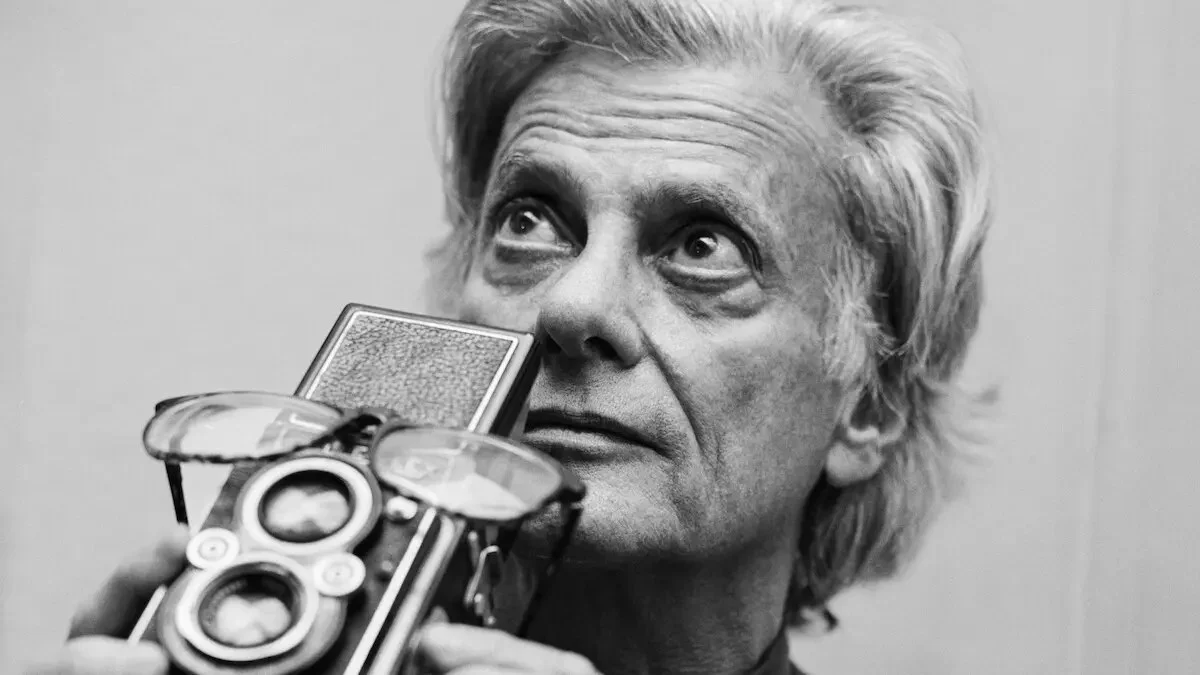
Director Ron Howard has delivered what is arguably his most accomplished documentary to date with the release of Avedon, a comprehensive and artfully crafted exploration of the life and legacy of Richard Avedon. Through the meticulous editing of Andrew Morreale, the film functions as both a biographical account and a visual treatise on the evolution of 20th-century photography. By weaving together hundreds of Avedon’s most iconic portraits, the documentary provides an intimate look at a man who fundamentally altered the metaphysics of the medium, shifting the collective gaze of the public from the artificial to the authentic.
The Genesis of a Visionary
Born in New York City in 1923, Richard Avedon’s journey toward becoming a defining figure in visual history began long before he touched a professional camera. His early life was marked by a keen observational instinct; as a child, he would intentionally blink while walking the streets, a habit he described as a way to "capture" the imagery of his surroundings in his mind’s eye.
This formative period of internal visualization reached a turning point in 1942 when, at age 19, Avedon enlisted in the U.S. Merchant Marines. Assigned to the photographic department, he was tasked with capturing identification portraits of enlisted personnel. This repetitive, utilitarian work—which resulted in roughly 100,000 images—served as his training ground. It was here that he discovered the transformative power of the stark, white-background portrait. By removing the context of the environment, Avedon found that the subject’s face became the sole focus, revealing a vulnerability and humanity that had previously been obscured by the clutter of surroundings. This discovery would become the hallmark of his lifelong aesthetic.
Chronology of an Artistic Evolution
Avedon’s career spanned six decades, from 1944 until his death in 2004. During this time, he completed approximately 16,000 sittings, an average of one session every workday for 60 years. His professional trajectory can be categorized into distinct, though overlapping, eras:
- 1940s–1950s: The Rise of Fashion and Glamour. Avedon emerged as a titan of high fashion, working for Harper’s Bazaar and later Vogue. He moved models out of static, stiff poses and into dynamic, motion-filled environments, changing the industry’s perception of what a fashion photograph could be.
- 1960s–1970s: The Portraiture of Influence. This era saw Avedon document the cultural shift of the late 20th century. His work with the Chicago 7, the residents of the Warhol Factory, and prominent political figures cemented his status as a chronicler of history.
- 1980s: The American West. Avedon moved away from the glitter of the fashion world to photograph the working class of the American West. This project was initially met with critical skepticism by the New York art establishment, who found the raw, unflinching nature of the work uncomfortable.
- 1990s–2004: Legacy and Reflection. In his final years, Avedon continued to push the boundaries of portraiture, maintaining his signature intensity until his passing while on assignment for The New Yorker in San Antonio, Texas.
Technical Deception and the Invisible Method
One of the most compelling aspects of the film is its deconstruction of Avedon’s "invisible" technique. While many photographers of his era relied on complex lighting setups and technical equipment, Avedon favored simplicity. Isabella Rossellini, featured in the documentary, notes that Avedon’s process was not about the quantity of film exposed, but the quality of the interaction.
He famously eschewed discussions of f-stops and shutter speeds, preferring to cultivate an atmosphere of psychological engagement. A session often began with conversation or coffee, with the actual act of photography reserved for a brief, intense window of time. This methodology—what he termed the "ineffable dance"—allowed him to capture subjects in moments of unguarded honesty. The iconic 1957 portrait of Marilyn Monroe is perhaps the greatest testament to this approach; after an entire day of performance-based posing, Avedon captured the final image only when Monroe’s exhaustion allowed her true self to emerge for a fleeting moment.
The Paradox of the Democratic Humanist
The documentary explores the central paradox of Avedon’s career: he was simultaneously a pioneer of the impossible beauty standards of high fashion and an ardent democratic humanist. He viewed all his subjects—whether they were world-renowned celebrities like Elizabeth Taylor and John Lennon or nameless oil field workers in Oklahoma—through the same lens.
This democratic approach to portraiture extended to his commercial work. Even in his highly stylized advertising campaigns, such as the surrealist-inspired television spots for Obsession perfume, Avedon applied the same rigorous attention to the human form. His son, John Avedon, and executive director of the Richard Avedon Foundation, James Martin, provide crucial insights into how these disparate worlds were not separate at all, but part of a unified pursuit of truth.
Critical Reception and Broader Implications
The film’s inclusion of interviews with figures like Tina Brown, Larry Gagosian, Adam Gopnik, and Hilton Als provides a multidimensional view of Avedon’s influence on modern media and art. The consensus among these luminaries is that Avedon did not merely record history; he curated it.
His work serves as a reminder of the power of the "head-on" portrait. By stripping away artifice, Avedon forced his viewers to confront the reality of the subject. This had profound implications for the journalism and photography of the late 20th century, effectively ending the era of the "posed" celebrity image and ushering in a more authentic, albeit sometimes uncomfortable, standard of visual storytelling.
Analysis of Historical Impact
The significance of Avedon’s work lies in its longevity. His portraits of figures such as J. Robert Oppenheimer, Orson Welles, and Truman Capote remain the definitive images of those individuals. When viewers look at an Avedon portrait today, the lighting and composition appear as fresh and relevant as the day they were captured.
The documentary correctly identifies that Avedon’s greatest contribution was his ability to use the camera as a tool for empathy. Even in his most controversial works—such as the series on his own father’s aging process—he demonstrated that the camera is a bridge between the observer and the observed. This, ultimately, is the takeaway of the film: photography is not about the camera, but about the connection established between two human beings.
Conclusion: A Study in Craft
The film Avedon is more than just a biography; it is a masterclass in documentary filmmaking. Its pacing, combined with the strategic placement of testimonials and historical footage, allows the viewer to experience the weight of Avedon’s 60-year career without feeling overwhelmed.
By grounding the narrative in the tragic and complex personal life of the photographer—including his struggles with his sister’s mental health and his own complicated marriages—the film avoids the trap of hagiography. It presents a man who was deeply flawed, intensely driven, and singular in his mission. For students of film, photography, and cultural history, Avedon serves as an essential record of a man who looked at the world, saw something no one else did, and forced us to look at it, too.

