
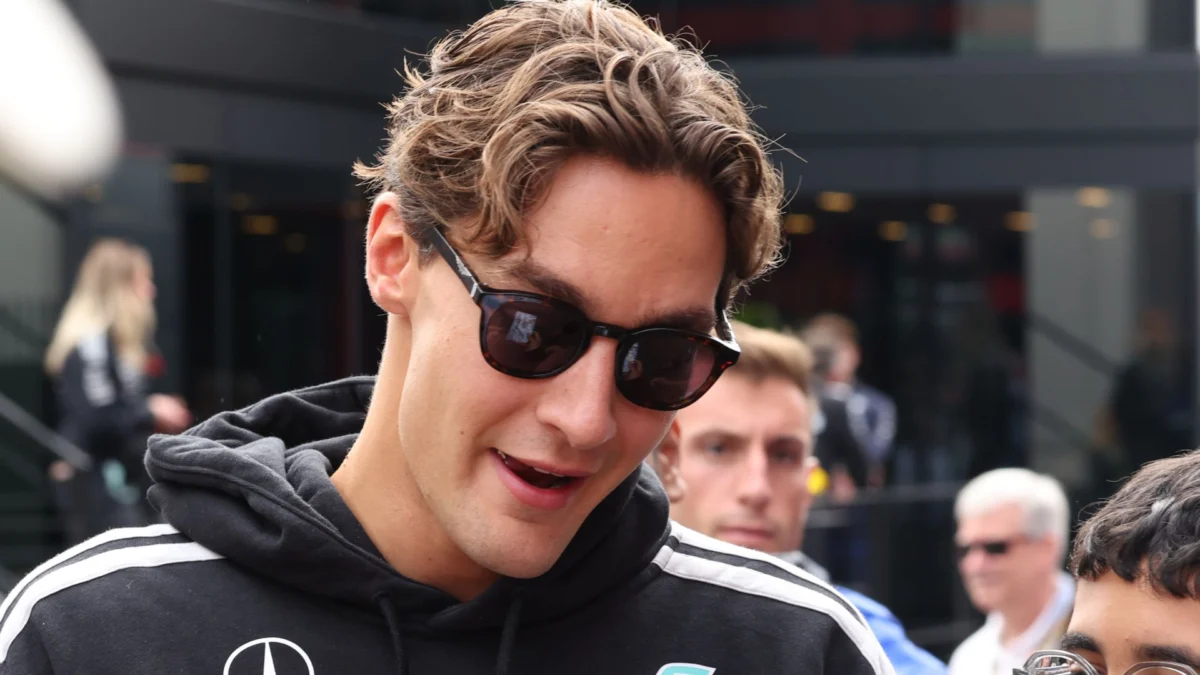
The legendary Circuit de Spa-Francorchamps plays host to one of the most pivotal weekends in the 2026 FIA Formula One World Championship as the grid descends upon the Ardennes Forest for the Belgian Grand Prix. Saturday’s proceedings represent a critical juncture for teams and drivers alike, featuring the final practice sessions and the high-stakes qualifying hour that will determine the starting grid for Sunday’s main event. As the sport continues to navigate the first year of its revolutionary technical regulations, the unique challenges of the 7.004km circuit provide the ultimate litmus test for the new generation of power units and active aerodynamics.
The 2026 Technical Landscape at Spa-Francorchamps
The 2026 season marks a historic shift in Formula One history, characterized by a near 50/50 split between internal combustion and electric power. At a power-sensitive track like Spa, these regulations are under intense scrutiny. The removal of the MGU-H (Motor Generator Unit – Heat) and the increased reliance on the MGU-K (Motor Generator Unit – Kinetic) mean that energy management through the sweeping curves of Sector 2 and the flat-out blasts of Sectors 1 and 3 is more complex than ever before.
Engineers have spent the morning sessions fine-tuning the "Override Mode," a new driver-controlled boost system designed to aid overtaking. On the long Kemmel Straight, which follows the iconic Eau Rouge and Raidillon complex, the effectiveness of this system is expected to be the difference between a successful pole position lap and a mid-grid start. Furthermore, the 2026 chassis regulations, which introduced smaller, lighter cars with active aerodynamics, are being pushed to their limits. Drivers have reported a significant change in car behavior as the front and rear wings adjust their profiles to minimize drag on the straights while maximizing downforce through the technical middle sector.
Saturday Morning: Free Practice 3 and Final Preparations
The final hour of practice, FP3, commenced under typical Belgian skies—overcast with a persistent threat of rain that often defines the competitive output at this venue. For the front-runners, the session was less about outright lap times and more about understanding tire degradation on the 2026-spec Pirelli compounds. With the track temperature hovering at a cool 18 degrees Celsius, generating tire surface heat without graining the rubber became the primary focus for the technical crews.
Red Bull Racing, continuing their pursuit of dominance in the post-Adrian Newey era, showed significant strength in the middle sector, where the RB22’s mechanical grip appeared superior. However, the Scuderia Ferrari duo, led by Lewis Hamilton in his second season with the Italian outfit, displayed formidable straight-line speed, topping the speed traps at over 340 km/h before the braking zone for Les Combes.
Mid-session, a brief yellow flag was triggered when the Alpine of Jack Doohan suffered a minor sensor issue, forcing him to crawl back to the pits. The incident highlighted the ongoing reliability concerns surrounding the complex 2026 power units, which utilize 100% sustainable fuels. As the clock wound down, the top five teams—Red Bull, Ferrari, Mercedes, McLaren, and the emerging Audi factory team—were separated by less than four-tenths of a second, setting the stage for one of the most contested qualifying sessions of the decade.
Chronology of the Belgian Grand Prix Saturday Schedule
The Saturday schedule at Spa is designed to build momentum toward the afternoon’s qualifying peak. The timeline for the day’s events followed a rigorous structure:
- 09:00 – 09:45: Formula 3 Sprint Race – A chaotic opening event that saw multiple lead changes, underlining the slipstream effect that makes Spa a favorite for junior categories.
- 10:15 – 11:00: Formula 2 Sprint Race – Strategic tire management was the theme as drivers battled the abrasive surface of the renovated track sections.
- 12:30 – 13:30: Formula 1 Free Practice 3 – The final opportunity for teams to validate their qualifying maps and ERS (Energy Recovery System) deployment strategies.
- 14:00 – 14:45: Porsche Supercup Qualifying – Providing additional rubber on the track, improving grip levels for the F1 session.
- 16:00 – 17:00: Formula 1 Qualifying – The three-phase knockout session (Q1, Q2, Q3) to determine the starting order for the Grand Prix.
Technical Analysis: The Impact of Active Aerodynamics
One of the most discussed elements during the Saturday broadcast was the visual impact of the active aerodynamics. Onboard footage from the Sky Sports F1 cameras clearly showed the "X-mode" and "Z-mode" transitions. In "Z-mode," the wings are angled to provide maximum downforce for corners like Pouhon and Blanchimont. As the cars exited the final chicane onto the start-finish straight, the wings shifted into "X-mode," a low-drag configuration that significantly boosts top speed.
Data telemetry suggested that the transition timing is critical. A delay of even a few milliseconds in the wing flap adjustment can result in a loss of nearly two-tenths of a second—a margin that could mean the difference between several positions on the grid. Mercedes’ George Russell noted over the team radio that the "buffeting" during the transition through the high-speed curves was a physical challenge for the drivers, requiring precise steering inputs to maintain the racing line.
Official Reactions and Paddock Insights
In the paddock, team principals offered their perspectives on the evolution of the weekend. Toto Wolff, Team Principal of Mercedes, emphasized the importance of the new fuel regulations. "We are learning with every lap," Wolff stated. "The 100% sustainable fuel changes the combustion characteristics of the engine. At a high-altitude, high-load track like Spa, the mapping must be perfect to avoid clipping at the end of the straights."
Christian Horner of Red Bull focused on the competitive spread, noting that the 2026 regulations have successfully closed the gap between the top and midfield teams. "You see the Haas and the Williams cars much closer to the front than in previous cycles. It makes the Q1 and Q2 sessions incredibly stressful. There is no room for a ‘safe’ lap anymore; you have to be on the limit from the first out-lap."
From the drivers’ perspective, Max Verstappen highlighted the physical toll of the new cars. Despite being lighter, the increased electrical torque makes the cars more "snappy" on corner exit. "It’s a lot more work in the cockpit," Verstappen commented after FP3. "You are managing the battery, the aero modes, and the tires all at once. Spa is already a difficult track, and these cars make it a true marathon of concentration."
Supporting Data: Speed Traps and Sector Times
Data collected during the Saturday sessions provided a clear picture of the various team philosophies. Ferrari’s "power-first" approach saw them dominate Sector 1, which is almost entirely full-throttle from the exit of La Source to Les Combes.
Sector 1 Top Speeds (FP3):
- Lewis Hamilton (Ferrari): 342.1 km/h
- Charles Leclerc (Ferrari): 341.8 km/h
- Lando Norris (McLaren): 339.5 km/h
In contrast, the middle sector (Sector 2), which contains the technical corners of Bruxelles, Pouhon, and Fagnes, was dominated by McLaren and Red Bull. This suggests a strategic split in the paddock: some teams are opting for a "low-drag" setup to defend and overtake on the straights, while others are banking on "high-downforce" to build a gap in the twisty sections where overtaking is nearly impossible.
Sector 2 Best Times (FP3):
- Oscar Piastri (McLaren): 44.212s
- Max Verstappen (Red Bull): 44.255s
- George Russell (Mercedes): 44.401s
Broader Impact and Implications for the Championship
The Belgian Grand Prix remains a cornerstone of the Formula One calendar, yet its future has often been the subject of debate amid the rise of street circuits in the United States and the Middle East. The massive turnout on Saturday—estimated at over 120,000 spectators for the day—serves as a powerful reminder of the circuit’s enduring appeal. For the 2026 championship, the results at Spa will likely dictate the development path for the remainder of the season.
Because Spa-Francorchamps requires a compromise between every aspect of car performance—aerodynamics, power, tire management, and driver skill—it is often said that the car that wins here is the best all-around machine on the grid. If Ferrari can translate their straight-line advantage into a pole position, it would signal a major shift in the title race, potentially ending Red Bull’s multi-year stranglehold on the constructors’ standings.
Furthermore, the 2026 Belgian Grand Prix serves as a showcase for the FIA’s sustainability goals. The successful integration of carbon-neutral fuels in a high-performance environment is a key pillar of F1’s "Net Zero 2030" initiative. The performance levels seen on Saturday prove that the move toward greener technology has not diminished the spectacle or the speed that fans expect from the pinnacle of motorsport.
As the sun begins to set over the pines of the Ardennes, the focus shifts entirely to the race. Strategy will be paramount, especially with the 2026 cars’ ability to follow more closely through high-speed corners. The "live updates and video coverage" provided throughout the day have captured a sport in transition—one that honors its heritage at tracks like Spa while aggressively embracing a high-tech, sustainable future. All eyes now turn to the grid, where twenty of the world’s best drivers will prepare to tackle the most daunting seven kilometers in racing.

