
For the 3,000 residents of Rjukan, a remote town cradled in the deep Vestfjorddalen valley of southern Norway, the arrival of autumn once signaled the beginning of a long, sunless exile. Hemmed in by steep, jagged mountains that rise aggressively on either side of the valley, the town is cast into perpetual shade from late September until March. For nearly six months every year, the sun remains too low on the horizon to crest the peaks, leaving the community to exist in a twilight state of ambient daylight. However, a century-old dream—realized through modern heliostat technology—has transformed this seasonal darkness into a testament to human resilience and engineering prowess.
The Genesis of an Impossible Idea
The desire to illuminate Rjukan is not a recent phenomenon. The town was founded in the early 20th century by Sam Eyde, a visionary industrialist who recognized the immense potential of the Rjukan Falls to generate hydroelectric power for the production of fertilizers. Eyde’s industrial ambitions transformed the valley into a thriving hub of labor and innovation. Yet, he was acutely aware of the psychological and physical toll that living in constant shadow took on his workers.
As early as 1913, Eyde proposed the installation of large mirrors on the mountain ridges to reflect sunlight down into the valley floor. At the time, the technology to track the sun’s movement with the necessary precision simply did not exist. Instead, the town had to settle for a more analog solution: in 1928, a cable car (the Krossobanen) was constructed, allowing residents to ascend the mountain to reach the sunlit heights during the winter months. While this provided a temporary respite, the town center remained, for all intents and purposes, a winter-long shadow zone.
The Realization of "Solspeilet"
It was not until 2005 that the idea of the "Solspeilet" (The Sun Mirror) was revived by local artist Martin Andersen. Moving from the conceptual phase to reality required a convergence of precision engineering, climate-resilient material science, and significant municipal investment. The project was officially inaugurated on October 30, 2013, to global fanfare.
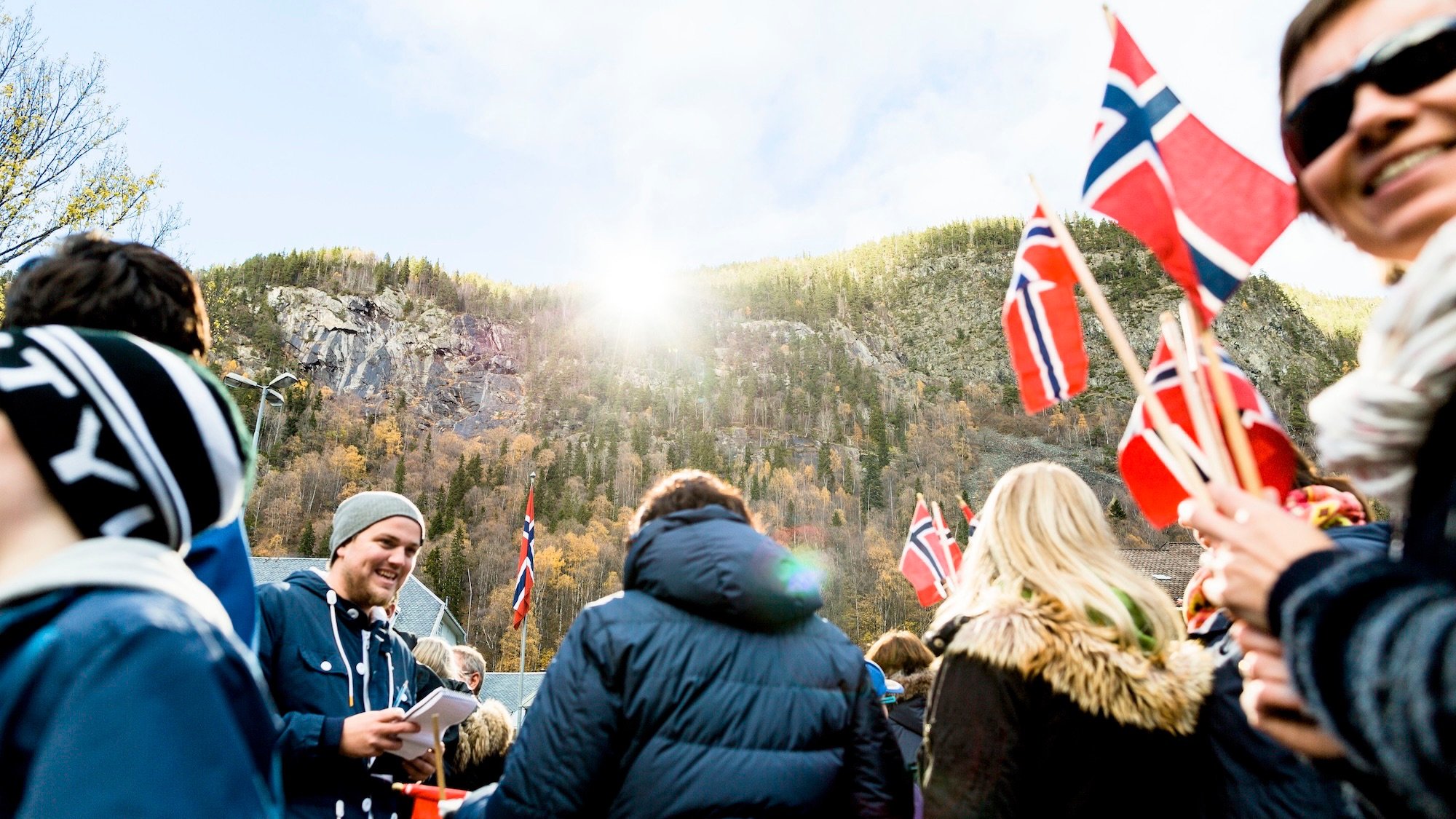
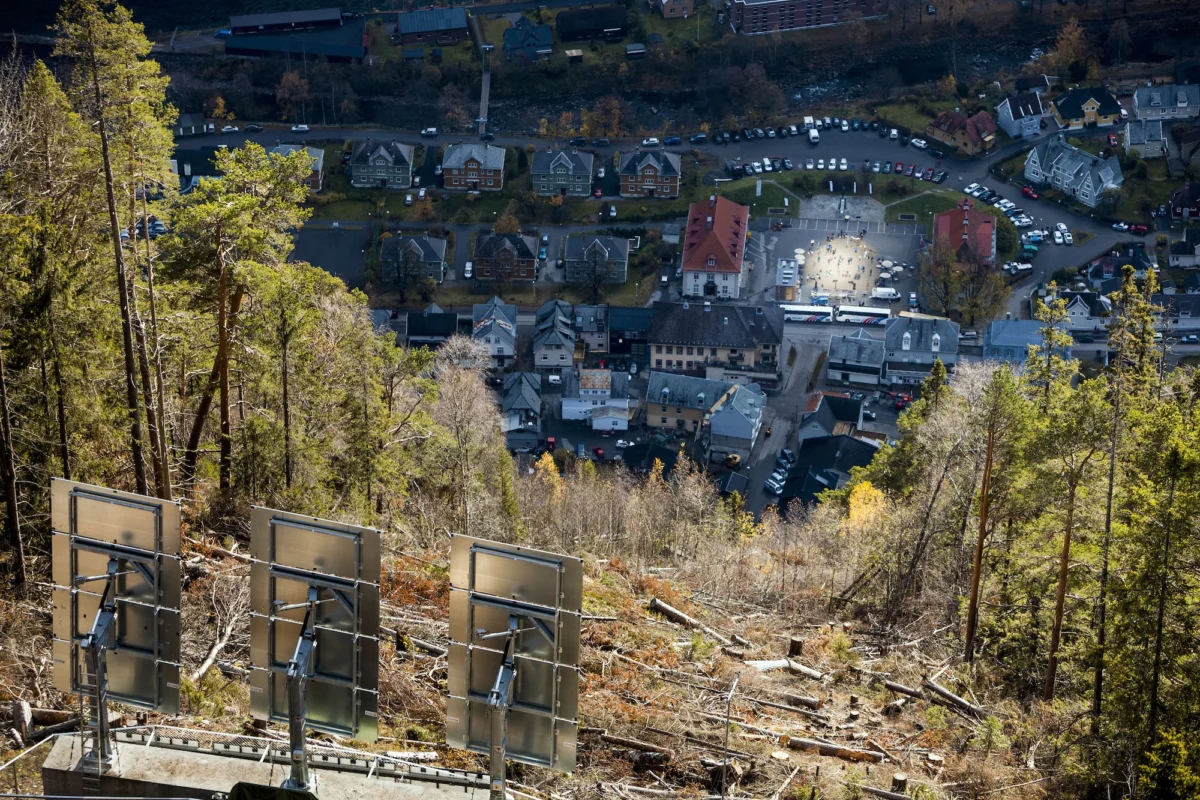
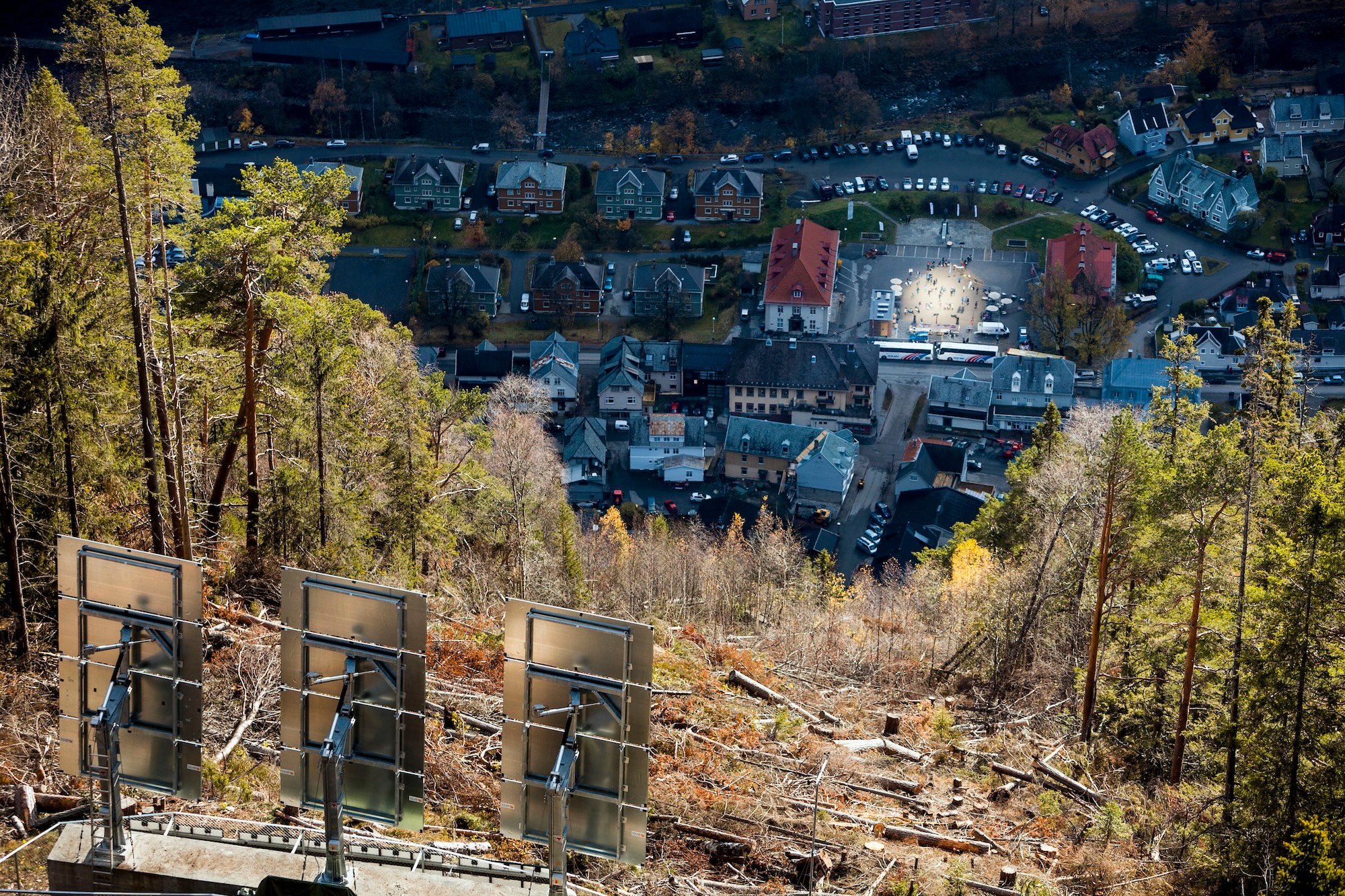
The installation consists of three computer-controlled heliostats—massive, specialized mirrors that track the sun’s path across the sky. Positioned 450 meters (approximately 1,476 feet) above the town, each mirror spans 17 square meters, totaling 51 square meters of reflective surface. These mirrors are programmed to rotate in real-time, capturing direct sunlight and beaming it onto a specific 600-square-meter patch in the town square. The result is a concentrated, warm circle of light that moves across the plaza throughout the day, providing a stark contrast to the surrounding winter gloom.
A Decade of Technical Challenges and Resilience
The operation of the heliostat system has been far from seamless. The extreme environment of the Norwegian mountains poses significant challenges to infrastructure. The mirrors are exposed to severe wind, snow accumulation, and sub-zero temperatures, all of which threaten the sensitive mechanical components.
Initially, the system relied on solar panels and a backup diesel generator, as the remote location of the mirrors lacked a direct connection to the municipal power grid. This reliance on decentralized power proved to be a vulnerability. In 2022, the system experienced a critical failure, plunging the town square back into its traditional darkness. The repair process was arduous; because there is no road access to the summit where the mirrors are located, maintenance crews were required to hike the heavy, high-tech components up the mountainside in backpacks.
The 2023 restoration project was far more comprehensive than a simple repair. The municipality invested 3 million Norwegian kroner (approximately $310,000 USD) to modernize the infrastructure. This included the installation of a permanent power line to the site and the implementation of a new internet-enabled control system. This digital upgrade allows technicians to manage the mirrors remotely, providing the flexibility to redirect the sunbeams to other areas of town, such as the public skating rink, depending on local needs.
Public Reception and Cultural Impact
The path to implementation was not without controversy. During the planning stages, the project faced significant opposition, with a petition against the construction garnering over 1,000 signatures. Skeptics argued that the project was an unnecessary vanity endeavor or a waste of public funds. However, since the mirrors became operational, the mood in Rjukan has shifted significantly.
The mirror array has become a cornerstone of the town’s identity and a vital engine for the local tourism economy. As an unconventional tourist destination, Rjukan draws international visitors intrigued by the intersection of nature and human intervention. Local officials have noted that the project has helped sustain the town’s profile, balancing its industrial heritage—most notably its history as a site of the heavy water sabotage during World War II—with its modern status as a beacon of light in the Arctic winter.
Scientific and Psychological Implications
The importance of natural sunlight in northern latitudes cannot be overstated. Seasonal Affective Disorder (SAD) and general lethargy associated with the "polar night" are well-documented public health concerns in Scandinavian countries. While the Solspeilet does not provide the same broad-spectrum exposure as a full day of natural sunlight, the psychological impact of seeing a patch of sun on the town square is profound.
For the residents, the mirror is more than a utility; it is a symbol of agency. It represents the ability of a community to manipulate their environment to improve their quality of life. The fact that the system was repaired at a significant cost during a period of economic pressure suggests a collective decision that the "right to light" is a fundamental component of the town’s standard of living.
Broader Implications for Sustainable Architecture
The Rjukan project serves as a compelling case study for urban planners and architects working in extreme environments. As global populations continue to expand into high-latitude regions, the lessons learned from the Solspeilet—particularly regarding the maintenance of high-tech infrastructure in harsh climates—are invaluable.
The successful integration of remote-controlled heliostats suggests that "sun-harvesting" could become a standard architectural consideration for future developments in deep mountain valleys or northern cities. By utilizing low-energy, high-precision tracking systems, municipalities can mitigate the psychological impacts of darkness without the environmental cost of constant artificial illumination.
Looking Toward the Future
Today, the Solspeilet stands as a symbol of the synthesis between human curiosity and engineering. The town of Rjukan has proven that even in the most inhospitable conditions, a community can refuse to accept the status quo.
The maintenance of the system remains a permanent responsibility for the municipal government, a reality that underscores the ongoing commitment required to keep the "sun" shining in the valley. As the technology matures, it is likely that the system will see further iterations, perhaps incorporating even more efficient materials or advanced sensor arrays that could increase the intensity and coverage of the reflected light.
For the traveler, the sight of the town square—a glowing, sun-drenched oasis against a backdrop of snow and shadows—is a powerful reminder of the potential of human ingenuity. Rjukan is no longer just a town in a valley; it is a laboratory of light, a place where, thanks to a few carefully positioned mirrors, the winter sun has finally been tamed.

