
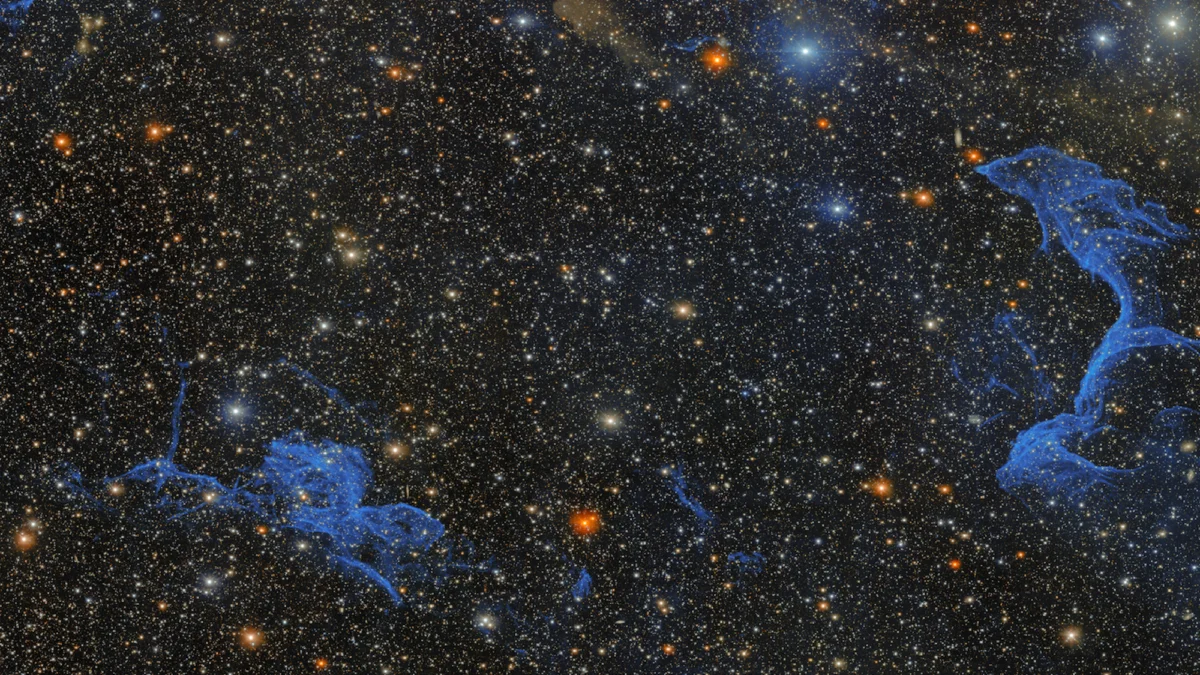
High-resolution imaging from the Cerro Tololo Inter-American Observatory (CTIO) in Chile has provided a stunning new perspective on SNR G295.5+09.7, a sprawling supernova remnant located approximately 6,800 light-years from Earth. Known colloquially as the Betta Fish or Mermaid Nebula due to its fluid, ethereal morphology, this cosmic structure represents the terminal stage of a massive star’s life cycle. Captured by the 570-megapixel Dark Energy Camera (DECam), the imagery highlights the complex interactions between high-velocity stellar debris and the surrounding interstellar medium, offering astronomers a rare window into the violent processes that seed the galaxy with heavy elements.
The Anatomy of a Cosmic Catastrophe
Supernova remnants are among the most energetic phenomena in the universe, acting as the primary laboratories for high-energy astrophysics. When a star significantly more massive than our Sun exhausts its nuclear fuel, it can no longer maintain the hydrostatic equilibrium necessary to counter its own immense gravitational pull. The resulting core collapse triggers a catastrophic explosion, stripping the star of its outer layers and hurling them into the surrounding space at speeds reaching thousands of kilometers per second.
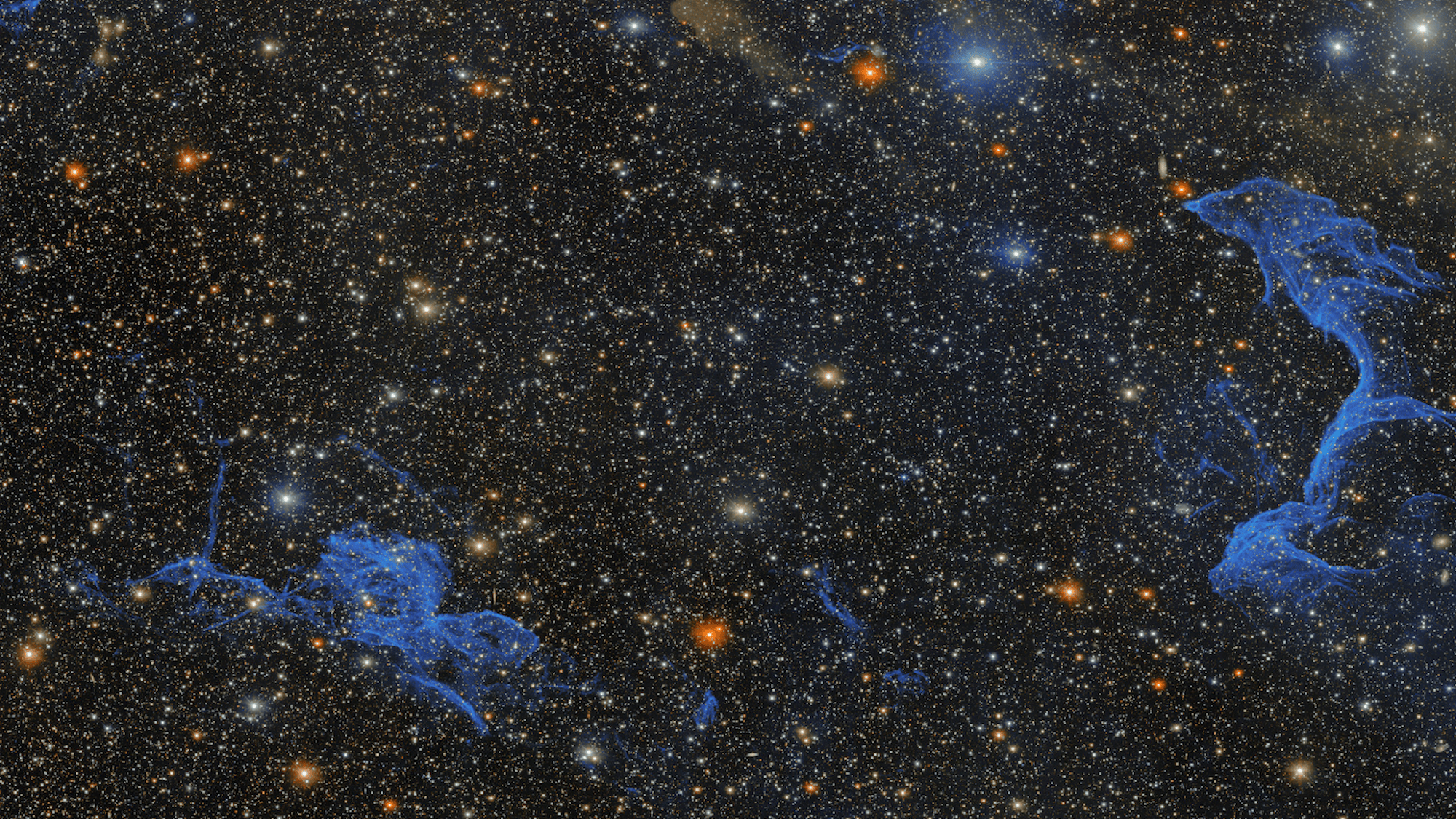
In the case of the Betta Fish Nebula, this event occurred between 7,000 and 10,000 years ago within the Centaurus constellation. As the ejected material expands, it plows into the ambient gas and dust of the interstellar medium. This collision generates powerful shock waves that compress and heat the gas to millions of degrees, causing it to emit radiation across the electromagnetic spectrum. It is this glowing plasma that the DECam has rendered in such vivid detail, revealing the intricate, wispy filaments that earned the nebula its aquatic nickname.
Chronology of a Stellar Death
To understand the significance of the Betta Fish Nebula, one must view it within the broader timeline of stellar evolution. The progenitor star, born millions of years ago, spent the vast majority of its existence fusing hydrogen into helium in its core. As it evolved, it burned through progressively heavier elements—carbon, neon, oxygen, and silicon—until it developed an iron core. Because iron fusion consumes rather than produces energy, the star’s internal pressure vanished in a fraction of a second, leading to the collapse that created SNR G295.5+09.7.
The "Betta Fish" phase we observe today is merely a snapshot of a transient event. On an astronomical scale, the nebula is relatively young. Over the next several tens of thousands of years, the expansion will continue to slow as the remnant encounters more resistance from the interstellar medium. Eventually, the gas will dissipate, cooling and mixing with the surrounding material, eventually contributing to the formation of future generations of stars and planets.
The Hidden Heart: The Neutron Star
While the glowing, wispy clouds of the nebula capture the eye, the true architectural remnant of the explosion lies hidden at the center: a neutron star. This object is the result of the star’s core being crushed to an extreme degree. A neutron star is an exotic state of matter where the density is so high that protons and electrons are squeezed together to form neutrons.
The statistics of this remnant are staggering. Despite packing 1.4 times the mass of our Sun into a sphere roughly 12 miles in diameter, the neutron star is essentially an ultra-dense atomic nucleus on a macroscopic scale. If one were to bring a teaspoon of material from the surface of such an object to Earth, it would weigh billions of tons. As noted by the National Science Foundation’s National Optical-Infrared Astronomy Research Laboratory (NOIRLab), this density is so concentrated that the entire remnant could physically fit within the city limits of Tucson, Arizona, with room to spare.
Alternative Fates: The Thin Line Between Remnants
The existence of the Betta Fish Nebula is a testament to a specific set of physical conditions. Had the progenitor star been slightly more massive, or had the dynamics of the collapse differed in a subtle way, the outcome would have been significantly more destructive. In cases where the remnant mass exceeds the Tolman-Oppenheimer-Volkoff limit—the theoretical maximum mass for a neutron star—the collapse continues unabated, resulting in the formation of a black hole.
Had a black hole been formed in the heart of the Betta Fish Nebula, the visual signature of the explosion would be fundamentally different. The intense gravitational potential of a black hole would likely have prevented the dramatic outward expansion of the ejected layers, or perhaps pulled the surrounding gas inward in an accretion disk, creating a high-energy X-ray source rather than a luminous, diffuse nebula. Astronomers study these remnants to calibrate their models of stellar evolution, helping to determine why some stars leave behind neutron stars while others vanish into the singularity of a black hole.
Scientific Implications and Data Collection
The deployment of the Dark Energy Camera at the CTIO has been instrumental in mapping these faint, diffuse structures. While the camera was originally designed to study the acceleration of the universe’s expansion by mapping the distribution of galaxies, its wide-field capability and high sensitivity make it an ideal tool for galactic archaeology. By analyzing the light from SNR G295.5+09.7, researchers can measure the chemical composition of the ejecta, revealing the types of elements the star synthesized and distributed into the galaxy.
This process of enrichment is vital to the existence of life. Heavy elements such as oxygen, iron, and calcium, which are essential for biological life on Earth, are forged in the centers of massive stars and dispersed during supernova events. The Betta Fish Nebula is, in a very literal sense, a factory for the building blocks of future solar systems.

Official Perspectives and Future Research
Researchers at NOIRLab have emphasized that the study of such remnants is a foundational component of modern astrophysics. By creating high-resolution maps of supernova remnants, scientists can better understand the turbulence and magnetic fields that govern the evolution of the interstellar medium. The imagery released from the DECam is part of a larger, ongoing effort to catalog the "galactic debris" that litters the Milky Way.
While no single institution can claim ownership of the "discovery" of the nebula—as its presence has been suspected in various surveys—the recent imagery marks a milestone in clarity and technical precision. The data will likely be incorporated into multi-wavelength studies, where researchers will combine the DECam’s optical observations with X-ray data from satellites like Chandra or radio observations from the Very Large Array. Such multi-messenger approaches are expected to provide a more holistic view of how the energy from the explosion is distributed and how the shock waves interact with local interstellar clouds.
A Broader Context
The observation of the Betta Fish Nebula serves as a reminder of the dynamic, ever-changing nature of our galaxy. Though we perceive the night sky as a static collection of pinpoints, it is in reality a turbulent sea of birth and destruction. The "Betta Fish" is just one of many such remnants currently being mapped by international astronomical consortia.
As technology advances, the resolution at which we can observe these structures continues to improve, allowing for more detailed simulations of the physical processes at play. These studies are not merely academic; they inform our understanding of how galaxies evolve over billions of years. By observing the "ghosts" of ancient stars, we gain a clearer picture of the origin of our own sun and the chemical ingredients that allow for the complexity of the universe as we know it. The Betta Fish Nebula stands as a monument to the cycle of life and death in the cosmos, a reminder that every atom in our own bodies was once processed through the heart of a star, and will eventually return to the stellar graveyard that populates our galaxy.

