

Cypress Hill, a pioneering force in hip-hop for over three decades, is boldly embracing its heritage with the release of "Dios Bendiga," their first album entirely in Spanish featuring original material. This landmark project marks a significant evolution for the iconic group, born from the diverse cultural landscape of Los Angeles, and arrives at a pivotal moment for Latin rap’s global ascendance. The album is not merely a collection of songs but a profound declaration of cultural identity and a testament to the enduring legacy of Latino artists in the hip-hop genre.
Founded in the early 1990s by B-Real, Sen Dog, and DJ Muggs, with Eric Bobo later joining the ranks, Cypress Hill quickly distinguished themselves through their innovative fusion of West Coast sounds, psychedelic influences, and a distinct Latino perspective. Their early work captured the gritty social realities of California, resonating with audiences who saw their own experiences reflected in the group’s raw lyricism and distinctive sonic palette. This authentic connection to their roots was further solidified in 1999 with the release of "Los Grandes Éxitos en Español," an album that reimagined some of their most popular hits in Spanish. This project achieved cult status among Latino fans, with tracks like "Yo Quiero Fumar" and "Loco en el Coco" underscoring that their Mexican and Cuban heritage was not an incidental element but a foundational pillar of their artistic identity.
"Dios Bendiga," released on July 24th, represents a deeper commitment to this heritage, moving beyond reinterpretations to create entirely new narratives in Spanish. The album arrives at a time when Latin rap is experiencing unprecedented global growth, with artists from various Latin American countries topping charts and influencing mainstream music. Cypress Hill’s foray into original Spanish-language material positions them not just as participants but as seasoned pioneers reclaiming and celebrating a cultural legacy they have championed since their inception.
"Dios Bendiga is more than just a collection of songs; it’s a prayer for the culture," B-Real stated in an interview with Billboard Argentina. "This album serves as a powerful reminder that our heritage isn’t a trend, but a divine legacy and a global future. We’re living through a historic era for Latin rap, and with this project, we wanted to bring a sound that honors our history and resilience."
The album features collaborations with established and emerging talents in the Latin hip-hop scene, including a notable partnership with Argentine artist Trueno. Following their 2023 collaboration on "F*ck El Police Remix," the group reunited with Trueno for "Saca la Bolsita," a track that infuses the project with a distinct local flavor. "Trueno is a student of hip-hop – he’s someone who’s great to work with," Sen Dog remarked, highlighting the mutual respect and shared understanding of the genre’s nuances. Trueno’s involvement, in particular, signifies a bridge between generations and geographies within the expanding Latin rap landscape.

A Deep Dive into "Dios Bendiga"
The creation of "Dios Bendiga" was a deliberate and passionate endeavor, as detailed in interviews with the group members. The process, which began in November of the previous year, was surprisingly efficient, with the core recording completed in approximately one month. This rapid creation was attributed to a natural flow and a palpable sense of creative synergy.
Eric Bobo described the experience as almost spiritual: "It was as if the music wasn’t just flowing through us, but coming from something bigger. We felt a presence, something positive. For us, it was like saying, ‘God is with us.’ From that feeling, we started developing that whole theme. On top of that, we knew it was something very close to the hearts of a lot of people in Latin America, so the concept ended up making even more sense." This sentiment underscores the album’s thematic depth, aiming to resonate beyond mere musicality to encompass cultural solidarity and spiritual connection.
The choice of lead singles, "Wacha Trucha" and "Campeones," was strategic, designed to showcase the album’s multifaceted nature. B-Real explained that "Wacha Trucha" was chosen for its timeliness and its potent message, referencing socio-political issues in the United States. "It was kind of an alert song, a message to stay aware. But it also had a very signature Cypress Hill vibe. It reminded us of the energy of ‘We Ain’t Goin’ Out Like That.’ We thought it was the perfect introduction to the album because that’s exactly the kind of sound a lot of people expect from us."
Sen Dog elaborated on the inclusion of "Campeones," highlighting the group’s desire to demonstrate their versatility: "With ‘Campeones,’ we wanted to show our versatility. We wanted to prove that we could also bring a festive vibe, something closer to the Latin spirit. That’s why we chose those songs: first to show the strength, and then to show that we also know how to make music to celebrate and have a good time – not just aggressive or confrontational songs." This duality in the singles reflects the album’s broader spectrum, from social commentary to celebratory anthems.
Reconnecting with Cultural Roots
The creation of "Dios Bendiga" is widely seen as a profound return to Cypress Hill’s Latin roots. Sen Dog articulated this sentiment, stating, "Totally. It was a way of reconnecting with who we are, with our Latin identity and with the way we grew up in Los Angeles. We were always surrounded by the Spanish language, the slang, and that whole culture." He further contrasted this new project with their earlier Spanish-language work, "Los Grandes Éxitos," emphasizing that "Dios Bendiga" offers entirely original material. "Honestly, I like the feeling this new album gives off even more, because everything here is original. These are new songs, new concepts. We’re not relying on anything we did in the past for this project to be embraced by the fans."
The album’s title, "Dios Bendiga" (God Bless), carries significant weight, evoking a sense of divine protection and cultural affirmation. Sen Dog shared a personal anecdote about the title’s impact: "I remember one day walking into the studio and seeing a whiteboard with the song titles on it. At the very top it said ‘Dios Bendiga.’ In that moment I thought, ‘I like the way that sounds.’ I don’t know exactly who came up with it, but as soon as I saw it, it felt perfect. And I know my mother would have been very happy to know we made this album."
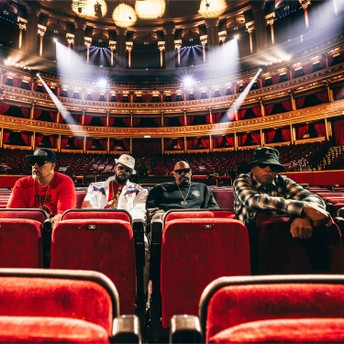
For B-Real, the project was a long-held aspiration that finally materialized. "It was something we had been planning for a very long time," he explained. "Sometimes your own career gets in the way of your plans. Constant touring and other albums kept taking up our time, and we never fully committed to the idea. But this time we had a serious conversation, and when the opportunity came up, we said, ‘If we’re going to make this album, we have to really do it.’" This commitment involved clearing their schedules for an extended period, a rare occurrence for the perpetually touring group, to dedicate themselves fully to the creative process.
The challenge of rapping in Spanish for B-Real, who grew up absorbing the language rather than formally learning it in school, was significant. "It’s a constant challenge," he admitted. "I can’t speak for Sen because Spanish was his first language, but in my case I grew up like a lot of Latinos in the U.S., especially in Southern California. Chicanos learn Spanish at home, from our parents. They speak to us in Spanish and we absorb that knowledge. Some people develop the language more, while others mostly understand it without speaking it as much. In school, we weren’t really taught Spanish beyond maybe a basic class. So it’s always going to be a challenge to compete with rappers who are native speakers and have a very advanced command of the language. That pushes us to work much harder."
Sen Dog concurred, noting the dedication required when collaborating with native speakers. "When I have to perform in Spanish, I really have to focus. There are words I know perfectly well, but sometimes they slip away from me. That’s why it was incredible to hear these guys doing what they do."
Evolution and Influence in Hip-Hop
Cypress Hill’s career has been marked by a continuous process of reinvention, consistently incorporating new sounds and adapting to the evolving hip-hop landscape. This willingness to explore new artistic territories is crucial to their longevity. "It helps you explore places you might not have reached on your own," B-Real stated. "As an artist, you have to be willing to keep learning no matter how long you’ve been doing this. When you collaborate with younger artists, they’re going to learn something from you, but you can also learn from them." This reciprocal learning dynamic is central to their approach, ensuring they remain relevant and innovative.
The burgeoning hip-hop scene in Latin America has undeniably fueled this reinvention. Sen Dog observed, "Without a doubt. The hip-hop scene in South America and Mexico has grown tremendously since the days when we released ‘Los Grandes Éxitos’ and started traveling to those countries." He further elaborated on the impressive development of the genre, noting how artists have honed their craft, writing, and cultural expression, imbuing it with a unique identity. "All of that made me understand even more how rich Spanish is. There’s so much to discover within the language, the slang, and the different cultures."
From their early days, Cypress Hill has been instrumental in the global expansion of hip-hop. Their tours in the early to mid-1990s across Mexico, South America, and Europe revealed the profound impact American hip-hop had on burgeoning international scenes. "We had the chance to witness its growth from a very early stage," B-Real recalled. "When we started touring Mexico, South America, and Europe, we saw how people celebrated the arrival of American artists and absorbed that culture with so much passion that they eventually decided to build their own scenes." This observation highlights their role as catalysts, inspiring local artists to create their own versions of the genre.

A Legacy of Normalization and Legalization
Beyond their musical contributions, Cypress Hill has also been a prominent voice in advocating for the destigmatization and eventual legalization of cannabis. Their early songs, such as "Light Another," "Something for the Blunted," and "Stoned Is the Way of the Walk," openly discussed cannabis use, often in defiance of prevailing societal norms. B-Real expressed satisfaction with the recent shifts in public perception. "I’m glad to see that everything has become more normalized," he said. "People no longer have the same prejudices or labels they used to. Now they understand it much better for what it is."
He emphasized the significant progress made, noting how former critics have become allies due to increased information and understanding. The normalization has led to greater acceptance and the potential for viable careers within the cannabis industry. However, he stressed that full legalization remains a crucial objective. "In some places, it’s even possible to make a living from this industry. But beyond normalization, it still needs to be legalized. There are countries where it already has been legalized, and that’s extraordinary, but there’s still a lot of work to do, both in the United States and in other parts of the world. When I think about where we were 30 years ago and compare that reality to where things are now, it’s honestly pretty incredible."
The group’s enduring influence is evident in their consistent presence on the Billboard charts, with seven songs charting on the Hot 100. Their 1993 hit "Insane in the Brain" reached No. 19 and became an enduring rap anthem. The same year, their album "Black Sunday" debuted at No. 1 on the Billboard 200, cementing their status as one of the era’s most innovative and successful acts. With millions of records sold and a legacy that spans generations, Cypress Hill’s impact extends to paving the way for Latino artists within the U.S. hip-hop landscape. Their unique blend of cultural pride and artistic innovation has served as a blueprint for many artists who are now at the forefront of Spanish-language rap’s global expansion.
"Dios Bendiga" is more than just a new album; it is a powerful statement of purpose, a bridge between Cypress Hill’s past and present, and a vibrant affirmation of the language and culture that have always defined them. The project underscores their continued relevance and their deep commitment to celebrating their heritage on a global stage.

