
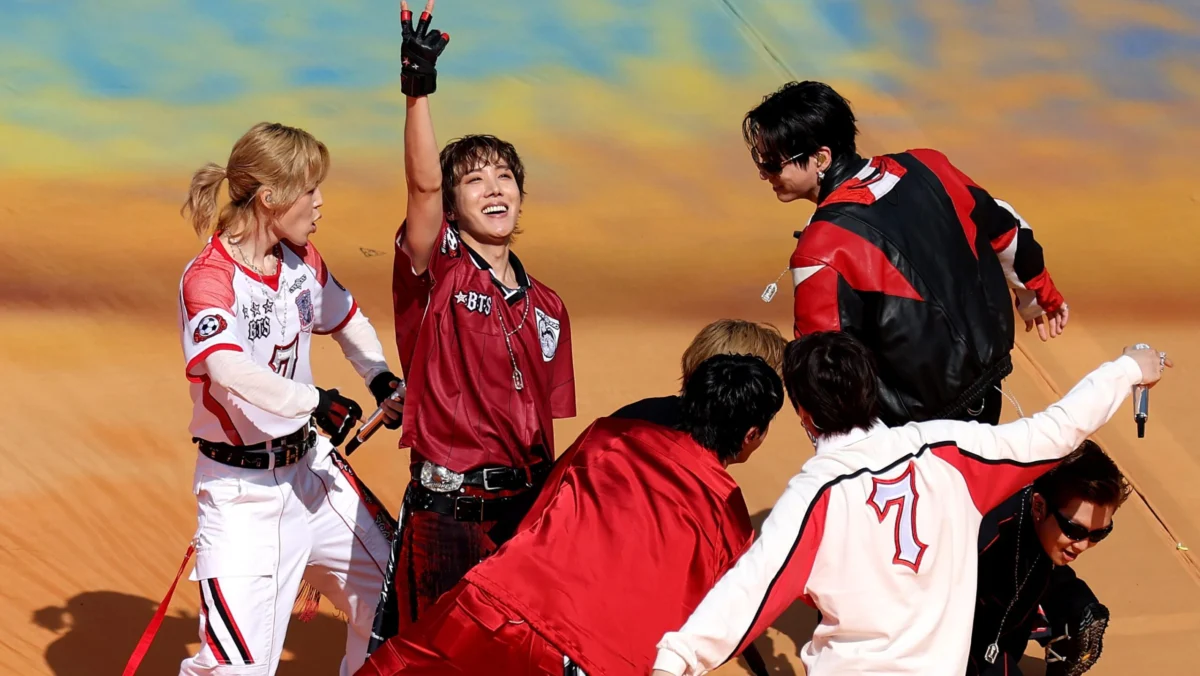
The world’s biggest football event, the FIFA World Cup 2026 final, witnessed an unprecedented cultural crossover as K-pop titans BTS delivered a landmark 11-minute performance during the tournament’s inaugural halftime show on Sunday. The seven-member global sensation, comprising RM, Jin, Suga, J-Hope, Jimin, V, and Jung Kook, took center stage at the New York New Jersey Stadium, commonly known as MetLife Stadium outside of major sporting events, to entertain a captivated audience during the highly anticipated championship match between Spain and Argentina.
This monumental performance marked a significant moment not only for BTS but also for the FIFA World Cup, which historically has not featured such an extensive and star-studded halftime spectacle. BTS’s inclusion alongside a diverse lineup of global icons, including Madonna, Justin Bieber, Shakira, Burna Boy, the New York Philharmonic’s Gustavo Dudamel, and even beloved characters from The Muppets, underscored the increasing globalization of entertainment and the universal appeal of music and sport. The appearance of Jason Sudeikis and Brendan Hunt, reprising their roles as characters from the critically acclaimed Apple TV+ series Ted Lasso, further amplified the show’s broad cultural reach, demonstrating a sophisticated blend of sports, music, and popular television. The World Cup 2026 tournament itself had spanned across numerous cities in the United States, Canada, and Mexico, culminating in this electrifying finale.
A Spectacle of Global Proportions
The halftime show, a collaborative production spearheaded by Global Citizen, aimed to transcend mere entertainment, incorporating a philanthropic mission. Programming for the event was thoughtfully curated by Chris Martin of Coldplay, a renowned advocate for social causes. The overarching goal of this initiative was to raise $100 million for the FIFA Global Citizen Education Fund. This ambitious target was supported by a direct contribution of $1 from every ticket purchased throughout the World Cup, embedding a charitable element into the very fabric of the tournament.
BTS, known for their meticulously choreographed performances and magnetic stage presence, delivered a rousing rendition of their 2020 global smash hit, "Dynamite." The performance began with a dynamic flourish as Jung Kook, the youngest member of the group, took the initial spotlight. Dressed in a striking ensemble of red, black, and white, reminiscent of his bandmates, Jung Kook sported a stylish moto jacket and sunglasses, commanding attention with his powerful vocals. The rest of the BTS members gradually joined him on stage as the song progressed, building the energy and amplifying the visual spectacle.
Lyrical Adaptations for a Sporting Stage
In a creative nod to the footballing context, BTS ingeniously adapted the lyrics of "Dynamite" to resonate with the World Cup theme. Lines were cleverly modified to incorporate football-related imagery and calls to action. For instance, the familiar lyrics were transformed to include phrases like "King Kong, kick the ball," injecting a playful and thematic energy into the performance. V, whose real name is Taehyung Kim, further enhanced this adaptation by incorporating a mimed football kick as he delivered his lines, such as "Ding-dong, call me on my phone / Ice tea, and a game of football," adding a touch of theatricality and engaging the audience directly with the sport at hand.
The performance was not just a musical showcase but a carefully crafted visual experience. The members’ coordinated outfits, the vibrant stage design, and the seamless integration of their iconic choreography created a dazzling spectacle that captivated millions worldwide. The sheer scale of the production, combined with BTS’s global fanbase, known as ARMY, ensured that this halftime show transcended traditional sporting event entertainment, becoming a cultural moment of significant magnitude.
BTS: A Year of Monumental Comebacks and Global Reach
This historic FIFA halftime performance caps off a truly remarkable year for BTS, solidifying their status as one of the most influential cultural forces of the 21st century. Following their mandatory military service in their native South Korea, all seven members reunited for group activities last year, embarking on a new creative chapter. Their highly anticipated album, Arirang, released in March, was met with critical acclaim and commercial success, further demonstrating their enduring appeal.
The release of Arirang was accompanied by a massive world tour, a testament to the group’s global demand. Their sold-out shows, including a significant run in Las Vegas in May, have consistently broken attendance records and generated substantial economic impact in the host cities. During their time in Las Vegas, BTS also took a brief hiatus from their tour to accept three American Music Awards, marking a triumphant return to the awards circuit post-military service. Their touring schedule is set to include a return to the iconic Las Vegas Strip for the iHeartRadio Music Festival in September, underscoring their continued dominance in live performances.
A Prelude to Their Own Stadium Takeover
Adding another layer of significance to their World Cup appearance, BTS is slated to return to the very venue of the halftime show, MetLife Stadium, in mere weeks. The group has two sold-out concerts scheduled for August 1 and August 2, further cementing their deep connection with the New York metropolitan area and their ability to command massive audiences in iconic venues. This dual presence at MetLife Stadium—first on the global football stage and then for their own highly anticipated concerts—highlights their unparalleled impact across different entertainment spheres.
Supporting Data and Context
The FIFA World Cup is arguably the most-watched sporting event globally. The 2022 FIFA World Cup in Qatar, for example, reportedly reached a cumulative audience of over 5 billion people across all platforms, with the final match between Argentina and France drawing an estimated 1.5 billion viewers. The inclusion of a K-pop group like BTS in the halftime show of the 2026 final, which is expected to be hosted across North America, signifies a deliberate effort by FIFA to broaden its appeal to diverse demographics and tap into the immense global popularity of K-pop.
BTS’s "Dynamite" itself is a record-breaking song. Released in August 2020, it became the first song by a South Korean act to debut at number one on the Billboard Hot 100 chart in the United States. It has since garnered over 1.5 billion streams on Spotify and achieved Diamond certification by the RIAA for selling over 10 million units in the US. The song’s infectious disco-pop sound and uplifting message resonated with audiences worldwide, making it a fitting anthem for a global event.
The partnership with Global Citizen for the halftime show also aligns with broader trends in corporate social responsibility and philanthropic engagement within major global events. By integrating a charitable component, FIFA and Global Citizen aimed to leverage the immense platform of the World Cup to drive meaningful social impact, particularly in the realm of education.
Broader Impact and Implications
The inclusion of BTS in the FIFA World Cup halftime show is more than just a performance; it represents a significant cultural bridge-building moment. It underscores the growing influence of non-Western cultural exports on the global stage and highlights the universal language of music and sport. For BTS, it provides another platform to showcase their artistry to an even wider audience, potentially converting football fans into new admirers of their music.
For FIFA, this strategic decision signals a forward-thinking approach to engagement, recognizing the power of contemporary popular culture to attract and retain younger audiences and diverse fan bases. The success of this innovative halftime show could set a precedent for future FIFA World Cups and other major international sporting events, encouraging greater collaboration between the worlds of sports, music, and entertainment. The fact that the performance was integrated with a charitable cause further adds a layer of positive social impact, demonstrating that large-scale entertainment can also serve as a catalyst for good. The event’s success, measured by viewership, social media engagement, and the philanthropic contributions, will undoubtedly be analyzed for years to come as a benchmark for global event programming.
The presence of global superstars like BTS alongside established legends and beloved fictional characters signifies a new era of interconnected entertainment. As the world continues to shrink through digital connectivity, the lines between music, sports, and popular culture blur, creating opportunities for groundbreaking collaborations that resonate across borders and generations. BTS’s electrifying performance at the FIFA World Cup 2026 final has undoubtedly etched itself into the annals of both sports and entertainment history.
(The article is supplemented by the embedded video of the performance, allowing viewers to experience the spectacle firsthand.)

