
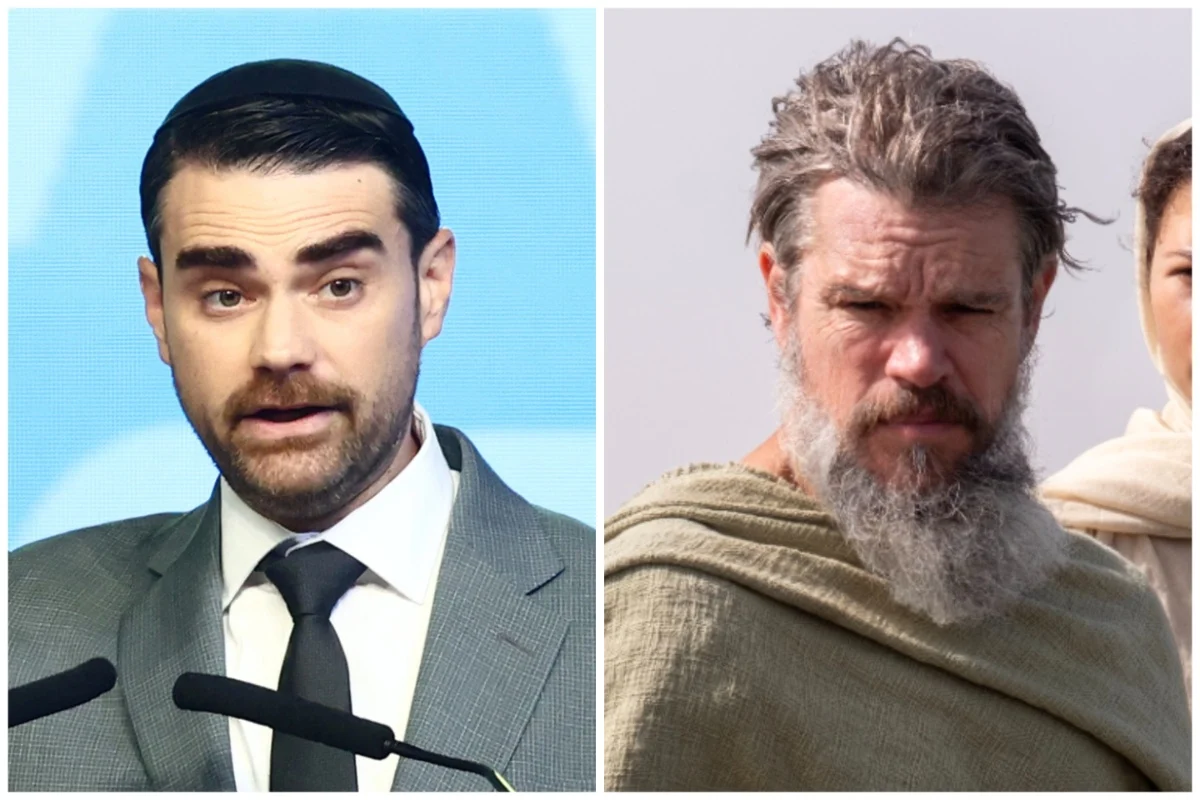
Conservative commentator Ben Shapiro has offered a surprisingly ardent endorsement of Christopher Nolan’s latest cinematic endeavor, "The Odyssey," a reimagining of the ancient Greek epic. In an 18-minute review posted to his YouTube channel on Saturday, Shapiro lauded the film as a "masterpiece," a sentiment that stands in stark contrast to the vocal criticism emanating from some conservative circles regarding its casting and perceived historical inaccuracies.
Shapiro’s assessment places Nolan at the pinnacle of contemporary filmmaking. "Nolan is unparalleled," Shapiro declared in his video. "He’s the best director working today, without a doubt. He just creates iconic movie after iconic movie." This high praise extended to the film’s ensemble cast, with particular commendation for Matt Damon’s portrayal of the titular hero, Odysseus. "I think he’s great in nearly everything," Shapiro noted. "He sort of disappears into the part in a way that he doesn’t in a lot of other movies. He’s great as Odysseus."
The review continued with effusive praise for several supporting actors. Robert Pattinson, taking on the role of Antinous, was described as an "excellent antagonist," characterized by Shapiro as "sleazy and gross." Tom Holland received accolades for his casting as Telemachus, deemed "excellent" and "well cast." Anne Hathaway’s performance as Penelope was also highlighted, with Shapiro stating she "does a great job."
Addressing Casting Controversies
A significant portion of Shapiro’s review directly addressed the controversy surrounding Lupita Nyong’o’s casting as Helen of Troy. Critics had argued that Nyong’o did not fit the traditional depiction of Helen, a point Shapiro countered. "So, I know a lot of people were like, ‘Oh my god, Lupita Nyong’o is supposed to look like Diane Kruger.’ I don’t know. Diane Kruger doesn’t look very Greek. She’s German," Shapiro stated, suggesting a disconnect between perceived historical accuracy and the film’s artistic license. He further defended the casting by emphasizing Nyong’o’s inherent beauty and, more crucially, by referencing Nolan’s script. "Lupita Nyong’o is a beautiful woman. But here’s the thing, actually, in the script, Nolan goes out of his way to explain that the war wasn’t really launched over Helen being gorgeous." This suggests a narrative justification within the film that moves beyond superficial appearances, a point Shapiro seemed to appreciate.
However, Shapiro did express reservations about one specific casting choice: Elliot Page as Sinon. He described Page’s role as an "absolute puzzler." Shapiro elaborated on his discomfort, pointing to Page’s physical stature and vocal characteristics. "He is about 5’2 and 105 pounds soaking wet and has the voice of a woman. It doesn’t work," Shapiro opined, suggesting a perceived mismatch between the actor and the character’s narrative function. This marks a rare point of contention within an otherwise overwhelmingly positive review, and it touches upon broader discussions about representation and character interpretation in modern cinema.
Nolan’s Stance on Backlash
Shapiro’s review arrives amidst a backdrop of significant online backlash, particularly from right-wing voices, including prominent figures like Elon Musk. These criticisms have largely focused on the perceived departure from traditional interpretations of the epic, especially concerning the casting of non-white actors in roles traditionally depicted as European.
Christopher Nolan himself has publicly addressed such controversies. In a recent interview with The Telegraph, Nolan conveyed an unbothered stance regarding the online noise. He explained that such backlash is an inherent part of the filmmaking process when dealing with large-scale, highly anticipated projects. "Remember, I spent 10 years of my life dealing with Batman," Nolan stated, drawing a parallel to his experience with the Dark Knight franchise. "When I came on ‘Begins,’ writers and artists had been working on this beloved character for almost 65 years, and a lot of freighted thoughts were out there about what he represents. And what I learnt over my time on that trilogy is you can’t worry about any of that at all. What you have to do is honor the original text by interpreting it in the strongest way you personally can."
Nolan’s philosophy, as articulated here, suggests a focus on artistic integrity and personal interpretation over appeasing external expectations or historical purism. This approach aligns with his history of reinterpreting established narratives, a characteristic that has defined his directorial career.
Contextualizing "The Odyssey" and Nolan’s Filmography
Homer’s "The Odyssey" is one of the foundational works of Western literature, chronicling the arduous ten-year journey of the Greek hero Odysseus as he strives to return home to Ithaca after the Trojan War. The epic poem is renowned for its intricate plot, its exploration of themes such as homecoming, loyalty, divine intervention, and the human struggle against adversity. Its enduring influence can be seen across millennia of art, literature, and storytelling.
Christopher Nolan, known for his complex narratives, mind-bending plots, and large-scale productions, has a well-established track record of tackling ambitious projects. His filmography includes critical and commercial successes such as "Inception," "The Dark Knight" trilogy, "Interstellar," and "Dunkirk." His approach often involves deconstructing familiar genres or narratives and presenting them through a unique, often intellectually challenging, lens. "The Odyssey," with its rich source material and epic scope, presents a fertile ground for Nolan’s directorial style.
The recent surge of conservative criticism directed at Hollywood productions for their casting choices is not a new phenomenon but has gained significant traction in recent years. This discourse often centers on debates about representation, historical accuracy, and what some perceive as a departure from traditional cultural norms in storytelling. The casting of actors of color in roles that have historically been portrayed by white actors has become a particular flashpoint.
Analysis of Implications and Broader Impact
Ben Shapiro’s positive review of "The Odyssey" is noteworthy for several reasons. Firstly, it demonstrates that even within ideologically aligned circles, individual artistic merit can sometimes transcend political or social critiques. Shapiro’s willingness to praise a film that has drawn fire from his own ideological spectrum suggests a genuine appreciation for Nolan’s filmmaking craft.
Secondly, the differing reactions to "The Odyssey" highlight a broader cultural conversation about the role of representation and interpretation in media. While some audiences prioritize strict adherence to historical or traditional depictions, others, including filmmakers like Nolan and reviewers like Shapiro (in this instance), champion artistic freedom and the potential for diverse casting to bring new dimensions to classic stories.
The implications of this discourse extend beyond "The Odyssey." It reflects an ongoing tension between traditionalist views and more progressive approaches to storytelling and representation in the entertainment industry. As Hollywood continues to diversify its casts and narratives, such debates are likely to persist, shaping audience reception and critical discourse. Nolan’s stated philosophy of honoring the original text through personal interpretation offers a framework for understanding how filmmakers navigate these evolving expectations. His success in the past with challenging established narratives, such as Batman, suggests a proven ability to resonate with audiences even amidst initial resistance. The eventual box office performance and sustained critical reception of "The Odyssey" will likely offer further insights into how these contemporary casting debates ultimately influence the success of ambitious cinematic undertakings. The fact that a film adapted from an ancient epic is generating such contemporary debate underscores its potential cultural relevance and the enduring power of storytelling to provoke thought and discussion.

