
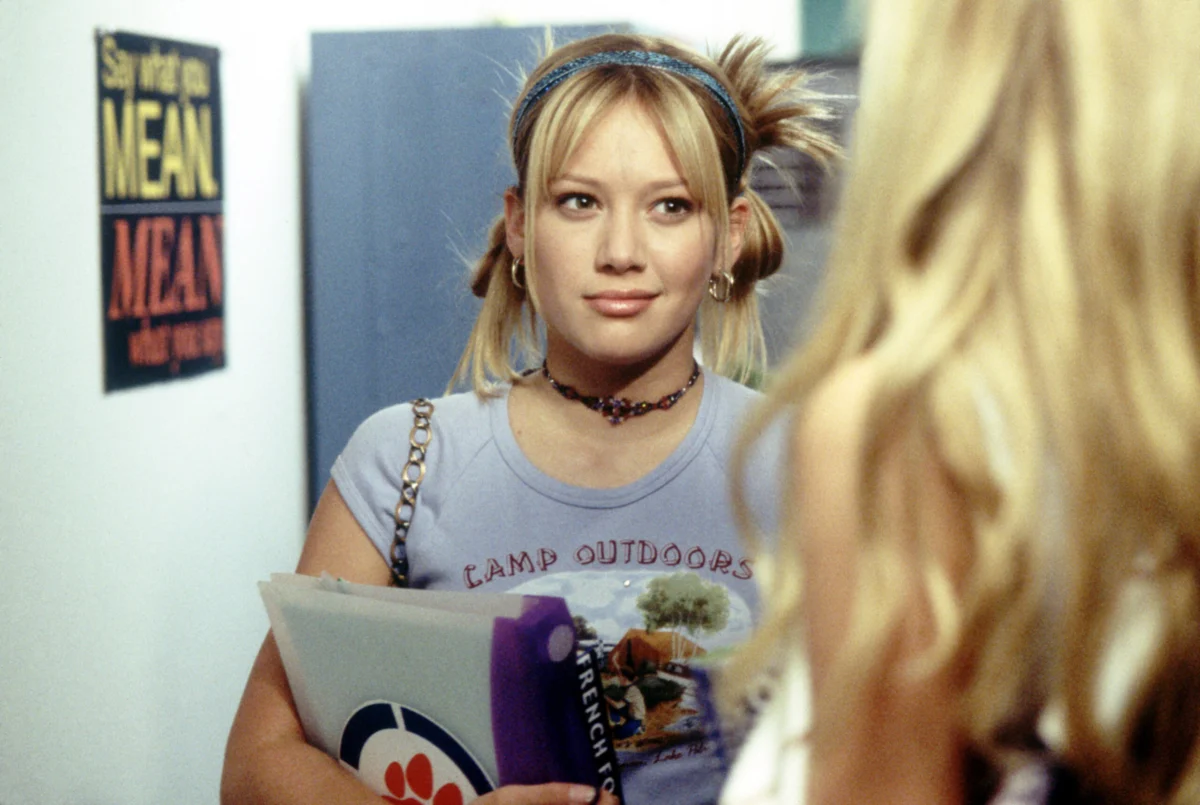
The transition from child star to autonomous artist is a well-documented phenomenon in Hollywood, yet few cases illustrate the tension between public identity and personal agency as clearly as that of Hilary Duff. Two decades after the conclusion of the cultural phenomenon that was Lizzie McGuire, Duff has opened up about the profound sense of exhaustion and detachment she felt while filming the 2003 cinematic finale, The Lizzie McGuire Movie. In a recent, candid interview with Paper magazine, the actress and singer detailed the internal struggle of being a teenager defined by a character while desperately attempting to forge a separate, independent identity.
A Chronology of a Cultural Phenomenon
To understand the weight of Duff’s recent reflections, one must look at the meteoric rise of the Lizzie McGuire franchise. The series, which premiered on the Disney Channel on January 12, 2001, became an immediate success. It followed the life of a junior high student navigating the quintessential anxieties of adolescence, accompanied by a signature animated inner monologue.
The production schedule was, by all accounts, grueling. Duff filmed 30 episodes in the first year and followed that with 35 episodes in the second. By the time the production moved to Italy for the 2003 feature film, the pressure of being the face of a brand that had become a global merchandising juggernaut had reached a breaking point. For a young woman barely out of her early teens, the blurring of lines between the actress and the character was not merely a professional challenge—it was an existential one.
The show officially concluded in 2004 after 65 episodes, a number that became a standard benchmark for Disney Channel series at the time. Yet, the legacy of the show—and the iconic track "What Dreams Are Made Of"—persisted long after the cameras stopped rolling.
The Struggle for Autonomy and Identity
In her interview with Paper, Duff was explicit about the psychological toll the franchise took during its final stages. "I was pretty done with Lizzie at that time," she stated. "I had filmed 30 episodes one year and 35 episodes the next. I turned into a huge star. Everyone called me Lizzie. And then I went to Italy to film that movie, and I think I was just like, ‘I’m fucking done with you.’ I want people to see me. This isn’t fun anymore."
This sentiment is common among child actors who face the "monikering" effect, where the audience struggles to separate the performer from the role. For Duff, the conflict was compounded by the fact that she was becoming a legitimate pop star in her own right, releasing albums like Metamorphosis and later, Dignity, which aimed to establish a sound and persona distinct from the Disney aesthetic.
The reclamation of "What Dreams Are Made Of" serves as a symbolic turning point in this narrative. The song, which was a cornerstone of the film’s climax, was recently re-recorded for her 2026 EP, (Mine). During her "Small Rooms, Big Nerves" tour, Duff performed the song live, effectively integrating it into her current artistic identity. "I don’t want to sound ungrateful for doing it, but at the time, I was pretty exhausted by it," Duff explained. "I was trying to create Hilary Duff separate from Lizzie, so that was right at the midway point where I was like, ‘I’m never singing that song.’ And I didn’t even own it. It wasn’t my song to sing. But now I feel like it is."
Musical Evolution and the (Mine) EP
The release of the (Mine) EP marks a significant chapter in Duff’s career. Comprised of seven re-recorded versions of her greatest hits—tracks that were originally relegated to bonus status on vinyl variants of her 2025 album Luck… or Something—the project is a deliberate exercise in creative ownership.
Industry analysts suggest that re-recording catalogs has become a strategic imperative for artists seeking to control their intellectual property and connect with long-term fan bases. By revisiting these tracks, Duff is not only providing fans with high-fidelity updates but also reconciling with her past work from a position of authority.
"When I look back at that, I’m like, oh my god, I would love a redo," she remarked regarding her early music career. "All of it was just so crazy. I’m so glad it resonated with people this many years later, and that they loved it and ate it up. But when I perform it now, I’m like, ‘Oh, I’m in this.’ Back then, I just feel like I wasn’t in my body yet."
The Broader Implications for Child Stardom
The narrative surrounding Hilary Duff is emblematic of the evolving conversation regarding the treatment of child stars in the early 2000s. Unlike many of her contemporaries, Duff has managed to sustain a long-term career in film and television—notably through her roles in Young Adult series like Younger and her lead role in How I Met Your Father—without succumbing to the burnout that often sidelines performers who grow up under a microscope.
The analytical perspective on this transition suggests that Duff’s ability to eventually embrace the "Lizzie" legacy was predicated on her achieving professional success outside of that sphere. By establishing herself as an actress in mature roles, the pressure to "kill the character" diminished, allowing for the nostalgic appreciation she now exhibits.
Furthermore, the data regarding the longevity of the Lizzie McGuire fan base supports the idea that the show remains a cultural touchstone. The intense public reaction to the cancellation of the proposed 2020 Disney+ revival series underscored the enduring emotional attachment that audiences have to the property. Duff’s current willingness to engage with that legacy on her own terms indicates a healthy evolution in her relationship with her work.
Conclusion: Reclaiming the Narrative
Hilary Duff’s journey from an exhausted teenager on the streets of Rome to a seasoned artist in control of her own discography offers a roadmap for navigating early fame. The decision to re-record "What Dreams Are Made Of" is more than a nostalgic nod to her past; it is an act of artistic integration.
As she continues her "Small Rooms, Big Nerves" tour, Duff is demonstrating that the boundaries between her past and present are no longer walls, but bridges. By acknowledging the exhaustion and frustration of her youth while simultaneously celebrating the joy the music brought to her fans, she has successfully reclaimed her narrative.
For many who grew up watching the show, seeing Duff sing the lyrics that defined a generation—now with the confidence and perspective of an adult—serves as a poignant reminder that personal growth is rarely linear. It is a process of returning to the beginning, not as the person one was, but as the person one has fought to become. As the industry continues to evaluate the legacy of the 2000s pop culture boom, Duff’s trajectory stands as a testament to the power of agency, timing, and the ultimate necessity of self-reclamation.

