
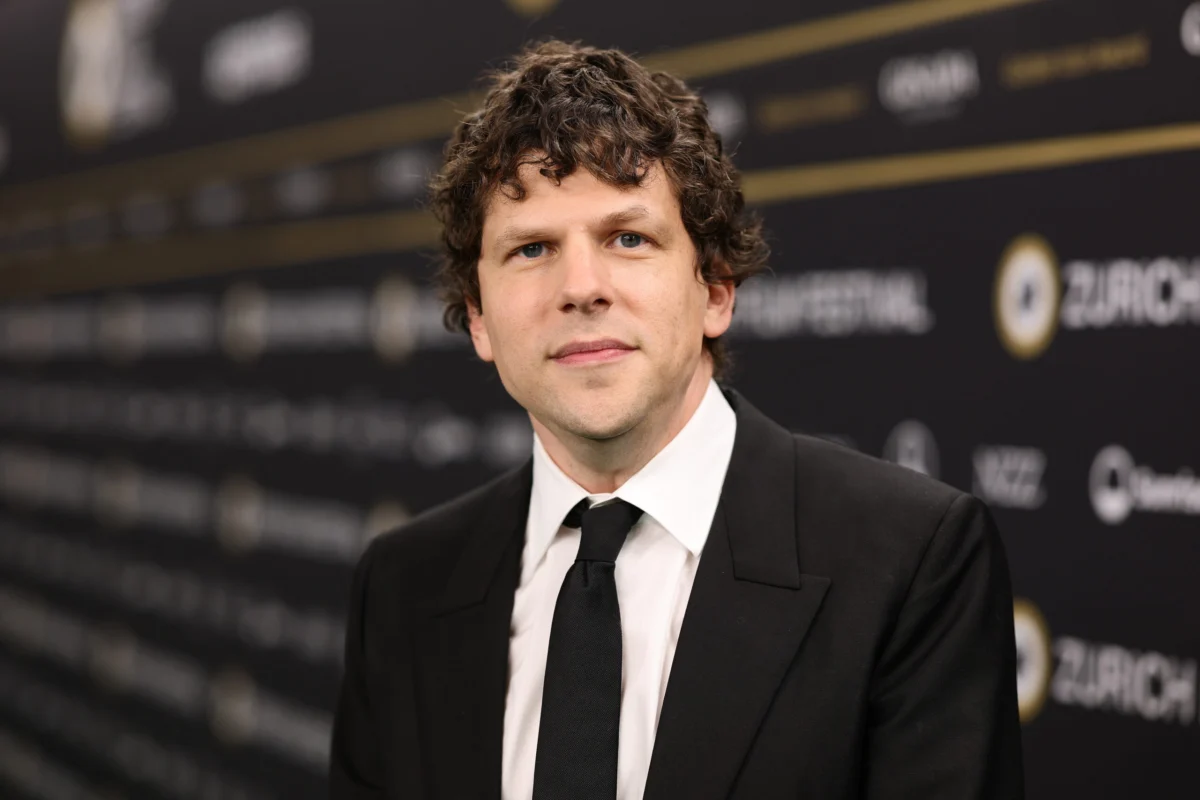
The nature of celebrity in the twenty-first century is frequently defined by the intensity of audience identification, a phenomenon that actor, director, and writer Jesse Eisenberg suggests is inextricably linked to the specific archetypes an performer occupies. In a recent, expansive profile published by The New Yorker, Eisenberg offered a candid assessment of his own public interactions, positing that his career trajectory—largely devoid of overtly sexualized roles—has allowed him a level of anonymity and normalcy that remains elusive for many of his contemporaries.
Eisenberg, whose diverse portfolio spans from the frantic, intellectual energy of Mark Zuckerberg in The Social Network to the neurotic, self-deprecating characters that have become his hallmark, identifies a clear distinction between actors who are "objects of desire" and those who exist in the public consciousness as intellectual or comedic entities. This distinction, he argues, fundamentally alters the way fans approach him in public spaces.
The Dynamics of Public Recognition and Interaction
For many prominent actors, the experience of being in public is often mediated by the "sexualization" of their onscreen personas. When an audience is conditioned to view an actor as a romantic or sexual figure, the parasocial relationship shifts, often leading to more intrusive or demanding interactions in real-world settings. Eisenberg, however, suggests that his experience is qualitatively different.
"People are mostly fine," Eisenberg remarked during his interview, describing his regular routine of working on scripts at the New York Public Library. He attributes this lack of friction to the nature of the roles he portrays. "It’s because there’s no sexuality to my work. I think once the public is asked to want to sleep with a person onscreen, that person’s life is fundamentally different."
This observation highlights a broader sociological trend in celebrity culture: the "typecasting" of actors into romantic leads versus character actors influences the boundary-setting of their fans. By avoiding roles that lean into traditional heartthrob or romantic-lead tropes, Eisenberg has curated a professional existence where he is recognized more for his intellectual output than his physical appeal, resulting in a public experience characterized by relative detachment rather than intense fixation.
A Chronology of a Career in the Public Eye
Jesse Eisenberg’s career trajectory provides a compelling case study in the evolution of the modern character actor. Rising to prominence in the mid-2000s with roles in films like The Squid and the Whale and Adventureland, Eisenberg established a reputation for playing highly verbal, socially complex individuals.
The turning point in his public perception occurred in 2010 with the release of David Fincher’s The Social Network. His portrayal of Mark Zuckerberg earned him an Academy Award nomination and solidified his place as one of the most recognizable faces in independent and mainstream cinema. However, the success of the film also created a permanent, if somewhat inaccurate, association between the actor and the real-life tech billionaire.
Recalling the complications of this association, Eisenberg noted that public interactions are not always purely professional or polite. "I’d be out at a bar, and a drunk guy would say, ‘Hey, I love your website,’" he recounted. "And as I’m pretending to laugh, I’d just wish all of the oxygen would leave my lungs, and that I would collapse on the floor in front of this guy and show him what he’s doing to me."
This tension reached a head regarding the recent development of the sequel, The Social Reckoning. Despite the massive cultural footprint of the original film, Eisenberg notably declined to return for the follow-up, a decision that underscores his desire to maintain artistic autonomy and move away from roles that pigeonhole him into specific public perceptions. The role of Zuckerberg was subsequently filled by Jeremy Strong, marking a significant shift in the portrayal of the character and signaling Eisenberg’s deliberate pivot toward his own creative projects.
The Transition to Directorial Work and The Debut
Eisenberg’s evolution from actor to writer-director represents a strategic move to define his own narrative. His latest directorial endeavor, The Debut, serves as a testament to his desire to explore human complexities behind the camera. The film, which is slated for a theatrical release on December 11, boasts an impressive ensemble cast, including Julianne Moore, Paul Giamatti, Halley Bailey, Colton Ryan, and Bernadette Peters.
By positioning himself as a creator, Eisenberg is attempting to mitigate the "celebrity" factor that often impedes the work of high-profile actors. The transition to directing is a common path for actors seeking more control over their environment, yet for Eisenberg, it also serves as a mechanism to shift the focus from his physical presence to his intellectual contribution.
Supporting Data and Industry Context
The phenomenon described by Eisenberg is backed by emerging research in celebrity studies. Studies into "parasocial relationships"—the one-sided bonds fans form with media figures—suggest that when actors are cast in romantic roles, the psychological barrier between the viewer and the celebrity thins. According to data from industry analysts regarding "star power" and social media engagement, actors who leverage their physical image for marketing purposes tend to encounter higher rates of stalker-like behaviors and intrusive public interactions compared to those who prioritize character-driven, non-romantic roles.
Furthermore, the "New York Public Library" dynamic that Eisenberg describes—where he is able to function as a writer in a public space—is a luxury not afforded to all. Many A-list celebrities, particularly those marketed through sexualized roles, report that they cannot visit public institutions without a security detail or significant disruption, a clear indicator of the social tax levied on certain archetypes of stardom.
Broader Implications for Hollywood’s Talent
The implications of Eisenberg’s reflections are significant for the industry. As Hollywood continues to grapple with the demands of the social media age, where every actor is expected to be a brand, the ability to maintain a private life is becoming increasingly rare. Eisenberg’s approach—prioritizing non-sexualized roles and focusing on behind-the-camera work—offers a blueprint for how performers can protect their personal space.
However, this strategy also highlights a systemic issue within the film industry: the tendency to commodify an actor’s body as a marketing tool. For many actors, the choice to avoid sexualized roles is not merely an artistic preference but a defensive measure against the erosion of their privacy. As audiences continue to demand more intimacy with their favorite stars through platforms like Instagram and TikTok, the divide between those who are "marketed as people" and those who are "marketed as products" will only widen.
Conclusion
Jesse Eisenberg’s reflections in The New Yorker provide a rare, unvarnished look at the realities of life in the public eye. By identifying the root cause of his relatively calm public interactions, he exposes the subtle ways in which Hollywood’s casting choices impact the daily lives of its talent. As he prepares for the release of The Debut, it is clear that Eisenberg is continuing his effort to be defined by his work rather than his celebrity status. Whether this trajectory will allow him to maintain his desired level of anonymity remains to be seen, but his commitment to artistic integrity and personal boundaries serves as a notable counter-narrative to the standard trajectory of the modern movie star.
The industry’s reception of The Debut will likely serve as another benchmark for his career, further establishing his identity as a multifaceted creator. As he navigates the balance between public recognition and private authorship, Eisenberg remains a compelling figure—one who understands the game of celebrity well enough to know when to step back from the spotlight and focus on the quiet, often solitary, process of creation.

