
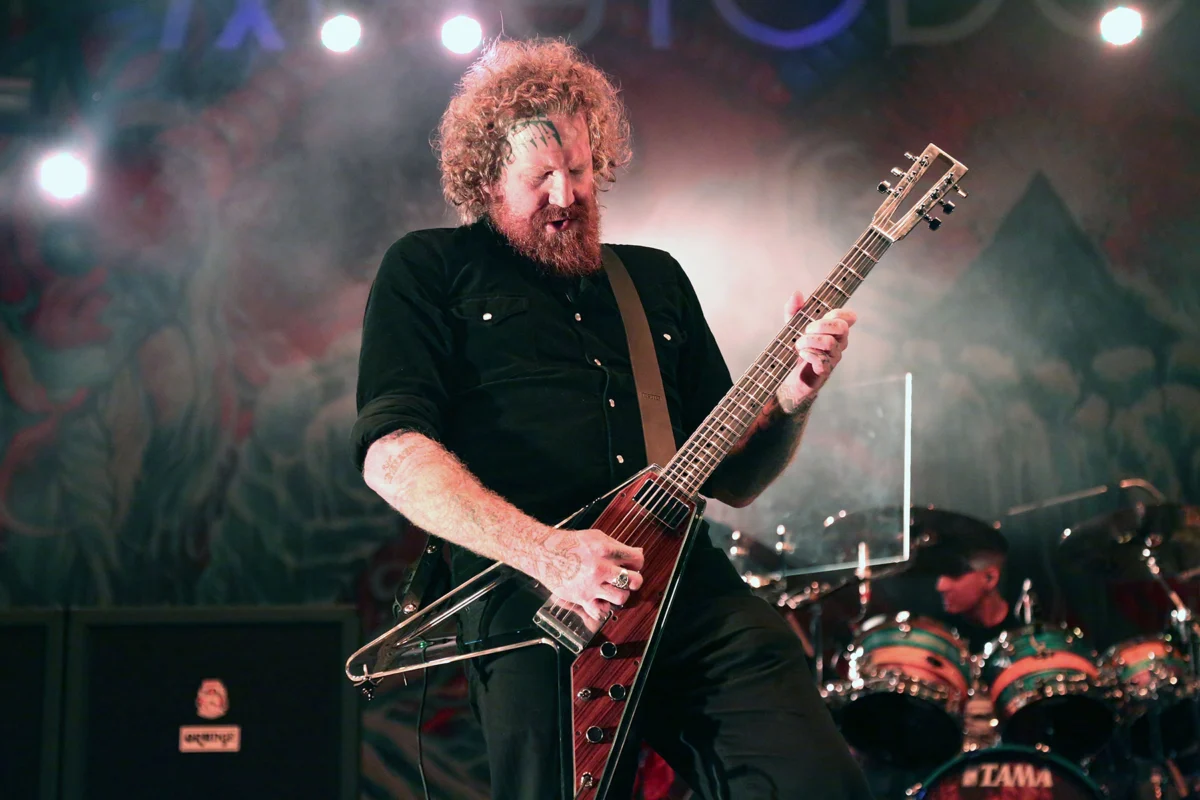
The legal battle between the surviving members of the heavy metal band Mastodon and the estate of their late former guitarist, Brent Hinds, has taken a decisive turn. In a comprehensive legal filing submitted on Monday, the members of Mastodon officially asked a judge to dismiss significant portions of the lawsuit filed against them. The lawsuit, originally initiated in September by Billy Hinds—the father of the late musician—acts on behalf of Brent Hinds’ estate, aiming to challenge the band’s financial and business maneuvers following the guitarist’s passing.
The 20-page legal memorandum meticulously dismantles the phrasing, legal theories, and specific claims presented in the initial complaint. According to the band’s defense team, large sections of the lawsuit fail to state a legally viable claim, even when accepting the estate’s allegations at face value. The filing centers heavily on corporate structure protections, the intricacies of business buyouts, the legitimate utilization of artistic likeness on recent album artwork, and the legal boundaries of intellectual property and fiduciary duty.
As this high-profile dispute unfolds in the public eye, it underscores the complex intersection where personal grief, band partnerships, corporate law, and the multi-million-dollar music industry collide. Both legal camps are now preparing for what could be a protracted courtroom battle over the legacy and business affairs of one of modern metal’s most influential guitarists.
Core Legal Arguments and the Push for Dismissal
At the heart of Mastodon’s recent motion is the principle of corporate shielding. The band’s lawyers argue forcefully that the individual members of Mastodon should not be held personally and individually liable for the claims brought forward in the lawsuit. Because Mastodon operates as a limited liability company (LLC), corporate law generally protects individual members from personal liability arising from the company’s ordinary business operations and contractual disputes, absent extraordinary circumstances of fraud or intentional wrongdoing—which the band firmly denies.
Furthermore, the defense takes direct aim at the estate’s claims regarding a corporate buyout. Prior to his tragic passing in August 2025, discussions had taken place regarding Brent Hinds divesting his business interests from the band following their mutual parting of ways in March 2025. The estate’s complaint heavily criticizes the "buyout process," pointing to an $80,000 check issued by the band to represent Hinds’ corporate share—a check the estate notably refused to cash.
Mastodon’s legal team counters that any informal offers or preliminary discussions conducted by a subsidiary company prior to Hinds’ death did not constitute a binding, finalized legal obligation to complete the transaction under those exact terms. Additionally, the defense highlights a critical flaw in the estate’s attempt to dictate the valuation of those business interests. According to the filing, the complaint fails to establish an agreed-upon purchase price and neglects to show that Hinds himself ever formally proposed a specific buyout price when he originally requested to divest his shares. "The Complaint cannot allege an agreed purchase price — it does not even allege that Hinds offered a purchase price when he requested to be bought out," the legal filing states.
The Controversy Over Marrow Deep and Artist Likeness
A particularly contentious element of the lawsuit revolves around the use of Brent Hinds’ image on the cover art for Mastodon’s recently released studio album, Marrow Deep. The estate alleged breach of fiduciary duty and unauthorized exploitation of the late musician’s likeness, demanding financial restitution and attempting to bar future uses of his image.
Mastodon’s legal memorandum stands resolutely by the decision to feature Hinds on the album cover. The defense argues that the estate has fundamentally failed to establish the existence of a specific fiduciary relationship governing the artistic utilization of historical images in promotional and album artwork context. In the realm of music production, bands frequently utilize historical imagery, archival photographs, and promotional assets of former members, particularly when honoring their contributions to a shared musical legacy.
Addressing the separate allegation of "conversion"—a legal term for civil theft or the wrongful deprivation of property—the defense denies that the band unlawfully seized or withheld Hinds’ alleged 25 percent ownership interest in the entity. While acknowledging that the estate claims Mastodon purported to redeem those interests and declined to recognize certain rights, the filing emphasizes a distinct absence of any factual allegation that the band physically seized, transferred, or withheld tangible stock certificates, ownership deeds, or physical documents embodying Hinds’ corporate stakes.
Moreover, the band’s attorneys took aim at the broad and sweeping nature of the estate’s demands regarding future actions. The filing argues that the estate is attempting to improperly police and direct Mastodon’s future conduct rather than seeking legitimate legal guidance regarding its own rights or obligations.
Chronology of Events Leading to the Litigation
To fully understand the context of the current legal standoff, it is necessary to examine the timeline of events that preceded the filing of the lawsuit:
- March 2025: Mastodon and Brent Hinds officially and mutually part ways after a long and storied tenure together as core members of the Grammy-nominated heavy metal institution. Discussions begin regarding the separation of his business interests and corporate shares from the band’s commercial entities.
- August 2025: Brent Hinds passes away tragically, sending shockwaves through the global heavy metal community and leaving behind grieving family members, bandmates, and millions of fans.
- Late Summer 2025: In the wake of his passing, private discussions take place between Mastodon’s business entities and Hinds’ family regarding his remaining financial stake in the band. Mastodon issues a check for $80,000 intended to finalize the corporate buyout of his share. The estate declines to cash the check, viewing the valuation as inadequate.
- September 2025: Billy Hinds, acting on behalf of the estate of Brent Hinds, files a formal civil complaint against Mastodon in court, alleging breach of fiduciary duty, conversion, and improper business buyout procedures, while also challenging the use of the late guitarist’s likeness.
- September 2025: Mastodon releases a public statement addressing the matter, expressing profound sadness that a private business dispute was dragged into the public sphere, denying any ill intent, and vowing to vigorously defend against the lawsuit.
- November 2025: Mastodon’s legal team files a formal 20-page memorandum in court, requesting a judge to dismiss major portions of the lawsuit, clarify legal definitions surrounding likeness and corporate structure, and absolve individual band members of personal liability.
Broader Industry Implications and Corporate Realities
The legal friction between Mastodon and the Hinds estate sheds light on a frequently overlooked aspect of the music business: the corporate mechanics of bands operating as commercial entities. When legacy acts achieve international success, they typically form complex corporate structures—including limited liability companies, publishing corporations, and touring entities—to manage millions of dollars in revenue, merchandise sales, streaming royalties, and intellectual property.
When a founding member or long-tenured contributor departs a band, untangling these financial webs is rarely straightforward. Valuation of minority shares in private entertainment LLCs involves complicated accounting principles, projected future catalog earnings, touring revenue assessments, and valuation metrics that frequently leave departing members—or their surviving heirs—feeling undervalued.
Furthermore, the dispute over Marrow Deep highlights the delicate balance bands must strike when honoring fallen or departed members while maintaining their creative momentum. As Mastodon continues to tour and release new music, questions regarding how past members are visually and commercially represented will likely become increasingly common touchpoints in entertainment law. Industry analysts note that standard band agreements and partnership contracts often dictate these buyout procedures, but ambiguity in informal separation agreements can easily pave the way for costly and emotional litigation.
Official Responses and Ongoing Silence
As the legal proceedings progress, representatives for both sides have largely maintained tight-lipped postures outside of the courtroom. A designated public relations representative for Mastodon declined to offer additional comments regarding the recent motion to dismiss, pointing instead to the band’s previous public statements emphasizing their dedication to defending their position and honoring their shared history with Hinds.
Similarly, legal counsel representing Billy Hinds and the estate did not immediately respond to media inquiries following the release of the 20-page memorandum. With the formal dismissal request now officially lodged with the court, the presiding judge will review the written arguments from both legal teams, determine the legal sufficiency of the estate’s claims, and decide whether the lawsuit will proceed in its entirety or undergo significant narrowing.
For millions of Mastodon fans worldwide, the ongoing legal drama represents a bittersweet chapter in the history of a band that defined a generation of progressive sludge metal. While the courtroom battle continues to parse the dry mechanics of corporate law and intellectual property rights, the musical legacy built by Brent Hinds and his bandmates remains permanently etched into the heavy metal canon.

