
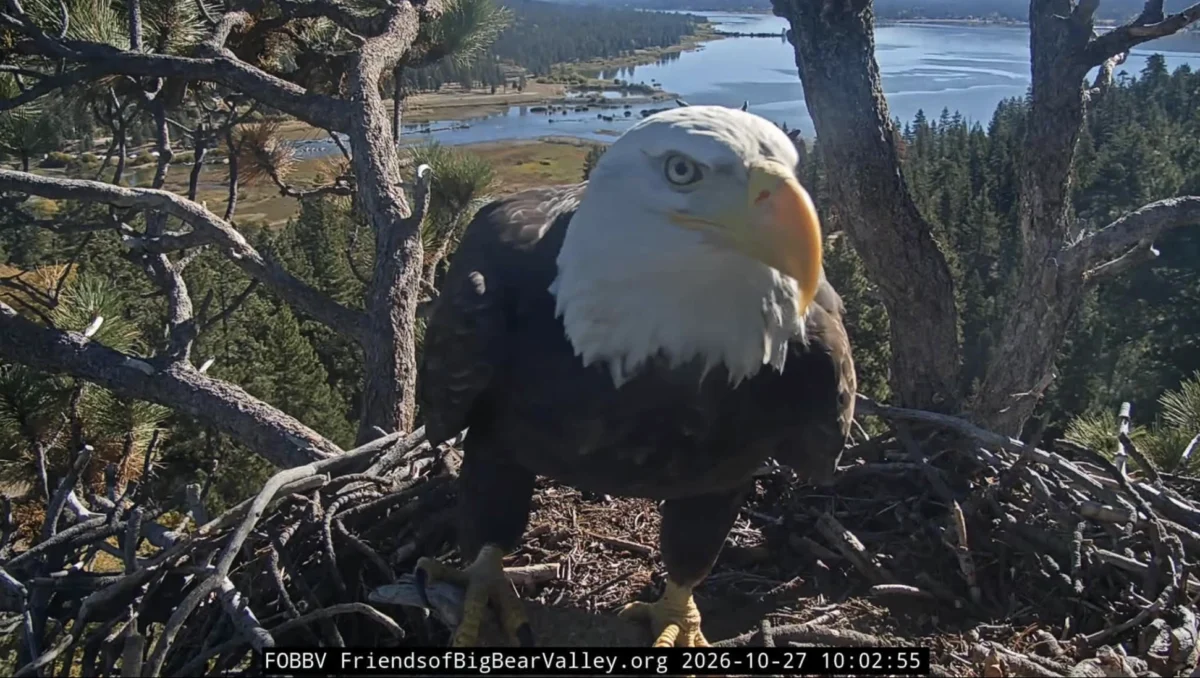
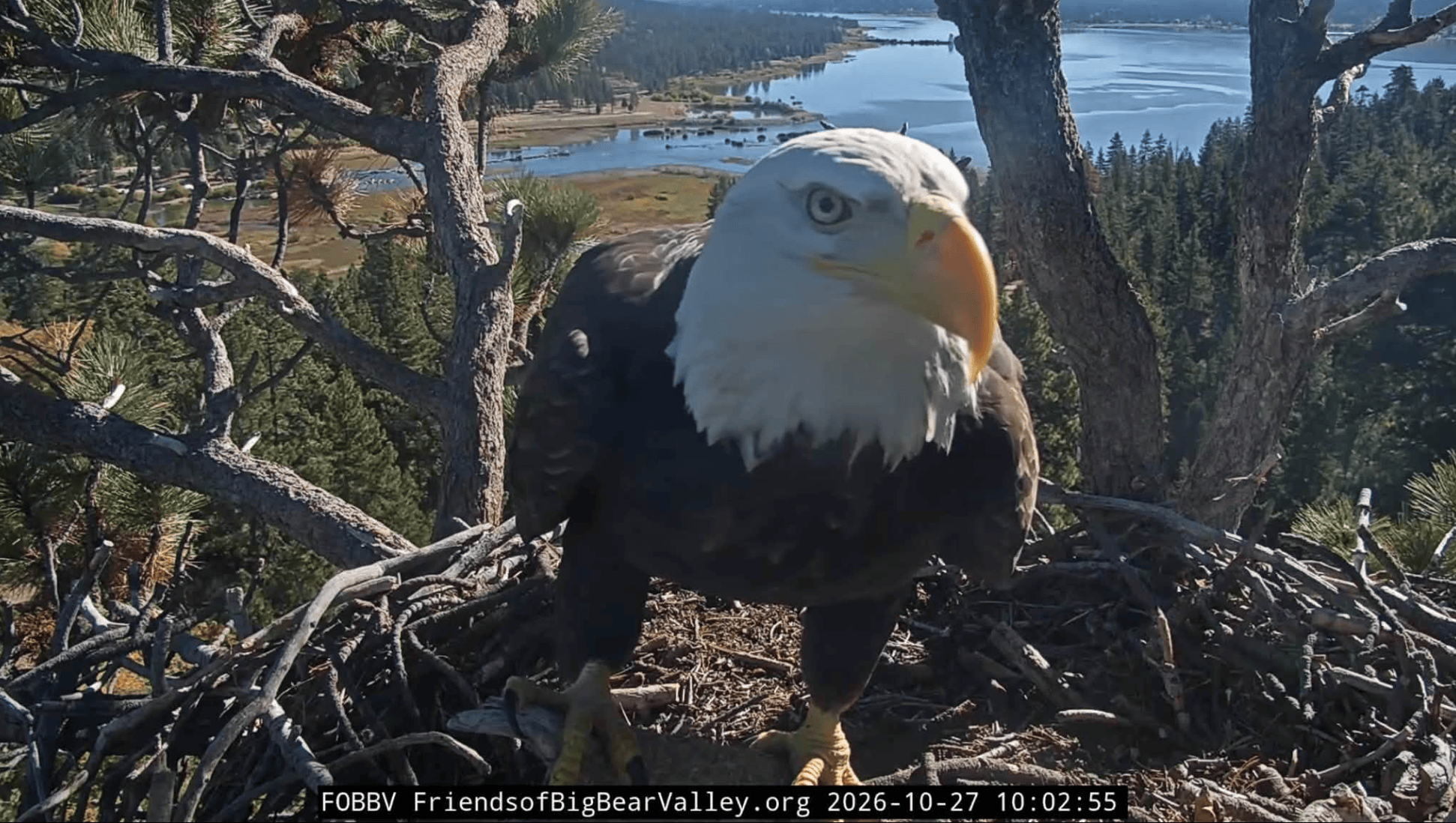
The bald eagle nest in Big Bear Valley has welcomed a new visitor, prompting intense observation from researchers and the public alike. On Tuesday, high-definition nest cameras operated by the Friends of Big Bear Valley (FOBBV) captured footage of an unidentified adult bald eagle spending time in the historic structure—a site that served as the primary nesting ground for the iconic eagle pair, Jackie and Shadow, for many years. This sighting is the latest chapter in a period of significant transition for the local eagle population following the death of the resident matriarch, Jackie, earlier this year.
A Period of Transition
The presence of the new eagle, which has not yet been identified by sex or age, was first noted late last week. However, the visitor’s return on Tuesday—during which it spent approximately 30 minutes interacting with the nest, rearranging sticks, and appearing on the live-streamed camera feed—has intensified interest. This visitor is not the only bird to have frequented the site recently; a sub-adult eagle has also been observed by the cameras in the weeks leading up to this event.
These sightings coincide with a notable absence of the established resident, Shadow. The male eagle, who shared a long-term bond with Jackie, has not been confirmed on camera since October 23. Furthermore, another young adult eagle named Kaydee, who had been observed in the nest periodically since the summer and had engaged in cooperative behaviors such as stick-arranging and vocalizing with Shadow, was last recorded on October 21. The fluid nature of these visitations suggests that the territory, while historically stable, is currently undergoing a period of re-evaluation by the local avian population.
Historical Context and Nest Lineage
To understand the significance of these events, one must look at the history of the Big Bear Valley nest. The structure currently monitored by FOBBV is not the original site used by the lineage of eagles in this territory. The legacy began with Jackie’s parents, Lucy and Ricky, who established a nest during the 2012-2013 season. That nest was constructed following the destruction of their previous home, which had been lost to severe weather conditions shortly after Jackie’s successful fledging in 2012.
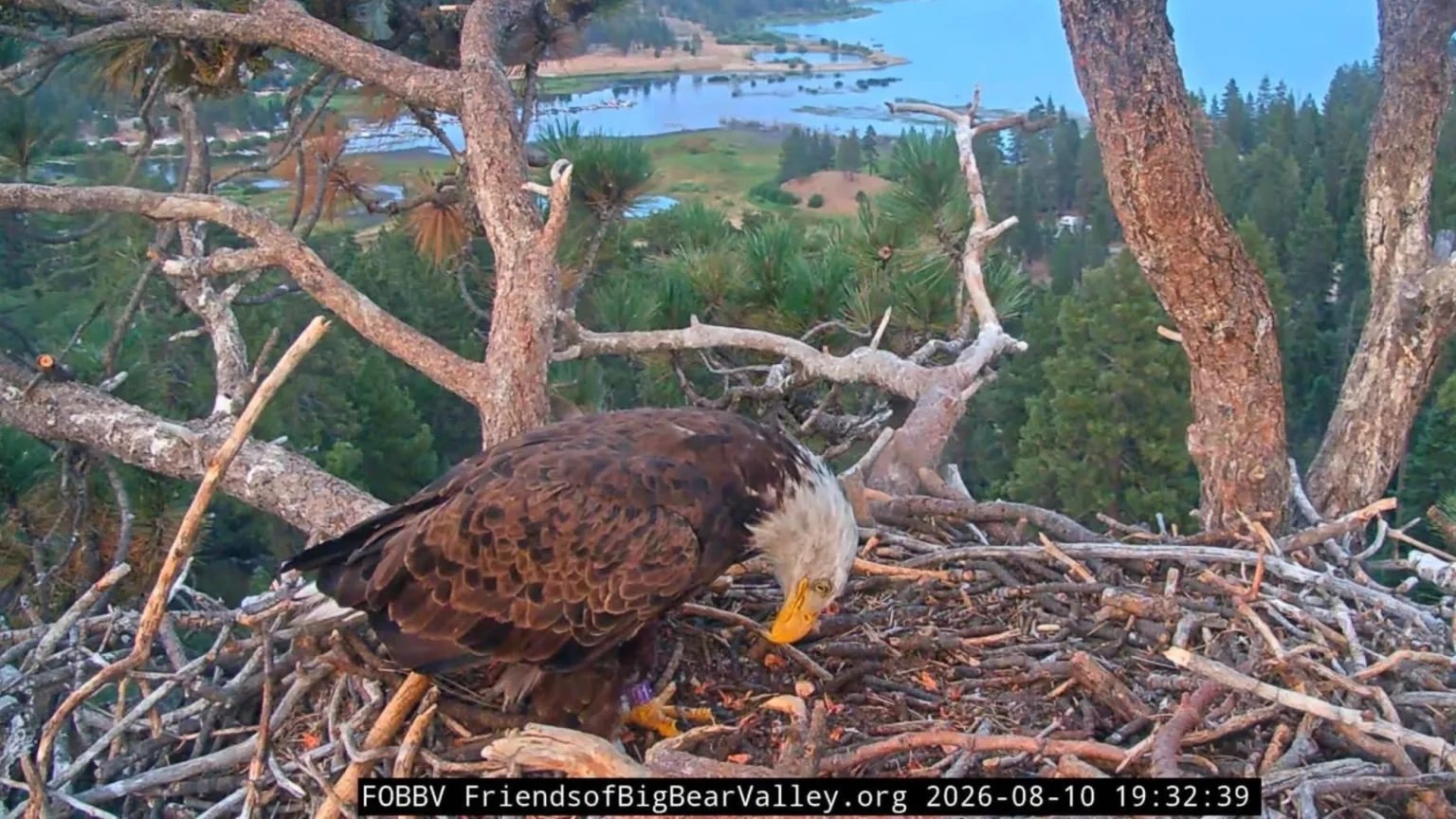
The current nest, which sits approximately 50 feet from the site where Jackie was raised, was occupied by Lucy and Ricky until the 2015-2016 season. Following their departure and eventual disappearance in 2017, the nest was claimed by a juvenile female who experts identified as Jackie. Her subsequent occupancy of this territory, first with a partner known as Mr. B and later with Shadow, became a subject of global fascination through the 24/7 live streams provided by the FOBBV. The death of Jackie on August 10, 2026, marked a definitive end to that era, leaving Shadow as a solitary figure to finish the season’s parenting duties for their offspring, Sandy and Luna, who successfully fledged in mid-July.
Understanding Bald Eagle Behavior in Autumn
Ornithologists often characterize the autumn months as a period of "bald eagle vacation." During this time, it is common for mature bald eagles to reduce their presence at the nest, opting instead to forage in more varied locations or roost in trees that offer greater environmental cover. This behavioral shift is a natural part of their life cycle, as they prepare for the rigors of the upcoming winter months.
Mating season for the Big Bear Valley population generally commences in December. Consequently, the current activity at the nest—the movement of sticks and the presence of unidentified visitors—serves as a preliminary indicator of how the local eagle population may reorganize for the next breeding cycle. While it remains unclear whether Shadow will return to the nest or attempt to secure a new mate, the presence of these visitors suggests that the site remains a high-value resource within the local ecosystem.
Data and Monitoring Protocols
The Friends of Big Bear Valley continue to maintain their rigorous monitoring standards. Camera 1, the primary feed focusing on the nest itself, remains operational on its 24/7 schedule. Camera 2, which provides a wide-angle perspective of the surrounding territory, has been adjusted to a power-saving mode, shutting down during nighttime hours.
The data collected from these cameras is vital for understanding the population dynamics of bald eagles in Southern California. The "fiddling" with sticks observed by the new visitor is a classic nesting behavior; even in the off-season, eagles often engage in maintenance, which serves to reinforce the structure and signal occupancy to potential rivals or mates. The documentation of these interactions provides researchers with a rare window into the social hierarchies of these apex predators.
Broader Implications for the Population
The loss of an established breeding female like Jackie has ripple effects throughout the local habitat. Bald eagles are known for high site fidelity, meaning they are likely to return to the same general vicinity year after year. However, the vacancy left by a dominant female creates a power vacuum. The presence of multiple visitors—including the unidentified adult and the sub-adult observed earlier—indicates that other birds are scouting the area, assessing whether the territory is ripe for take-over.
From an ecological standpoint, the survival and success of these birds depend on the continued availability of high-quality nesting sites. The Big Bear Valley nest has been a cornerstone of local conservation success, and the continued activity at the site is a positive sign that the habitat remains viable. Whether the nest is reclaimed by Shadow, claimed by a new pair, or left dormant for a season, the ongoing activity ensures that the valley remains a focal point for ornithological study.
Public Interest and Ethical Observation
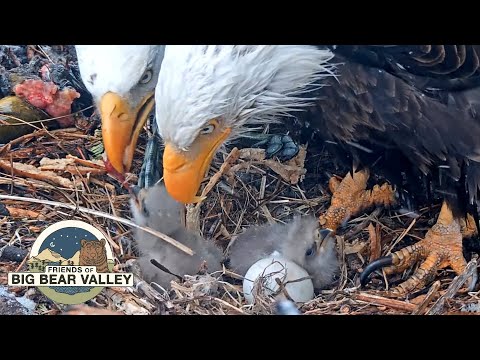
The public interest in these eagles has grown exponentially over the last decade, with thousands of viewers tuning in daily. This level of engagement has provided significant support for the FOBBV’s conservation efforts. However, experts remind the public that while the behavior of these eagles may seem dramatic or human-like, it is driven by complex biological imperatives. The "singing" or "kissing" behaviors observed between eagles are functional components of pair bonding and territorial defense, rather than emotional expressions in the human sense.
As the season progresses, the wildlife community will be watching closely to see if a stable pair bond forms before the December mating window. If a new pair establishes residency, it will demonstrate the resilience of the species and the adaptability of these birds in the face of environmental changes and the loss of long-term partners.
Summary of Recent Developments
- August 10, 2026: Death of the resident female, Jackie.
- Mid-July 2026: Chicks Sandy and Luna successfully fledge the nest.
- October 21, 2026: Final recorded sighting of Kaydee in the nest area.
- October 23, 2026: Final recorded sighting of Shadow in the nest area.
- Late October 2026: Appearance of an unidentified adult visitor, engaging in nest maintenance.
The coming weeks are critical. The transition from the post-breeding season to the pre-mating period is a delicate time for these raptors. By continuing to provide high-resolution, objective data through their camera network, the FOBBV allows both the public and the scientific community to witness the realities of survival in the wild. Whether the nest sees the return of a familiar face or the establishment of a new dynasty, the story of the Big Bear Valley eagles remains a testament to the enduring nature of these majestic birds.
Observers are encouraged to continue following the official updates from the FOBBV, as these reports serve as the primary source of verified information regarding the identity and behavior of the visiting birds. As the environment cools and the winter season approaches, the nest will continue to serve as a vital indicator of the health and stability of the Big Bear Valley bald eagle population.

