
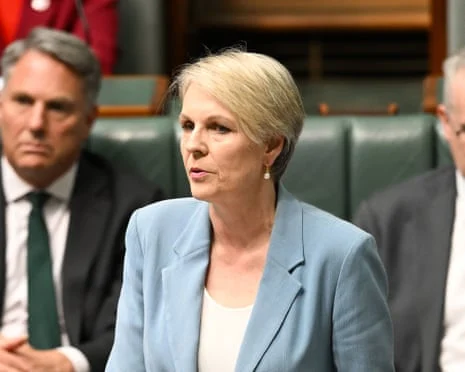
The Australian government has announced sweeping and long-awaited reforms to the national child support system, introducing strict travel prohibitions for individuals with significant unpaid liabilities and dismantling structural loopholes that have historically allowed perpetrators of family and domestic violence to weaponize financial administrative processes. Revealed by senior government ministers, the comprehensive package aims to reclaim more than $2 billion in cumulative outstanding child support debts while fundamentally improving the safety, security, and administrative efficiency of nearly 100,000 vulnerable parents and carers navigating the system.
Alongside the child support overhaul, the Australian political landscape has been dominated by a convergence of major policy developments, including historic advancements in global gender equality rankings, ongoing controversies surrounding political campaign conduct, and the impending unveiling of high-stakes federal immigration reforms by Home Affairs Minister Tony Burke.
Tough New Penalties for Child Support Evaders
Under the banner of major legislative changes spearheaded by Social Services Minister Tanya Plibersek and Finance Minister Katy Gallagher, the federal government is moving to impose automatic international travel bans on individuals with outstanding child support debts exceeding $10,000.

According to government disclosures, the national child support debt pool currently exceeds $2 billion, involving numerous extreme cases of systemic avoidance. Authorities have identified approximately 200 individual cases where accumulated debt surpasses $150,000, alongside at least one extreme instance exceeding $2 million. Under the upcoming legislation, anyone carrying a debt above the $10,000 threshold will be automatically flagged at Australian borders, preventing them from flying overseas until their financial obligations to their children are met.
Minister Plibersek emphasized that the enforcement mechanism is designed not only to recover funds but to dismantle a framework that has frequently been exploited.
"We know that the system can be used as an insidious form of domestic violence where you can continue to harass or intimidate your ex," Plibersek noted, highlighting how withholding financial support acts as a continuous tool for post-separation abuse.
To counter strategies employed by debtors—such as falsifying or underreporting personal earnings—the federal government is injecting additional resourcing into the Australian Taxation Office (ATO). The expanded funding will specifically target individuals who fail to lodge tax returns, a common tactic used to mask true income levels and minimize calculated child support payments.
Protecting Families and Dismantling Domestic Violence Loopholes
The legislative package represents the most substantial structural reform to Australia’s child support architecture in decades. Beyond punitive travel restrictions, the laws address severe safety risks inherent in mandatory information-sharing provisions.
Historically, legal mandates dictated that any information supplied by one parent must be automatically shared with the other. Advocates and government officials pointed out that this requirement frequently compromised the physical safety of parents and children escaping volatile or violent relationships, inadvertently providing abusers with tracking details or leverage. The new laws will scrap these rigid information-sharing obligations, closing gaps that allowed domestic violence perpetrators to maintain pressure through administrative pathways.
Additionally, the reforms introduce measures to alleviate the harmful burdens of family tax benefit debts. Frequently, primary carers found themselves saddled with unexpected tax liabilities driven by the actions or reporting habits of child support payers. The new framework seeks to insulate vulnerable former partners from these cascading financial penalties, ensuring a simpler, safer, and fairer operational environment.
Australia Reaches Historic Milestone in Global Gender Equality
In tandem with domestic safety overhauls, the Albanese government received a significant international validation as Australia broke into the top 10 of the World Economic Forum’s Global Gender Gap Report for the first time in history. Ranking eighth out of 148 countries, Australia climbed 35 positions from its 43rd spot recorded prior to the current administration taking office.
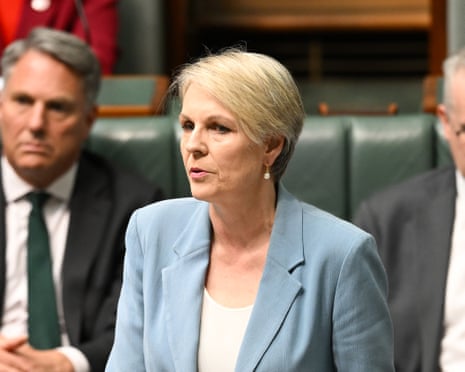
Prime Minister Anthony Albanese attributed the historic high to a series of deliberate policy interventions, including expanding paid parental leave, securing wage increases across female-dominated care sectors, directing investments into women’s health outcomes, and achieving unprecedented political representation, highlighted by a majority-female federal cabinet.
Despite celebrating the milestone, Minister for Women Katy Gallagher acknowledged that systemic challenges persist.
"We know there is more work to do across our priorities of ending violence against women, valuing care, improving women’s economic empowerment, improving women’s health outcomes and strengthening women’s leadership and representation," Gallagher stated, emphasizing that the ranking serves as a directional indicator rather than the finish line.
High-Stakes Immigration Overhauls and Political Fallout
While social policy reforms commanded significant attention, the political capital in Canberra remained heavily tied to the immigration portfolio. Home Affairs Minister Tony Burke prepared to deliver a heavily anticipated address at the National Press Club, titled "The work of managing the migration program: Who arrives, who stays, who leaves."

The policy shift is designed to curb net overseas migration (NOM) while minimizing economic disruption. Central to the announcement are severe restrictions on international students bringing family members or dependents to Australia. Official data from the previous year revealed that out of more than 337,000 international student visas issued, approximately 45,000 were granted to secondary applicants. Under the new settings, the vast majority of international students will be expected to arrive unaccompanied.
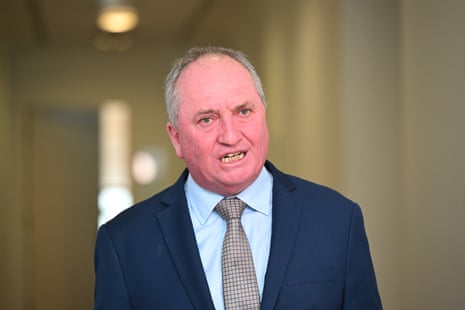
The impending policy has already drawn intense scrutiny from across the political aisle. National Party leader Barnaby Joyce launched a scathing critique, accusing the Labor government of replicating policies previously advocated by Pauline Hanson’s One Nation party. Joyce also targeted Burke over the timing and previous delays of the address, while questioning whether Treasurer Jim Chalmers’ economic budget modeling could accommodate the sudden shifts in migration targets.
Simultaneously, political tensions extended to electoral integrity debates. Minister Plibersek used media appearances to condemn alleged behavior by members of the Plymouth Brethren Christian church during the previous election cycle, alleging firsthand observation of intimidation tactics directed against parliamentary colleagues such as MP Sally Sitou. The claims have added fuel to an ongoing parliamentary committee inquiry into third-party campaign interference and church-affiliated political volunteering.
Broader Implications and Outlook
The convergence of child support enforcement, gender equality milestones, and migration restructuring underscores a period of profound legislative activity in Australian federal politics.

By tying international mobility directly to the fulfillment of family responsibilities, the government is signaling a zero-tolerance approach to financial non-compliance and domestic coercion. Simultaneously, the overhaul of migration frameworks reflects an ongoing balancing act between managing population growth, supporting higher education export markets, and stabilizing domestic housing and economic pressures.
As Parliament concludes its current sitting fortnight, the success of these wide-ranging initiatives will depend heavily on legislative negotiations in the Senate, administrative execution across federal agencies, and the tangible impact these measures have on the daily safety and economic security of Australian families.

