
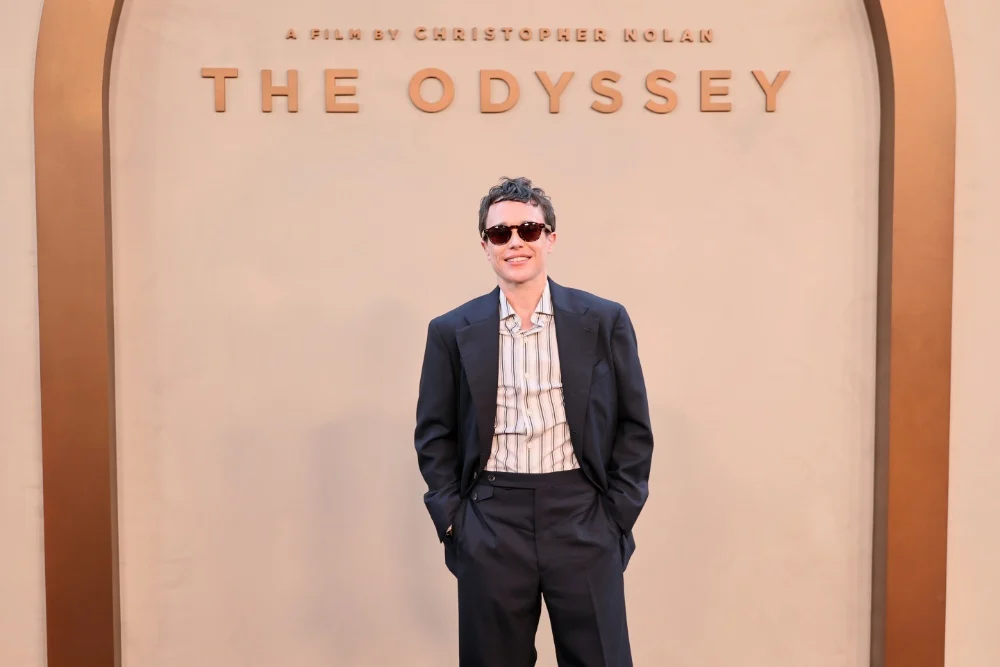
Whoopi Goldberg, a prominent co-host on ABC’s "The View," has vocally defended the casting of Elliot Page in Christopher Nolan’s critically acclaimed epic, "The Odyssey," directly addressing and dismissing the vocal disapproval from conservative commentators. The controversy ignited following a segment featuring commentator Ben Shapiro, who expressed bewilderment and criticism regarding Page’s role in the film, particularly highlighting the actor’s physical characteristics and voice. Goldberg’s remarks on Tuesday’s episode aimed to challenge the underlying sentiment of the backlash, questioning the motivation behind such intense scrutiny of casting choices when the film itself is receiving widespread praise and commercial success.
Shapiro’s critique, aired and subsequently amplified across various platforms, characterized Page’s casting as an "absolute puzzler." He elaborated, stating, "He is about 5’2 and 105 pounds soaking wet and has the voice of a woman. It doesn’t work." This statement, focusing on Page’s physical attributes and vocal presentation, has been interpreted by many as transphobic, given Page’s public identity as a transgender man. The implication that Page’s gender identity or physical appearance disqualifies him from a role, regardless of the character’s description or the director’s vision, has become a focal point of the debate.
Goldberg’s response on "The View" directly confronted this line of reasoning. She posed a series of rhetorical questions to the audience and, implicitly, to the critics: "A lot of conservatives who see this are going to feel the same way. That’s okay. But I don’t understand. Why go see the movie? If you don’t want to see it, don’t go see it. Why do you care who’s cast in it?" Her argument centers on the principle of individual choice and the perceived absurdity of expressing strong negative opinions about a piece of media one has no intention of engaging with. This perspective suggests that the outrage is performative and driven by ideological opposition rather than genuine artistic critique.

The Genesis of the Controversy: Rumors and Realities
The criticism directed at "The Odyssey" and its casting choices predates the film’s official release and evolved over time. Initially, conservative critics latched onto speculative and inaccurate rumors that Elliot Page would be portraying Achilles, a heroic figure in Greek mythology typically depicted as a powerful male warrior. This early misinformation campaign, which included commentary from prominent figures like Elon Musk, fueled a wave of outrage even before the actual casting details were confirmed. The narrative swiftly shifted once Page’s role as Sinon, a cousin to Matt Damon’s Odysseus, was revealed. While this role is less prominent than that of Achilles, the objections persisted, highlighting a broader pattern of conservative disapproval towards LGBTQ+ representation in media.
Adding another layer to the controversy was the hostile response met by Lupita Nyong’o’s involvement in the project. Reports indicate that this backlash was rooted in racist objections, demonstrating that the criticism extended beyond Page’s casting and encompassed broader societal biases. This pattern of targeting minority actors and narratives in Hollywood productions has become increasingly scrutinized in recent years.
Elliot Page’s Role and Critical Reception

In "The Odyssey," Elliot Page plays Sinon, a character described as a cousin to Odysseus, portrayed by Matt Damon. While not a central protagonist, Page’s performance has garnered attention for its nuanced portrayal. A review from Variety highlighted the role as "tersely vulnerable," suggesting an emotional depth that transcends superficial physical characteristics. The choice to cast Page in this supporting role underscores Christopher Nolan’s directorial approach, which often involves intricate character development and the utilization of actors who can bring a unique perspective to their roles.
Goldberg’s Broader Critique of "Woke" Discourse
Beyond defending Elliot Page, Whoopi Goldberg used the platform of "The View" to address the broader cultural phenomenon of what is often labeled as "woke." She articulated a frustration with the term’s proliferation and its perceived misuse. Goldberg argued that the label is frequently applied to ordinary individuals simply trying to live their lives, maintain employment, raise families, and pursue education. She contrasted this with the idea that "woke" is a term weaponized to discredit or dismiss anyone advocating for social progress or inclusivity, rather than a genuine descriptor of an agenda-driven movement. This broader commentary suggests that Goldberg views the backlash against Page as symptomatic of a larger cultural debate about identity, representation, and the evolving definition of societal norms.
Box Office Success: A Testament to Audience Appeal

Despite the vocal opposition from certain segments of the audience and media, "The Odyssey" has achieved remarkable commercial success. Christopher Nolan has secured the biggest opening of his directorial career with the film, and its global box office collections have surpassed an impressive $300 million. This robust financial performance suggests that the film’s artistic merit and compelling narrative have resonated with a far wider audience than the critics of its casting choices represent. The box office figures provide a data-driven counterpoint to the criticisms, indicating that audience engagement is not being significantly hampered by the controversies surrounding specific casting decisions. This trend highlights a potential disconnect between vocal online criticism and the broader public’s viewing habits and preferences.
Analyzing the Implications: Representation, Backlash, and Box Office
The controversy surrounding Elliot Page’s casting in "The Odyssey" and Whoopi Goldberg’s subsequent defense brings to the forefront several critical issues within contemporary media and society.
-
Representation and Authenticity: The debate touches upon the evolving landscape of representation in Hollywood. Casting choices that reflect diverse identities, including LGBTQ+ individuals, are increasingly seen as crucial for authentic storytelling and for fostering a more inclusive cultural environment. The criticism of Page’s casting, which focused on his physical attributes and voice, can be seen as an attempt to impose traditional and rigid notions of gender and appearance onto artistic endeavors.

-
The Nature of Conservative Backlash: The reactions from figures like Ben Shapiro and Elon Musk exemplify a pattern of conservative backlash against what they perceive as "woke" agendas in entertainment. This backlash often manifests as criticism of casting decisions, narrative themes, or character portrayals that challenge established norms or promote progressive values. Goldberg’s critique of the term "woke" suggests that such labels are often used to dismiss legitimate calls for inclusivity and diversity.
-
The Power of Media Platforms: "The View" and figures like Whoopi Goldberg serve as significant platforms for public discourse. Goldberg’s direct engagement with the criticism amplifies the conversation and offers a counter-narrative to the one propagated by conservative commentators. This highlights the role of daytime talk shows and media personalities in shaping public opinion and addressing contentious social issues.
-
Box Office as a Measure of Public Opinion: The resounding commercial success of "The Odyssey" offers a compelling counter-argument to the notion that casting controversies negatively impact a film’s appeal. The film’s ability to gross over $300 million globally suggests that audiences are more interested in the quality of filmmaking, storytelling, and the overall cinematic experience than in the ideological purity of its cast, at least for a significant majority. This data implies that while vocal minorities may express strong opposition, the broader audience often prioritizes entertainment value.
-
Nolan’s Artistic Vision: Christopher Nolan’s consistent success and his ability to attract massive audiences for his films, regardless of the specific casting choices, underscore his status as a major directorial force. His willingness to cast actors like Elliot Page in roles that may challenge conventional expectations, coupled with his reputation for delivering critically and commercially successful blockbusters, suggests a directorial vision that prioritizes artistic integrity and audience engagement.

In conclusion, the furor surrounding Elliot Page’s role in "The Odyssey" is a microcosm of broader cultural tensions surrounding representation, identity, and the role of media in society. While some critics have voiced strong disapproval based on perceived deviations from traditional norms, the overwhelming success of the film at the box office and the vocal defense from prominent figures like Whoopi Goldberg suggest that the cinematic landscape is indeed shifting, and audiences are increasingly embracing diverse narratives and casting choices. The conversation initiated by Goldberg serves as a reminder of the importance of critical engagement with media and the need to challenge discriminatory viewpoints that seek to limit artistic expression and representation.

