

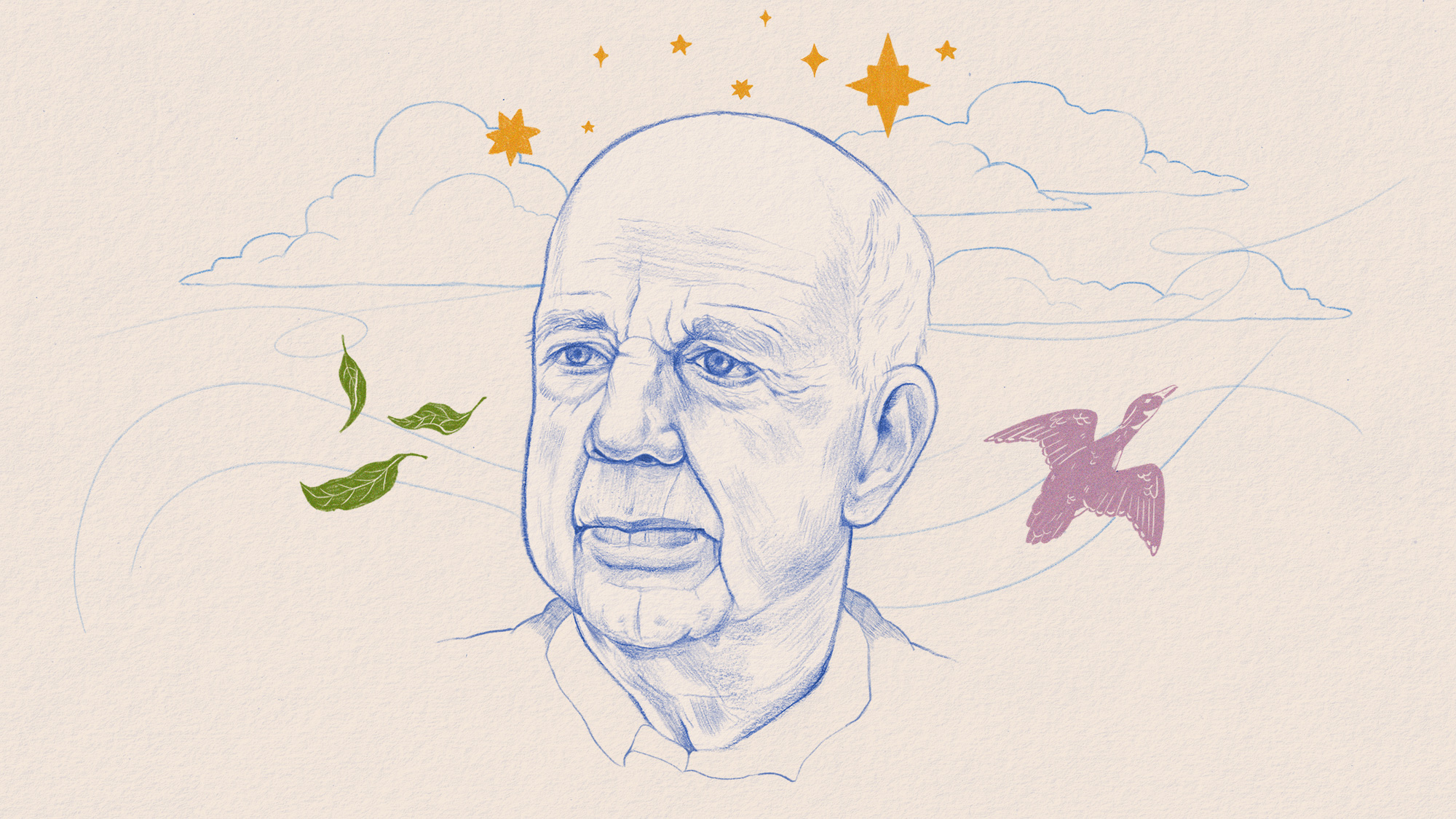
The death of Wendell Berry at the age of 92 marks the conclusion of a singular American life that served as a bridge between the agrarian traditions of the 19th century and the urgent ecological crises of the 21st. A poet, essayist, novelist, and small-scale farmer, Berry died last week at his home in Henry County, Kentucky, leaving behind an intellectual legacy that challenged the foundations of modern industrial society. Throughout a career spanning seven decades, Berry articulated a philosophy that prioritized local stewardship, the sanctity of the family farm, and the necessity of resisting technological alienation. His passing leaves a profound void in the landscape of American letters and environmental activism, prompting a nationwide reflection on his call to "think little" in an era of global environmental upheaval.
A Life Rooted in the Land: Chronology and Evolution
Wendell Berry’s trajectory was defined by his commitment to the soil. Born in 1934, he witnessed the mechanization of American agriculture and the subsequent depopulation of rural communities. After a brief tenure in academia, including a position at Stanford University and a fellowship in Europe, Berry made the deliberate choice in 1965 to return to his native Kentucky. He purchased a farm in Henry County, establishing a life that would become the primary laboratory for his writing and his philosophy.
The chronology of his influence tracks alongside the rise of the modern environmental movement:
- 1960s: Berry begins his career as a prominent voice in American literature, publishing Nathan Coulter (1960) and establishing himself as an essential observer of rural life.
- 1970s: His seminal essay "Think Little" (1972) articulates his critique of industrial growth, arguing that public crises are inseparable from private actions.
- 1979: Berry’s activism takes a physical turn; he is arrested during a protest against the Marble Hill Nuclear Power Plant in Indiana, signaling his willingness to move from the page to the picket line.
- 1987: He publishes "Why I am Not Going to Buy a Computer" in Harper’s Magazine, a manifesto that cements his reputation as a critic of the "information age."
- 2011: Berry is arrested during a sit-in at the Kentucky state capitol to protest mountaintop removal coal mining, a practice he described as an "assault on the earth."
- 2010s: He maintains a sustained campaign against the coal industry, including a high-profile withdrawal of his personal archives from the University of Kentucky in response to the school’s acceptance of fossil fuel industry funding.
The Philosophy of Resistance and the Luddite Label
Berry was frequently labeled a "Luddite" or a "curmudgeon" by critics who viewed his rejection of digital technology as an impractical retreat from modernity. However, academic analysts suggest this characterization misinterprets his intent. Jeffrey Bilbro, an English professor at Grove City College and a scholar of Berry’s work, notes that Berry’s resistance was not directed at technology itself, but at the "dignity of work."
"Berry understood that the mechanization and digitization of labor often severed the worker from the product of their hands," Bilbro explains. "He wasn’t merely anti-tech; he was pro-community. He recognized that when we delegate our essential tasks to machines or distant corporations, we lose the social and environmental feedback loops that keep us accountable to our neighbors and the land."
This perspective aligns with historical critiques of industrialization. Much like the 19th-century Luddites who sought to preserve the artisan nature of their craft, Berry argued that true sustainability requires a return to smaller, human-scaled economies. His writing—produced almost entirely with pencil and paper—served as a living testament to this discipline.
Environmental Activism and Political Paradoxes
Berry’s environmentalism was notoriously difficult to categorize. He did not align with the standard policy-oriented environmentalism of Washington, D.C., which he often criticized for focusing on legislative "fixes" while ignoring the underlying social decay of rural regions. Instead, he proposed a radical, bottom-up approach.
His activism was marked by a series of direct actions that defied partisan labels. By protesting both nuclear energy and coal mining, he positioned himself as an opponent of industrial extraction in all forms. His refusal to accept the binary of "left vs. right" politics allowed his work to find a receptive audience among both religious conservatives, who valued his emphasis on family and tradition, and radical environmentalists, who admired his defense of the commons.
His withdrawal of his papers from the University of Kentucky stands as a defining moment in his later career. By refusing to allow his work to be housed in an institution that accepted a $7 million donation from Alliance Coal, Berry demonstrated that his convictions were not merely literary—they were a non-negotiable component of his identity.
Broader Impact and Implications
The implications of Berry’s life and work are now being re-evaluated in the context of the accelerating climate crisis. While his prose often focused on the local—the health of a creek, the quality of a pasture, the integrity of a family—his arguments were always directed at the global.
Data from the U.S. Department of Agriculture shows that the number of mid-sized farms, which Berry championed as the backbone of a healthy society, has continued to decline precipitously over the last half-century. Simultaneously, the consolidation of the global food system has increased the carbon footprint of food production. Berry’s writings provide a diagnostic framework for these trends, arguing that the "social decay" he observed in rural America is a direct precursor to the ecological breakdown witnessed in the broader world.
Critics of Berry have pointed out that his lifestyle was not a scalable solution for an urbanized global population. Yet, supporters argue that his work was never meant to be a literal blueprint for everyone. Instead, it functioned as a moral compass. "He was a man who lived a life of rigorous integrity," says Dr. Elena Rossi, an environmental sociologist. "Even if you disagreed with his rejection of technology, you had to contend with the logic of his critique. He forced us to ask, ‘What are we losing in our pursuit of progress?’"
The Cycle of Death and Rebirth
In his poetry, most notably in "Manifesto: Mad Farmer Liberation Front" and "A Discipline," Berry consistently grappled with the inevitability of loss. He rejected the linear, apocalyptic narrative of much modern climate discourse, choosing instead to view the world through the lens of ecological cycles.
"It is the time’s discipline to think / of the death of all living, and yet live," he wrote in A Discipline. This sentiment serves as a summary of his worldview: the belief that while environmental catastrophe may be looming, the responsibility of the individual remains the same—to plant, to nurture, and to live in a way that leaves the earth slightly better than it was found.
As the literary and environmental worlds mourn his loss, the consensus remains that Wendell Berry’s contribution was to restore a sense of gravity to the act of living. In an age of ephemeral digital communication and global supply chains, he insisted on the physical, the local, and the durable. Whether through the cultivation of a field or the drafting of an essay, he demonstrated that the struggle to preserve the world is not a distant, abstract goal, but a daily practice—a series of small, intentional choices made in the dirt and the quiet of a farmhouse in Kentucky.

