
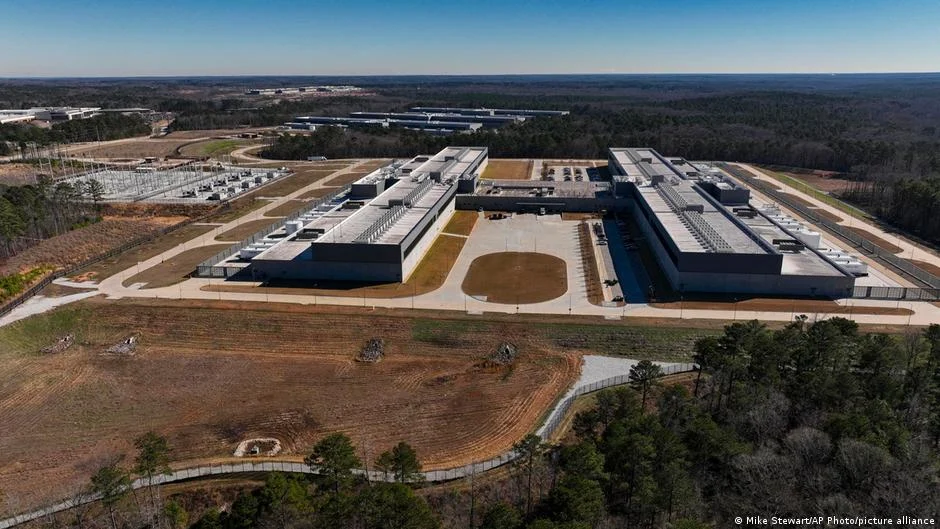
Maine has emerged as a trailblazer in the national discourse surrounding the escalating energy demands of the artificial intelligence (AI) industry, with its legislature on Tuesday passing a bill that calls for a temporary halt to the construction of large data centers. This landmark legislative action, now awaiting the signature of Democratic Governor Janet Mills, positions Maine as the first state in the United States to implement a statewide moratorium specifically targeting these power-hungry facilities, which are increasingly straining local electric grids and raising profound environmental and economic concerns. The bipartisan support for the measure underscores a growing recognition across political divides of the significant infrastructure challenges posed by the rapid expansion of AI-driven data processing.
The bill’s passage through both legislative chambers marks a pivotal moment for a state that currently hosts no major data centers but has seen several proposals surface in recent weeks. Representative Melanie Sachs, the bill’s sponsor, articulated the urgency behind the legislation, stating, "People and communities across the state have been asking the Legislature to take action and temporarily pause these projects, which could have significant impacts on ratepayers, our electric grid and our environment. This bill positions Maine to respond deliberately and responsibly to a rapidly evolving industry." Her remarks highlight the proactive stance Maine is taking to assess and mitigate potential adverse effects before large-scale development commences, rather than reacting to an established problem.
The Legislative Journey and Key Provisions
The journey of this legislative initiative began with mounting public and governmental apprehension regarding the unchecked growth of data centers, particularly those designed to support the computationally intensive operations of modern AI. The bill, once signed into law, would impose a moratorium on the approval of data centers requiring more than 20 megawatts of power. This temporary pause is slated to remain in effect until late 2027, providing a critical window for a specially appointed state council to conduct a comprehensive study. This council will be tasked with evaluating the multifaceted impacts of these facilities, specifically focusing on their effects on electricity grids, consumer costs, and the broader environment.
The selection of the 20-megawatt threshold is strategic, designed to target the largest, most energy-intensive projects that pose the greatest risk to existing infrastructure, while potentially allowing smaller, less impactful developments to proceed. This nuanced approach demonstrates an attempt to balance the need for technological advancement with the imperative of sustainable growth and protection of public resources. The study’s findings are expected to inform future state policies and regulatory frameworks, ensuring that Maine’s approach to data center development is data-driven and aligned with its long-term energy and environmental goals.
The AI-Driven Energy Demand Crisis
The impetus behind Maine’s bold move is rooted in the unprecedented energy demands generated by the artificial intelligence industry. AI, particularly the training and operation of large language models (LLMs) and other complex neural networks, requires immense computational power, which translates directly into massive electricity consumption. A single AI training run for a sophisticated model can consume as much electricity as several homes over a year, and the continuous operation of these models for inference and data processing adds significantly to the overall load.
Modern data centers, the physical backbone of the digital economy and AI, are colossal facilities filled with thousands of servers, networking equipment, and cooling systems. A typical large data center can consume anywhere from 20 to over 100 megawatts of power, roughly equivalent to the electricity consumption of a small to medium-sized city. For instance, a 50-megawatt data center can power approximately 37,000 homes. This demand is not static; it is rapidly escalating with the increasing sophistication and widespread adoption of AI technologies across various sectors, from autonomous vehicles to personalized medicine and advanced scientific research. The global electricity consumption by data centers is projected to double by 2026, reaching figures comparable to the total electricity demand of entire countries like Japan or Germany.
The strain on local electric grids is a primary concern. Many existing grids were not designed to accommodate such concentrated and rapidly growing industrial loads. Integrating new data centers often requires substantial upgrades to transmission and distribution infrastructure, which are costly, time-consuming, and ultimately passed on to ratepayers. Furthermore, the constant need for vast amounts of electricity, often around the clock, can push grids to their capacity limits, increasing the risk of brownouts, blackouts, and grid instability, particularly during peak demand periods or extreme weather events.
Impact on Maine’s Infrastructure and Residents
Maine, like many other states, has experienced rising energy costs in recent years, according to data from the US Energy Information Administration. These increases are attributable to a combination of factors, including fluctuating fuel prices, infrastructure upgrade needs, and global energy market dynamics. The prospect of energy-intensive data centers exacerbating these cost pressures has fueled significant public opposition. Supporters of the bill have consistently highlighted these concerns, arguing that unchecked data center expansion could lead to higher electricity bills for households and businesses already grappling with affordability issues.
Beyond energy consumption, data centers also demand considerable land and water resources. Large facilities often require vast tracts of land, which can lead to habitat fragmentation, changes in local land use, and increased development pressure on rural communities. Water consumption is another critical issue, as many data centers rely on evaporative cooling systems that can draw millions of gallons of water annually from local sources, potentially straining freshwater supplies, especially in regions prone to drought or with sensitive aquatic ecosystems. For example, a single large data center can consume between 1 million and 5 million gallons of water per day, comparable to the daily consumption of a city of 10,000 to 50,000 people.
Public sentiment strongly reflects these concerns. A recent national poll revealed that 65% of Americans oppose having a data center built in their community. This widespread opposition is not merely NIMBYism (Not In My Backyard) but rather a comprehensive apprehension about the tangible impacts on local infrastructure, environmental quality, and the cost of living. Residents often express worries about increased noise from cooling towers, potential air pollution from backup generators, and the aesthetic alteration of their landscapes.
Governor Janet Mills has previously demonstrated a nuanced understanding of these issues. While supportive of responsible economic development, she had earlier pushed for an exemption for a smaller data center project. This particular project was designed to utilize existing infrastructure, thereby minimizing its impact on the grid and energy bills. Her prior stance suggests that while she is likely to sign the current moratorium bill, she may also be open to future data center developments that can demonstrate minimal environmental footprints and sustainable energy practices.
A National Trend: Other States and Federal Action
Maine’s initiative is not an isolated incident but rather indicative of a burgeoning national trend. Lawmakers in at least 11 other US states are reportedly discussing similar proposals to address the challenges posed by data center proliferation. These discussions reflect a growing awareness among state and local governments that the rapid expansion of the AI industry necessitates a re-evaluation of existing energy policies and land-use regulations.
Chronologically, concerns have been escalating across the country. In February, residents of New Brunswick, New Jersey, successfully mobilized to veto plans for a data center in their community. Their opposition was primarily driven by concerns over energy consumption, environmental impact, and the real estate footprint the facility would leave. This grassroots victory served as a powerful example for other communities facing similar proposals, demonstrating that organized public resistance can halt or alter large-scale development projects.
The issue has also garnered attention at the federal level. Last month, Senator Bernie Sanders and Representative Alexandria Ocasio-Cortez introduced legislation aiming to halt all construction on data centers until Congress passes comprehensive AI safety legislation. Their proposal links the physical infrastructure of AI with the broader ethical and safety considerations of the technology itself, suggesting a holistic approach to regulating the industry. Simultaneously, Senators Josh Hawley and Richard Blumenthal have also introduced measures specifically addressing the impact of data centers on energy costs, underscoring the bipartisan concern about the economic burden these facilities can impose on consumers. These federal initiatives, while broader in scope, align with Maine’s concerns about unchecked growth and its repercussions.
Industry Perspective and Challenges
While the legislative actions reflect public and governmental concerns, the data center industry emphasizes the critical role these facilities play in the modern economy. Data centers are not merely energy consumers; they are the essential infrastructure that powers cloud computing, supports remote work, enables advanced research, and drives innovation across virtually every sector. The rapid advancements in AI, in particular, are predicated on the ability to process vast datasets and execute complex algorithms, which requires state-of-the-art data center capabilities.
Industry representatives often highlight their efforts towards sustainability and efficiency. Many data center operators are investing heavily in renewable energy sources, more efficient cooling technologies (such as liquid cooling), and optimizing server utilization to reduce their carbon footprint. They argue that moratoriums, while offering a pause, can stifle innovation and economic growth, potentially driving investment and job creation to other states or countries. The challenge for the industry is to demonstrate that technological advancement and environmental responsibility can go hand-in-hand, and that data centers can be integrated into local communities without undue burden.
However, the sheer scale of AI’s energy appetite often outpaces efficiency gains. As AI models become larger and more complex, their energy demands grow exponentially, making it difficult for even the most efficient data centers to keep pace with demand reduction. This creates a dilemma where the societal benefits of AI must be weighed against its environmental cost and infrastructure requirements.
Environmental and Economic Implications
The environmental implications of the data center boom extend beyond energy and water consumption. The construction of these facilities involves significant embedded carbon emissions from materials like concrete and steel. Furthermore, the increased demand for electricity can lead to greater reliance on fossil fuel-based power generation in regions where renewable energy sources are not yet sufficient to meet the new load. This contributes to greenhouse gas emissions and exacerbates climate change, undermining broader environmental goals. The state council in Maine will undoubtedly delve into these aspects, analyzing the carbon footprint and broader ecological impact of potential data center developments.
Economically, a moratorium presents a double-edged sword. On one hand, it protects existing ratepayers from potentially soaring electricity costs and safeguards the environment. It also provides Maine with an opportunity to strategically plan for future growth, attracting data centers that align with the state’s values and infrastructure capabilities. On the other hand, it could deter immediate investment and job creation associated with data center construction and operation. The economic analysis by the state council will need to carefully balance these factors, considering the long-term economic resilience and sustainability of the state against short-term gains. It will also examine the potential for attracting "green" data centers that prioritize renewable energy and minimal environmental impact, thereby aligning with Maine’s progressive environmental policies.
The Path Forward
With the bill now on Governor Mills’ desk, Maine stands at the precipice of setting a significant precedent. If signed, the moratorium will not only provide Maine with crucial time to study the impacts of large data centers but also send a clear signal to the tech industry: unconstrained growth will be met with careful scrutiny and regulatory action. The state council’s work will be instrumental in shaping Maine’s future approach, potentially leading to a model for other states grappling with similar issues.
The outcome in Maine will be closely watched by environmental advocates, consumer groups, energy providers, and the burgeoning AI industry across the nation. It represents a critical juncture in the ongoing effort to reconcile the rapid pace of technological innovation with the imperative of environmental stewardship and sustainable economic development. Maine’s deliberate pause offers a valuable opportunity to forge a path forward that integrates the benefits of advanced technology with the well-being of its communities and the health of its natural environment. The findings of the state council, due by late 2027, will undoubtedly influence not only Maine’s legislative landscape but also the broader national conversation on how to manage the energy-intensive future of artificial intelligence.

