
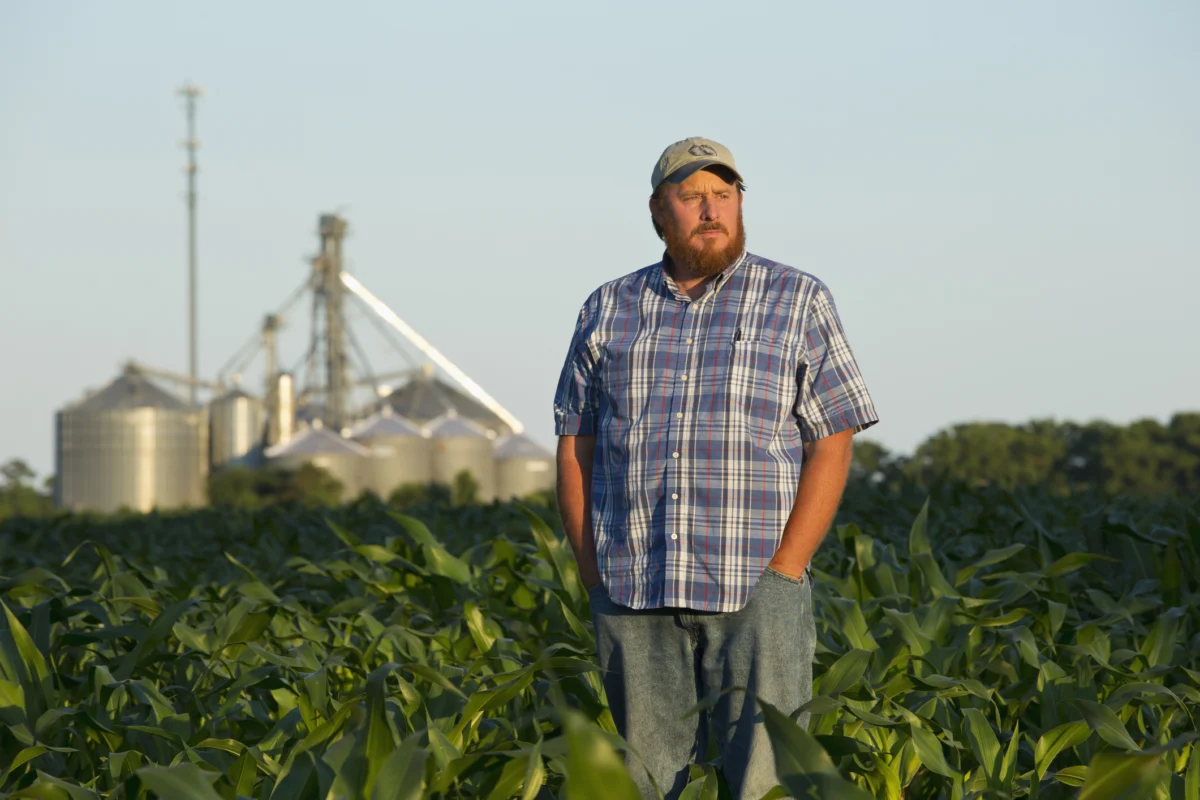
President Trump’s second term has been characterized by a series of unfulfilled promises and policy decisions that have disproportionately impacted America’s agricultural heartland, leaving many family farms in a precarious state. While the administration’s tenure has seen a broad array of challenges, the nation’s struggling farmers stand out as a demographic that has faced particularly acute suffering amidst what they perceive as a betrayal of trust.
The agricultural sector has long contended with inherent vulnerabilities, making it susceptible to economic shifts and policy changes. Even before the current administration, American family farms had endured a challenging decade marked by market volatility, escalating operational costs, and the relentless pressures of consolidation within the industry. Data from the American Farm Bureau Federation and the U.S. Department of Agriculture indicates a consistent trend of financial strain, with an average of 373 farms failing every year since 2015. This steady decline underscores a systemic crisis that has eroded the foundation of many rural communities, transforming what was once a cornerstone of the American economy into a landscape of increasing uncertainty. The profound stress associated with the struggle for survival has not merely been economic; it has manifested as a widespread mental health crisis across resource-starved farming communities, where suicide rates have tragically surged.
The Allure of Promises: Rural America’s Vote in 2024
In the lead-up to the 2024 election, then-candidate Trump successfully harnessed the deep-seated anxieties and frustrations prevalent in rural America. His campaign rhetoric resonated strongly with farmers who felt overlooked by previous administrations and increasingly marginalized by global economic forces. Promising a return to prosperity, robust federal support, and protection from what he termed unfair foreign competition, Trump captivated a significant portion of the rural electorate. His pledges to renegotiate trade deals, cut regulations, and prioritize American agriculture fueled hopes that a new era of stability and growth was on the horizon. This message proved highly effective, culminating in Trump capturing an impressive 62 percent of the rural vote in 2024, a notable 4-point improvement over his performance in 2020. This substantial mandate reflected a profound trust placed in his ability to deliver on these ambitious promises, with many believing he would be a champion for the embattled farming community.
The Unraveling of Trust: Unfulfilled Pledges and Policy Missteps
However, as is often the case with grand political promises, the anticipated help for small farms on the verge of collapse largely failed to materialize. Instead, farmers found themselves confronting a landscape worsened by the very policies intended to uplift them. The economic and foreign policy decisions enacted during Trump’s second term inadvertently created a perfect storm of challenges, exacerbating existing vulnerabilities and pushing many to the brink. The suicide rate in rural communities, a stark indicator of the deepening crisis, has now climbed to 3.5 times the national average, a tragic testament to the immense psychological toll of financial strain and perceived abandonment. Farmers are buckling under a confluence of crippling agricultural tariffs, steadily rising input costs, and a disconcerting lack of attention from the highest levels of government – evidenced by the President’s notable omission of farmers in his most recent State of the Union address.
The Scars of Trade Wars and Rising Costs
One of the most significant blows to American agriculture has been the administration’s aggressive trade policies, particularly the imposition of tariffs. While framed as a strategy to protect domestic industries and force more favorable trade agreements, these tariffs inadvertently decimated demand for U.S.-grown crops in key international markets. The trade dispute with China, in particular, proved devastating for soybean producers. Chinese imports of American soybeans plummeted by nearly 80 percent, an unprecedented contraction that sent shockwaves through the heartland. This dramatic decline was not an isolated incident; other agricultural exports, including pork and corn, also faced significant retaliatory tariffs from countries like Mexico and Canada, further constricting market access for American farmers. The American Soybean Association, typically a politically conservative industry trade group, took the rare and significant step of publicly criticizing the administration, expressing deep concern over misleading assurances regarding future Chinese purchases and the severe financial losses incurred by its members. This industry outcry underscored the widespread disillusionment among farmers who felt caught in the crossfire of a trade war they did not initiate.
Beyond the direct impact of tariffs on export markets, farmers also faced a compounding challenge in the form of rapidly escalating operational costs. Tariffs on imported steel, aluminum, rubber, and various replacement parts significantly increased the expenses associated with maintaining and upgrading farm machinery. Many critical imported components either became prohibitively expensive or, in some cases, entirely unavailable, forcing farmers to grapple with unexpected delays and higher repair bills. The cost of new farm equipment soared, transforming what was already a substantial investment into an almost insurmountable financial hurdle for smaller operations. For instance, the average price of a new tractor, which stood at roughly $190,000 in 2019, has surged to approximately $330,000 today, representing an increase of nearly 74 percent. This dramatic spike makes it exceedingly difficult for farmers to replace aging equipment, impacting efficiency and productivity.
Simultaneously, global geopolitical events exacerbated the financial pressures. The closure of the Strait of Hormuz, a critical chokepoint for global oil and gas shipments, alongside broader disruptions in the global natural gas market linked to the ongoing war in Iran, triggered a sharp spike in fertilizer costs. Fertilizer, a non-negotiable input for crop production, saw its price jump from approximately $795 to nearly $1,000 per ton. This increase directly translated to higher expenses for every acre planted. Furthermore, farm equipment heavily relies on diesel fuel, the price of which surged by more than 50 percent since the commencement of Trump’s military engagement in Iran. These converging factors — diminished sales, higher equipment costs, and soaring input prices — squeezed farmers from both ends, eroding profit margins that were already razor-thin.
A Growing Debt Burden and Budgetary Neglect
The cumulative effect of these challenges has been an often-fatal debt spiral for many American farms. According to comprehensive data collected by the U.S. Department of Agriculture (USDA) Economic Research Service, the total U.S. farm sector debt is projected to reach a record high of more than $600 billion this year. This staggering figure reflects the extent to which farmers have been forced to borrow to cover rising operational costs and offset declining revenues, pushing many into an unsustainable financial position.

In response to this escalating rural crisis, the White House’s proposed 2027 budget delivered what many in the agricultural community perceived as another slap in the face. Rather than increasing support for struggling farmers, the budget proposed a drastic 19 percent cut to the Agriculture Department’s overall funding. Several vital farmer-friendly programs were targeted for significant reductions or complete defunding. Among the most impactful cuts was the complete defunding of the $1.2 billion Food for Peace program, a critical initiative that provides food assistance to vulnerable populations globally while simultaneously supporting American agricultural exports. The budget also sought to gut the Rural Business Service, an agency instrumental in promoting economic development and job creation in rural areas, and proposed a $61 million cut to the Agricultural Marketing Service budget, which supports market access and promotion for U.S. agricultural products. These proposed cuts signaled a profound disconnect between the administration’s stated commitment to rural America and its actual budgetary priorities, further deepening the sense of disillusionment among farmers.
The Disputed ‘Farmer Bailout’
In an attempt to mitigate some of the economic damage wrought by his administration’s tariff policies, President Trump authorized a $12 billion "farmer bailout." This program was explicitly marketed as a lifeline for cash-strapped small and family farmers suffering from the trade wars. However, the distribution of these federal aid payments quickly became a point of contention and criticism. Investigations revealed a significant disparity in how the funds were allocated: more than half of all federal aid went not to the small, struggling family farms but to industrial farming operations and giant agribusiness firms, many of which were also substantial donors to Trump’s political campaigns.
On average, individual small farmers received less than $5,000 each in these payments, a sum barely sufficient to cover a fraction of their losses. In stark contrast, major agribusiness companies often pocketed checks averaging around $180,000. In total, over 60 percent of the farm aid authorized by Trump in 2025 flowed into the coffers of the nation’s largest Big Ag titans. This skewed distribution ignited widespread outrage among small farmers and rural advocates who argued that the bailout had been co-opted by powerful corporate interests, failing its stated purpose of assisting those most in need. It reinforced the perception that the administration prioritized large-scale industrial agriculture over the bedrock of family farming, further eroding trust and highlighting a fundamental disconnect between policy intent and real-world impact.
Political Reckoning: The 2026 Midterm Landscape
As the 2026 midterm elections draw closer, rural voters find themselves at a critical juncture, weighing their options and reconsidering their long-standing political allegiances. President Trump’s national approval rating recently scraped a record low, fueled by widespread voter frustration over persistent rising prices, economic instability, and the ongoing war in Iran. The economic hangover effects of his administration’s mismanagement, particularly the inflationary pressures and supply chain disruptions, have not been lost on rural Americans, who feel the pinch acutely in their daily lives and business operations.
For years, rural communities have demonstrated steadfast loyalty to the Republican Party, often overlooking setbacks in the belief that their interests were best represented. However, the current depth of their struggles – from plummeting crop prices and exorbitant input costs to a perceived lack of governmental support – has pushed many to the breaking point. There is a palpable shift in sentiment, with rural voters openly exploring alternatives, signaling a potential realignment in one of the most consistently Republican voting blocs.
The central question now becomes: are Democrats ready to seize this moment? The historical narrative has often portrayed the Democratic Party as out of touch with rural concerns. However, the current crisis presents a unique opportunity for Democrats to articulate a clear, actionable vision for agricultural recovery and rural economic development. Any successful strategy would need to address the immediate financial relief for struggling farmers, advocate for fair trade policies, invest in rural infrastructure and healthcare, and champion sustainable agricultural practices.
The upcoming midterm elections are poised to be pivotal. Rural America, once considered a reliable electoral stronghold, is now a battleground where disillusionment runs deep. As farmers decide whom to trust to keep their livelihoods afloat, Trump and his Republican allies must confront the growing discontent among the very demographic they once promised to champion. The confluence of economic misadventures and foreign policy entanglements has arguably created the worst economic environment for American farmers since the previous Trump administration. The administration’s own forecasts anticipate that this pain will not abate but is likely to worsen in the coming year. This stark reality stands in stark contrast to the "golden age" of prosperity that was promised.
Rural Americans deserve more than empty rhetoric and broken promises. This year, they will have a profound opportunity to remind politicians from all parties that their votes are not to be taken for granted. If farm communities across the nation hope to return to better days and secure a sustainable future, they must critically evaluate the leadership that has brought them to this precipice of bankruptcy and ruin. The choice before them is not merely political; it is existential for the future of American agriculture.
Max Burns is a veteran Democratic strategist and founder of Third Degree Strategies.
Tags
2026 midterm elections, Donald Trump, family farms, Inflation, oil and gas, Republican Party, Rural America, Supply chain, Tariffs
Copyright 2026 Nexstar Media Inc. All rights reserved. This material may not be published, broadcast, rewritten, or redistributed.

