
The New England Clean Energy Connect, a high-voltage transmission project designed to deliver massive quantities of Canadian hydroelectricity to the American Northeast, reached a significant milestone in January 2024 when it began commercial operations. Proponents of the project, including state officials in Massachusetts and Maine, as well as climate advocacy groups, initially celebrated the activation as a pivotal victory for the region’s ambitious decarbonization goals. However, six months into its operational life, a close analysis of energy flow data, technical reliability, and regional market dynamics suggests that the project’s immediate impact on the energy transition may be more nuanced and less transformative than originally advertised.
While the line was built to serve as a green artery for a region heavily reliant on natural gas, the early performance of the New England Clean Energy Connect (NECEC) has been characterized by intermittent service and a surprising lack of net-new renewable energy entering the grid. As of mid-2024, the total volume of electricity flowing from Canada into New England has seen only a marginal increase compared to previous years. This discrepancy between the project’s projected capacity and its real-world output has sparked a debate among energy analysts regarding the reliability of cross-border hydropower and the long-term strategy for New England’s grid stability.
A Decadelong Journey: The Chronology of NECEC
The origins of the NECEC can be traced back to the 2016 Massachusetts Energy Diversity Act. This landmark legislation required the Commonwealth to solicit long-term contracts for 1,200 megawatts (MW) of clean energy to reduce carbon emissions and stabilize volatile electricity prices. The state eventually partnered with Hydro-Québec, a provincial crown corporation that manages one of the world’s largest hydroelectric systems, and Avangrid, the parent company of Central Maine Power.
The project’s path to completion was fraught with political, legal, and environmental obstacles. Initially, a similar proposal called Northern Pass was slated to run through New Hampshire, but it was rejected by state regulators in 2018 due to concerns over its impact on tourism and the environment. This shift pushed the development into Maine, where it faced even stiffer opposition.
In November 2021, Maine voters passed a statewide referendum aimed at retroactively blocking the construction of the transmission line. The project was forced into a hiatus that lasted nearly two years as the legal battle ascended through the court system. In early 2023, a Maine jury eventually ruled that the developers had "vested rights" to continue the project because significant work had been completed before the referendum took place. This legal victory allowed construction to resume, leading to the first flow of electricity in January 2024.
Technical Hurdles and Operational Inconsistency
Despite the successful completion of the 145-mile High-Voltage Direct Current (HVDC) line, the first half of 2024 has revealed significant operational growing pains. According to data monitored by grid analysts, the NECEC line has been inactive for approximately 27 days since it launched. These outages have ranged from brief windows to a nearly two-week shutdown spanning late May and early June.
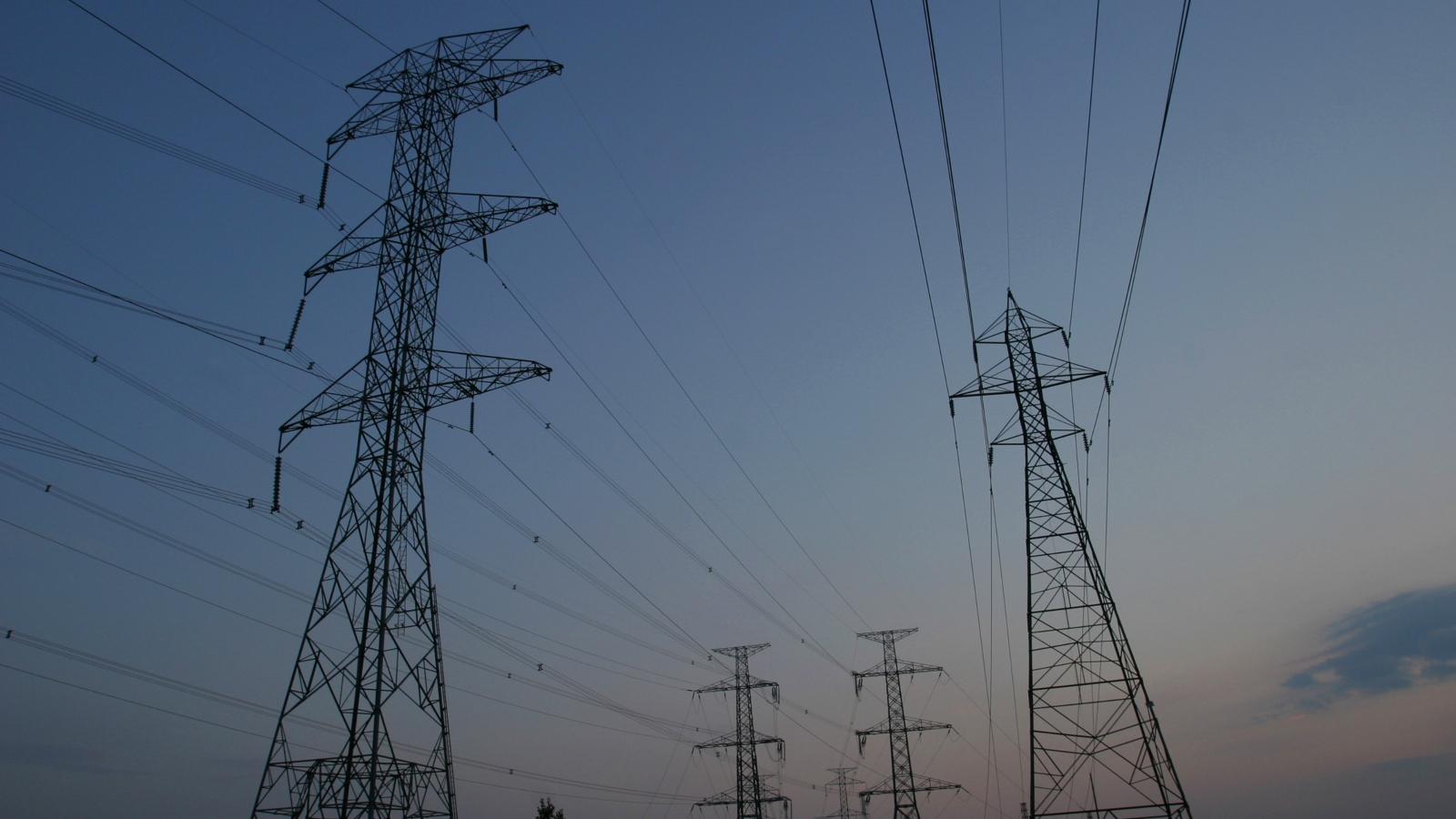
Hydro-Québec representatives have attributed these interruptions to "technical difficulties" and the necessary "fine-tuning" that accompanies any large-scale infrastructure project. While technical glitches are common during the commissioning phase of HVDC lines—which require complex inverter stations to convert direct current to the alternating current used by the domestic grid—the frequency of the outages has raised eyebrows.
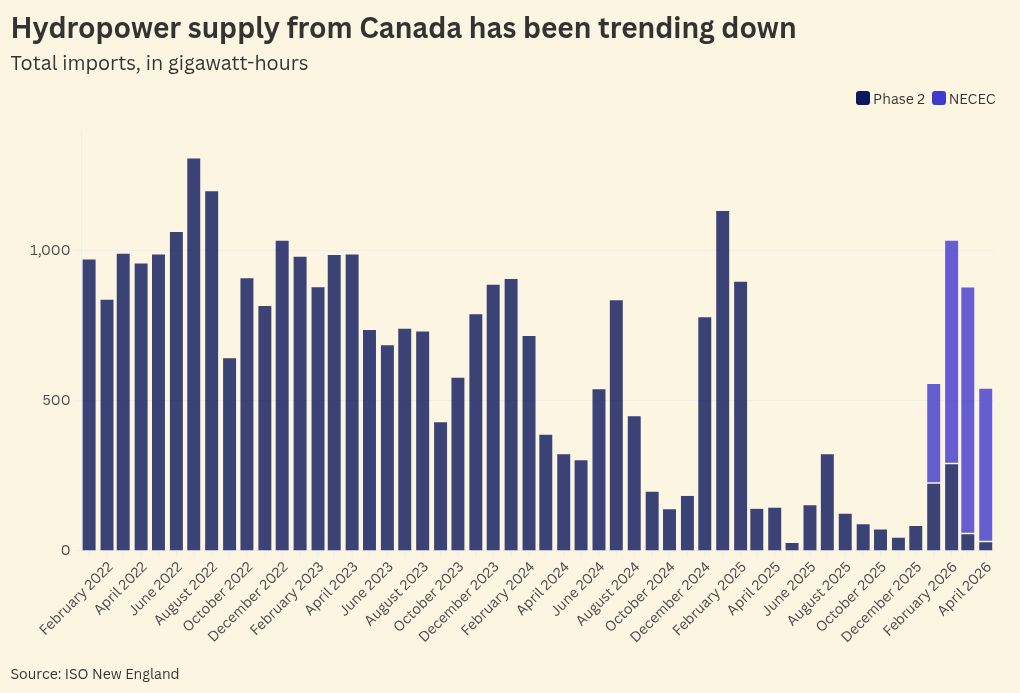
Beyond the technical reliability of the physical line, there is the issue of resource availability. Through the end of April 2024, Hydro-Québec exported approximately 2.4 terawatt-hours (TWh) of power over the NECEC. While this figure appears substantial, it does not represent a purely additive contribution to the New England power pool.
The Substitution Effect: Phase 2 and Net Energy Flows
The most critical challenge to the NECEC’s success is the "substitution effect." For decades, New England has received Canadian hydropower via a separate transmission corridor known as Phase 2, which terminates in central Massachusetts. In 2019, Phase 2 carried more than 12 TWh of electricity into the region. However, as the NECEC came online, flows on the Phase 2 line began to drop precipitously.
In the first four months of 2024, Phase 2 carried only about 0.5 TWh of electricity south. Essentially, the hydropower that once traveled along the old "road" of Phase 2 is now being diverted to the new "highway" of NECEC. Dan Dolan, president of the New England Power Generators Association, noted that net energy flows from Quebec into New England remain near historic lows.
Adding to the complexity is a rare reversal of energy flows. During periods of high domestic demand or low water levels in Canada, the Phase 2 line has actually been used to ship electricity from New England north into Quebec. In the first quarter of 2024, more than 500 gigawatt-hours traveled into Canada. Because New England’s marginal power generation is largely provided by natural gas-fired plants, this means the region is occasionally burning fossil fuels to support the Canadian grid, even as it pays for "clean" hydropower from the north.
The Role of Climate Change and Hydrological Volatility
The primary driver behind the stagnant export numbers is a prolonged drought in Quebec. Hydroelectric systems are fundamentally dependent on precipitation and snowmelt. For the past several years, Quebec has experienced below-average rainfall, leading to lower reservoir levels.
Under its provincial mandate, Hydro-Québec must prioritize domestic customers. When water levels are low, the utility limits its discretionary exports to ensure it can meet the heating and industrial needs of Quebeckers. Gilbert Bennett, a senior adviser for WaterPower Canada, emphasized that hydroelectricity is a dynamic resource. While reservoirs allow for "banking" energy, consecutive dry years can strain the system’s ability to fulfill all export contracts simultaneously.
This hydrological volatility creates a paradox for New England’s energy planners. The region is looking to hydropower as a "baseload" renewable resource—one that is available 24/7, unlike wind or solar. However, if climate change increases the frequency of northern droughts, the reliability of that baseload power may be compromised.
Contractual Safeguards and Economic Implications
From a financial perspective, Massachusetts ratepayers are shielded from some of these delivery failures. The contracts signed between Massachusetts utilities—including Eversource, National Grid, and Unitil—and Hydro-Québec include strict performance requirements. If the Canadian utility fails to deliver the contracted 9.55 TWh per year, it is liable for financial penalties.
Joseph LaRusso, manager of the Clean Grid Program at the Acadia Center, explained that Hydro-Québec must essentially "make the utilities whole" by covering the cost of replacement power. If the NECEC line is down or the water is unavailable, and the utilities have to buy expensive natural gas-generated power from the spot market to fill the gap, Hydro-Québec is on the hook for the price difference.
However, financial compensation does not solve the carbon problem. The primary goal of the $1 billion NECEC project was to displace fossil fuel generation. If the power isn’t flowing, the carbon emissions from natural gas plants continue to accumulate, regardless of who pays the bill for the electricity.
Regional Competition: The New York Factor
New England is no longer the only major market vying for Quebec’s surplus energy. In mid-2024, the Champlain Hudson Power Express (CHPE) began sending electricity from Quebec directly into New York City. This 339-mile line is designed to deliver 1,250 MW of power, enough to satisfy roughly 20% of New York City’s needs.
The emergence of CHPE creates a competitive environment for Hydro-Québec’s available supply. As New York and New England both race to meet aggressive "Net Zero" deadlines, the strain on Quebec’s reservoirs will only increase. This has led some analysts to question whether there is enough surplus water in the North to satisfy the contractual obligations of both the NECEC and the CHPE during dry years.
The Long-Term Outlook: Optimism Amidst Uncertainty
Despite the underwhelming start, many industry experts remain optimistic about the NECEC’s future. Climate modeling suggests that while the current drought is severe, the long-term trend for northern Quebec is toward increased precipitation. As the planet warms, the atmosphere holds more moisture, which is expected to result in more frequent and intense rainfall and snowfall in the subarctic regions where Hydro-Québec’s largest reservoirs are located.
Furthermore, Hydro-Québec is not relying solely on water. The utility has announced plans to significantly expand its wind power capacity, intending to integrate wind and hydro into a "virtual battery" system. During windy periods, the utility can use wind power to meet demand while keeping its hydro gates closed, effectively saving the water for use when the wind dies down or when export demand from New England peaks.
There have also been flashes of the project’s potential. On May 16, 2024, a combination of high solar output in New England and full-capacity flow on the NECEC allowed the region to briefly operate with minimal natural gas intervention. For a few hours, the grid offered a glimpse of a decarbonized future where Canadian hydro and local renewables worked in tandem to push fossil fuels off the system.
Conclusion: A Critical Piece of a Larger Puzzle
The first six months of the New England Clean Energy Connect serve as a reminder that the energy transition is rarely a linear process. Large-scale infrastructure projects are subject to the whims of geology, meteorology, and international market fluctuations.
While the NECEC has yet to deliver a significant net increase in renewable energy flow, its existence provides New England with a critical piece of hardware for a future grid. As technical issues are resolved and weather patterns normalize, the line remains the most direct route for bringing carbon-free energy into a region that desperately needs it. However, the early data suggests that hydropower is not a "silver bullet" solution. To truly decarbonize, New England will need to complement these Canadian imports with a robust build-out of offshore wind, battery storage, and domestic solar, ensuring that the grid is resilient enough to handle the inevitable fluctuations of a changing climate.

