
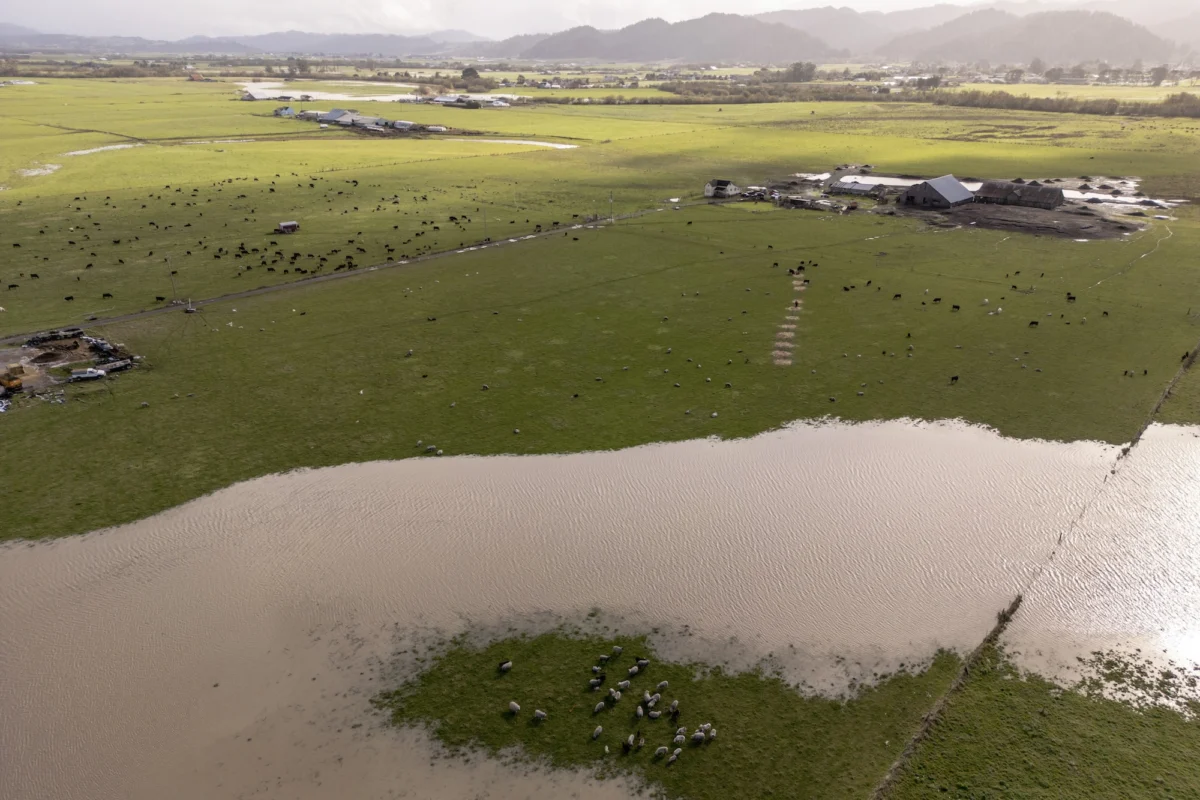
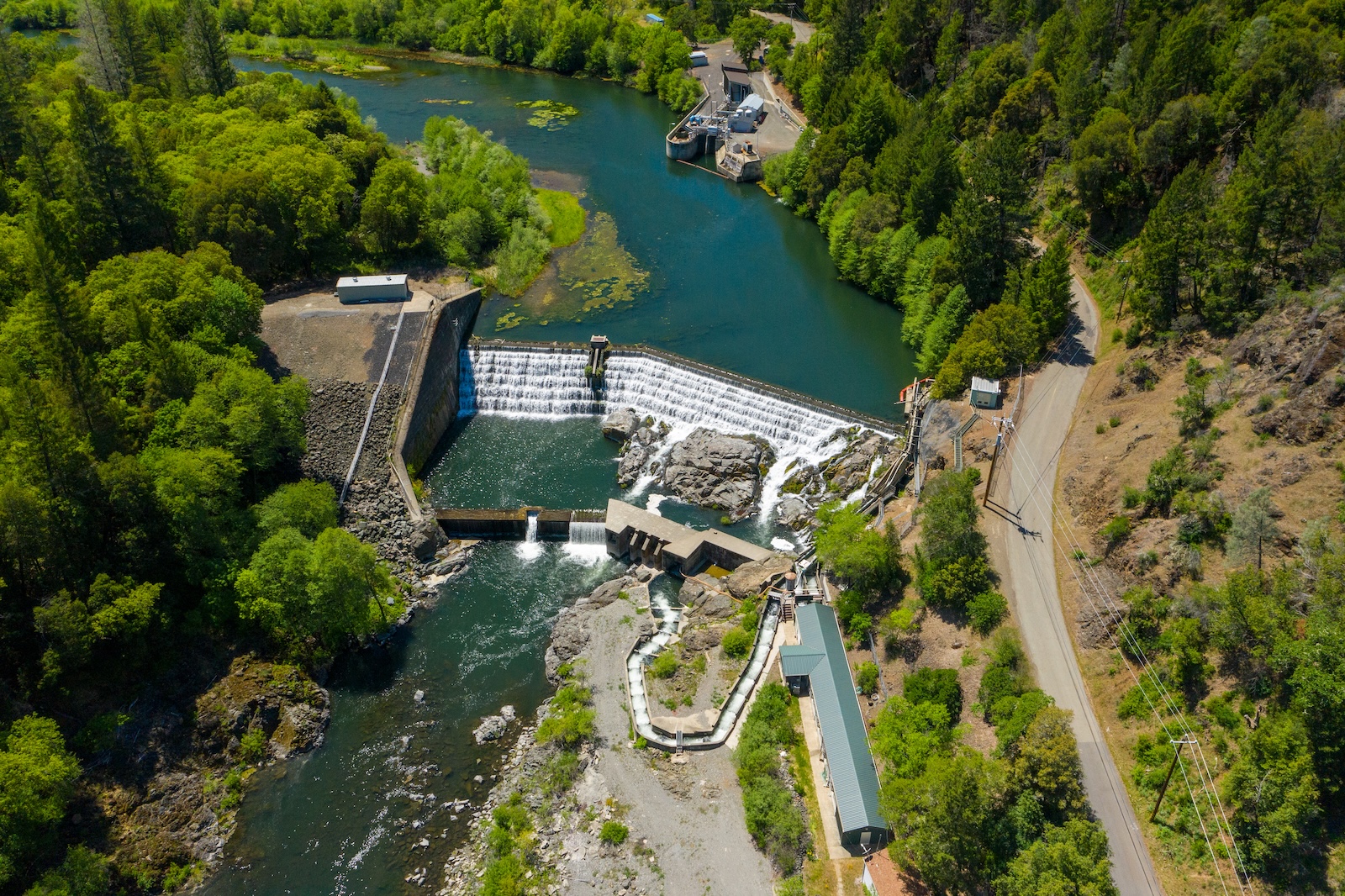
The Potter Valley Project, a century-old hydroelectric and water diversion system that dams Northern California’s Eel River, currently stands as a monument to a fading industrial era. Its primary reservoir, Lake Pillsbury, is heavily choked with sediment, and recurring droughts frequently reduce its water levels to a mere fraction of its capacity. Once a modest source of renewable energy, the project’s hydroelectric plant—capable of generating approximately 9.4 megawatts, or roughly 1 percent of a standard fossil-fuel power plant—has been non-functional for years due to mechanical failure. Furthermore, engineering reports suggest that the aging infrastructure, situated near active seismic zones, is at significant risk of catastrophic collapse during a major earthquake.
Despite its physical decline, the project remains at the center of a high-stakes legal and political firestorm. Last year, Pacific Gas and Electric (PG&E), the utility that owns the project, formally moved to decommission the dams and restore the natural flow of the Eel River. This decision followed decades of internal deliberation, as PG&E determined that the costs of required safety upgrades and environmental compliance far outweighed the project’s economic value. However, the path to demolition has been complicated by a sudden intervention from the federal government and an unlikely municipal water district from Southern California, threatening to upend a fragile regional compromise.
The Two-Basin Solution: A Hard-Won Regional Consensus
For years, stakeholders in Mendocino and Sonoma counties worked toward what was termed the "Two-Basin Solution." The challenge was immense: the Potter Valley Project diverts water from the Eel River into the Russian River basin, supporting high-value vineyards, municipal water supplies for cities like Santa Rosa, and the entire agricultural economy of the rural Potter Valley.
The eventual agreement was a masterpiece of delicate negotiation. The Round Valley Indian Tribe, which holds senior sovereign water rights to the Eel River, agreed to a compromise that would allow a portion of the water to continue flowing to farmers via a newly constructed diversion tunnel. In exchange, the farmers agreed to accept roughly half of their historical water allocations, and the dams—Scott Dam and Cape Horn Dam—would be removed to allow struggling populations of Chinook salmon, coho salmon, and steelhead trout to access hundreds of miles of upstream spawning habitat.

Supporters of the deal, including environmental advocacy groups and local irrigation leaders, viewed the agreement as a landmark model for resolving Western water conflicts. By prioritizing ecosystem restoration while maintaining a reduced but reliable water supply for agriculture, the plan sought to avoid the "water wars" that have historically paralyzed California’s resource management.
Federal Intervention and the Shift to "Culture War" Politics
The regional consensus began to fracture when U.S. Secretary of Agriculture Brooke Rollins launched a public campaign against the decommissioning plan. Rollins, a prominent ally of former President Donald Trump and a co-founder of the America First Policy Institute, has framed the dam removal as a radical environmentalist agenda that prioritizes "fish over people."
Under Rollins’ leadership, the U.S. Department of Agriculture (USDA) has increasingly targeted conservation programs and federal grants established during the Biden administration, labeling them "woke" initiatives. In the case of the Potter Valley Project, Rollins has utilized the federal agency’s platform to amplify the concerns of a vocal minority of local residents who fear the loss of the reservoir will destroy their way of life.
In December, Rollins filed a formal notice to intervene in the project proceedings with the Federal Energy Regulatory Commission (FERC). She requested that the commission suspend PG&E’s license surrender application, arguing that the removal would "devastate hundreds of family farms" and compromise the USDA’s regional investments in insurance, loans, and rural development.
The intervention has been met with sharp criticism from local representatives. U.S. Representative Jared Huffman, a Democrat representing California’s 2nd District, characterized the move as "political theater masked as policy." Huffman and other proponents of the deal argue that the USDA’s claims regarding firefighting capacity and groundwater stability are scientifically questionable and ignore the existential threat posed by the dams’ potential seismic failure.
A Chronology of Conflict
The timeline of the Potter Valley Project’s decline and the subsequent political battle illustrates the complexity of modern infrastructure management:
- 1908–1922: Construction of the Cape Horn and Scott Dams.
- 2021: The Potter Valley hydroelectric powerhouse suffers a major equipment failure and ceases operations.
- 2022: PG&E announces it will not seek a new license for the project, citing economic unfeasibility.
- Early 2024: Stakeholders, including the Round Valley Indian Tribe and the Sonoma County Water Agency, reach a tentative agreement on a decommissioning and diversion plan.
- September 2024: Secretary Brooke Rollins begins a social media campaign against the deal, promising local opponents she is "on it."
- December 2024: The USDA formally intervenes with FERC to block the decommissioning.
- April 2025: Rollins announces that the Elsinore Valley Municipal Water District is interested in acquiring the dams.
- May 2026: FERC releases its initial National Environmental Policy Act (NEPA) scoping document, labeling dam retention "infeasible" due to seismic risks.
The Geographic Paradox: The Elsinore Valley Factor
One of the most bewildering developments in the saga is the emergence of the Elsinore Valley Municipal Water District (EVMWD) as a potential buyer for the dams. Located in Riverside County, nearly 500 miles south of the Potter Valley Project, EVMWD has no physical infrastructure connecting it to the Eel River.
Board members from the district have framed their interest as an act of "altruism" intended to protect California’s overall water security. However, environmentalists and state policymakers have expressed deep skepticism. Given that there is no mechanism to transport water from the Eel River to Southern California, critics suggest the move is a political stunt coordinated by conservative think tanks to stall environmental progress.
The intervention has sparked a formal investigation by Representative Huffman’s office. Meanwhile, the Elsinore Valley district and the America First Policy Institute have engaged in aggressive public records requests, targeting non-profit organizations like CalTrout. These legal maneuvers are seen by many as an attempt to intimidate the coalition of groups supporting the dam removal.
The "Nuclear Option": Tribal Water Rights
The most significant hurdle for those seeking to keep the dams in place may be the Round Valley Indian Tribe. The tribe’s senior water rights are a legal powerhouse in California’s "first in time, first in right" hierarchy. Tribal President Joseph Parker has made it clear that the tribe’s cooperation was contingent on the removal of the dams.

If the USDA or Elsinore Valley succeeds in blocking the decommissioning, Parker has vowed to pursue a full adjudication of the tribe’s water rights in court. Such a legal battle could last decades and potentially result in the tribe claiming the entirety of the Eel River’s flow, leaving farmers and the Elsinore Valley with no water at all.
"We aren’t backing down," Parker stated. "The farmers have been getting water for over a hundred years. If they want a fight, we are here for the long haul." This "nuclear option" of legal adjudication threatens to create more uncertainty for the very agricultural communities Secretary Rollins claims to be protecting.
Environmental and Economic Data: The Reality of Decommissioning
The push for dam removal is backed by significant environmental data. The Eel River was once the third-largest producer of salmon and steelhead in California. Current populations are estimated to be at less than 1 percent of their historic levels. Removing the Scott Dam would reopen access to high-elevation, cold-water habitat that is essential for species survival as lower elevations warm due to climate change.
From an economic perspective, the cost of retrofitting the Potter Valley Project is staggering. Estimates suggest that bringing the dams into compliance with modern seismic safety standards and the Endangered Species Act could exceed $500 million. PG&E, a company already embattled by wildfire liabilities, has stated clearly that its ratepayers should not bear the burden of these costs for a project that produces negligible power.
Implications for National Water Policy
The conflict at Potter Valley is a microcosm of a larger national debate over aging infrastructure. Across the United States, thousands of small-to-medium dams are reaching the end of their design lives. The successful removal of the Klamath River dams on the California-Oregon border recently demonstrated that large-scale restoration is possible through bipartisan and multi-stakeholder cooperation.

However, the politicization of the Potter Valley Project suggests that future dam removals may become increasingly contentious. If federal agencies can be used to bypass local compromises in favor of ideological battles, the precedent for collaborative watershed management is at risk.
As FERC continues its environmental assessment, the future of the Eel River remains in limbo. While the commission currently views dam retention as "infeasible," the political pressure from the USDA and the legal challenges from Southern California have introduced a level of volatility that few expected. For the residents of Potter Valley, the tribe, and the fish of the Eel River, the resolution of this conflict will determine the ecological and economic landscape of the region for the next century.

