

The educational landscape has undergone a significant shift in recent decades, moving away from a model of passive lecture-based instruction toward a more dynamic, reciprocal exchange between educators and students. Central to this evolution is the concept of formative assessment—low-stakes, ongoing evaluations that allow teachers to monitor student learning and provide immediate feedback. Among the most effective tools in this category is the "exit ticket," a brief response system utilized at the conclusion of a lesson to gauge comprehension, identify misconceptions, and inform future instructional strategies. As schools increasingly prioritize data-driven instruction and personalized learning, the exit ticket has transitioned from a simple classroom management trick to a sophisticated pedagogical instrument essential for student success in both physical and virtual learning environments.

The Evolution and Theoretical Framework of Formative Assessment
To understand the rise of the exit ticket, one must examine the broader history of educational assessment. Historically, student progress was measured primarily through summative assessments—high-stakes exams administered at the end of a unit or term. However, research by educational theorists such as Paul Black and Dylan Wiliam has demonstrated that formative assessment, when integrated into daily routines, significantly boosts student achievement. Their landmark 1998 study, "Inside the Black Box," argued that frequent, low-stakes feedback loops allow for "mid-course corrections," ensuring that students do not fall behind before the final exam.
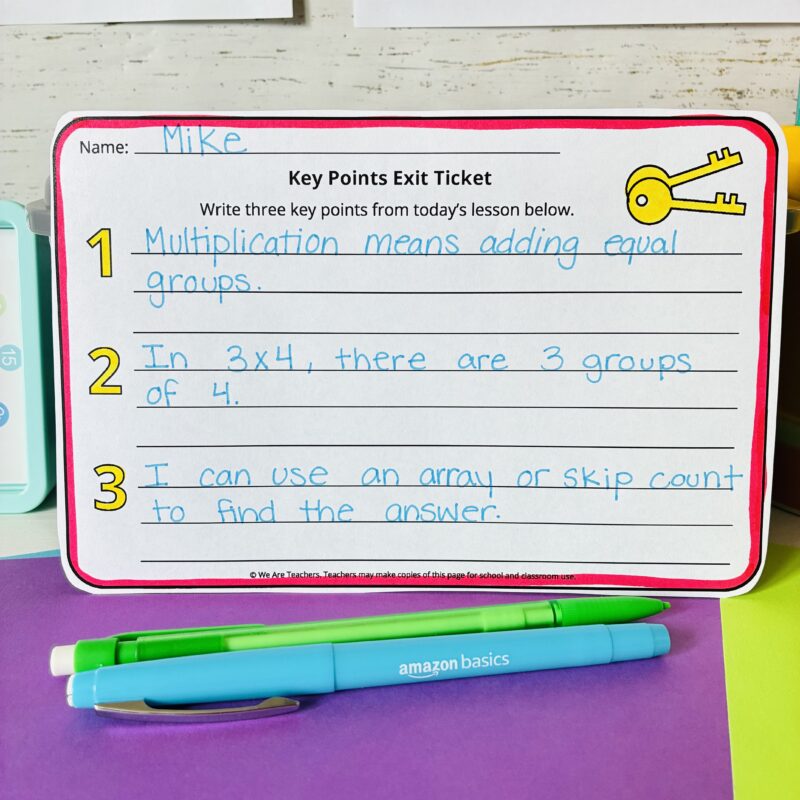
The exit ticket serves as the ultimate feedback loop. It is grounded in the principles of retrieval practice and metacognition. By asking students to summarize what they have learned or identify a lingering question, educators are forcing the brain to retrieve information from short-term memory, which strengthens neural pathways. Simultaneously, it encourages students to "think about their thinking," a process known as metacognition, which is a critical predictor of long-term academic autonomy.
Chronology of a High-Impact Lesson Close
The implementation of an exit ticket is not an isolated event but the culmination of a deliberate instructional sequence. For an exit ticket to provide meaningful data, the preceding lesson must follow a structured chronology:
- Establishment of Learning Objectives: The teacher clearly defines the goal of the day (e.g., "Students will be able to solve quadratic equations using the quadratic formula").
- Instructional Delivery: The core content is presented through direct instruction, collaborative work, or inquiry-based activities.
- Guided Practice: Students engage with the material under teacher supervision.
- The Synthesis Phase (The Exit Ticket): In the final five to seven minutes of the period, the teacher poses a prompt that directly aligns with the initial learning objective.
- Submission and Analysis: Students submit their responses—physically or digitally—before leaving the room. The teacher then analyzes these responses before the next class session begins.
Supporting Data: The Impact of Real-Time Feedback
Quantitative research supports the efficacy of these brief assessments. According to data synthesized by John Hattie in his "Visible Learning" research, feedback has an effect size of 0.79, placing it among the top ten most influential factors in student achievement. Exit tickets provide a standardized medium for this feedback.

In a survey of K-12 educators conducted by various pedagogical research groups, approximately 78% of teachers who utilized exit tickets at least three times a week reported a "noticeable improvement" in student retention of core concepts. Furthermore, data-driven classrooms that use exit tickets to differentiate instruction—sorting students into "mastery," "near-mastery," and "remediation" groups—saw a 15% higher average score on end-of-unit assessments compared to classrooms that relied solely on traditional homework for feedback.
Expert Perspectives on Classroom Implementation
Experienced educators emphasize that the value of an exit ticket lies in its ability to bridge the communication gap between the teacher and the individual student. Sheena LeMay-Nelssen, a veteran art teacher, notes that these tools are particularly vital for students who may be hesitant to participate in open discussions. "Some students are just more comfortable writing questions or putting answers on paper than speaking privately with me or in front of the class," LeMay-Nelssen explains.

She further highlights the role of exit tickets in fostering student engagement and accountability. In her classroom, exit tickets are used not as a punitive measure, but as a transparent tool for self-improvement. "Kids want to know if it is part of a daily grade, a separate grade, or extra credit," she says. "If kids see exit tickets as busywork, they will not do it." By integrating these responses into the grading structure or using them to skip redundant review sessions, teachers can incentivize honest and thoughtful participation.
Categorization of Exit Ticket Methodologies
To maintain engagement and address different learning styles, educators employ a variety of exit ticket formats. These can be categorized into three primary types:

1. Data-Driven and Skill-Based Tickets
These focus on the "Solve It" or "Prove It" method. In a mathematics or science context, a teacher might present a single complex problem. Students must show their work, allowing the teacher to see exactly where a calculation error occurred. This provides a "pulse check" on whether the class is ready to move to more advanced topics.
2. Reflective and Metacognitive Tickets
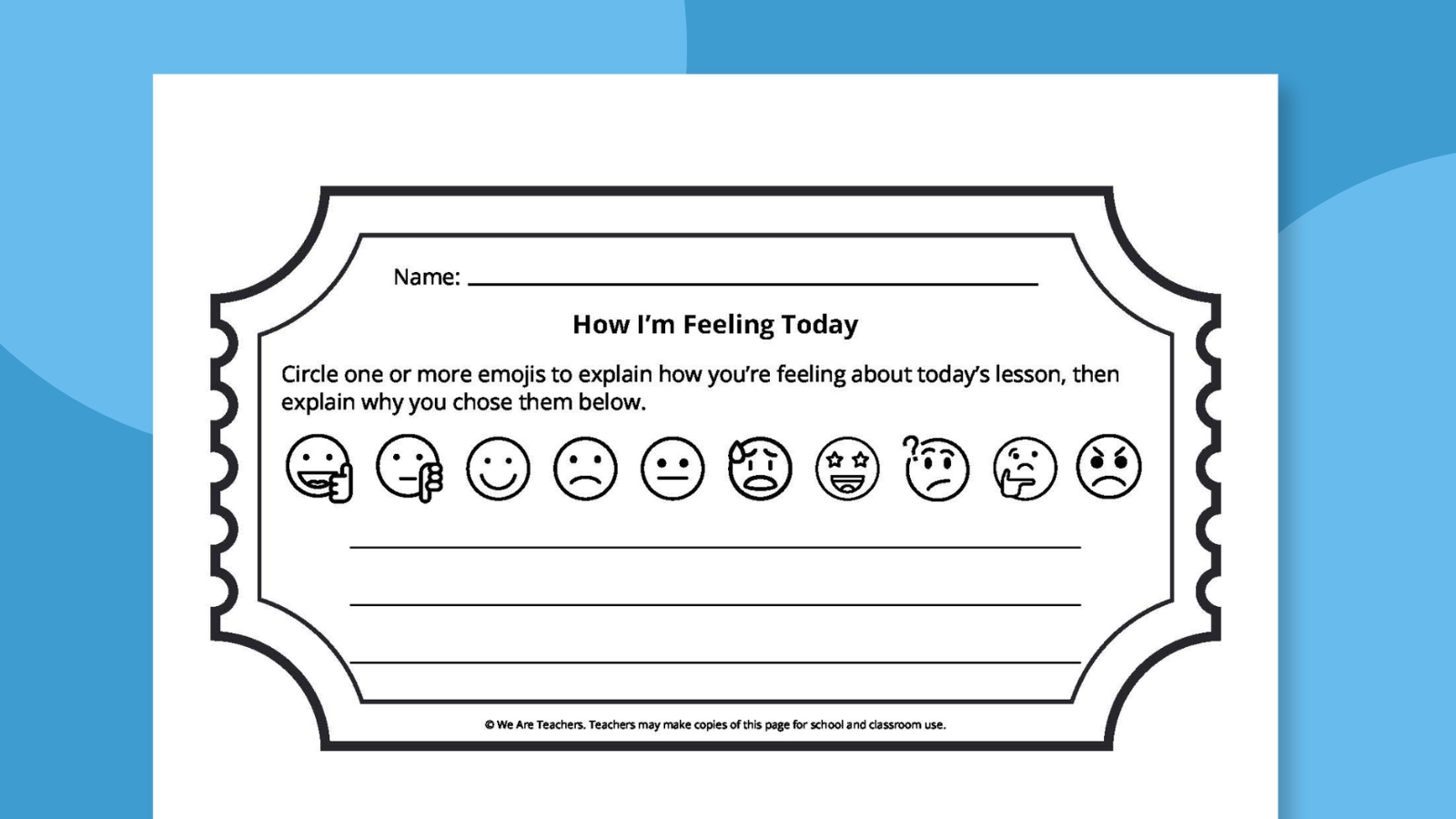
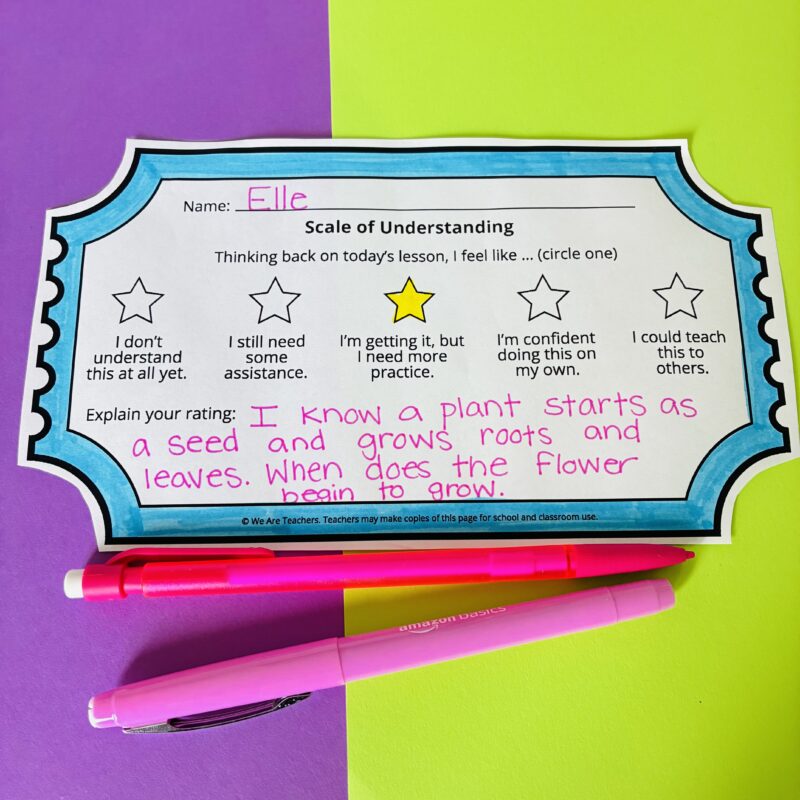
These encourage students to assess their own emotional and intellectual state. Common examples include:

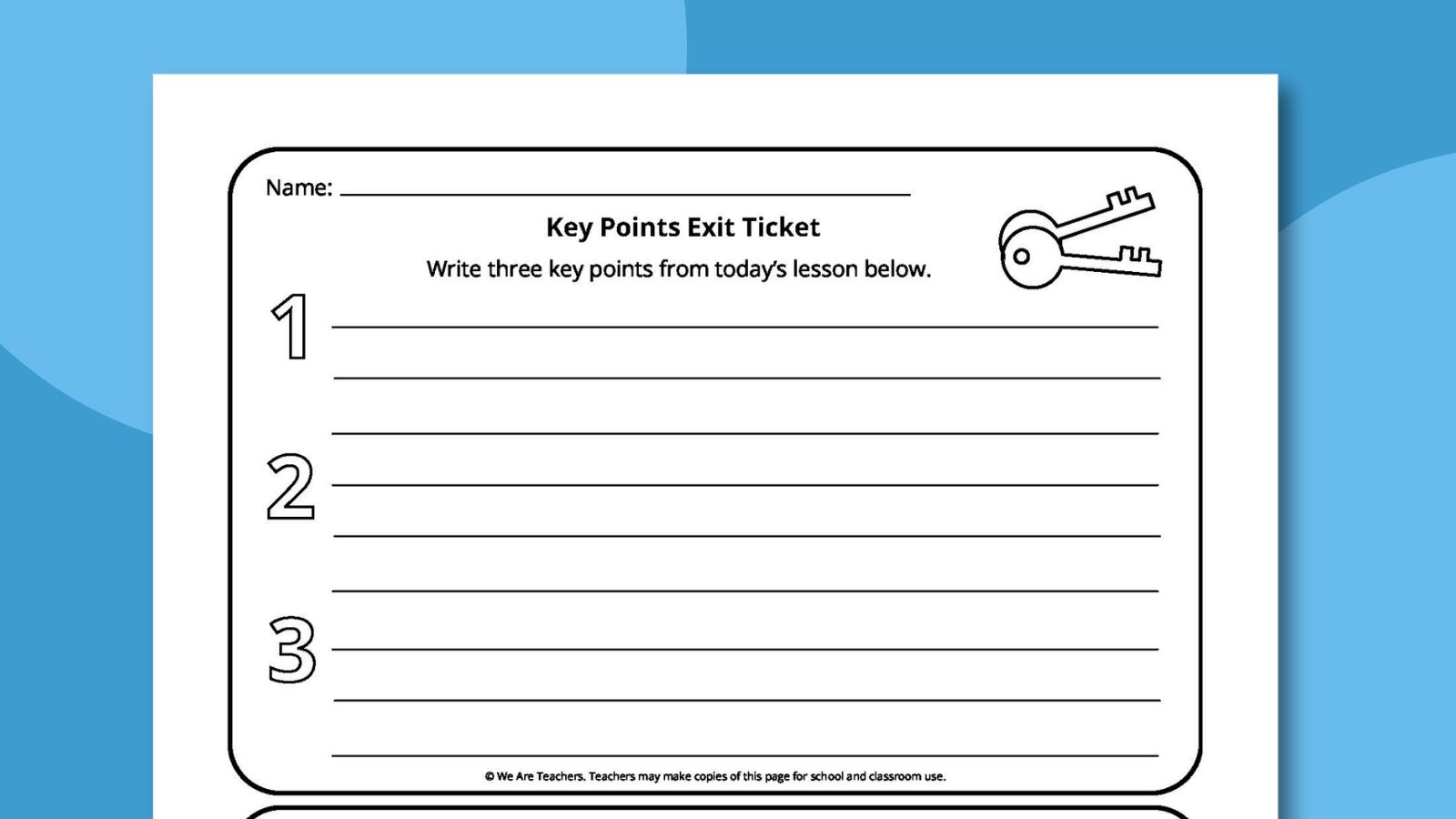
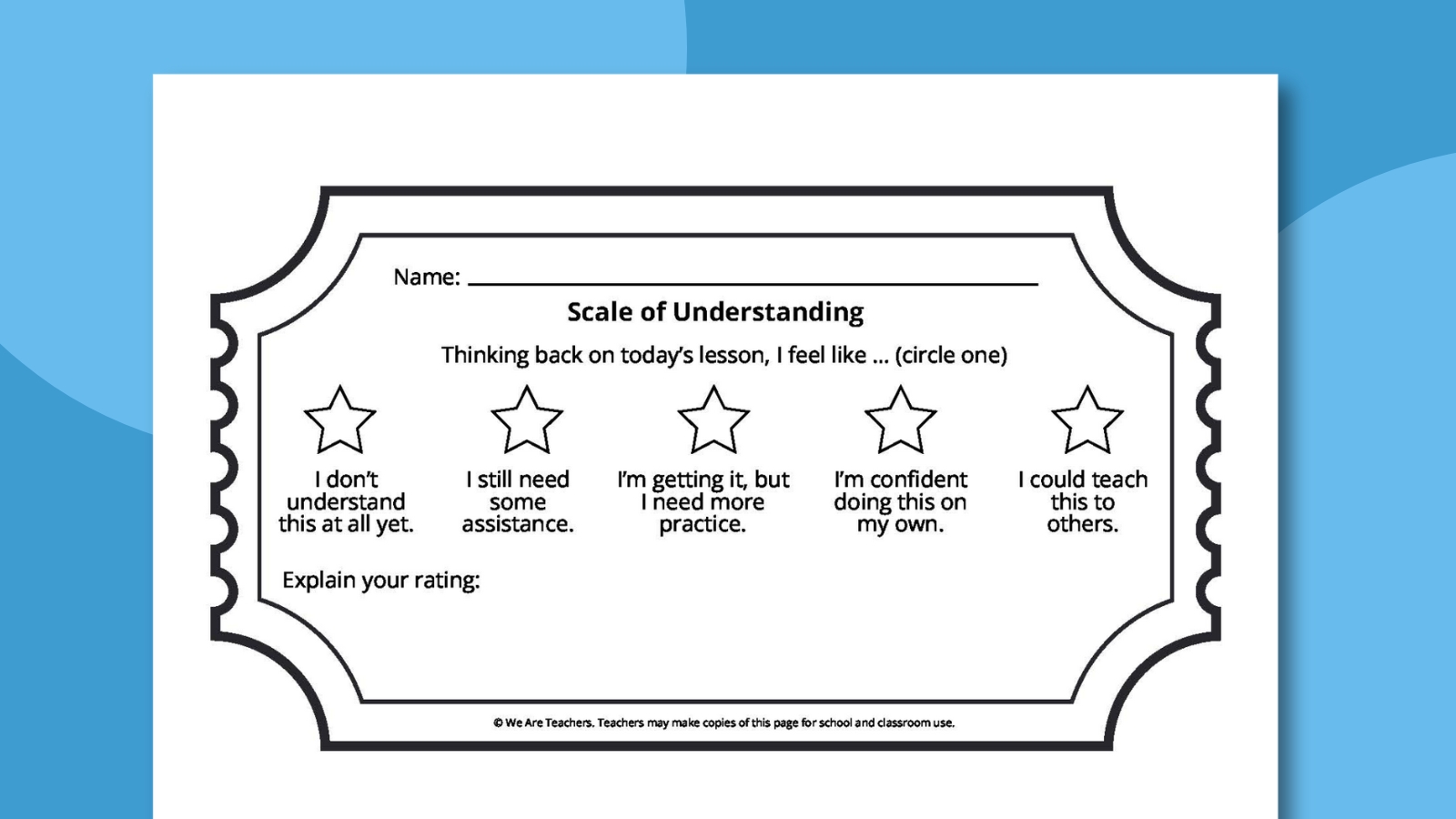
- The 3-2-1 List: Three things learned, two things the student found interesting, and one question remaining.
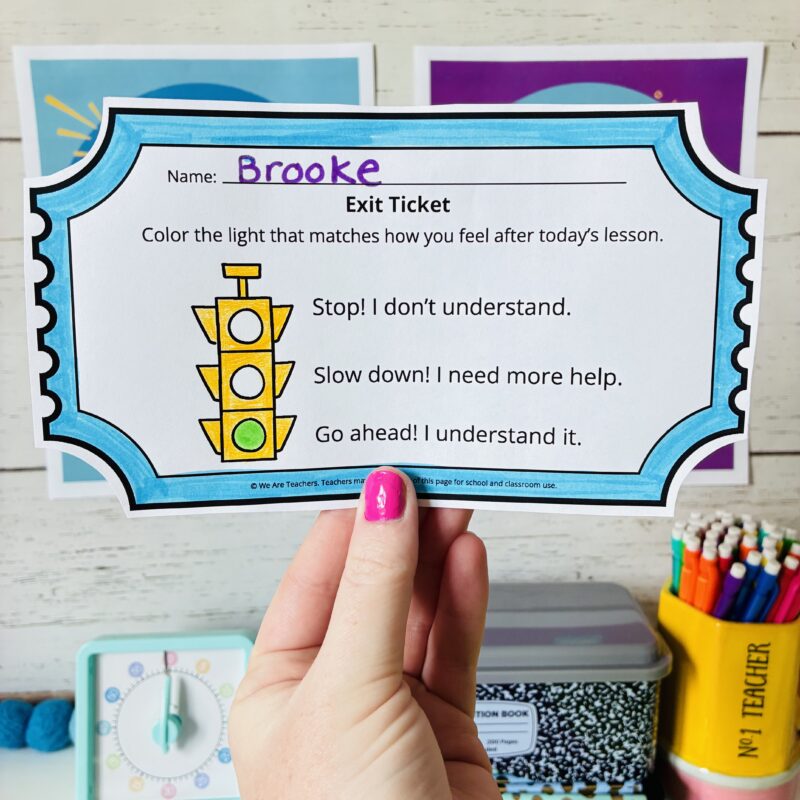
- Emoji/Traffic Light Ratings: Students circle a green light (I understand), yellow light (I need some help), or red light (I am lost).
- The One-Sentence Summary: Students must distill a 50-minute lecture into a single sentence, forcing them to prioritize the most important information.
3. Creative and Interactive Tickets
These are designed to lower the affective filter and make assessment feel like a natural part of the creative process.
- Two Facts and a Fib: Students write three statements about the lesson, one of which is false, and challenge a peer to identify the "fib."
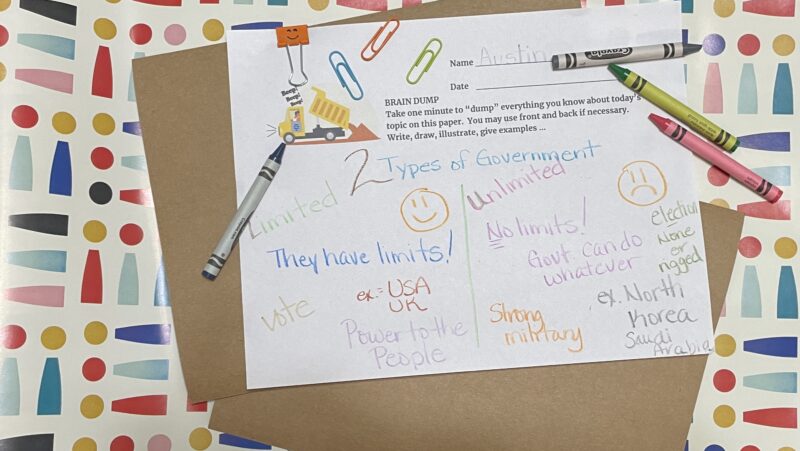
- Brain Dumps: A timed exercise where students write down every word or concept they remember from the lesson without worrying about structure.
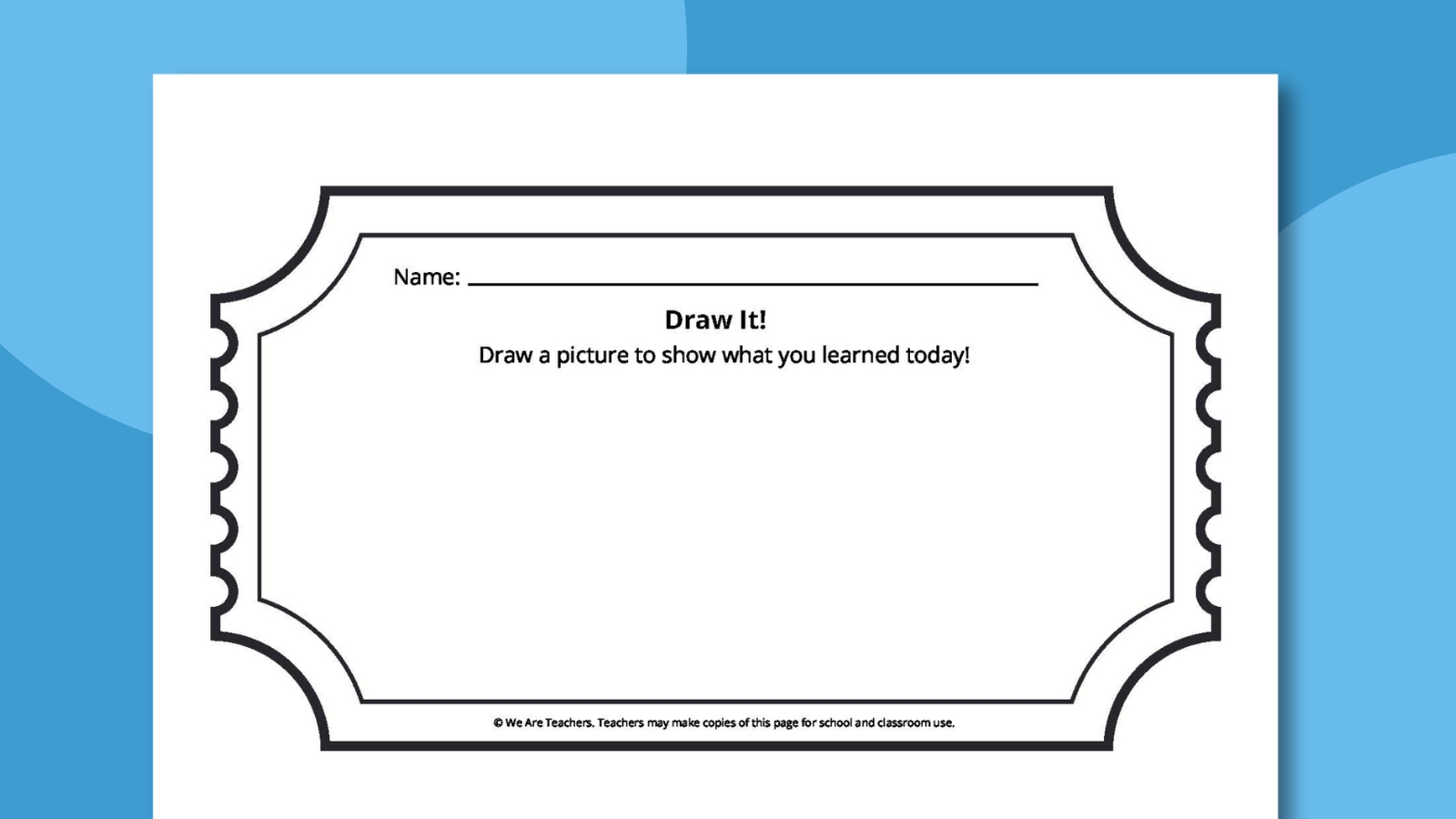
- Visual Responses: For younger students or those in arts programs, drawing a representation of a concept (e.g., "Draw the water cycle") can reveal more than a written paragraph.
The Digital Transformation of Formative Assessment
The transition to virtual and hybrid learning models has necessitated a digital evolution of the exit ticket. While the traditional "sticky note on the door" remains effective in physical classrooms, digital tools have expanded the possibilities for data analysis.
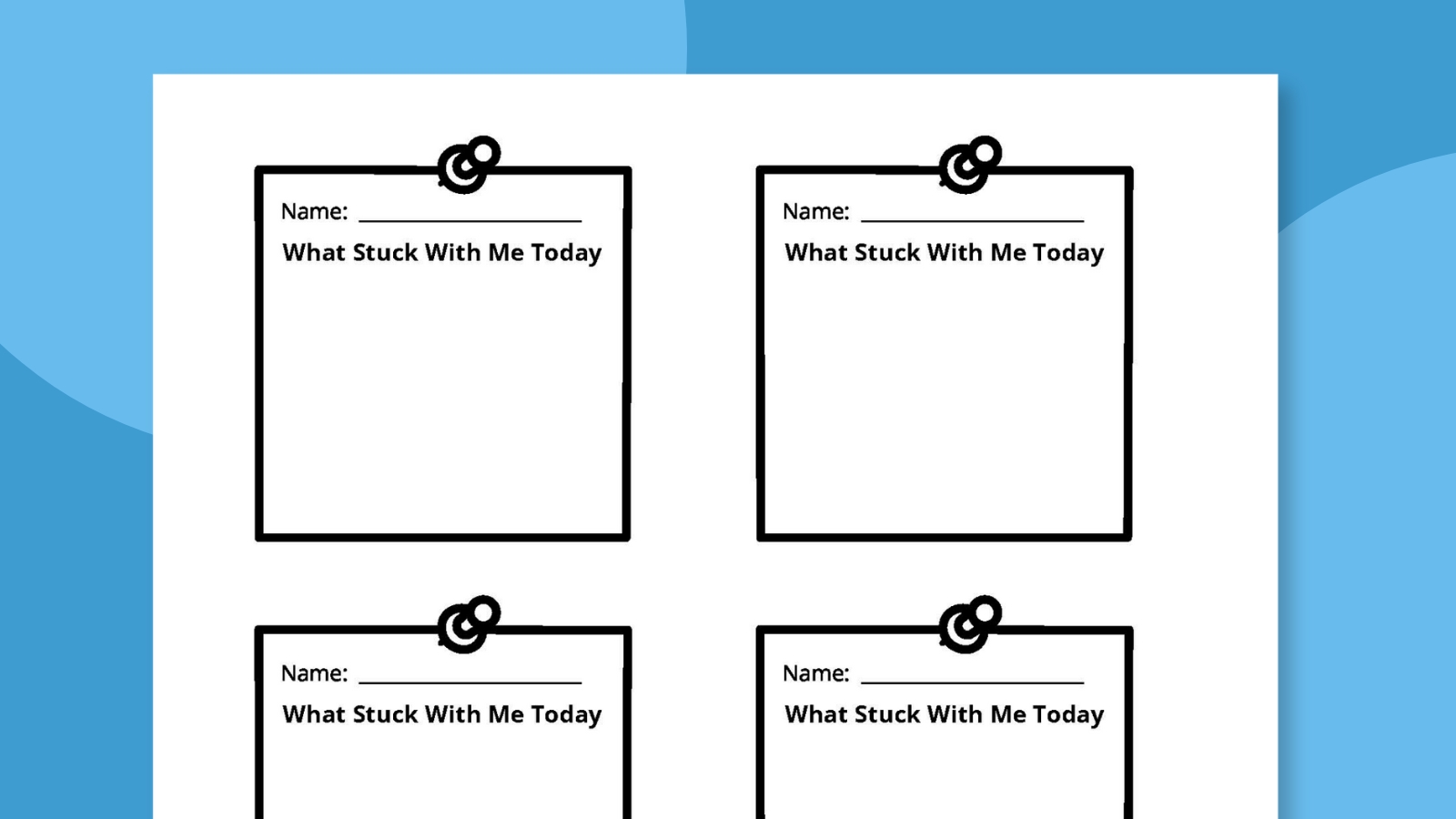
Platforms such as Google Forms allow teachers to instantly aggregate student responses into spreadsheets, identifying class-wide trends in seconds. Padlet serves as a digital bulletin board where students can post their "stuck with me" moments, creating a collaborative wall of learning. Video-based responses via platforms like Flip (formerly Flipgrid) allow for verbal articulation of concepts, which is essential for language learners and students with diverse learning needs. This digital shift has made the data collected from exit tickets more actionable and easier to track over the course of a semester.
Analysis of Implications: Beyond the Classroom
The systematic use of exit tickets has broader implications for school culture and educational policy. When exit tickets are used consistently, they foster a "culture of error"—an environment where students feel safe admitting they do not understand a concept. This psychological safety is a cornerstone of high-performing organizations, not just in education but in the professional world.

Furthermore, the data generated by exit tickets can serve as a vital resource during Professional Learning Communities (PLCs). Teachers can compare exit ticket data across different sections of the same course to determine which instructional strategies yielded the best results. This collaborative approach to data turns the individual classroom into a laboratory for pedagogical improvement.
Conclusion: The Path Forward for Instructional Design
As the educational sector continues to grapple with learning loss and the need for more personalized instruction, the exit ticket stands out as a high-yield, low-cost intervention. By providing immediate feedback, facilitating better communication, and helping students develop lifelong metacognitive skills, these brief assessments ensure that the "back-and-forth" of a good classroom remains productive.

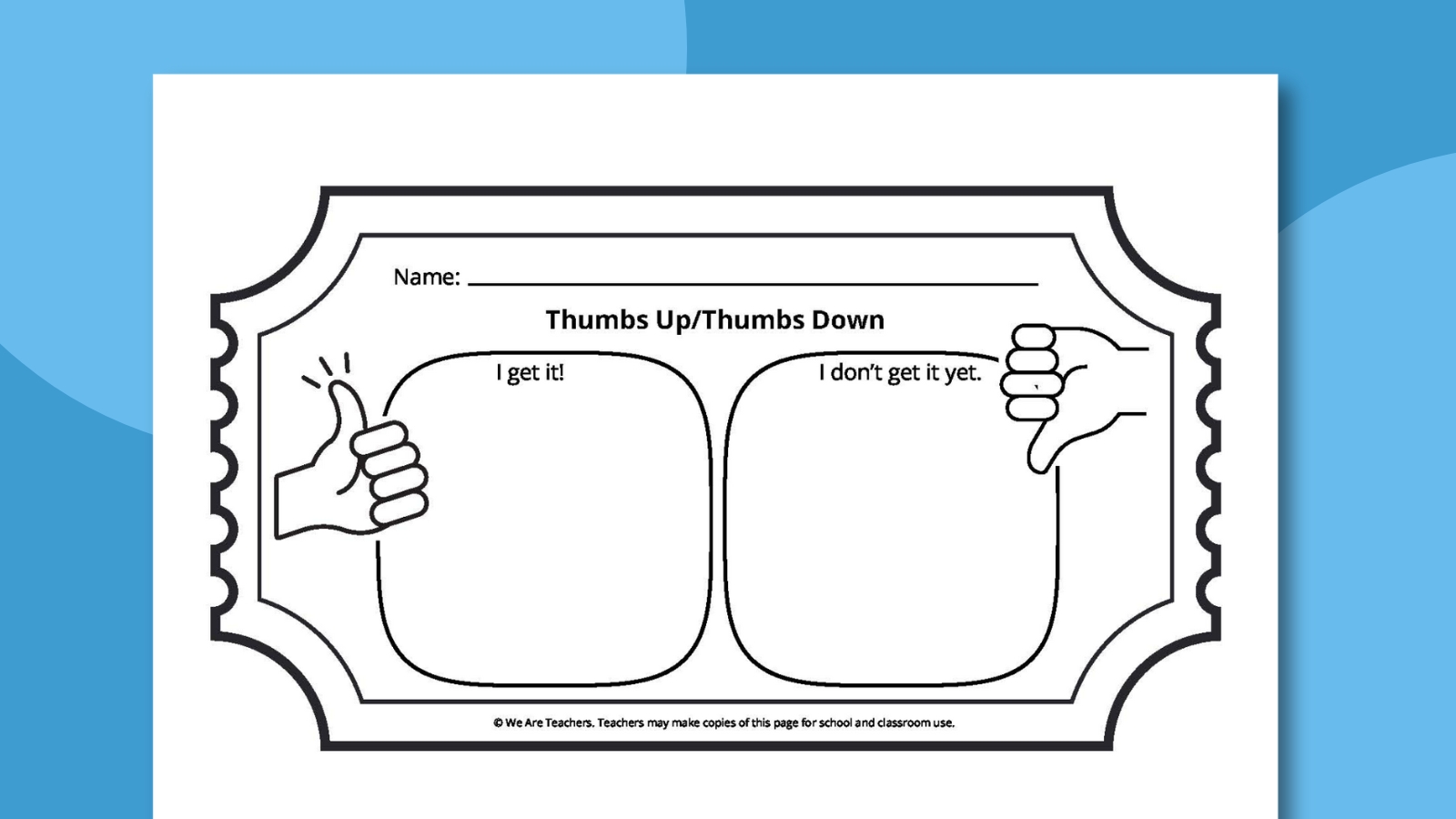
For the modern educator, the challenge is not simply to collect these tickets, but to analyze them and act upon the information they contain. Whether through a quick "thumbs-up" at the door or a detailed digital survey, the goal remains the same: ensuring that no student leaves the classroom with a misunderstanding that could have been corrected in five minutes. In the final analysis, the exit ticket is more than a way to end a class; it is the essential roadmap for the beginning of the next.

