
In a brightly lit first-grade classroom at Sand Creek Elementary in Highlands Ranch, Colorado, the air was thick with the quiet intensity of a writing workshop. Gabrielle Grace’s students were tasked with a foundational exercise: brainstorming details for a paragraph about their upcoming summer plans. For many six-year-olds, translating abstract thoughts into structured sentences is a Herculean task, often met with chewed pencils and blank stares. However, for a student named Dean, the challenge had already been conquered.
Before the introductory bell had even finished echoing through the suburban Denver hallways, Dean had completed his worksheet. His page was a model of early elementary organization, featuring a clear topic sentence—“I do many things over the summer”—followed by a categorized list of activities including visits to the park, time on his iPad, and family vacations. His teacher, Grace, noted that at the beginning of the academic year, many of her students struggled to form a single coherent sentence. Now, they operate with a systematic efficiency that she describes as "clockwork."
Dean’s proficiency is increasingly becoming the exception rather than the rule in American education. For decades, the United States has focused its pedagogical energy and federal funding on reading and mathematics, often leaving writing instruction as an afterthought. Educators across the country report a growing crisis: students entering middle and high school who lack the fundamental ability to construct basic sentences, let alone the complex, multi-paragraph essays required for college and career readiness. This gap in skills has prompted a burgeoning movement to apply "the science of writing"—a body of research-based instructional methods—to classrooms from Colorado to Rhode Island.
The Data Void: A Decades-Long Blind Spot
One of the primary obstacles in addressing the national writing deficit is a profound lack of comprehensive data. While the National Assessment of Educational Progress (NAEP), often called "The Nation’s Report Card," provides frequent updates on reading and math proficiency, it has not released nationwide standardized writing scores for elementary students since 2002. At that time, only 27 percent of fourth graders were found to be proficient or higher in writing.

In the absence of recent federal data, state-level results provide a sobering substitute. In 2025, an analysis of Texas’s annual English language arts exams revealed that more than half of the state’s 360,000 third graders received zero credit for essay responses that required them to compare and contrast two texts. In California, during the same period, only 17 percent of third graders met the standard for well-organized writing on research-based prompts. Florida reported similar struggles, with students averaging only 50 percent of the possible points on state writing assessments.
Vicki McQuitty, a professor in Towson University’s elementary education program and director of the Maryland Writing Project, suggests that while national data is sparse, the anecdotal evidence from the field is overwhelming. "The word on the street is that kids can’t write," McQuitty said, noting that the issue persists through higher education, where professors and employers alike complain about a lack of basic composition skills among recent graduates.
The Cognitive Load: Why Writing is the "Hardest Thing to Teach"
The difficulty of writing instruction stems from the immense cognitive load the task places on developing minds. Unlike reading, which is a receptive skill, writing is productive and requires the simultaneous coordination of multiple high-level processes. A student must master fine motor skills for handwriting, phonemic awareness for spelling, and a robust vocabulary for word choice. Beyond these mechanics, they must employ executive function skills to plan, organize, and revise their thoughts.
Chrissy Everett, a veteran educator with 23 years of experience currently teaching fourth grade at Prairie Crossing Elementary in Douglas County, describes writing as the most demanding subject in the curriculum. "It involves knowing how to piece it all together and what steps to do next," she explained.
This challenge has been exacerbated by the digital age. Christina Bretz, an occupational therapist with Learning Without Tears, has observed a decline in the manual dexterity required for writing. As children spend more time on iPads and touchscreens, they lose the opportunity to develop the hand strength and coordination gained from manipulating physical objects. Bretz recounted meeting a kindergartner who, having been raised entirely on digital devices, attempted to "color" a physical page using his finger rather than a crayon.

A Chronology of Neglect in Teacher Preparation
The crisis is not merely a result of student struggle but also of systemic failures in teacher training. Research indicates that many teacher preparation programs offer little to no standalone instruction on how to teach writing. Historically, writing has been folded into broader literacy courses that prioritize reading.
Adrea Truckenmiller, an associate professor at Michigan State University’s College of Education, argues that this lack of preparation leads to a "hodgepodge" of instructional methods in the classroom. Without a scientific framework, teachers often resort to "creative writing" prompts—such as "describe your shoe" or "write about your birthday"—which fail to build the structural skills necessary for academic writing.
"I just assumed writing instruction was happening, but every time I walk into a classroom my assumption is proven wrong," Truckenmiller said. This sentiment is echoed by Randy Barth, CEO of SRSD Online, who refers to writing as the "last bastion of education"—the final frontier that the system is only now beginning to fund and prioritize.
The Douglas County Transformation: Implementing the Science of Writing
In 2023, administrators in Colorado’s Douglas County School District, which serves 61,000 students, noticed a glaring disparity: students were scoring significantly higher in reading than in writing. Janet Merrill, the district’s literacy coordinator, discovered that teachers were largely left to their own devices, often sourcing materials from unvetted online platforms like Teachers Pay Teachers.
To rectify this, the district turned to an evidence-based approach known as Self-Regulated Strategy Development (SRSD). Unlike traditional methods that focus on the "joy" of free-writing, SRSD is highly prescriptive and structured. It emphasizes:

- Explicit Instruction: Breaking down the writing process into manageable steps.
- Modeling: Teachers demonstrate the thought process behind planning and drafting.
- Mnemonics: Using acronyms like "TIDE" (Topic, Important Details, Ending) to help students organize their thoughts.
- Text-Based Evidence: Moving away from personal anecdotes and toward responding to specific texts.
The district also integrated a psychological component into the curriculum. Before beginning a draft, students are encouraged to write a "positive affirmation" to themselves at the top of their page, such as "I can do this" or "I am a smart writer." This strategy is designed to combat the "blank page syndrome" and the anxiety that often accompanies writing tasks.
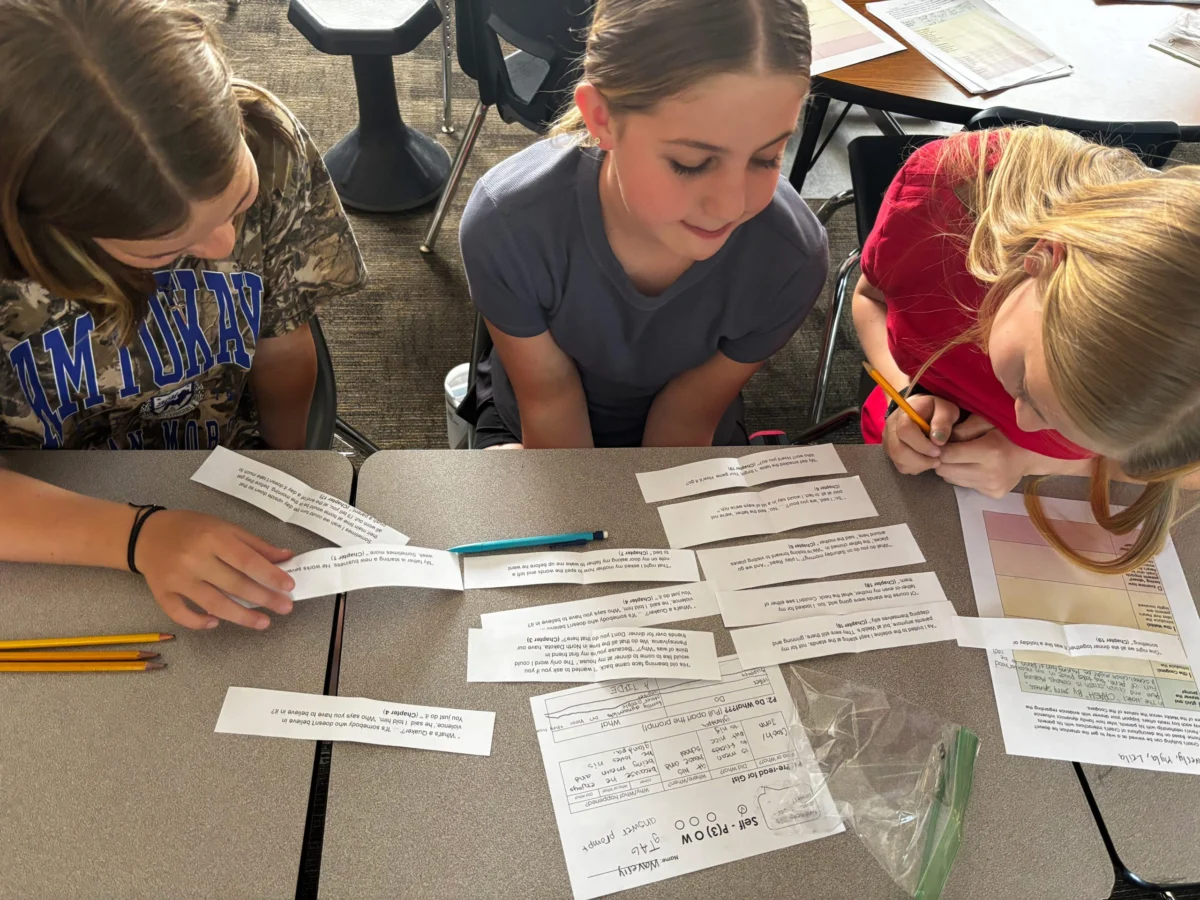
Three years into the implementation, the results are palpable. In Kristin Allen’s kindergarten class, five-year-olds who were previously thought too young for formal composition are now writing full paragraphs with correct punctuation and topical focus. "Some people have the attitude that they can’t do it because they are five or six," Allen said. "They can."
Broader Impacts and the Path Forward
The success in Douglas County is mirrored by similar overhauls in Tennessee, Pennsylvania, California, and Rhode Island. These districts are finding that a focus on writing does not just improve essay scores—it also bolsters reading comprehension and even math performance. District officials in Douglas County noted a three-percentage-point increase in state writing scores after just one year of the pilot program, alongside a rise in math scores. They attribute the latter to students’ improved ability to analyze and deconstruct word problems.
The "science of writing" movement suggests that the historical separation of reading and writing instruction was a mistake. Experts now argue that the two skills are reciprocal; as students learn to build sentences, they become better at deconstructing the sentences they read.
Despite the promising results, scaling these methods remains a challenge. The knowledge base is currently concentrated among a small group of researchers and early adopters. However, as more districts witness the transformation in classrooms like those in Sand Creek Elementary, the momentum for a national shift in literacy instruction continues to grow.

For students like ten-year-old Arya Melancon, a fourth grader in Douglas County, the shift from "creative freewrites" to structured strategy has replaced fear with confidence. "Last year we were all scared of writing prompts," she said. "This year, we felt like we were ready." As the American education system begins to treat writing with the same scientific rigor it has applied to reading, the goal is for every student to share that sense of readiness, turning a once-daunting task into a mastered skill.

