
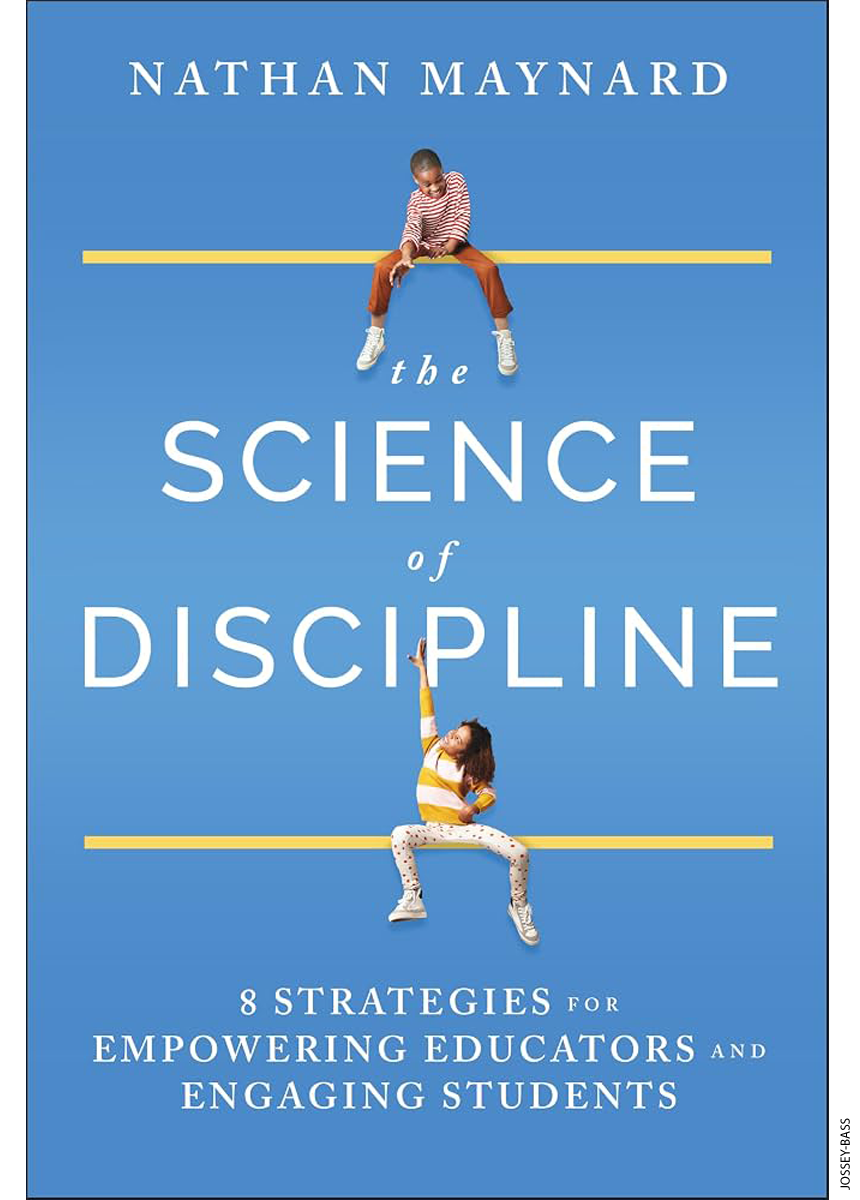
The release of Nathan Maynard’s The Science of Discipline has reignited a fundamental debate in American education regarding the primary purpose of school discipline: whether it exists to diagnose and accommodate individual psychological needs or to form the character and habits necessary for civic life. This tension, which traces its roots back to the Enlightenment, pits a Madisonian view of human nature—which suggests that institutions are necessary to restrain impulse and encourage virtue—against a more Rousseauian perspective that views children as naturally good but often suppressed by the heavy hand of adult authority. As schools across the United States move away from traditional punitive measures toward restorative justice and trauma-informed care, the publication of Maynard’s work provides a timely focal point for analyzing the implications of this shift for both educators and students.
From Punitive Measures to Diagnostic Curiosity
Nathan Maynard’s The Science of Discipline (Jossey-Bass, 2026) advocates for a paradigm shift in how educators perceive and respond to student misconduct. The central thesis of the work is that behavior is a form of communication. Under this framework, disruptions—ranging from minor talking in class to overt defiance or bullying—are not seen as character failures or intentional acts of rebellion. Instead, they are viewed as "clues" to underlying deficits, such as missing social-emotional skills, unmet physiological needs, or emotional overloads.
Maynard proposes that the role of the educator must evolve from that of a rule enforcer to a "diagnostician." This involves a process of curiosity where the adult seeks to understand the "why" behind the behavior before applying a "replacement skill" as a solution. For example, if a student is habitually disruptive during a lecture, Maynard suggests assigning that student a leadership role in the discussion to channel their energy into positive engagement. This approach is rooted in the belief that traditional discipline—suspensions, detentions, or public reprimands—often exacerbates the trauma or skill gaps that caused the behavior in the first place.
However, critics of this model, including Robert Pondiscio of the American Enterprise Institute, argue that this approach risks treating misconduct merely as an incapacity rather than a choice. This perspective suggests that while understanding a child’s background is essential, schools also have a responsibility to teach "habits of self-command" and to reinforce the idea that actions have predictable consequences. The debate highlights a growing divide in educational philosophy between a "diagnostic" model that looks backward at causes and a "formative" model that looks forward at the development of a student’s moral and civic identity.
A Chronology of Disciplinary Evolution in American Schools
The transition to the modern "science of discipline" did not occur in a vacuum. It is the result of a decades-long evolution in policy and psychological theory:
- Pre-1990s: Traditionalism. For most of the 20th century, school discipline was largely hierarchical and punitive. Rules were clear, and consequences—including corporal punishment in some regions and detention or suspension elsewhere—were the standard response to infractions.
- 1994: The Zero-Tolerance Era. The passage of the Gun-Free Schools Act of 1994 ushered in the "Zero-Tolerance" era. Originally intended to keep weapons out of schools, the policy was soon expanded to cover drugs, alcohol, and general "disruptive behavior." This led to a dramatic spike in suspensions and expulsions, particularly among minority populations.
- 2010s: The Rise of Restorative Justice. In response to data suggesting that high suspension rates contributed to the "school-to-prison pipeline," the Obama administration and various state departments of education began encouraging "restorative practices." This model focused on repairing harm through dialogue and mediation rather than exclusion.
- 2020s-Present: Trauma-Informed and SEL-Integrated Models. Following the COVID-19 pandemic and a perceived surge in student behavioral issues, the focus shifted toward Social-Emotional Learning (SEL) and trauma-informed care. Works like Maynard’s represent the latest iteration of this trend, moving beyond restorative circles to a total integration of neuroscience and behavioral diagnosis.
The Role of Neuroscience and the Trauma-Informed Lens
One of the key selling points of The Science of Discipline is its claim to be grounded in "groundbreaking research in neuroscience." The book suggests that when students are in a state of "fight or flight" due to trauma or stress, the prefrontal cortex—the part of the brain responsible for logic and impulse control—is effectively offline. Therefore, punitive discipline is viewed not just as unkind, but as biologically ineffective, as a child in a state of dysregulation cannot learn from a punishment.
While the neuroscience of trauma is a well-established field, some educational analysts caution against the over-application of these concepts to ordinary classroom management. The critique is that by labeling common behavioral issues—such as tardiness or talking back—as symptoms of neurological dysregulation or "trauma," schools may inadvertently lower expectations for student agency. There is a concern that the "trauma-informed" label is being applied so broadly that it encompasses any form of discomfort, including the healthy discomfort that comes from accountability and the correction of poor choices.
Critical Analysis: Character Formation versus Behavioral Management
A significant point of contention in the review of Maynard’s work is the distinction between "skills" and "character." Maynard’s approach treats behavior as a set of skills that can be taught like math or reading. If a student is defiant, they lack the "skill" of leadership or cooperation; if they are inattentive, they lack the "skill" of focus.
Traditionalists argue this is a category error. They contend that a student who bullies a classmate or lies to a teacher may not be suffering from a "skill gap" but rather succumbing to common human temptations like cruelty or deceit. In this view, the purpose of discipline is not just to manage the behavior in the moment but to form the child’s character over time.
Schools serve as one of the first major social institutions where children learn that they are part of a community with shared obligations. When a school replaces a clear consequence with a "leadership role" or a "negotiation," it may signal to the rest of the student body that misconduct is rewarded with attention and status. This raises questions about the "hidden curriculum"—the lessons students learn by observing how adults respond to those who break the rules.
The Institutional Identity: Schools as Social Systems
To understand the broader impact of disciplinary shifts, researchers often look to the work of Nobel Prize-winning economist George Akerlof and Rachel Kranton. In their influential 2002 paper, "Identity and Schooling," they argue that schools are not just places of academic instruction but social institutions that confer identities.
Students are motivated by the "social category" they belong to—whether they see themselves as "scholars," "athletes," or "rebels." Akerlof and Kranton posit that a school’s culture is defined by its ability to persuade students to adopt the identity of a "scholar" who adheres to the school’s norms.
When a disciplinary system becomes purely diagnostic and individualistic, as Maynard suggests, it may weaken the collective identity of the school. If rules are constantly negotiated and "replacement skills" are tailored to each individual, the shared norms that define the community can begin to erode. The most effective schools, according to this analysis, are those where students stop asking "What can I get away with?" and start asking "What do people like us do here?" This requires a coherent, predictable culture that rewards self-command and respect.
Data and Efficacy: The Real-World Impact of Restorative Practices
The move away from traditional discipline is often justified by data regarding suspension disparities. According to the U.S. Department of Education’s Office for Civil Rights, Black students are nearly three times as likely to be suspended as their white peers. Reducing these disparities has been a primary goal of restorative justice advocates.
However, the efficacy of these new models remains a subject of intense debate. While some studies show that restorative practices lead to a decrease in suspension numbers, other data—including teacher surveys—suggest that these policies can sometimes lead to a perceived decline in school safety and order. For example:
- Teacher Retention: In several major urban districts, teachers have cited a lack of administrative support in discipline and a "revolving door" policy for disruptive students as primary reasons for leaving the profession.
- Student Safety: Some surveys indicate that while suspension rates go down under restorative models, students’ feelings of safety do not always improve, as they may feel that serious infractions are not being adequately addressed.
- Academic Outcomes: The link between reduced suspensions and improved academic performance is inconsistent. While keeping students in class is generally positive, the presence of persistent disruption can negatively impact the learning environment for the entire classroom.
Broader Impact and Implications
The debate over The Science of Discipline reflects a larger societal shift toward the "therapeutic" management of social problems. In this vision, institutions—whether schools, workplaces, or legal systems—are increasingly expected to prioritize emotional regulation and the affirmation of individual needs over the enforcement of collective standards.
For schools, this shift has profound implications for the preparation of future citizens. As James Madison noted in Federalist No. 51, the necessity of government (and by extension, rules and discipline) arises from the fact that humans are not angels. If schools move entirely away from the formative work of character-building and toward a diagnostic model of behavioral management, they may struggle to produce citizens capable of the self-governance required in a free society.
The challenge for modern educators is to find a balance between the two models. A healthy school environment requires adults who are capable of understanding a child’s struggles and trauma (the diagnostic) but who also represent an institution capable of setting high standards and forming habits of responsibility (the formative).
As the "Science of Discipline" becomes more entrenched in teacher training and school policy, the long-term results will likely depend on whether schools can maintain their role as moral communities or if they will become purely therapeutic environments. The ultimate goal of discipline remains the same: to help students transition from being governed by external rules to being governed by internal character. Whether Maynard’s "replacement skills" can achieve that goal as effectively as traditional "habits of self-command" remains the central question of the modern classroom.

