
Australia is experiencing a tumultuous period marked by escalating political rhetoric, debates over education funding, a significant development in law enforcement technology, the solemn farewell to a media icon, and a robust display of international defence cooperation. These diverse events, unfolding concurrently, paint a complex picture of the nation’s current challenges and priorities.
Pauline Hanson’s European Tour Sparks Domestic Outcry Over White Australia Policy Comments
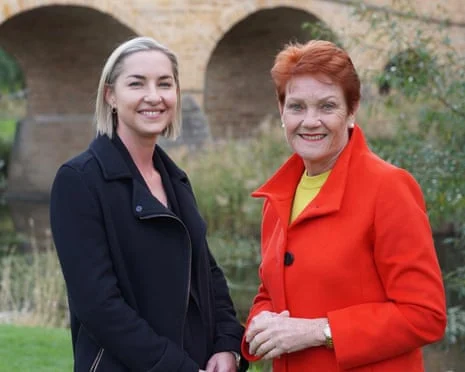
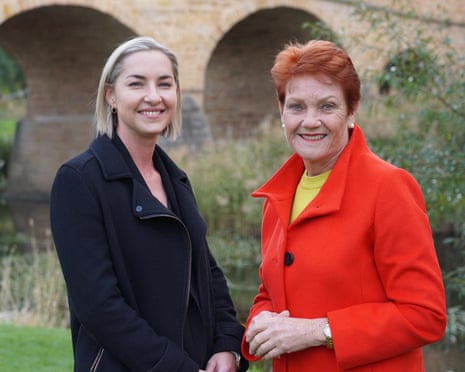
The One Nation leader, Pauline Hanson, has once again ignited a firestorm of controversy following remarks made during her recent European tour, which included appearances at conservative political events and a high-profile holiday with billionaire benefactor Gina Rinehart. At the heart of the current dispute are comments made by Senator Hanson on a podcast hosted by far-right British activist Tommy Robinson, where she appeared to lament the dismantling of Australia’s historical White Australia policy, attributing it to contemporary migration challenges.

In response to the widespread condemnation, Lee Hanson, Senator Hanson’s daughter and a prominent figure within the One Nation movement, has vehemently asserted that her mother’s statements were "misinterpreted" and taken "out of context." Speaking on Sky on Sunday night, Lee Hanson stated, "I know who Pauline is, Mum is, and I know that’s not what her intention was in any way. I do think snippets of it was misinterpreted. Under no way, shape, or form did she say she wished the White Australia policy hadn’t of been changed. She does not support it and she does not want it back. So I do believe it’s been taken out of context." She further accused the media of selectively highlighting "snippets and grabs" for "clickbait," suggesting that political rivals, including Labor and Liberals, were opportunistically "jumping on it" to gain an advantage. Lee Hanson defended her mother’s communication style, noting, "She may not be the most eloquent person in the world but that is also a positive about her too, because she’s not necessarily the polished politician that speaks the talking points as everybody else. She is authentic but, yes, it was misunderstood, that’s for sure."
The White Australia policy, a series of discriminatory laws implemented after federation in 1901, severely restricted non-European immigration for decades, shaping Australia’s demographic and social fabric. Its gradual dismantling, beginning in the mid-20th century and formally abolished in 1973, is widely regarded as a pivotal step towards a more inclusive and multicultural Australia. Hanson’s historical alignment with anti-immigration sentiments and her party’s platform have frequently drawn criticism for invoking elements reminiscent of this exclusionary past.
Prime Minister Anthony Albanese sharply rebuked Senator Hanson’s conduct abroad, stating that she was "talking Australia down" rather than representing the nation positively on the international stage. During a visit to Tiwi Island, Albanese articulated his belief that Australian representatives, regardless of their political alignment, have a responsibility to promote a positive image of the country overseas. "When I have the opportunity to represent Australia overseas, I talk Australia up. I don’t talk Australia down. I go as someone who’s proud to represent our nation and proud to talk about what we are as a nation. There’s nowhere you’d rather be than Australia and I think that it is up to our representatives, no matter where they stand in the parliament, when they’re overseas, to talk Australia up, not talk Australia down," he affirmed. He underscored Australia’s success as an "extraordinary nation" that the world "is envious of," asserting that it is the responsibility of those travelling abroad to "be proud of who we are and what we have created as a nation."
Adding another layer to the controversy, a Channel Seven "Spotlight" episode chronicling Hanson’s European trip aired, offering a glimpse into her engagements with various right-wing figures. The program highlighted her participation in the CPAC conference in London, a gathering known for attracting conservative and far-right personalities. It also documented her interactions with Tommy Robinson, the British activist who has faced travel restrictions to Australia due to his criminal record, a fact he reportedly denied on the program despite previous visa refusals. The "Spotlight" segment also featured awkward exchanges with former Nationals defector Barnaby Joyce and showed Hanson defending previous criticisms of each other. A street tour of Luton, Robinson’s hometown, nearly escalated into a physical altercation with a local resident, further illustrating the tense atmosphere surrounding her engagements.
Perhaps most notably, the program revealed Senator Hanson’s enthusiastic support for "mass deportation policies," drawing parallels with Reform UK’s proposals to remove hundreds of thousands of individuals from Britain. Hanson expressed her approval, stating, "I love it," and even pledged to initiate the implementation of a similar policy in Australia with bureaucrats should One Nation gain government power. This stance underscores a significant shift towards more extreme immigration policies within her party’s rhetoric. Despite these controversies, recent Newspoll data indicates a surprising surge in support for One Nation, with its primary vote reaching 30%, equalling Labor and surpassing the Coalition, which registered 19%. This polling suggests that Hanson’s populist appeal continues to resonate with a significant segment of the Australian electorate, despite, or perhaps because of, her controversial pronouncements.
Private Schools Launch Campaign for Increased Government Funding Amidst Equity Concerns
Independent Schools Australia (ISA), the peak representative body for private schools, has initiated a concerted campaign to advocate for increased government funding, strategically targeting key federal electorates held by both Labor and "teal" independents across the nation. This campaign, launched today, seeks to leverage public sentiment by deploying digital advertising, billboards, and bus advertisements in diverse inner-city seats. These include Labor-held Brisbane and Griffith in Queensland, and Melbourne in Victoria, alongside pivotal teal electorates such such as Mackellar and Wentworth in Sydney, and Curtin in Perth. The campaign will also extend to Goldstein, a seat won by Liberal Tim Wilson, who previously lost it to a teal independent.
The core message of the campaign, encapsulated in its slogan, is "Parents are choosing, families are contributing, and policy needs to reflect that reality." ISA argues that as a growing number of parents opt for independent schooling, often making significant financial sacrifices to do so, government funding policies should acknowledge and support these choices. The timing of this campaign is particularly strategic, preceding Labor’s national conference scheduled for later this week, where education funding is expected to be a key discussion point.

However, the campaign’s call for increased funding comes amidst ongoing debate about equitable resource allocation within Australia’s education system. Data from the Australian Curriculum, Assessment and Reporting Authority (ACARA) from 2023 indicates a significant disparity: 98% of private schools currently receive funding above the Schooling Resource Standard (SRS) recommended by the Gonski review, while over 98% of public schools are funded below this benchmark. The Gonski review, a landmark inquiry into school funding in Australia, aimed to establish a needs-based funding model to ensure all students have access to a high-quality education, regardless of their background or location. The persistence of these funding gaps has been a contentious issue, with public education advocates arguing for greater investment in the state sector.
Graham Catt, the chief executive of ISA, articulated the rationale behind the campaign, stating, "Independent school families have been stereotyped for too long. They are parents and taxpayers making careful decisions about their children’s education, often under real financial pressure. They deserve to be seen, they deserve to be heard and they deserve policy settings that recognise the choices they are already making." This statement seeks to reframe the narrative around private school families, portraying them not as beneficiaries of privilege but as ordinary taxpayers making choices that warrant government support. The campaign is expected to intensify the political debate around education funding, particularly in electorates where voters may be swayed by arguments for parental choice and financial contribution.
WA Police Unveil Real-Time Facial Recognition Technology with Dramatic Live Arrest
Western Australia’s police force has publicly launched a groundbreaking five-month mobile trial of real-time facial recognition technology, demonstrating its capabilities with a dramatic live arrest during a media conference at Perth’s busy Mirrabooka bus station. The incident unfolded as Police Commissioner Col Blanch addressed reporters, unknowingly to the cameras mounted on a nearby police van, which were actively scanning the interchange.
The sophisticated camera system is designed to scan hundreds of faces per minute, instantaneously cross-referencing them against a comprehensive database of approximately 4,000 individuals. This database includes profiles of people with outstanding arrest warrants, registered child sexual abuse offenders, and individuals reported missing. Mid-conference, the algorithm "pinged," signaling a match. Officers promptly moved into the crowd and apprehended a woman who was wanted for failing to appear in court.
A reporter, observing the unfolding scene, interjected, "Commissioner, can we just get your reaction? There’s just been an arrest from the cameras behind you right now." Commissioner Blanch, seemingly unfazed, responded, "Been happening all week. I’d love to say I planned that but I think that’s exactly what the technology is… People are being arrested because they are wanted." This impromptu demonstration served as a powerful, albeit perhaps unplanned, validation of the technology’s effectiveness in real-world scenarios.
While the trial promises enhanced law enforcement capabilities, it has simultaneously ignited a fierce debate over privacy and civil liberties. Critics argue that the widespread deployment of real-time facial recognition technology poses significant risks to individual freedoms, raising concerns about mass surveillance and the potential for misuse of personal data. Organisations advocating for privacy rights have called for robust regulatory frameworks and public consultation to ensure that such powerful technologies are implemented with adequate safeguards and oversight. The five-month trial will undoubtedly be closely watched by privacy advocates, civil liberties groups, and other law enforcement agencies across Australia, as it could set a precedent for the future integration of advanced surveillance technologies in public spaces. The balance between public safety and individual privacy remains a critical challenge that this trial will bring into sharp focus.
Australia Mourns the ‘Human Headline’: Derryn Hinch’s State Funeral Held in Melbourne

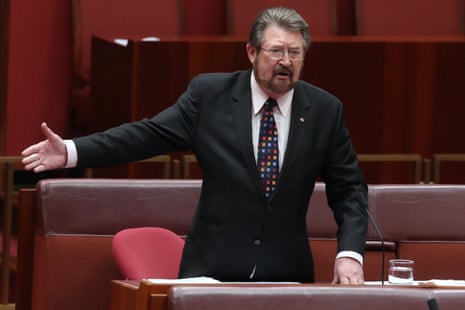
Melbourne is today hosting the state funeral for veteran broadcaster, journalist, and former senator Derryn Hinch, who passed away on July 10 at the age of 82 after a long battle with various health issues. The service, hosted by the Victorian government, is being held at the Timber Yard events space in Port Melbourne, drawing a significant attendance of notable figures from Australia’s political and media landscapes. For those unable to attend in person, the service is being livestreamed via the Victorian government website, allowing a broader audience to pay their respects to a truly singular figure.
Derryn Hinch, affectionately known as the "Human Headline," earned his moniker through a career defined by an unwavering commitment to controversial causes, a fearless interrogative style, and a life lived largely in the public eye. As The Guardian’s obituary aptly describes, his journey was marked by a series of extraordinary events: periods of imprisonment for contempt of court, a foray into federal politics as an independent senator, a rags-to-riches personal narrative, multiple marriages, and numerous serious health challenges, including liver transplants and cancer battles. Throughout it all, Hinch remained candid, often provocative, and consistently newsworthy.
The service’s master of ceremonies is 3AW’s Darren James, and among those scheduled to speak are Hinch’s close friends and former colleagues, including celebrated journalist Ray Martin, who will undoubtedly share anecdotes reflecting Hinch’s unique character and impact. His death prompted an outpouring of tributes from across the political spectrum, underscoring his broad influence despite his often-divisive opinions. Prime Minister Anthony Albanese and Opposition Leader Angus Taylor both offered their condolences, acknowledging Hinch’s significant contributions to public life. A statement released by the Victorian government lauded Hinch as a man whose life was "defined by his principles and an unwavering commitment to stand up for what he believed was right," a testament to his enduring legacy as a relentless advocate for victims’ rights and journalistic integrity, even when it came at personal cost.
Corporate Watchdog Secures Record $830 Million in Civil Penalties
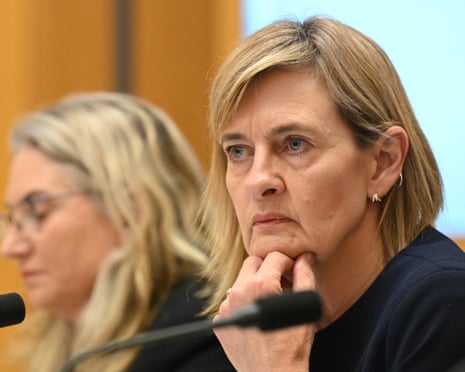
Australia’s corporate regulator, the Australian Securities and Investments Commission (ASIC), has reported a landmark year, securing a record $830 million in civil penalties from courts over the past financial year (2025-26). This figure represents a dramatic increase, surpassing the total amount of civil penalties won in the preceding six years combined, which averaged a mere $137 million annually between 2019-20 and 2024-25.
This significant achievement highlights an intensified focus on corporate misconduct and consumer protection by the watchdog. A substantial portion of this record sum includes the largest penalty ever awarded in an ASIC case: a staggering $300 million imposed on the collapsed foreign exchange broker Union Standard in June. Beyond the penalties, ASIC’s enforcement actions are projected to result in an impressive $643.5 million worth of remediation, refunds, and other payments directly to tens of thousands of affected customers and investors, demonstrating a tangible benefit for those harmed by corporate malfeasance. The penalties collected will also contribute to the federal budget, providing an unexpected boost to government coffers.
Furthermore, ASIC issued $12 million worth of infringement notices during the same period, effectively doubling the amount from the previous financial year (2024-25). Sarah Court, the Chair of ASIC, reiterated the commission’s strategic priorities, stating, "Our enforcement work is focused on misconduct that causes real harm and we are delivering results, forcing change, strengthening accountability and returning money to consumers and investors." This robust enforcement posture signals ASIC’s commitment to holding corporations accountable and safeguarding the integrity of Australia’s financial markets, sending a clear message that misconduct will be met with substantial legal and financial repercussions. The record penalties reflect a proactive and assertive approach by the regulator to address complex financial crimes and protect the interests of ordinary Australians.
Australia Launches Major International Air Combat Exercise Pitch Black 2026

Prime Minister Anthony Albanese has officially inaugurated Exercise Pitch Black 2026, Australia’s premier international air combat exercise, which commenced today in Darwin. Over the next three weeks, the skies above Australia’s north will become a theatre for advanced aerial manoeuvres, involving a formidable contingent of 100 aircraft and approximately 2,500 personnel. Participants hail from the Royal Australian Air Force (RAAF) and 20 other nations, underscoring the exercise’s significant international scope and strategic importance.
The biennial exercise is meticulously designed to enhance and strengthen cooperation among participating air forces through high-end training scenarios. Operations will be primarily conducted from RAAF Bases Darwin and Tindal in the Northern Territory, with additional support from RAAF Base Amberley in Queensland. This multi-base approach allows for diverse training environments and logistics support, crucial for large-scale international drills.
The extensive list of participating nations reflects Australia’s expanding network of defence partnerships and its pivotal role in regional security. Aircraft from the United States, Japan, Papua New Guinea, Indonesia, the Philippines, Thailand, South Korea, India, Singapore, Germany, France, and Spain will actively take part. Additionally, embedded personnel from the United Kingdom, New Zealand, Fiji, Canada, Brunei, Malaysia, Finland, and Sweden will contribute their expertise, further enriching the multinational training environment.
Prime Minister Albanese emphasised the critical role of such collaborations in maintaining regional stability. "Australia is strongest when we work closely with our partners," he stated at the launch. "Exercise Pitch Black strengthens those partnerships and demonstrates Australia’s commitment to working closely across our region to support peace, stability and security." This sentiment highlights the exercise’s strategic importance beyond mere military training, positioning it as a key diplomatic and security initiative in the Indo-Pacific region, especially in the context of evolving geopolitical dynamics and increasing regional security concerns. The scale and breadth of Exercise Pitch Black 2026 serve as a powerful testament to Australia’s commitment to fostering robust international defence alliances and capabilities.

