
Stockholm, Sweden – In a bold move signaling a strategic shift in European resource policy, Sweden on Thursday, July 23, 2026, unveiled an ambitious plan to dramatically boost its domestic mining sector, with a particular focus on rare earth elements. The initiative is explicitly designed to diminish Europe’s significant reliance on China for these crucial minerals, which are indispensable for the continent’s green transition, defense capabilities, and advanced technological industries. The Swedish government’s declaration that the mining of critical metals and rare earths constitutes a national security interest is expected to streamline regulatory processes, attract substantial investment, and firmly position Sweden as a pivotal player in the global raw materials supply chain.
Sweden’s Strategic Shift: A National Security Imperative
The announcement from Stockholm underscores a growing geopolitical awareness across Europe regarding the vulnerability of supply chains for critical raw materials. Energy Minister and Deputy Prime Minister Ebba Busch articulated the government’s vision, stating, "Sweden must become a leading mining nation." This declaration is not merely economic but deeply strategic, aimed at fostering greater self-sufficiency within the European Union and enhancing the defense industrial base of NATO member states. Busch emphasized that the current dependence of European industry on China poses a "systemic risk," a sentiment echoed by policymakers across the continent grappling with the implications of concentrated supply.
The cornerstone of the new strategy involves a significant overhaul of the permitting process for new extraction projects. By classifying critical mineral mining as a national security interest, the government aims to drastically reduce the lengthy timelines traditionally associated with environmental assessments and land-use approvals. This acceleration is crucial for attracting the necessary capital and expertise, as investors often shy away from projects plagued by protracted bureaucratic hurdles. Busch highlighted the government’s intent to "streamline authorization procedures so decisions can be taken more quickly," a direct response to the urgent need for mineral security. Furthermore, the state is exploring the establishment of a state-owned investment company dedicated to the mining sector. "Today, to put it plainly, the government lacks concrete tools to wisely contribute to accelerating and attracting investments in crucial strategic projects," Busch admitted, signaling a proactive approach to de-risk investments and ensure strategic projects move forward. This proposed entity would fill a critical gap, providing direct financial backing and strategic direction to projects deemed vital for national and European security.
The Global Race for Critical Minerals and European Dependency
Rare earth elements (REEs) are a group of 17 chemically similar metallic elements that possess unique magnetic, catalytic, and optical properties. Despite their name, many are not exceptionally rare in the Earth’s crust, but their economically viable concentrations are. These elements are the backbone of modern technology: neodymium and praseodymium are vital for high-strength magnets in electric vehicle motors and wind turbines; lanthanum is used in hybrid car batteries and camera lenses; cerium in catalytic converters and polishing agents; and europium in red phosphors for displays. Without a secure supply of these materials, the ambitious targets for renewable energy transition, the proliferation of electric vehicles, and the advancement of defense technologies across Europe face significant bottlenecks.
Globally, China has cultivated an undeniable dominance in the rare earth sector, accounting for approximately 70% of global mining and an even larger share, often exceeding 90%, of the refining and processing capacity. This near-monopoly, built over decades through strategic investment and often less stringent environmental regulations, grants Beijing considerable geopolitical leverage. The weaponization of supply chains, as seen during past trade disputes, has instilled a profound sense of urgency in Western nations to diversify their sources. The European Union, in particular, imports 98% of its rare earth needs from China. This vulnerability became acutely clear during the COVID-19 pandemic, which exposed the fragility of global supply chains, and has been further exacerbated by geopolitical tensions, including Russia’s war in Ukraine and increasing competition with China. The EU’s Critical Raw Materials Act, proposed in 2023 and currently navigating legislative processes, aims to set clear targets for domestic extraction, processing, and recycling to reduce this over-reliance. Sweden’s new strategy is a direct, significant contribution to achieving these broader European objectives.
Unearthing Potential: The Kiruna Discovery and Sweden’s Mineral Wealth
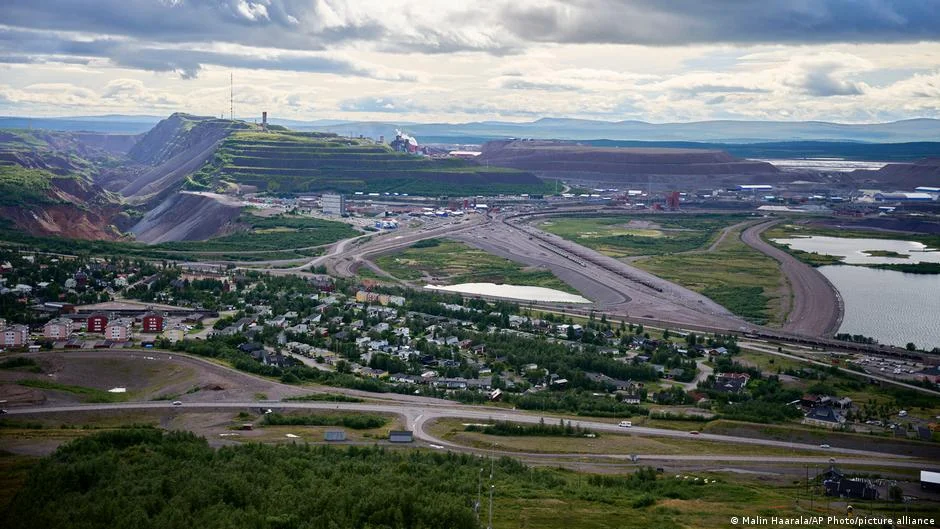
Sweden is already a resource-rich nation with a deep history in mining, dating back to the 10th century. It is home to Europe’s largest iron ore mine, operated by LKAB, located in Kiruna, within the Arctic Circle. This region has now gained even greater strategic importance following the significant discovery of rare earth deposits at the same site. In January 2023, LKAB announced the identification of considerable rare earth deposits at Per Geijer, adjacent to the existing Kiruna iron ore mine. Initial estimates indicated an inferred mineral resource of approximately 1.2 billion tons, including a staggering 2.2 million tons of rare earth oxides. This makes Per Geijer potentially the largest known rare earth deposit in Europe, offering an unprecedented opportunity to shift the continent’s mineral landscape.
The existing infrastructure and expertise in Kiruna, honed by centuries of iron ore extraction, provide a crucial advantage for developing these new rare earth operations. Sweden holds around 60% of Europe’s known iron ore deposits and, as of 2021, was responsible for approximately 90% of the continent’s iron ore extraction, with about one-third of that originating from Kiruna alone. The town itself is a testament to the scale of mining, having undertaken a monumental relocation effort to move homes, businesses, and even its historic church to accommodate the expanding underground operations that have caused subsidence. This ongoing project, which saw Kiruna’s iconic church moved on a specially designed trolley with 224 wheels in August 2025, highlights both the commitment to mining and the complex challenges it presents. The presence of such a vast, identified rare earth resource near an established mining hub minimizes some of the initial infrastructure hurdles that new greenfield projects often face.
Historical Roots and Modern Challenges: Sweden’s Mining Legacy
Sweden’s mining heritage is woven into its national identity. The Falun copper mine, active from the 10th century until 1992, was once the largest copper producer in Europe, at one point supplying two-thirds of the continent’s copper. The distinctive "Falun Red" color, derived from pigments produced at the mine, adorns countless buildings across Sweden and beyond, a tangible link to its industrial past. Today, the Falun mine is a UNESCO World Heritage Site and a museum, commemorating its profound historical significance.
This long history has endowed Sweden with invaluable expertise in geology, metallurgy, and mining engineering. Modern Swedish mining operations, particularly those managed by LKAB, are renowned for their technological advancements, safety standards, and relatively lower environmental impact compared to some global counterparts. However, the scale of contemporary critical mineral demand and the geopolitical stakes introduce new layers of complexity. The rapid acceleration of extraction projects, while economically and strategically appealing, must be balanced with robust environmental protection and social responsibility, particularly concerning indigenous communities.

Navigating Indigenous Rights and Environmental Concerns
The majority of Sweden’s mining operations, including the newly discovered rare earth deposits, are located in the sparsely populated Norrland region, a significant portion of which falls within Sápmi, the traditional territory of the Sami people. The Sami, Europe’s only indigenous population, have historically relied on reindeer herding, fishing, and hunting for their livelihood and cultural identity. The expansion of mining activities poses a direct threat to their traditional way of life, encroaching on grazing lands, migration routes, and sacred sites.
LKAB, the state-owned mining group exploring the Per Geijer deposit, estimates that obtaining the necessary permits for excavation on Sami land could take up to a decade, largely due to the rigorous consultation processes and potential legal challenges related to indigenous rights. This tension between national strategic interests and the rights of indigenous communities is not unique to Sweden but is a recurring theme globally in the pursuit of critical minerals. The Swedish government, while prioritizing national security, will face increasing pressure to ensure that Sami rights are respected, and that any development proceeds with genuine consent and adequate compensation. The proposed acceleration of the permit process, while aimed at reducing timelines, must still integrate meaningful engagement with Sami representatives to avoid protracted disputes and uphold international human rights standards. Finding an equitable balance between resource extraction and cultural preservation will be a defining challenge for Sweden’s mining ambitions.
Economic Impetus and Investment Strategy
Despite its vast mineral wealth and established mining operations, Energy Minister Ebba Busch noted that Sweden currently attracts only about 1% of global mining investment. This statistic highlights a significant untapped potential that the new strategy aims to unlock. By streamlining bureaucracy and offering clearer pathways for development, the government hopes to make Sweden a more attractive destination for both domestic and international capital. The proposal for a state-owned investment company is particularly significant in this context. Such an entity could provide early-stage capital for exploration and development, share risks with private investors, and ensure that projects aligning with national strategic interests are prioritized. This model, often seen in other resource-rich nations, can act as a catalyst for broader private sector engagement.
The economic benefits extend beyond direct investment in mines. A thriving mining sector generates high-skilled employment in geology, engineering, and metallurgy, and stimulates growth in related industries such as equipment manufacturing, logistics, and research and development. It also contributes to regional development, particularly in remote areas like Norrland, though careful planning is needed to mitigate negative social impacts. Sweden’s strong track record in innovation and sustainable practices could also attract "green" investment, positioning it as a leader in responsible mineral extraction.
Broader European Implications: Towards Strategic Autonomy

Sweden’s accelerated mining strategy resonates deeply with the broader European Union’s ambition for strategic autonomy, particularly in critical raw materials. Four of the EU’s 47 identified strategic projects aimed at reducing mineral dependence on China are located in Sweden, underscoring its pivotal role in the bloc’s security agenda. The Critical Raw Materials Act sets targets for the EU to extract 10%, process 40%, and recycle 25% of its annual consumption of strategic raw materials by 2030. Sweden’s rare earth deposits alone could significantly contribute to these extraction targets, reducing the EU’s vulnerability to supply disruptions and geopolitical leverage.
The implications for NATO are also substantial. Modern defense systems, from guided missiles to advanced communication equipment, are heavily reliant on rare earth elements and other critical minerals. By securing a domestic supply within a NATO member state, Europe strengthens its defense industrial base and reduces reliance on potentially hostile or unstable external sources. This initiative aligns with a growing consensus among Western allies to "de-risk" supply chains and build resilience against external shocks.
Challenges and the Path Forward
While the announcement is a powerful statement of intent, significant challenges remain. Beyond the complexities of indigenous rights and environmental stewardship, the sheer scale of investment required for full-scale rare earth mining and processing is immense. Developing a complete value chain, from extraction to refining and manufacturing, will require sustained political will, substantial capital, and international collaboration. The global market for rare earths is also volatile, influenced by geopolitical shifts and technological advancements.
Despite these hurdles, Sweden’s declaration marks a decisive step towards securing a critical future for Europe. By prioritizing its mineral wealth as a matter of national security, Stockholm is not only bolstering its own economic and strategic position but also offering a vital lifeline to the entire continent in its quest for energy transition, technological independence, and enhanced security in an increasingly uncertain world. The success of this ambitious strategy will hinge on its ability to navigate complex social, environmental, and economic landscapes, transforming its vast underground potential into a tangible asset for a more resilient Europe.

