
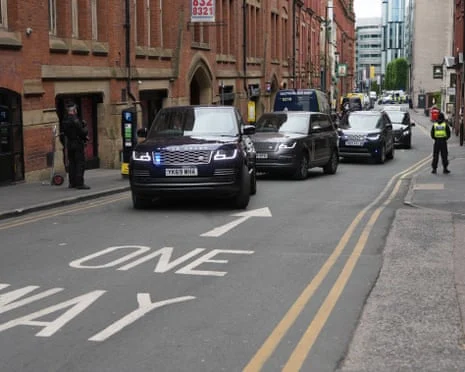
Prime Minister Andy Burnham today cemented his administration’s commitment to regional rebalancing by holding the inaugural meeting of the National Economic Council (NEC) at the newly established No 10 North in Manchester. This pivotal move, marked by a police convoy escorting the Prime Minister to Heron House, signifies a tangible shift in governance, aiming to decentralise power and drive economic growth across the United Kingdom, away from the traditional Westminster locus. The establishment of No 10 North, an initiative Burnham has championed as "the biggest rebalancing of power our country has seen," comes amidst a flurry of early policy announcements and a complex political landscape involving devolved nations and pressing economic concerns.

The Dawn of No 10 North: A Vision for Decentralisation
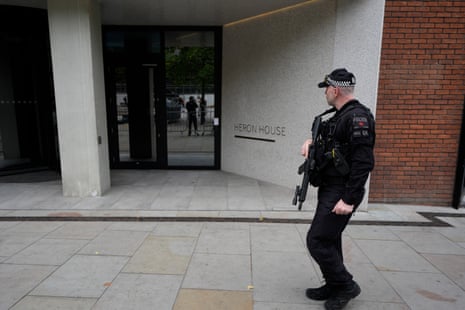
The arrival of Prime Minister Andy Burnham at Heron House, Manchester, a building that also hosts GCHQ’s North West operations, was a heavily symbolic moment. Accompanied by a police convoy and a visible security presence, the event underscored the seriousness with which the new government is approaching its regional agenda. Burnham, a former Mayor of Greater Manchester, is expected to work from No 10 North once a week, a move designed to keep him closely connected to his Makerfield constituents and the wider Northern community. Several other ministers, including Housing Secretary Angela Rayner and Lucy Powell, both with roots in the North West, are also slated to utilise the new office regularly.

The core function of No 10 North, as articulated by the Prime Minister in a Guardian opinion piece, is to serve as an "engine for growth throughout the whole UK." He elaborated that it would be "responsible for accelerating devolution," "drive reindustrialisation and growth across every postcode," and "remove barriers to regeneration, from council housebuilding to public transport infrastructure." The overarching ambition is to "achieve equivalent living standards across all the regions and nations of the UK." This vision directly confronts a historical pattern of centralised political and economic power in London, which, particularly since the deindustrialisation of the 1980s, has left many communities in other parts of Britain feeling neglected and in decline. Previous attempts at regional development, often dismissed as "gimmicks" like "levelling up," have largely failed because decision-making authority remained entrenched in Whitehall. No 10 North aims to correct this by ensuring that the central government’s efforts are aligned with and supportive of local initiatives, rather than impeding them.
The inaugural meeting of the National Economic Council (NEC) at this new northern hub is a critical component of this strategy. The NEC, a cabinet committee first convened by Gordon Brown in 2008 in response to the global financial crisis, is being revived and refocused. Its mandate under Burnham is to bring together senior ministers and regional mayors, ensuring that economic policy is informed by and responsive to the diverse needs of regions beyond the capital. This collaborative approach seeks to embed local insights directly into national decision-making processes, a significant departure from previous centralised models.
Economic Strategy: Energy and Cost of Living
Burnham’s new administration faces immediate economic challenges, most notably the ongoing cost of living crisis. In response, The Times reported this morning that the Prime Minister is poised to "move quickly" to increase North Sea oil and gas production. Industry sources suggest that the government, led by Prime Minister Burnham and his new Energy Secretary Miatta Fahnbulleh, is considering swift approval for production at the Jackdaw and Rosebank sites off the coast of Scotland. This expedited process is intended to boost domestic energy supplies and help mitigate soaring costs for consumers this winter. A source indicated that "an August approval would allow production to commence by October 1," noting that infrastructure is largely in place, with only "a piece of paper standing in the way."
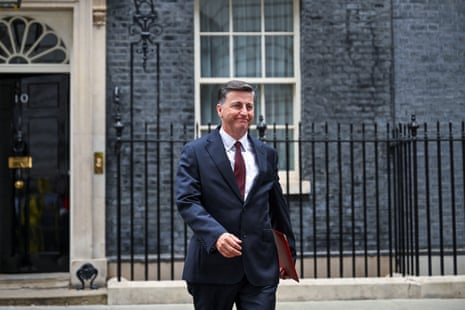
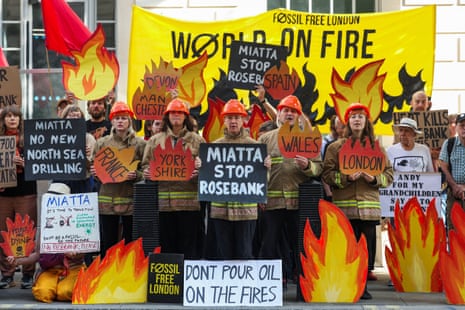
The appointment of Miatta Fahnbulleh as Energy Secretary has drawn particular attention due to her past record. As the Guardian’s environment correspondent Sandra Laville highlighted in her profile, Fahnbulleh, during her tenure as head of the New Economics Foundation (NEF) thinktank, had expressed strong opposition to new North Sea drilling. A 2021 joint report with Friends of the Earth, co-authored by NEF, explicitly called for a "total end to new drilling in the North Sea basin," advocating for the cancellation of all future licensing rounds, revocation of undeveloped licences, and rejection of new development consent applications. This stark contrast between her previous advocacy and her current ministerial brief has led environmental groups to watch her actions closely. Imogen Dow, energy lead for Friends of the Earth, stressed that Fahnbulleh "must hold the line against harmful fossil fuel expansion – including the highly contentious Jackdaw and Rosebank fields – make cheap, clean energy available to all and build on Ed Miliband’s efforts to scale up our renewable power capacity." This presents a significant political tightrope for the new Energy Secretary, balancing immediate economic pressures with long-term environmental commitments.
Beyond energy, the government has already unveiled a series of measures aimed at easing the financial burden on households, including a cap on bus fares, a VAT cut on electricity bills, and support packages for pubs and clubs. These initiatives are designed to demonstrate the administration’s understanding of and responsiveness to public frustration over the cost of living. This early policy blitz appears to have resonated positively with the public. Consumer confidence in the UK experienced its largest jump in nearly three years this month, according to data company GfK. Neil Bellamy, GfK’s consumer insights director, attributed this "wave of optimism" to a "Burnham bounce," alongside a strong performance by the men’s England football team at the World Cup and favourable weather. Burnham’s by-election victory on June 18, which positioned him as the clear frontrunner for the Labour leadership, was credited with improving consumers’ outlook for the economy over the next year by eight points. Their perception of the economy’s performance over the previous year also rose by ten points. Overall, the GfK index increased by six points to -17 in July, reaching its highest level since January and marking the biggest rise since November 2023.
Social Policy: Justice and Housing
In the realm of social policy, Prime Minister Burnham has initiated an urgent review of the controversial early prisoner release scheme. This scheme, which would have allowed thousands of prisoners in England and Wales to be released early from September, was put on hold following significant criticism from survivors and victims’ families. Burnham stated that the review was ordered to "minimise risk to the public." Junior Housing Minister Sally Jameson, a former prison officer, confirmed on Sky News that the review would be conducted "in the coming days and weeks" to ensure a "timely response" that allows the prison and criminal justice systems to "react and cope accordingly." The swift action reflects the government’s sensitivity to public safety concerns and a desire to project a strong stance on law and order.
Housing policy is another key area for the new administration, with Housing Secretary Angela Rayner at the helm. Rayner acknowledged on BBC Radio 4’s Today programme that the government’s ambitious goal of building 1.5 million homes in this parliament is "a really difficult stretched target," citing challenges such as rising construction costs. However, she firmly stated that the target is "not dropping." Rayner also clarified that the government is "not looking at rent controls" at present, explaining that "we’ve seen what’s happened in areas like Scotland. It hasn’t necessarily brought rents down." Instead, she highlighted that existing renters’ rights legislation, implemented under the Labour government, is "already having a significant impact on the market." This pragmatic approach suggests a focus on existing reforms and supply-side solutions over direct price controls in the rental market.
Inter-UK Relations and the "Celtic Alliance"
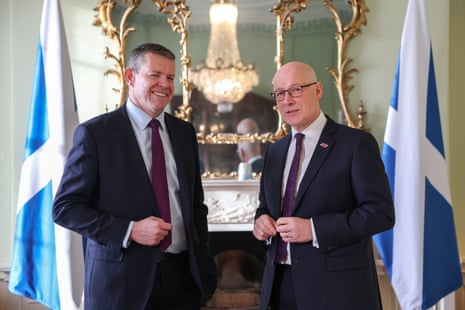
The political landscape across the UK’s devolved nations adds another layer of complexity to Burnham’s premiership. Welsh First Minister Rhun ap Iorwerth, during a visit to Glasgow for the Commonwealth Games, spoke openly of a "Celtic alliance" with his Scottish counterpart, John Swinney of the SNP. Iorwerth’s Plaid Cymru party won the May election in Wales, and with the SNP in power in Scotland and Sinn Féin holding the First Minister role in Northern Ireland, all of the UK’s devolved nations are now led by independence-supporting parties. This alignment signals a potentially more assertive stance from the devolved governments regarding their relationship with Westminster.
Iorwerth, speaking on BBC Radio Scotland’s Breakfast programme, described his party’s close working relationship with the SNP, often referred to as "sister parties," and expressed optimism following his meeting with Prime Minister Burnham. However, the issue of national independence remains a significant point of contention. Scotland Secretary Douglas Alexander revealed that during yesterday’s meeting in Glasgow between Burnham and Swinney, the Prime Minister made it unequivocally clear that Scottish independence was "off limits." Alexander stated, "Up front, the prime minister made clear that independence was off limits. I genuinely believe that we agreed to disagree." While acknowledging Swinney’s commitment to independence, Burnham’s firm stance indicates that, despite his push for devolution, he intends to uphold the integrity of the Union. This sets the stage for ongoing negotiations and potential friction between the central government and the increasingly aligned nationalist parties in the devolved administrations.
Early Challenges and Public Perception
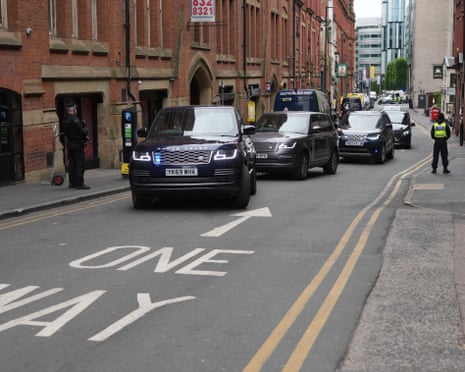
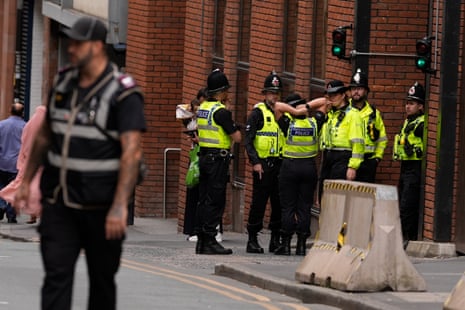
While the symbolic launch of No 10 North dominated headlines, the Prime Minister’s arrival was not without its minor, yet noticeable, blips. Observers pointed out that Burnham’s police convoy briefly headed the wrong way down a one-way street in central Manchester, a small detail that quickly circulated on social media, perhaps highlighting the initial logistical adjustments required for this unprecedented move.

Conservative leader Kemi Badenoch was quick to offer a critical assessment of the new Prime Minister’s focus. She accused Burnham of governing "like he’s still the mayor of Manchester," implying that his attention remained too localised and that he needed to address broader national challenges. This criticism underscores the political tightrope Burnham walks: attempting to empower regions while simultaneously demonstrating leadership on national issues and maintaining the unity of the UK.
Housing Secretary Angela Rayner, however, defended the government’s urgency, stating that they are "on borrowed time if we don’t get a move on." She commended Burnham’s direct communication with the public, noting his unscripted address where he acknowledged public frustration over the cost of living. This suggests an administration keenly aware of public expectations and the need to deliver tangible results quickly.

In conclusion, Andy Burnham’s first day operating from No 10 North marks a significant moment in UK politics, representing a bold attempt to redefine the relationship between Westminster and the regions. His administration has swiftly moved to address the cost of living crisis, albeit with controversial energy policy shifts, and is re-evaluating key social policies like prisoner release and housing. The "Celtic alliance" in the devolved nations presents a complex challenge to national unity, which Burnham has met with a firm "off limits" message on independence. The success of No 10 North and Burnham’s broader agenda will hinge on his ability to navigate these intricate political and economic currents, delivering on his promises for regional growth and improved living standards while managing divergent national interests and maintaining public confidence.

