
Sweden has officially announced a sweeping strategy to significantly bolster its domestic mining sector, with a pronounced focus on rare earth elements, in a concerted effort to diminish Europe’s critical reliance on China for these indispensable resources. The declaration, made on Thursday by the government in Stockholm, elevates the extraction of critical metals and rare earth minerals to a matter of national security, signaling a profound shift in policy designed to accelerate permitting processes, attract substantial investment, and secure vital supply chains.
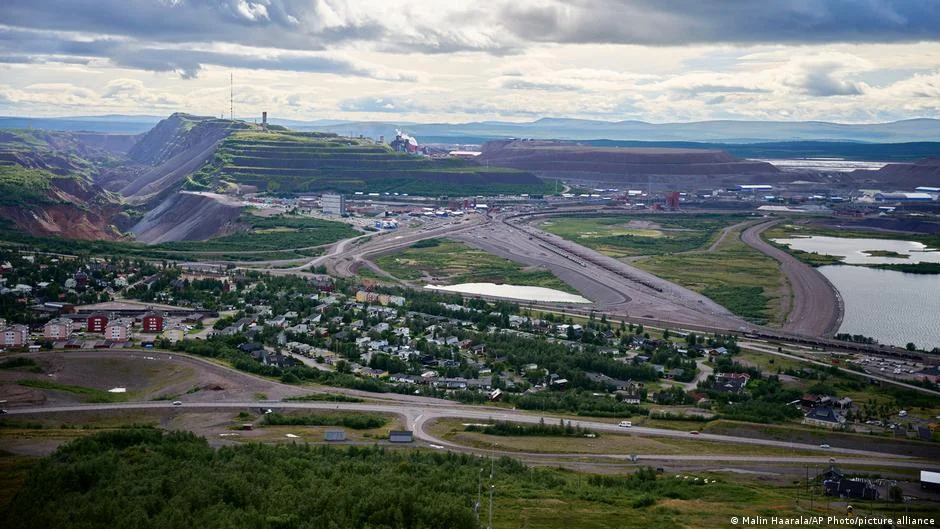
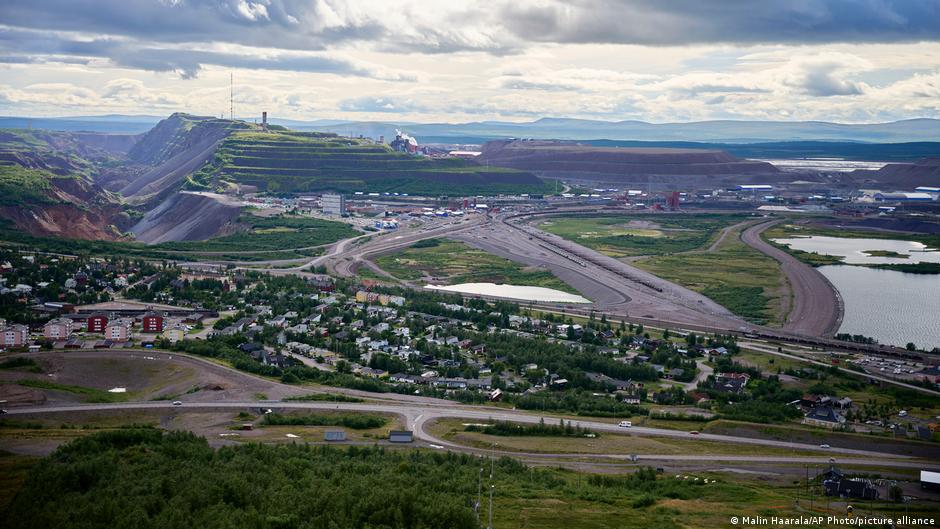
The Nordic nation, already renowned for its vast natural resources, hosts Europe’s largest iron ore mine in Kiruna, an Arctic Circle locale that has recently yielded considerable deposits of rare earth elements. These minerals are foundational to the modern economy, powering technologies ranging from renewable energy systems like wind turbines and solar panels, to electric vehicles, advanced defense technologies, and sophisticated computer manufacturing. Globally, China currently dominates the rare earth supply chain, accounting for approximately 70% of both mining and refining operations, a concentration that Western nations increasingly view as a systemic vulnerability.
A Bold New National Strategy for Mineral Security
Energy Minister and Deputy Prime Minister Ebba Busch articulated the core tenets of the new strategy during a press conference in Stockholm. "Sweden must become a leading mining nation," Busch asserted, emphasizing the government’s intention to "streamline authorization procedures so decisions can be taken more quickly." This policy aims to significantly reduce the bureaucratic hurdles and lengthy timelines traditionally associated with new mining projects, which can often span over a decade. By designating critical mineral mining as a national security interest, the government anticipates a more efficient regulatory pathway, thereby enhancing Sweden’s attractiveness to both domestic and international investors.
Busch underscored the multifaceted benefits of this strategic pivot, stating, "We believe that this can contribute significantly to both Sweden’s, the EU’s, and NATO’s defense capabilities." She candidly described European industry’s current dependence on China as a "systemic risk," echoing growing concerns across the continent about supply chain resilience and geopolitical leverage. Beyond streamlining permits, the minister also revealed that the government is exploring the establishment of a state-owned investment company dedicated to the mining sector. This initiative is designed to provide "concrete tools to wisely contribute to accelerating and attracting investments in crucial strategic projects," addressing a perceived gap in direct governmental support for such ventures. Despite Sweden’s extensive mineral wealth and historical mining prowess, Busch lamented that only about 1% of global mining investment currently finds its way to the country, a figure the new strategy aims to dramatically increase.
The Geopolitical Imperative: Decoupling from China
The urgency behind Sweden’s new mining strategy is deeply rooted in the broader geopolitical landscape and the European Union’s concerted efforts to de-risk its supply chains from over-reliance on single, potentially unstable, sources. Rare earth elements, a group of 17 chemically similar metallic elements, are crucial for the green transition and digital transformation. They are indispensable for high-strength magnets used in electric vehicle motors and wind turbine generators, as well as catalysts in refining, phosphors in screens, and components in advanced military hardware.
China’s near-monopoly on these materials, built over decades through aggressive investment, lower environmental standards, and strategic foresight, grants it significant economic and political leverage. This dominance has been a growing concern for Western nations, particularly since China briefly restricted rare earth exports to Japan in 2010 during a diplomatic dispute, highlighting the potential for weaponization of critical resources. The COVID-19 pandemic further exposed the fragilities of global supply chains, intensifying calls for diversification and regionalization of production.
The European Union, in response, has developed a comprehensive Critical Raw Materials Act, which aims to strengthen domestic extraction, processing, and recycling capacities. The Act sets ambitious targets for 2030, including extracting at least 10% of the EU’s annual consumption of strategic raw materials and processing at least 40%. Sweden’s new strategy aligns perfectly with these EU-wide objectives, positioning the country as a vital contributor to Europe’s mineral sovereignty. Indeed, four of the EU’s 47 strategic projects aimed at reducing mineral dependence on China are already located in Sweden, underscoring its pivotal role in the bloc’s critical raw materials agenda.
Sweden’s Enduring Mineral Legacy and Modern Discoveries
Sweden’s identity as a mining nation is not new; it stretches back over a millennium. The country’s mining tradition dates to the 10th century with the legendary Falun copper mine, which, at its zenith, supplied an astounding two-thirds of Europe’s copper. The mine’s legacy is still visible today in the distinctive deep red "Falun Red" paint that adorns countless Swedish houses and buildings, a pigment derived from its byproducts. Though now a UNESCO World Heritage Site and museum, Falun serves as a powerful reminder of Sweden’s historical significance in European resource provision.
In the modern era, the vast LKAB iron ore mine in Kiruna, situated deep within the Arctic Circle, continues this legacy. Sweden holds approximately 60% of Europe’s known iron ore deposits and, as of 2021, was responsible for around 90% of the continent’s iron ore extraction, with Kiruna alone contributing roughly one-third of that total. The sheer scale of the Kiruna operation has necessitated the dramatic relocation of parts of the entire town, including its historic church, due to subsidence caused by extensive underground mining. These relocation efforts, which involve moving structures on specially designed trolleys with hundreds of wheels, have garnered international attention and symbolize the profound impact of mining on the Swedish landscape and its communities.
The most significant recent development, however, is the discovery of the Per Geijer deposit near the Kiruna mine. Announced by LKAB in January 2023, this find is considered Europe’s largest known rare earth deposit, with estimated mineral resources of around 1.2 billion tons, including approximately 2.2 million tons of rare earth oxides. This colossal discovery immediately propelled Sweden to the forefront of Europe’s efforts to establish a domestic rare earth supply chain and reduce its dependence on China. LKAB is actively examining the potential of this deposit, which has been designated a flagship EU project, highlighting its strategic importance.

Challenges and Controversies: Balancing Progress with Preservation
While the economic and strategic imperative to expand mining is clear, Sweden’s ambitious plans are not without significant challenges and controversies, particularly concerning environmental impact and indigenous rights. A substantial portion, over 90%, of Sweden’s current and prospective mining operations are located in the sparsely populated Norrland region, a vast and resource-rich area that forms part of Sápmi, the traditional territory of the Sami people.
The Sami, Europe’s only indigenous people, have historically relied on reindeer herding, fishing, and hunting for their livelihood and cultural identity. The expansion of mining projects in their traditional lands directly conflicts with their way of life, raising profound concerns about land use, environmental degradation, and the preservation of their cultural heritage. Ebba Busch acknowledged this tension, stating that the new policy would make it easier for the state to assign land for mining projects. However, this simplification of land allocation directly impacts Sami communities, who fear that further mining expansion could spell the end of their traditional practices and lead to irreversible damage to delicate Arctic ecosystems.
The permitting process for new mines on Sami land is notoriously complex and lengthy, often involving protracted legal battles and environmental assessments. LKAB, for instance, estimates that obtaining the necessary permits to excavate the Per Geijer rare earth deposit could take as long as 10 years, underscoring the formidable hurdles that even strategically vital projects face. Critics argue that while streamlining permits is necessary for economic and security reasons, it must not come at the expense of thorough environmental reviews or the legitimate rights and consultation processes of indigenous communities. The government will need to navigate this delicate balance, finding solutions that facilitate mineral extraction while respecting environmental sustainability and the cultural integrity of the Sami people. This will likely involve robust dialogue, potential compensation agreements, and innovative approaches to co-existence between industrial development and traditional land uses.
Economic and Strategic Implications
The implications of Sweden’s bolstered mining strategy are far-reaching. Economically, a thriving critical minerals sector would inject significant investment, create jobs, and foster technological innovation within Sweden. It would also strengthen the EU’s industrial base, particularly in burgeoning sectors like electric vehicle manufacturing and renewable energy, which are heavily reliant on these materials. For Sweden, increasing its share of global mining investment from 1% would represent a substantial boost to its economy and reinforce its position as a key player in the European resource landscape.
Strategically, Sweden’s move is a significant step towards enhancing European and NATO’s collective security. By reducing dependence on China, Western nations can mitigate the risk of supply disruptions stemming from geopolitical tensions, trade disputes, or even conflict. Secure access to rare earths is vital not only for commercial technology but also for advanced defense systems, from precision-guided munitions to fighter jets. The diversification of supply chains means greater resilience against external shocks and a stronger foundation for strategic autonomy.

Furthermore, the emphasis on a state-owned investment company signals a more proactive governmental role in de-risking and accelerating critical projects. This could help overcome the hesitancy of private capital in ventures with long lead times and high upfront costs, ensuring that strategic national interests are prioritized.
Looking Ahead: Investment, Innovation, and Sustainability
The path forward for Sweden’s mining sector involves a multi-pronged approach encompassing investment, innovation, and a renewed commitment to sustainable practices. Attracting the necessary capital will require demonstrating not only a streamlined regulatory environment but also a stable political climate and access to skilled labor. The proposed state-owned investment company could play a crucial role in kickstarting projects and leveraging private sector involvement.
Innovation in extraction, processing, and recycling technologies will also be key. Developing more environmentally friendly mining techniques, reducing waste, and improving the efficiency of rare earth separation are essential for ensuring the long-term viability and public acceptance of new projects. Sweden, with its strong tradition of engineering and technological advancement, is well-positioned to lead in these areas.
Ultimately, Sweden’s ambition to become a leading mining nation in critical minerals represents a bold strategic move in a rapidly evolving global landscape. It addresses a critical vulnerability for Europe, provides a significant economic opportunity for Sweden, and underscores the growing importance of resource sovereignty in an increasingly complex world. While challenges, particularly concerning indigenous rights and environmental stewardship, remain, the government’s declaration of critical mineral mining as a national security interest signals an unwavering commitment to realizing this vision.

