
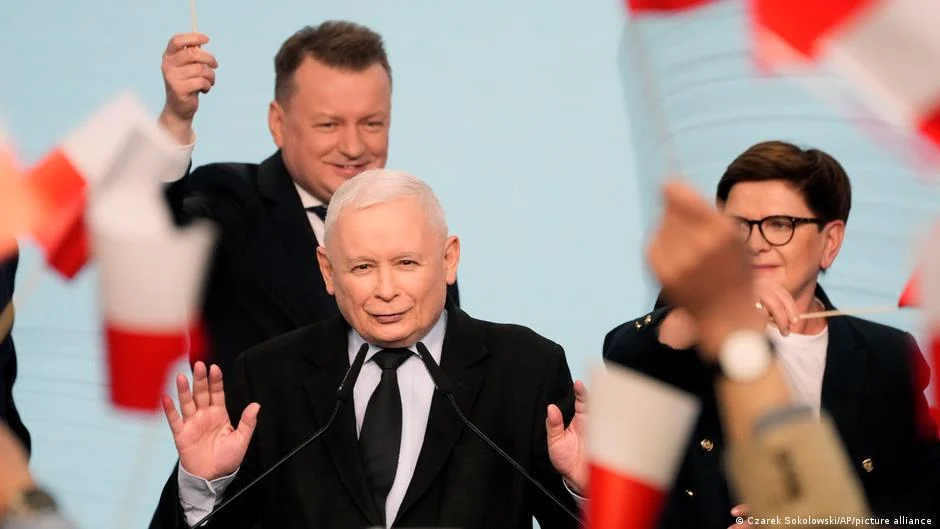
Poland’s dominant right-wing political force, the Law and Justice (PiS) party, has been thrown into its most profound crisis since its inception, as its venerable leader, Jaroslaw Kaczynski, announced on Friday that "over 30 delegates of our group have effectively forfeited their membership." Kaczynski explicitly accused former Prime Minister Mateusz Morawiecki and dozens of his loyalists of orchestrating an attempt to fracture the party, declaring, "We couldn’t accept that. It’s all done." The accused rebels, however, contested this narrative, asserting they had not resigned but were "expelled," highlighting the deep chasm that has opened within the conservative movement. This dramatic split signals a potential realignment of Poland’s political landscape, barely a year before the next parliamentary election, and casts a long shadow over the future of the nation’s right-wing.
A Decisive Break After Failed Negotiations
The public declaration of the split followed a tense, three-hour "last chance" negotiation between Kaczynski and Morawiecki on Thursday, which ultimately proved futile. Piotr Mueller, an EU delegate closely allied with Morawiecki, encapsulated the failure on X (formerly Twitter), stating, "We were looking for understanding, but couldn’t accept subjugation." The ultimatum issued by Kaczynski had expired at midnight, demanding that the rebel party members deliver a written declaration disavowing their involvement in the "Rozwoj Plus" (Development Plus) association, a new political initiative spearheaded by Morawiecki. Kaczynski viewed this breakaway association as a direct challenge to his party’s primacy and unity.
Morawiecki, demonstrating unwavering defiance, publicly rejected Kaczynski’s demand. Speaking to Polish television station TVN, he declared, "I’m not signing any loyalty pledge." He poignantly added, "That’s something one might have required of me in the 1980s," drawing a historical parallel to the political persecution his family faced due to his father’s prominent opposition to the communist regime, thereby framing Kaczynski’s demand as an affront to democratic principles and personal conviction. This refusal marks a critical juncture, elevating the internal dispute from a mere ideological difference to an open rebellion against Kaczynski’s long-standing autocratic leadership style.
The Historical Context of PiS Dominance
For a quarter of a century, the Law and Justice party, under the undisputed leadership of Jaroslaw Kaczynski (and previously his late twin brother, Lech Kaczynski), has been the undisputed hegemon of Poland’s political right. Founded in 2001, PiS emerged from the Solidarity movement’s conservative wing, quickly establishing itself as a staunch advocate for national sovereignty, traditional Catholic values, and a strong, interventionist state. Its ideology, often described as a blend of social conservatism, economic nationalism, and Euroscepticism, resonated deeply with a significant portion of the Polish electorate.
PiS has held power twice, first from 2005 to 2007, and then for a more extended period from 2015 to 2023. During these periods, the party reshaped Poland’s political, social, and legal landscape. Its landmark "500+" child benefit program significantly boosted family welfare, while its controversial judicial reforms and media policies led to protracted clashes with the European Union, drawing accusations of undermining democratic institutions and the rule of law. The party also successfully placed its allies in the presidential office, first with Lech Kaczynski, then Andrzej Duda, and, since mid-2025, Karol Nawrocki, ensuring a consistent right-wing influence across government branches. Any prior attempts to establish a new, more radical right-wing party were effectively neutralized by PiS’s formidable organizational strength and Kaczynski’s political acumen. However, the current schism represents an unprecedented challenge to this long-held dominance.
The Rise of Mateusz Morawiecki and the Ideological Divide
Mateusz Morawiecki, a trained historian with a distinguished career in banking, was initially considered an outsider when he joined the PiS party in 2016. His technocratic background and experience in leading positions at several banks (including Bank Zachodni WBK, now Santander Bank Polska) offered a different profile compared to the party’s core grassroots activists. His ascent within PiS was rapid; he served as Minister of Development and Finance Minister before being appointed Prime Minister in 2017. Morawiecki’s tenure as PM was marked by efforts to balance PiS’s nationalist agenda with pragmatic economic policies and a more diplomatic approach to the European Union, often positioning himself as a bridge between the party’s hardline faction and more moderate elements.
The current conflict highlights a fundamental ideological and tactical divergence within PiS. Kaczynski, in a bid to reclaim voters lost to the surging far-right, has pushed the party further towards the extreme. In March, he controversially nominated Przemyslaw Czarnek, an ultraconservative and ultra-Catholic former Minister of Education and Science, as the party’s lead candidate for the 2027 parliamentary election. Czarnek’s tenure was marked by highly contentious reforms in education, strong rhetoric against LGBTQ+ rights, and outspoken criticism of the EU. Morawiecki and his allies viewed this move as a "fundamental mistake," believing it alienates moderate conservatives and potential new voters.
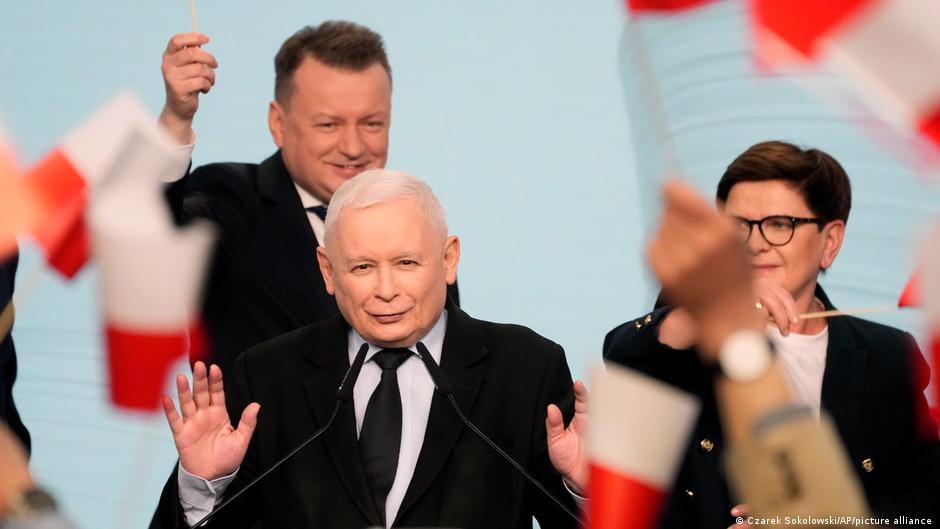
This divergence is starkly captured by the metaphors of "two lungs" versus "one fist." Kaczynski initially tolerated Morawiecki’s efforts to broaden the party’s appeal, speaking of "two lungs" within PiS, implying a degree of ideological diversity. However, this compromise proved short-lived. With the rise of the far-right, Kaczynski now demands a unified "fist," signifying rigid adherence to his increasingly radical line. Czarnek, embodying this "fist" approach, has openly attempted to outflank rival confederation parties from the right, launching verbal broadsides against the EU and Ukraine. His stance on the recent Polish-Ukrainian dispute over unresolved historical issues, where he called for the cessation of all military aid to Kyiv until its position changed, exemplifies the hardline approach that Morawiecki and his faction find counterproductive.
The Challenge from the Far-Right and Electoral Implications
The internal turmoil within PiS is exacerbated by the growing strength of two significant parties to its right: the Confederation Liberty and Independence (KWIN) and the Confederation of the Polish Crown (KKP). KWIN, an alliance of libertarian and nationalist factions, champions free-market economics and national conservative social policies, appealing to younger, economically liberal but socially conservative voters. KKP, led by Grzegorz Braun, is an extreme right-wing, ultranationalist, and traditionalist party with strong monarchist leanings and often conspiratorial rhetoric. Together, these groups have siphoned off a substantial portion of PiS’s traditional voter base, particularly those disillusioned with PiS’s perceived moderation or its handling of the economy.
Opinion polls underscore the severity of PiS’s predicament. Surveys conducted by Opinia24 for TVN and TVN24 on July 22 revealed a dramatic decline in support for PiS, dropping to 17.7%. This represents a precipitous fall from the 35% it garnered in the 2023 parliamentary election, where it emerged as the largest single party but failed to form a government. In the same polls, Mateusz Morawiecki’s new initiative, Rozwoj Plus, registered 6.2% of the vote. While this figure might seem modest individually, it represents a significant segment of the electorate that has fractured away from the PiS core, highlighting the profound impact of the internal divisions. The combined support for KWIN and KKP, though not specified in the provided text, is noted to surpass that of PiS alone, indicating a significant shift in the right-wing electorate.
Morawiecki’s strategy with Rozwoj Plus is explicitly aimed at addressing this erosion of support. He has been actively traveling across the country, engaging with local politicians and businesses, advocating for a broader, more inclusive right-wing conservative movement. He plans a major policy event in late July, inviting 1,000 guests from diverse political backgrounds to discuss the country’s future, signaling his intent to build a wide coalition. He has repeatedly affirmed his desire to remain within the broader PiS family, emphasizing that his goal is to "open the party to new voters" and ensure that right-wing conservatives return to power in 2027. This suggests Morawiecki believes PiS can only regain power by moderating its image and appealing beyond its shrinking hardline base. Just days before the split, Morawiecki reportedly commanded the loyalty of 40 members of the Sejm (Poland’s lower house of parliament) and several EU delegates, underscoring the potential scale and impact of his faction.
Reactions from the Political Spectrum and Analytical Insights
The unfolding drama within PiS has been met with undisguised amusement and strategic contemplation by Poland’s governing coalition, led by Prime Minister Donald Tusk. Foreign Minister Radoslaw Sikorski, upon hearing the news, quipped, "I love PiS so much, I’d love to have two of them," perfectly encapsulating the schadenfreude among the ruling parties. Political scientist Danuta Plecka, speaking on Friday, described the situation as "a gift" to the current government. "All the scandals of recent months are now fading into the background," she explained. "Tusk doesn’t have to do anything, he can just sit by the riverbank and wait for the bodies to float by." This sentiment reflects the immediate political advantage gained by the ruling coalition, as the internal strife of the main opposition party diverts attention from its own challenges and potentially weakens its principal adversary.
However, Plecka also offered a more nuanced and intriguing perspective. The University of Gdansk researcher posited that the conflict between Kaczynski and Morawiecki might, in fact, be a "staged performance." She argued that "there are hardly any programmatic differences between the two. The main difference between them is in the language and political tactics." According to this theory, Morawiecki’s role is to attract voters who lean more towards the political center, those who might be alienated by Kaczynski’s increasingly radical rhetoric and Czarnek’s hardline stance. After the 2027 election, Plecka predicted, both groups could potentially reunite, forming a broader and more formidable right-wing coalition capable of governing. This sophisticated political maneuver, if true, would be an attempt to capture different segments of the right-wing electorate under the guise of a split, ultimately aiming for a more comprehensive victory. Morawiecki and his associates have, for their part, accused their opponents of orchestrating a plot against them, adding another layer of complexity to the narrative.
Broader Consequences and Future Outlook
The profound schism within PiS carries significant implications for Poland’s political future and its standing on the international stage. If the split is genuine and irreconcilable, it could permanently fracture the right-wing bloc that has dominated Polish politics for decades. A weakened and divided PiS would struggle to regain its former strength, potentially opening avenues for other parties, including the current ruling coalition, to consolidate power or for new political forces to emerge. The 2027 parliamentary election would become even more unpredictable, with a highly fragmented right-wing potentially benefiting the centrist and left-leaning parties.
Internationally, the direction taken by the two factions could significantly impact Poland’s foreign policy. A PiS party under Czarnek’s influence, pushing further right with strong anti-EU and anti-Ukrainian rhetoric, could strain relations with Brussels and key allies, potentially isolating Poland further. Conversely, a Morawiecki-led center-right force, advocating for a more pragmatic and inclusive conservatism, might seek to repair ties with the EU and adopt a more constructive foreign policy stance. This internal battle within the Polish right-wing is therefore not merely a domestic affair but one that could reshape Poland’s geopolitical alignment and influence its role within the European Union and NATO. The coming months will reveal whether this is a temporary tactical divergence or a fundamental and lasting realignment of Poland’s political landscape.

