

In a significant policy pivot that has caught both environmentalists and industry leaders by surprise, President Donald Trump has announced the rolling back of key Environmental Protection Agency (EPA) regulations governing the use of hydrofluorocarbons (HFCs). These potent greenhouse gases, often described as "super pollutants," are central to modern refrigeration and air-conditioning systems. The administration’s decision marks a stark reversal from the president’s previous stance during his first term, when he signed the bipartisan American Innovation and Manufacturing (AIM) Act of 2020, which sought to phase out these chemicals in favor of more environmentally friendly alternatives.
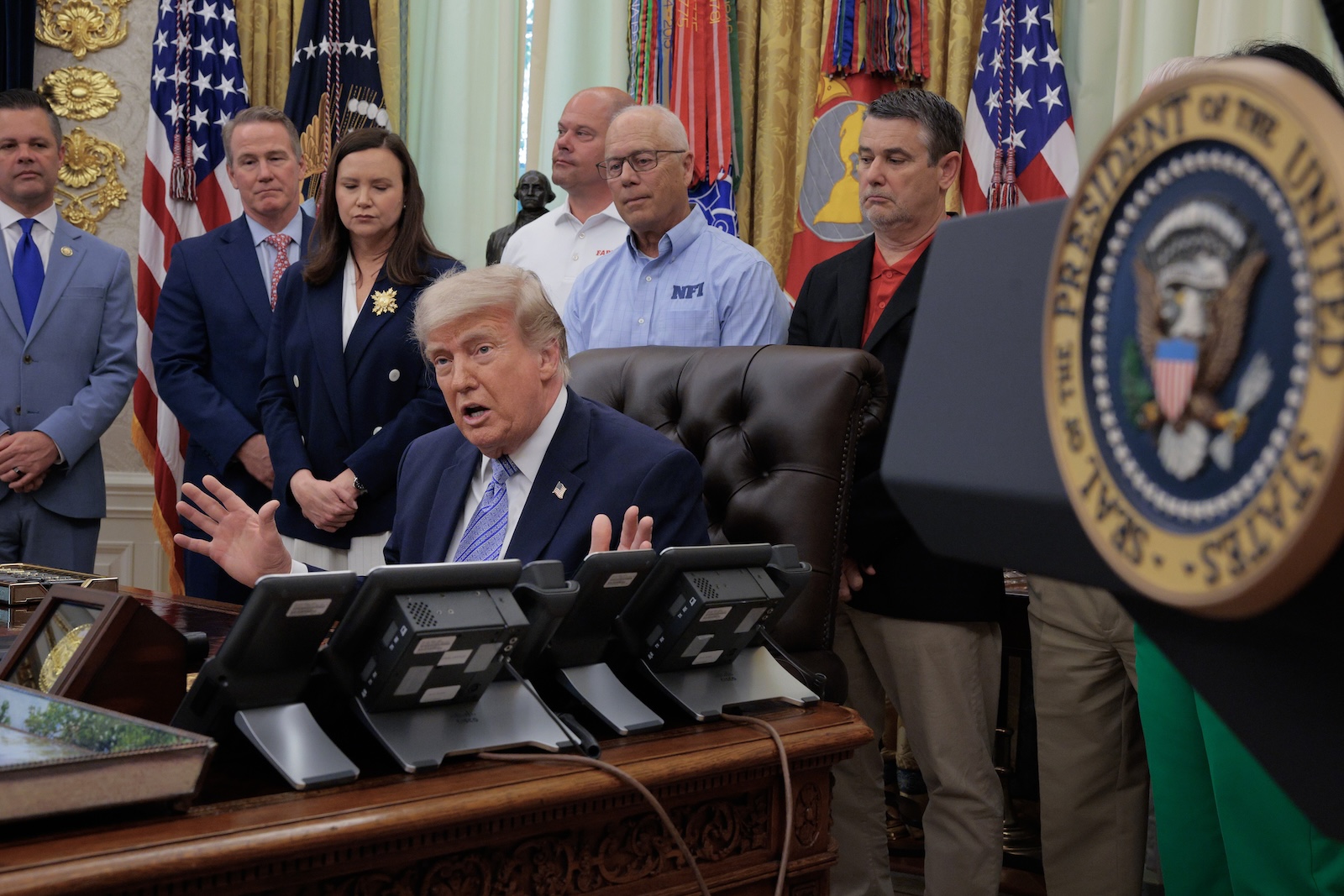
The announcement was made during a high-profile press conference at the White House, where President Trump was joined by EPA Administrator Lee Zeldin and several chief executives from the nation’s largest grocery chains. The administration argued that the current pace of the HFC phaseout is contributing to "refrigerant-induced inflation," placing an undue burden on the American food supply chain. By loosening two major EPA rules, the administration aims to delay deadlines for grocery stores and HVAC companies to transition to new equipment and will exempt transport companies from mandatory leak repairs on HFC-based refrigeration units.
The Evolution of HFC Regulation: From Bipartisan Support to Reversal
To understand the weight of this reversal, one must look back at the origins of HFC regulation. Hydrofluorocarbons were originally introduced as a "safe" alternative to chlorofluorocarbons (CFCs), which were found to be destroying the Earth’s ozone layer. While HFCs do not deplete the ozone, scientists soon discovered they are incredibly potent greenhouse gases—trapping thousands of times more heat in the atmosphere than carbon dioxide over a shorter period.
In 2016, the international community negotiated the Kigali Amendment to the Montreal Protocol, a landmark agreement designed to phase down HFCs globally. While the United States did not immediately ratify the amendment during the first Trump administration, the domestic industry—led by chemical giants like Honeywell and Chemours—lobbied for a national framework to ensure American companies remained competitive in the global market for next-generation refrigerants.
This lobbying culminated in the AIM Act of 2020. At the time, President Trump praised the legislation as a win for American manufacturing, noting that it would spur innovation and create jobs in the production of hydrofluoroolefins (HFOs) and other low-impact cooling agents. Following the transition to the Biden administration, the EPA moved aggressively to implement the AIM Act’s goals, which included an 85 percent reduction in HFC production and consumption by 2036.
Now, however, the political calculus has shifted. President Trump’s latest move characterizes these same regulations as a "hidden tax" on the American consumer. "Thanks to today’s reforms, the American people have lower grocery prices, cheaper transportation of goods, and lower costs of air conditioning at no detriment to our country," the president stated, claiming that the rollbacks would save U.S. businesses and families more than $2.4 billion.
The Economic Counter-Argument: "Grocery Price Theater"
Despite the administration’s optimistic projections, economists and former regulatory officials are sounding the alarm, suggesting that the rollbacks may actually lead to higher prices for consumers. The core of the debate lies in the complex "Food Dollar" data provided by the U.S. Department of Agriculture (USDA).
According to Chris Barrett, an economist at Cornell University, the cost of refrigerants represents a negligible fraction of a consumer’s total grocery bill. "There’s just no plausible way in which relaxing these rules is going to generate any meaningful reduction in the costs of food people purchase," Barrett explained. He noted that while retail, transport, and energy costs account for about 20 percent of the food dollar, the specific cost of maintaining refrigerant levels is a tiny subset of that share. Barrett estimates that even in a best-case scenario, the savings passed to a consumer spending $200 a week on groceries would amount to no more than a dollar or two.
Furthermore, former EPA officials, including Joseph Goffman, who served as the assistant administrator for the Office of Air and Radiation, have labeled the move "grocery-price theater." Critics argue that the administration is using the rollbacks as a political tool to address voter frustration with inflation, without providing a mechanism that ensures any corporate savings are actually passed down to shoppers. Because the EPA amendments carry no mandate for grocers to lower prices, companies may instead use the reduced compliance costs to bolster their own profit margins.
Industry Uncertainty and the Threat to Investment
While some grocery trade groups have praised the deregulation for providing "flexibility," a significant portion of the cooling and manufacturing industry is expressing deep concern. For nearly six years, American companies have been operating under the assumption that the HFC phaseout was settled law. Billions of dollars have been invested in retooling factories, training technicians, and developing new supply chains for HFOs and natural refrigerants like CO2 and ammonia.
The Air-Conditioning, Heating, and Refrigeration Institute (AHRI) and the Alliance for Responsible Atmospheric Policy have previously warned that sudden shifts in regulatory deadlines create market instability. If the demand for HFCs is artificially prolonged, it creates a "split market" where manufacturers must maintain two different production lines—one for the old, high-polluting technology and one for the new. This inefficiency often leads to higher equipment costs, the exact opposite of the administration’s stated goal.
Moreover, the exemption of transport companies from repairing leaks is seen by many as a step backward in basic maintenance standards. The EPA has historically estimated that U.S. supermarkets leak an average of 25 percent of their refrigerants annually. By removing the requirement to fix these leaks in transport refrigeration units (TRUs), the administration may be allowing a valuable and increasingly scarce commodity—HFCs—to simply vanish into the atmosphere, eventually driving up the price of the remaining HFC supply as production quotas continue to tighten.
The Environmental Feedback Loop: Climate Change and Food Inflation
The most profound irony of the administration’s decision, according to environmental scientists, is the long-term impact on food prices through the lens of climate change. HFCs are "short-lived climate pollutants," meaning they don’t stay in the atmosphere as long as CO2, but their warming effect is immediate and intense.

The original goals of the Kigali Amendment and the AIM Act were projected to prevent up to 0.5 degrees Celsius of global warming by the end of the century. While half a degree may sound marginal, in the context of global agriculture, it is the difference between a stable harvest and a catastrophic crop failure. Internal EPA assessments, recently brought to light, suggest that loosening the phaseout deadlines could increase emissions by 68 million metric tons of CO2 equivalent by 2050.
Economists like Barrett point out that the primary drivers of food inflation over the last several years have been extreme weather events—droughts, floods, and heatwaves—that decimate livestock and crops. For instance, skyrocketing beef prices in the U.S. have been directly linked to prolonged droughts in the Southwest that forced ranchers to cull their herds. Similarly, global coffee prices have spiked due to erratic rainfall patterns in Brazil and Vietnam.
"If relaxing these rules aggravates climate change and gives us more severe and more frequent episodes of extreme weather that hurts productivity in agriculture, we’re actually going to increase grocery prices down the road," Barrett warned. By prioritizing short-term regulatory relief, the administration may be fueling the very environmental volatility that makes food expensive.
Chronology of HFC Regulation and the Current Pivot
The path to the current regulatory crossroads has been marked by several key milestones:
- 1987: The Montreal Protocol is signed, initially focusing on ozone-depleting substances (CFCs).
- 2016: The Kigali Amendment is adopted, adding HFCs to the list of controlled substances under the Montreal Protocol.
- December 2020: President Trump signs the AIM Act as part of a year-end legislative package, authorizing the EPA to phase down HFCs by 85% over 15 years.
- 2021–2022: The Biden administration’s EPA issues the "Allocation Framework Rule" and the "Technology Transitions Rule," setting specific targets for HFC reduction.
- September 2022: The U.S. Senate ratifies the Kigali Amendment with strong bipartisan support (69-27).
- May 2026: President Trump, in his second term, announces the loosening of EPA refrigerant rules, citing the need to combat grocery inflation.
Implications for the Future
As the new EPA rules take effect, the legal and economic fallout is likely to be extensive. Environmental advocacy groups are expected to file lawsuits challenging the administration’s authority to ignore the mandates of the AIM Act, which remains the law of the land. Meanwhile, the international community may view the U.S. pivot as a breach of the Kigali Amendment, potentially complicating trade relations with nations that have already transitioned to low-GWP (Global Warming Potential) technologies.
For the average American consumer, the immediate impact on the grocery bill remains a matter of speculation. While the administration promises relief, the structural realities of the food industry and the looming threats of a warming planet suggest that the cost of cooling the world may be far higher than the price of a tank of refrigerant. The question remains whether this move is a pragmatic economic correction or, as critics suggest, a political gamble that trades long-term stability for a short-term headline.

