
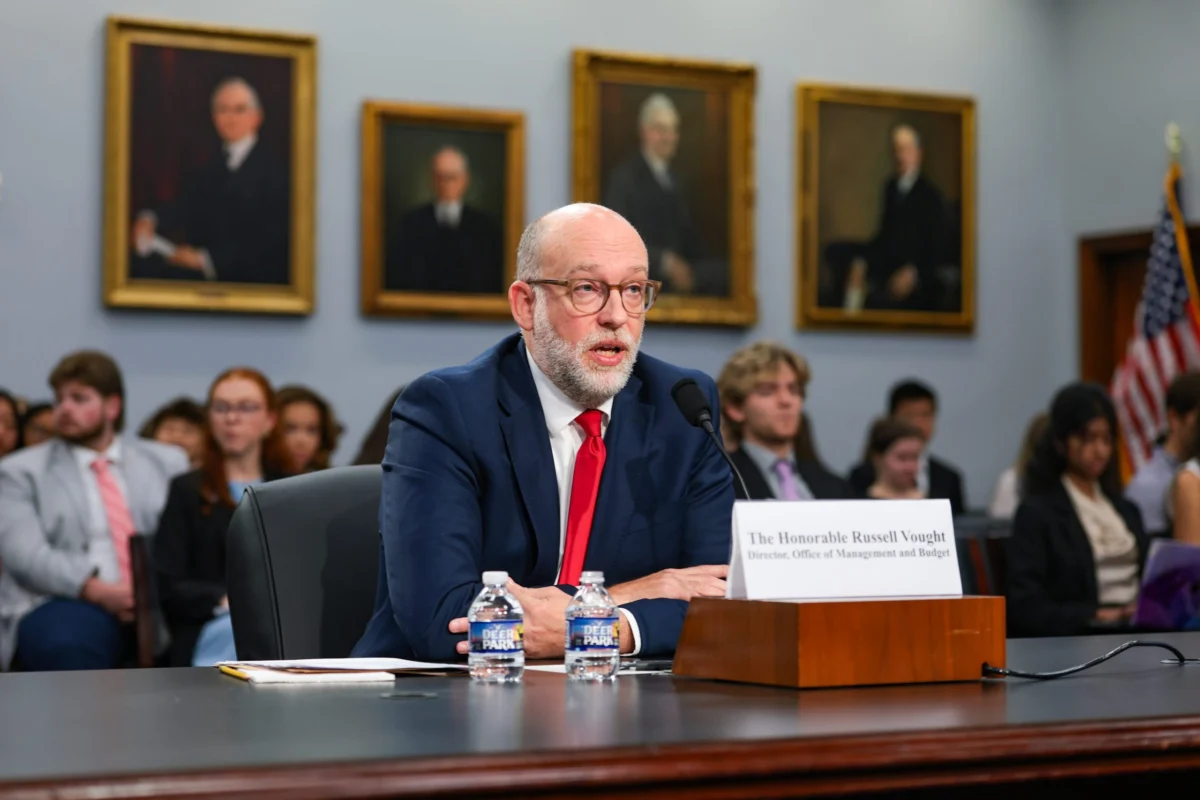
The federal Office of Management and Budget is facing a wave of criticism from the nation’s leading scientific and educational organizations over a proposed 100-page overhaul of federal grant rules. While the administration frames the changes as a necessary step toward increasing accountability and transparency in the use of taxpayer funds, researchers warn that the new regulations could dismantle decades of progress in evidence-based education policy. The proposal, which includes provisions for political review of scientific grants and restrictions on studies involving diversity and equity, has prompted a massive mobilization of the academic community, resulting in nearly half a million public comments submitted before the July deadline.
At the heart of the controversy is the future of long-term, foundational research that has historically shaped American classrooms. Programs like the "science of reading"—a multi-disciplinary body of evidence that has revolutionized literacy instruction across the United States—were built over decades through federally supported research spanning cognitive science, neuroscience, psychology, linguistics, and longitudinal classroom studies. Critics of the new OMB proposal argue that if these rules had been in place forty years ago, the science of reading might never have reached the classroom, as the new framework prioritizes immediate, breakthrough results over the patient accumulation of evidence.
The Scope of the OMB Proposal and Its Objectives
On May 29, the Office of Management and Budget (OMB) released a sweeping proposal to revise the rules for issuing and overseeing federal grants. These rules govern billions of dollars in funding distributed by agencies such as the Department of Education and the National Science Foundation (NSF). The OMB’s stated goal is to "strengthen accountability, transparency, and oversight," ensuring that taxpayer-funded research aligns with the "national interest" and delivers measurable value.
Key provisions of the 100-page document include:
- Political Appointee Oversight: A requirement that all grants undergo a review by political appointees before being finalized, adding a layer of executive branch scrutiny to the traditional peer-review process.
- Alignment with Federal Priorities: A mandate that agencies prioritize research that aligns with the specific policy goals of the current administration.
- Restrictions on DEI and Disparate Impact: Prohibitions on using federal funds for research related to "unlawful diversity, equity, and inclusion" (DEI) activities and restrictions on "disparate impact" studies—research that examines whether neutral policies result in different outcomes for different demographic groups.
- Financial and Administrative Constraints: Provisions to give preference to grant proposals with low overhead costs, alongside cuts to federal funding for conference attendance and publication fees unless specifically justified in writing.
The OMB has indicated an aggressive timeline for these changes, with an intended effective date of October 1. This rapid pace has alarmed the research community, which argues that the changes are being rushed through without adequate consideration of their long-term impact on scientific integrity.
Chronology of the Opposition Movement
The pushback against the OMB proposal has been swift and highly coordinated. Following the release of the proposal in late May, a coalition of scientific societies and education research groups began analyzing the potential fallout.
- May 29: OMB publishes the proposed rule change, opening a public comment period.
- June 2025: Major research universities and associations begin holding emergency briefings to discuss the implications for "disparate impact" studies and international collaborations.
- July 13: The deadline for public comments. Three major letters are submitted by the National Academy of Education (signed by 19 other organizations), the American Educational Research Association (AERA), and the Knowledge Alliance.
- July 14: Reports emerge that the OMB has been "flooded" with 496,775 comments. Sources indicate that research organizations intentionally encouraged a high volume of responses to create an administrative record for future litigation and to force the OMB to address each substantive concern, thereby slowing the implementation process.
This strategy of "flooding the zone" reflects the high stakes involved. Education researchers are particularly sensitive to abrupt policy shifts, citing the 2025 termination of dozens of research studies by the Department of Education, which resulted in 1,600 high school students with disabilities losing access to critical intervention services.
The Threat to Equity and Demographic Analysis
One of the most contentious aspects of the OMB proposal is the restriction on "disparate impact" studies. In the context of education, these studies are the primary tool used to identify and address achievement gaps. By analyzing data based on race, income, disability status, and English language proficiency, researchers can determine if a particular teaching method or school policy is failing a specific subgroup of students.
The National Academy of Education, in its formal objection, argued that these are not "fringe questions" but are "central empirical questions of education policy research." The organization highlighted several scenarios that could be jeopardized under the new rules:
- Determining if a specific reading intervention works differently for English language learners compared to native speakers.
- Analyzing whether school discipline policies fall disproportionately on students of color.
- Investigating whether gifted and talented programs under-identify students with disabilities.
Furthermore, researchers pointed out a significant legal conflict: existing federal laws, such as Title I of the Elementary and Secondary Education Act, actually require states and districts to conduct this type of demographic analysis. Title I, which receives approximately $17 billion in annual federal funding, mandates that schools identify and support struggling groups of students. Researchers argue that the OMB’s broad and vague language regarding "unlawful DEI" creates a "chilling effect," discouraging scientists from proposing any research that involves demographic variables for fear of being denied funding on political grounds.

Shifting the Decision-Making Power: Science vs. Politics
For decades, the "gold standard" of federal research funding has been the independent peer-review process. In this system, subject-matter experts—not political figures—evaluate grant proposals based on their scientific rigor, methodology, and feasibility. The OMB proposal threatens to upend this system by requiring a final layer of review by political appointees.
Education research organizations argue that this change would subject scientific inquiry to the whims of changing administrations. What one administration deems in the "national interest" may be discarded by the next, leading to a volatile research environment where long-term projects are constantly at risk of being defunded.
There is also concern regarding the administration’s push for "gold standard science." While the term sounds objective, researchers note it remains undefined in the proposal. In education, the "gold standard" often refers to Randomized Controlled Trials (RCTs), similar to clinical drug trials. However, researchers point out that education is rarely that simple. Classroom environments are complex, and researchers often rely on a variety of sophisticated methods—such as longitudinal surveys, qualitative interviews, and quasi-experimental data analysis—to understand how students learn. By favoring only one specific type of methodology, the OMB could effectively banish other valid forms of scientific inquiry that are better suited for the classroom setting.
Economic and Administrative Burdens on Universities
The proposal’s focus on reducing "overhead costs" and administrative expenses has also drawn fire from large research universities. These institutions rely on "indirect cost" reimbursements to maintain the laboratories, libraries, and administrative infrastructure that make high-level research possible. By prioritizing grants with lower overhead, the OMB could inadvertently favor smaller, less-equipped institutions or private consulting firms over the nation’s leading research universities.
Additionally, the proposed cuts to conference travel and publication costs are seen as a blow to scientific collaboration. "Science does not happen in a vacuum," noted one researcher from the AERA. "Conferences are where findings are vetted, debated, and refined. Publication costs are necessary to ensure that research is peer-reviewed and made available to the public. Cutting these funds is a move toward isolationism in science."
The requirement for researchers to provide written justification for every single request to receive grant funds is also expected to significantly increase the "regulatory paperwork" burden. At a time when the administration claims to be seeking efficiency, researchers argue that these rules would force them to spend more time on bureaucracy and less time on actual discovery.
Broader Implications for Global Competitiveness
The impact of the OMB proposal extends beyond American borders. Education researchers expressed grave concerns regarding restrictions on international research partnerships. The United States currently participates in several major international assessments, such as the Programme for International Student Assessment (PISA) and the Trends in International Mathematics and Science Study (TIMSS). These assessments allow U.S. policymakers to compare the performance of American students with their peers in countries like Singapore, Estonia, and Japan.
Broad limits on foreign collaborations could hinder the ability of U.S. researchers to participate in these global benchmarks, leaving American policymakers in the dark regarding the nation’s standing in the global education landscape. Furthermore, the interruption of longitudinal studies—which track student progress over years or even decades—could lead to "permanent damage" to the nation’s data sets. As the National Academy of Education noted, a gap of even one year in a longitudinal study can render the entire project statistically invalid.
Analysis: The Future of Evidence-Based Policy
The standoff between the OMB and the research community represents a fundamental disagreement over the role of science in government. From the administration’s perspective, the overhaul is a tool to ensure that the executive branch has the power to direct resources toward its priorities and eliminate what it perceives as ideological bias in academia.
However, from the perspective of the scientific community, the proposal represents a dangerous politicization of objective inquiry. By restricting research into disparate impacts and granting political appointees veto power over scientific grants, the administration may be creating a feedback loop where only "approved" data is collected.
The sheer volume of public comments suggests that this issue will likely move from the halls of the OMB to the federal courts. Under the Administrative Procedure Act, agencies are required to consider and respond to all substantive comments before a rule can be finalized. The strategy of "flooding" the agency may buy researchers time, but the underlying tension remains. If the rules take effect on October 1, the landscape of American education research—and the classroom practices that rely on it—may be fundamentally altered for years to come. For now, the OMB has remained silent, offering no response to the specific objections raised by the nation’s leading education experts.

