
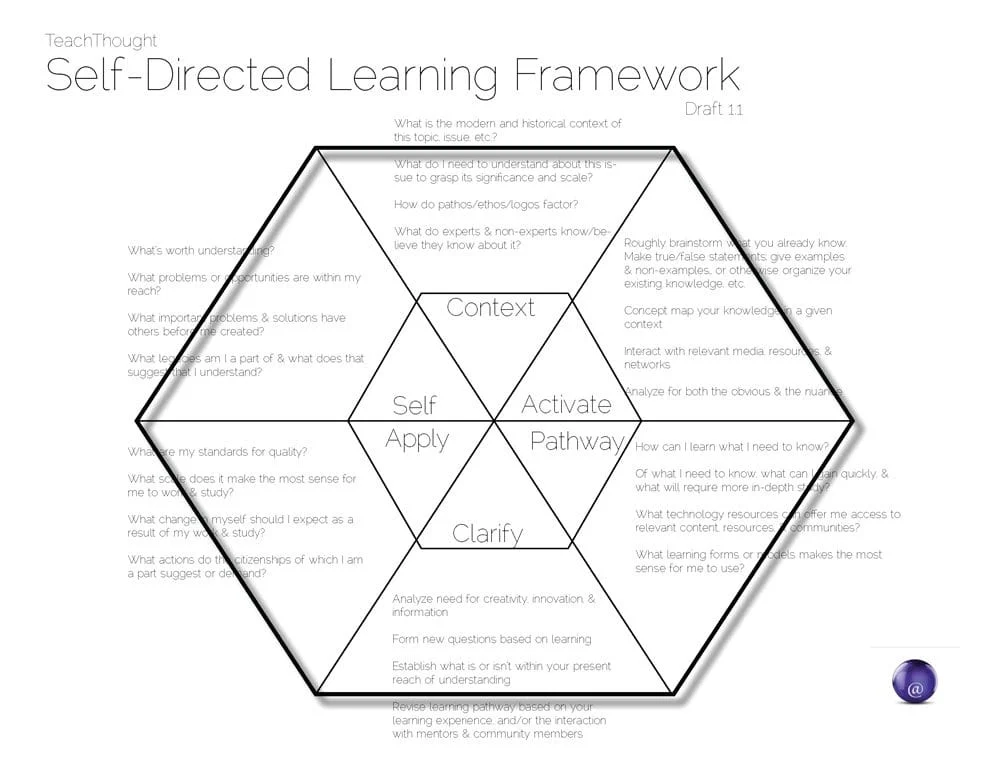
In the evolving landscape of global education, a fundamental shift is occurring in how pedagogical success is measured, moving away from the traditional ability to provide correct answers toward the more complex skill of formulating incisive questions. Educators and researchers are increasingly recognizing that while content mastery remains a cornerstone of learning, the capacity for student-led inquiry serves as the primary driver for authentic understanding and long-term cognitive development. This transition represents a departure from the industrial-age model of education, which prioritized rote memorization and standardized responses, toward a 21st-century framework centered on critical thinking, cognitive dissonance, and self-directed exploration.
The Shift from Answer-Centric to Inquiry-Based Pedagogy
Historically, the efficacy of an educational system was gauged by its students’ performance on assessments that required the retrieval of specific facts. However, modern educational theorists, including Terry Heick of TeachThought, argue that if the ultimate goal of schooling is to produce thinkers rather than just test-takers, the focus must shift to how students ask questions. The ability to pose the right question at the appropriate moment is now viewed as a high-level artifact of critical thinking. It indicates not only what a student knows but, more importantly, provides a roadmap for what they have yet to discover.
Experts suggest that asking a question is a sophisticated sign of understanding rather than a confession of ignorance. To formulate a query, a student must first synthesize existing knowledge and then identify the gaps in that knowledge. This "conceptual ecology" allows a student to look both backward at what has been learned and forward toward potential new insights. For instance, in a biology setting, a student viewing a drop of water as more than just a chemical compound—seeing it instead as a vessel for life, a scientific tool, and a cultural symbol—is engaging in the kind of multifaceted inquiry that traditional testing often fails to capture.
A Chronology of Questioning in Educational History
The role of inquiry has undergone several transformations over the centuries, reflecting the shifting needs of society and the economy.
- The Socratic Era (4th Century BCE): Classical education was rooted in the Socratic method, where the teacher used a series of questions to lead the student to their own realizations, emphasizing the internal process of logic.
- The Industrial Revolution Model (19th Century): As mass education was standardized to meet the needs of a factory-based economy, the focus shifted to "the one right answer." Efficiency and uniformity became the primary metrics of success.
- The Introduction of Bloom’s Taxonomy (1956): Benjamin Bloom and his colleagues developed a framework to categorize educational goals, which, while often misinterpreted as a hierarchy, provided a vocabulary for different types of cognitive processes, from recall to evaluation.
- The Information Age Shift (1990s–Present): With the advent of the internet, the "answer" became a commodity available at the click of a button. This has forced a return to inquiry, as the value in the modern workforce lies in the ability to frame problems and ask the questions that search engines cannot yet answer.
Analyzing the Teacher-Student Questioning Dynamic
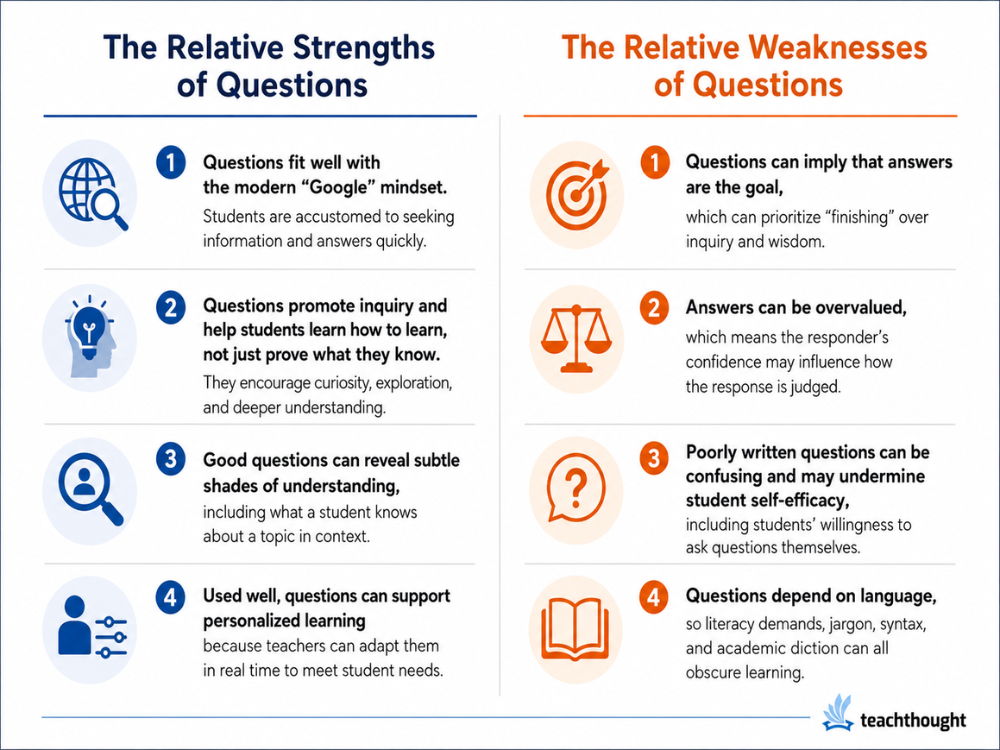
A significant bottleneck in the traditional classroom is the lopsided ratio of teacher-led questions to student-led questions. Research indicates that in a typical 60-minute lesson, a teacher may ask dozens of questions, while students may ask fewer than five. When teachers dominate the questioning process, they often prioritize curriculum efficiency over individual curiosity. Because they must manage large cohorts and aggressive curriculum maps, teacher questions tend to be universal rather than personalized.
Conversely, when the student becomes the primary questioner, the learning process is automatically personalized. Authentic student questions are rarely "guess-what-the-teacher-is-thinking" exercises; they are instead genuine markers of curiosity or confusion. This shift reverses the traditional classroom power dynamic, allowing the individual student’s fascinations to drive the pace of learning. This "spring-loading" of the mind, as described by pedagogical experts, ensures that when a student finally finds the answer to their own question, the information is retained with much higher fidelity.
Supporting Data: The Impact of Inquiry on Student Engagement
Recent data from international assessments, such as the Programme for International Student Assessment (PISA), highlights a strong correlation between inquiry-based instruction and student performance in science and mathematics. In systems where students are encouraged to design their own experiments and pose their own research questions, there is a measurable increase in "epistemic curiosity"—the drive to acquire new knowledge to close a gap in one’s understanding.
Furthermore, a 2021 study on classroom discourse found that classrooms utilizing "Question Formation Techniques" (QFT) saw a 30% increase in student engagement levels compared to classrooms using traditional lecture-and-response formats. These findings support the argument that when students are taught how to build, refine, and prioritize their own questions, they take greater ownership of their educational outcomes.
The Four Paradigms of Questioning
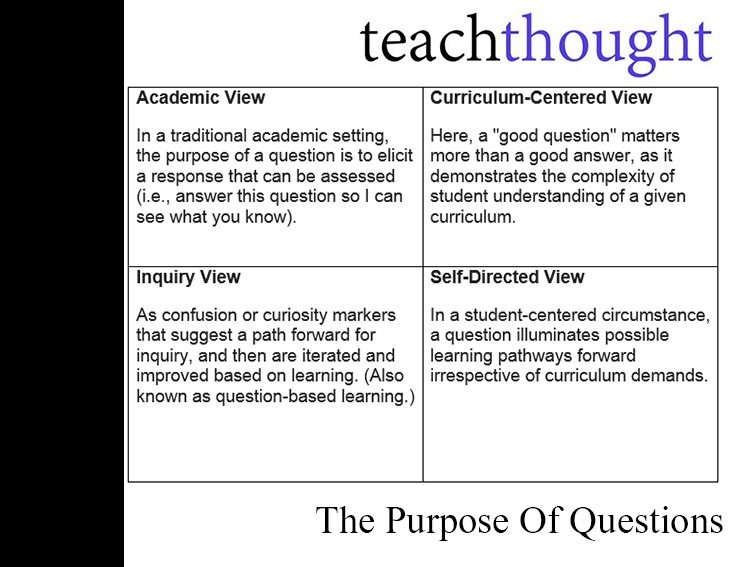
To better understand the function of inquiry, educators categorize the purpose of questions into four distinct views, ranging from traditional to progressive:
- The Academic View (Traditional): Questions are used primarily as assessment tools to elicit a response that can be graded. The goal is to verify that the student has absorbed the taught material.
- The Curriculum-Centered View: The quality of the question is valued as a demonstration of the complexity of the student’s understanding of a specific subject. Here, a "good" question is seen as more valuable than a "correct" answer.
- The Inquiry View (Progressive): Questions serve as markers of curiosity that dictate the path of research. This is often referred to as question-based learning, where the curriculum is flexible and follows the student’s iterative process of discovery.
- The Self-Directed View (Highly Progressive): In this model, the student’s own knowledge demands catalyze the entire experience. Questions illuminate learning pathways regardless of pre-set curriculum demands, fostering a sense of communal and human interdependence.
The Strategic Use of Lower-Level and Essential Questions
A common misconception in modern pedagogy is that "lower-level" questions—those involving simple recall or definitions—are inherently inferior. However, experts clarify that these questions provide the necessary foundation for "higher-level" thinking. Without a firm grasp of names, dates, and basic facts, students lack the "foothold" required for analysis or evaluation. Bloom’s Taxonomy was intended not to segregate "good" from "bad" thinking, but to show how simple behaviors integrate to form complex ones.
In contrast, "Essential Questions" are those that are broad, timeless, and perpetually arguable. Questions such as "What is justice?" or "Is science compatible with religion?" are designed to provoke deep thought and sustained inquiry. These questions do not have a single "right" answer; instead, they require students to weigh evidence, consider alternatives, and justify their positions over an extended period of time.
Implementation Strategies: From Wonder Walls to Think-Pair-Share
To foster a culture of inquiry, schools are increasingly adopting specific classroom strategies:
- Wonder Walls: A dedicated physical or digital space where students post questions that arise during lessons. This validates curiosity and allows for peer-to-peer interaction as students help each other investigate these "wonders."
- Think-Pair-Share: This collaborative strategy allows students to process a problem individually, discuss it with a partner to refine their questions, and then share those refined inquiries with the larger group.
- Cognitive Dissonance Induction: Teachers use Socratic questioning to present perspectives that challenge a student’s existing beliefs. This discomfort forces the student to either adjust their belief or critically examine the validity of the new information, leading to profound self-reflection.
Broader Implications for the Future of Education
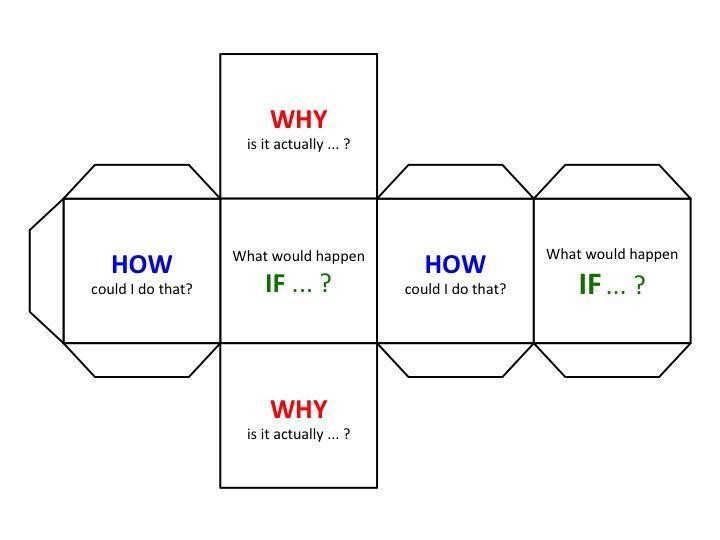
The implications of prioritizing questioning over answering extend far beyond the classroom. In a global economy increasingly influenced by artificial intelligence and automation, the ability to generate unique inquiries is a vital human skill. While AI can process vast amounts of data to provide answers, it cannot yet replicate the human capacity for "visionary questioning"—the ability to ask "Why?" or "What if?" in ways that lead to social, scientific, or artistic breakthroughs.
Educational institutions that fail to adapt to this shift risk producing graduates who are proficient at following instructions but incapable of independent thought. Conversely, systems that center on student inquiry are preparing a generation of learners who are resilient, adaptable, and capable of navigating the complexities of an uncertain future. As the field of education continues to evolve, the consensus among experts is clear: the most important thing a student can take away from their schooling is not a set of answers, but the ability to ask the next great question.

