
The Democratic Republic of the Congo (DRC) has initiated a massive expansion of its fossil fuel sector, proposing to open more than 53 percent of its national territory to oil and gas drilling. This move, which encompasses approximately 306 million acres of land, represents a significant shift in the country’s environmental policy and poses an existential threat to one of the world’s most critical ecological regions. According to a comprehensive new report titled "Forests to Frontlines: Oil Expansion Threats in the DRC," authored by Earth Insight in partnership with various civil society organizations, the proposed auctioning of 52 oil blocks—building upon three previously awarded concessions—now endangers 64 percent of the country’s pristine tropical forests.
The scale of this expansion has sent shockwaves through the international conservation community and local civil society. The DRC is home to the second-largest tropical rainforest on Earth, a landscape characterized by towering canopies, intricate river systems, and the world’s largest tropical peatland complex. The decision to prioritize hydrocarbon extraction over conservation goals puts the DRC at a crossroads, balancing immediate economic ambitions against the long-term stability of the global climate and the survival of thousands of endemic species.
The Ecological Stakes: A Global Carbon Sink at Risk
The Congo Basin is frequently referred to as the "second lung" of the planet, second only to the Amazon. Within the DRC lies the Cuvette Centrale, a vast peatland complex that serves as a critical carbon sink. Scientific estimates suggest these peatlands store roughly 30 gigatons of carbon—an amount equivalent to three years of global fossil fuel emissions. The Earth Insight report highlights that the majority of this sensitive region now falls within the newly designated oil blocks.
The degradation of these peatlands through industrial activity, such as road construction and pipeline installation, would not only destroy local ecosystems but could also trigger a "carbon bomb." If the water table in these areas is disturbed, the organic matter stored for millennia could begin to decompose, releasing massive quantities of methane and carbon dioxide into the atmosphere, thereby undermining global efforts to mitigate climate change.
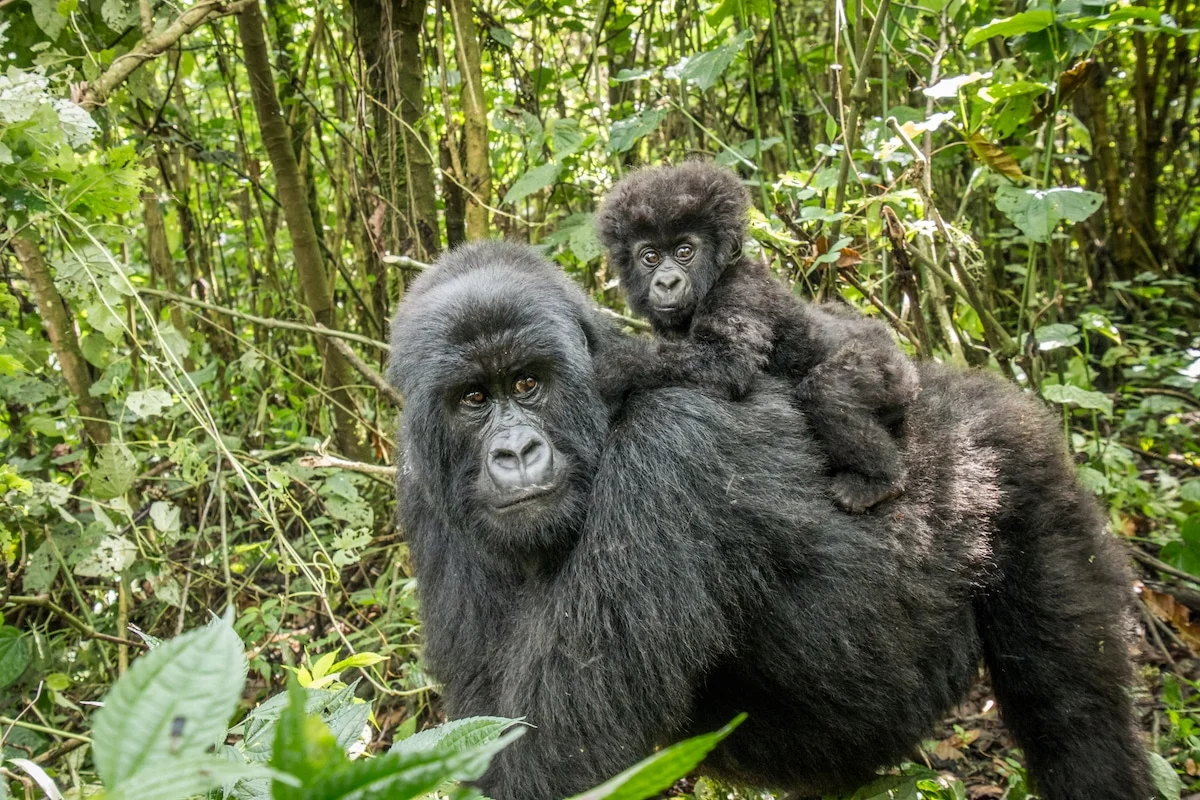
Beyond carbon sequestration, the DRC’s forests are a bastion of biodiversity. The country provides the primary habitat for several species of great apes, including the critically endangered mountain gorilla, the eastern lowland gorilla, and the bonobo. These species are already under immense pressure from poaching, habitat loss, and civil unrest. The introduction of industrial oil and gas infrastructure into their remaining strongholds threatens to fragment these habitats beyond repair, leading to a precipitous decline in population numbers.
Impact on Local Communities and Indigenous Rights
The human cost of the proposed drilling is equally significant. It is estimated that approximately 39 million people reside within the areas designated for auction. This population includes numerous forest-based and Indigenous communities whose survival is inextricably linked to the health of the tropical forests and river systems. These communities rely on the land for food, medicine, traditional livelihoods, and cultural identity.
Pascal Mirindi, a campaign coordinator for the organization Notre Terre Sans Pétrole (Our Land Without Oil), has been vocal about the potential displacement and disenfranchisement of these populations. Speaking on the scale of the threat, Mirindi emphasized the lack of logic in the government’s current trajectory. He pointed out that while the government publicly promotes the Kivu-Kinshasa ecological corridor—intended to be a bastion of sustainable development—it is simultaneously auctioning off the very land that forms the corridor’s foundation.
"We are reminding our leaders that the Congolese people are the primary sovereign," Mirindi stated. "We will not remain silent while certain people organize themselves to sell off our future."
The Earth Insight report confirms that 72 percent of the recently established Kivu-Kinshasa Green Corridor now intersects with oil blocks. This overlap jeopardizes the ecological integrity of the corridor and casts doubt on its viability as a legitimate climate solution or a model for sustainable development.
A Chronology of Fossil Fuel Pursuit
The current crisis is the result of an accelerating trend in the DRC’s resource management policy. While the country has long been known for its mineral wealth, particularly cobalt and copper, the push for oil and gas has intensified in recent years.
- Pre-2022: The DRC government maintained a rhetorical commitment to forest protection, positioning itself as a "solution country" for climate change due to its vast carbon sinks.
- July 2022: The government launched a controversial auction for 30 oil and gas blocks. This move was met with immediate international condemnation, as many blocks overlapped with protected areas, including Virunga National Park.
- 2023-2024: Despite protests, the government expanded its technical assessments and sought international investors, citing the need for domestic energy security and revenue to combat poverty.
- 2025: The current licensing round represents a drastic escalation, expanding the scope to 52 blocks and covering more than half the country’s landmass.
This timeline illustrates a pivot away from conservation-centric development toward an extractive model that critics argue follows an outdated and environmentally destructive economic blueprint.

Supporting Data: The Overlap of Extraction and Conservation
The Earth Insight report provides a data-driven look at the extent of the overlap between proposed oil concessions and sensitive areas. The figures reveal a systematic encroachment into regions previously deemed off-limits for industrial development:
- Protected Areas: Oil blocks overlap with 20.5 million acres of designated protected areas.
- Key Biodiversity Areas (KBAs): Approximately 21.3 million acres of KBAs are now under threat from extraction activities.
- Intact Tropical Forests: 165.1 million acres of pristine forest—areas with little to no human footprint—are included in the auction zones.
- Overall National Coverage: 53 percent of the DRC’s total land area is now covered by oil blocks.
These statistics underscore the reality that the proposed drilling is not confined to marginal lands but is targeted at the heart of the country’s most valuable natural assets.
Official Responses and Economic Justification
The DRC government, led by the Ministry of Hydrocarbons, has defended the auctions as a matter of national sovereignty and economic necessity. Officials argue that the DRC has the right to exploit its natural resources to fund infrastructure, education, and healthcare for its citizens, many of whom live in extreme poverty. They contend that Western nations, which built their economies on fossil fuels, are in no position to dictate the DRC’s energy policy.
However, environmental economists and civil society groups challenge this narrative. They point to the "resource curse" that has historically plagued the region, where mineral and oil wealth often leads to corruption, conflict, and environmental degradation rather than broad-based social progress. Furthermore, they argue that in a world rapidly transitioning to renewable energy, the DRC risks investing in "stranded assets"—infrastructure that will become economically unviable as global demand for oil and gas declines.
Anna Bebbington, a research manager at Earth Insight, warned that the impacts would be irreversible. "Oil and gas development in these fragile ecosystems would have devastating impacts on biodiversity, communities, land rights and the global fight against climate change," she noted.
Broader Implications for Global Climate Goals
The DRC’s actions have profound implications for international environmental agreements. As a signatory to the Paris Agreement and the Kunming-Montreal Global Biodiversity Framework, the DRC has committed to protecting 30 percent of its land and water by 2030. The current auction round appears to be in direct contradiction to these commitments.
The global community now faces a diplomatic challenge. The DRC’s move puts pressure on donor nations and international financial institutions to provide viable economic alternatives. Organizations like the Rainforest Foundation UK and the Coalition of Civil Society Organizations for the Monitoring of Reforms and Public Action (CORAP) are calling for a realignment of international financing. They suggest that instead of funding fossil fuel expansion, donor support should be directed toward sustainable forest management, community-led conservation, and renewable energy projects that benefit the Congolese people without destroying their heritage.
Analysis of Potential Outcomes
If the 2025 licensing round proceeds as planned, the environmental consequences will likely be multifaceted. Beyond the immediate loss of flora and fauna, the construction of roads into pristine forests typically facilitates secondary threats such as increased poaching, illegal logging, and unauthorized agricultural expansion. This "opening up" of the forest can lead to a cascade of ecological collapse.
Furthermore, the social implications are fraught with risk. The history of oil extraction in the Global South often includes the marginalization of Indigenous voices and the unequal distribution of profits. Without robust legal protections and transparent governance, the 39 million people living in these blocks face a future of uncertainty and potential displacement.
The report by Earth Insight and its partners concludes with a series of urgent recommendations. They call for the immediate cancellation of the 2025 licensing round and a permanent moratorium on hydrocarbon expansion in ecologically sensitive areas. They emphasize that the rights of local communities and Indigenous Peoples must be the focal point of any future development plans, ensuring that environmental governance is both transparent and inclusive.
As the international community watches, the Democratic Republic of the Congo stands at a defining moment. The choices made in the coming months will determine whether the Congo Basin remains a vital sanctuary for life and a bulwark against climate change, or whether it becomes the next frontier in a fading era of fossil fuel extraction.

