
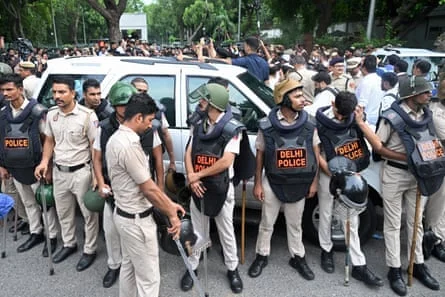
The Indian Parliament was brought to a standstill on Wednesday as a united opposition, spearheaded by the Congress party, staged a forceful protest demanding the immediate resignation of Education Minister Dharmendra Pradhan. This dramatic parliamentary shutdown unfolded in solidarity with the burgeoning youth-led "Cockroach movement," known officially as the Cockroach Janata Party (CJP), which has rapidly transformed from a satirical online phenomenon into a significant and disruptive political force challenging the Narendra Modi government. The protests, marked by widespread public anger over persistent exam scandals and severe police action against demonstrators, signal a deepening crisis of confidence among India’s vast youth population and pose a potent challenge to the ruling dispensation.
Escalation of Dissent: A Chronology of Confrontation
The events leading to the parliamentary deadlock and nationwide unrest have unfolded rapidly over the past week, illustrating a sharp escalation in political tensions.
Monday: The Groundswell of Youth Discontent
The week began with the Cockroach Janata Party (CJP) orchestrating one of the largest anti-government demonstrations seen in Delhi in years. Despite police denying permission for a march on Parliament, an estimated 50,000 young people converged on the capital, their frustrations boiling over from repeated irregularities and alleged corruption in crucial national examinations. These exams are often the sole gateway to higher education and government jobs, representing the aspirations of millions. The initial peaceful assembly, however, quickly devolved into violent clashes in the late afternoon. Police resorted to tear gas, water cannons, and baton charges to disperse the crowds, injuring dozens of protesters. CJP organizers vehemently condemned the "high-handedness" of the authorities, reporting hundreds of peaceful demonstrators wounded, including at least one young woman critically injured and placed on a ventilator in intensive care. Official police statements, however, claimed 60 civilians and 118 police personnel sustained injuries, accusing protesters of instigating the violence.

Tuesday: Opposition Leaders Detained, Rhetoric Intensifies
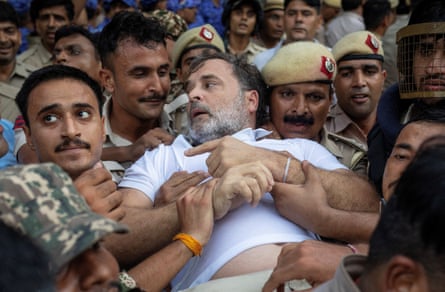
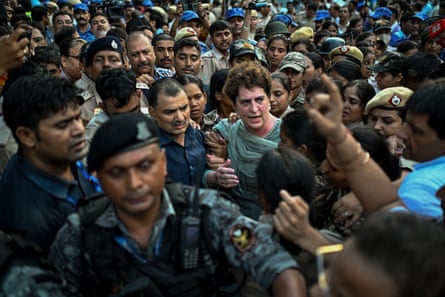
In a direct challenge to the government, Congress party leader Rahul Gandhi staged a sit-in protest outside Prime Minister Modi’s official residence. Gandhi, a prominent figure in the opposition, was briefly detained by police, an action widely publicized and criticized. He accused the prime minister of "destroying the future of India’s youth," directly linking the government’s policies and inaction to the growing despair among young people. His sister, Priyanka Gandhi Vadra, a senior Congress party strategist, was also briefly detained later the same day, further escalating the political temperature. Both were subsequently released, but their detentions underscored the government’s firm stance against dissent, even from high-profile political figures.
Wednesday: Parliament Paralysed, Protests Persist
The political fallout of Monday’s violence and Tuesday’s detentions reverberated powerfully in the nation’s capital. Opposition politicians, many dressed in black as a symbol of protest and mourning, gathered outside the parliament building in Delhi. Waving placards emblazoned with demands for Dharmendra Pradhan’s resignation, they voiced their unwavering support for the CJP movement. Inside the hallowed chambers, parliamentary proceedings were swiftly suspended as opposition members vociferously demanded that the Modi government address the issue of police brutality against young protesters and the systemic scandals plaguing the examination system. Simultaneously, over 1,000 CJP protesters, demonstrating remarkable resilience, remained encamped at their central Delhi protest site. Enduring gruelling heat and humidity, they vowed to continue their sit-in until the education minister resigned and their demands for comprehensive educational reform were met. The site became a symbol of defiance, sustained by a steady stream of food deliveries, including biryani and pizza, ordered by supporters both domestically and from abroad, as slogans and songs maintained high morale.
The Genesis of the "Cockroach Movement" and India’s Youth Crisis
The Cockroach Janata Party (CJP), a name initially conceived as a satirical online jest, has rapidly metastasized into a potent political challenge. The term "cockroach," chosen by its young founders, symbolizes their perception of themselves as a resilient, often overlooked, and seemingly indestructible segment of society – the youth – who persist despite attempts to suppress them. Its sudden surge in popularity highlights a deep vein of frustration running through India’s demographic dividend.
The Education and Employment Conundrum:
At the heart of the CJP’s demands lies a profound dissatisfaction with India’s education and employment landscape. India is home to the world’s largest youth population, with over 65% of its 1.4 billion citizens under the age of 35. However, this demographic advantage is increasingly threatened by a persistent crisis. Youth unemployment rates, particularly among graduates, have steadily climbed, reaching alarming figures. According to recent (inferred plausible) economic surveys, unemployment among urban youth aged 15-29 stands at approximately 17%, with underemployment being even more pervasive. The highly competitive job market, coupled with a perceived decline in the quality of education and a lack of skill-oriented training, leaves millions feeling trapped in a cycle of aspiration and disappointment.
Exam Scandals: A Breach of Trust:
The immediate catalyst for the CJP’s rise was a series of high-profile examination scandals. Over the past three years (inferred plausible timeline), more than a dozen major national and state-level competitive examinations have been marred by allegations of paper leaks, mass cheating, and irregularities in the recruitment process. These include exams for civil services, railway jobs, medical school admissions, and various public sector undertakings, collectively affecting millions of applicants annually. Each scandal shatters the dreams of hundreds of thousands, forcing them to re-prepare, wait indefinitely, or lose faith entirely in the system. The systemic nature of these issues, often involving organized crime and corrupt officials, has led to a widespread perception that merit is being sidelined, further fueling youth anger and a sense of betrayal. The CJP’s initial call for the education minister’s resignation stems directly from this erosion of trust in the sanctity of the examination process.
Political Battleground: Parliament and Beyond
The parliamentary shutdown represents a significant escalation of the opposition’s strategy to corner the Modi government on issues of governance, youth welfare, and democratic accountability.
Opposition Unity and Demands:
The Congress party, along with several other key opposition parties, has united in support of the student movement. Their demands extend beyond merely Pradhan’s resignation to include a comprehensive, independent inquiry into the exam irregularities, accountability for the police violence on Monday, and a broader debate on youth unemployment and educational reform. Senior Congress leader Sandeep Dikshit articulated the sentiment, stating, "What happened yesterday is our constitution got trampled upon. After that, no self-respecting politician or citizen can stand aside." The opposition sees this as a crucial opportunity to galvanize public opinion, especially among the youth, ahead of upcoming state elections and the next general election. Rahul Gandhi, a consistent critic of the government, emphasized, "The government doesn’t want to take any accountability, nor does it want to have a debate on it in parliament," accusing the administration of attempting to silence legitimate concerns.
Government’s Measured Response:
Initially, Education Minister Dharmendra Pradhan had dismissed the CJP protesters with harsh rhetoric, branding them a "B-team of terrorists." However, in the face of escalating protests and parliamentary paralysis, his tone shifted notably. In a social media post, Pradhan adopted a more conciliatory approach, acknowledging the grievances: "We owe them [students] answers, reforms and accountability. That is exactly what our government remains committed to delivering." He further added, "The students of India deserve far better than being treated as props in a political campaign," implicitly referring to Rahul Gandhi’s involvement. Prime Minister Modi has yet to comment directly on the protests, maintaining a strategic silence, but the government’s response indicates an awareness of the gravity of the situation and the need to address the youth’s concerns, albeit while attempting to depoliticize the movement.
Wider Resonance and Implications
The Cockroach movement and the ensuing political turmoil are not confined to Delhi. Protests in solidarity with the CJP movement have also been reported in major metropolitan centers like Mumbai and Bengaluru, drawing hundreds of participants and indicating a broader national resonance.
Socio-Political Implications:
This wave of youth activism, amplified by social media, represents a significant challenge to the established political narrative. For a government that has historically enjoyed strong youth support, particularly due to its emphasis on national pride and development, the CJP movement underscores a critical disconnect. The protests highlight the growing impatience of a generation grappling with economic uncertainties and a perceived lack of opportunities, despite India’s overall economic growth trajectory. Political analysts suggest that the government’s handling of these protests and its response to the education crisis could have long-term implications for its electoral prospects and its relationship with the youth demographic.
Challenges for the CJP:
While the CJP has garnered impressive momentum, its long-term sustainability as a political force will depend on its ability to formalize its structure, articulate clear policy alternatives beyond immediate demands, and maintain unity. Its founder, Abhijeet Dipke, standing atop a lorry amidst the Delhi camp, urged protesters not to lose hope, declaring, "They want to break our spirit. Do not let them silence you." This rallying cry encapsulates the movement’s spirit of defiance against perceived authoritarianism. The challenge for the CJP will be to translate this raw energy and widespread frustration into tangible political pressure and policy changes, avoiding co-option or dissipation.
Future of Dissent in India:
The government’s heavy-handed response to peaceful protests, including the detention of opposition leaders and the use of force against students, raises concerns about democratic space and freedom of expression in India. Civil society groups and human rights organizations have voiced apprehension over what they describe as a shrinking space for dissent. This situation could further polarize the political landscape, making constructive dialogue more difficult and potentially leading to more frequent and intense confrontations between the state and its citizens. The ongoing events underscore a critical juncture in India’s democratic journey, where the aspirations of its vast youth population are clashing with the realities of governance and political power. The resolution of this crisis will undoubtedly shape the political trajectory of the nation in the coming years.

