
President Donald Trump has signed two sweeping executive orders drastically reducing the size of the Bears Ears and Grand Staircase-Escalante national monuments in southern Utah, a move that excises millions of acres from federal protection and reignites a fierce national debate over land use, tribal sovereignty, and the limits of executive power. The orders, signed during a ceremony flanked by Utah’s top Republican officials, slash the two monuments by approximately 90 percent each. While the administration and Utah’s congressional delegation framed the decision as a victory for "the people" and a correction of federal overreach, a growing body of empirical data suggests that the move runs counter to the desires of a majority of Utah residents and voters across the Mountain West.
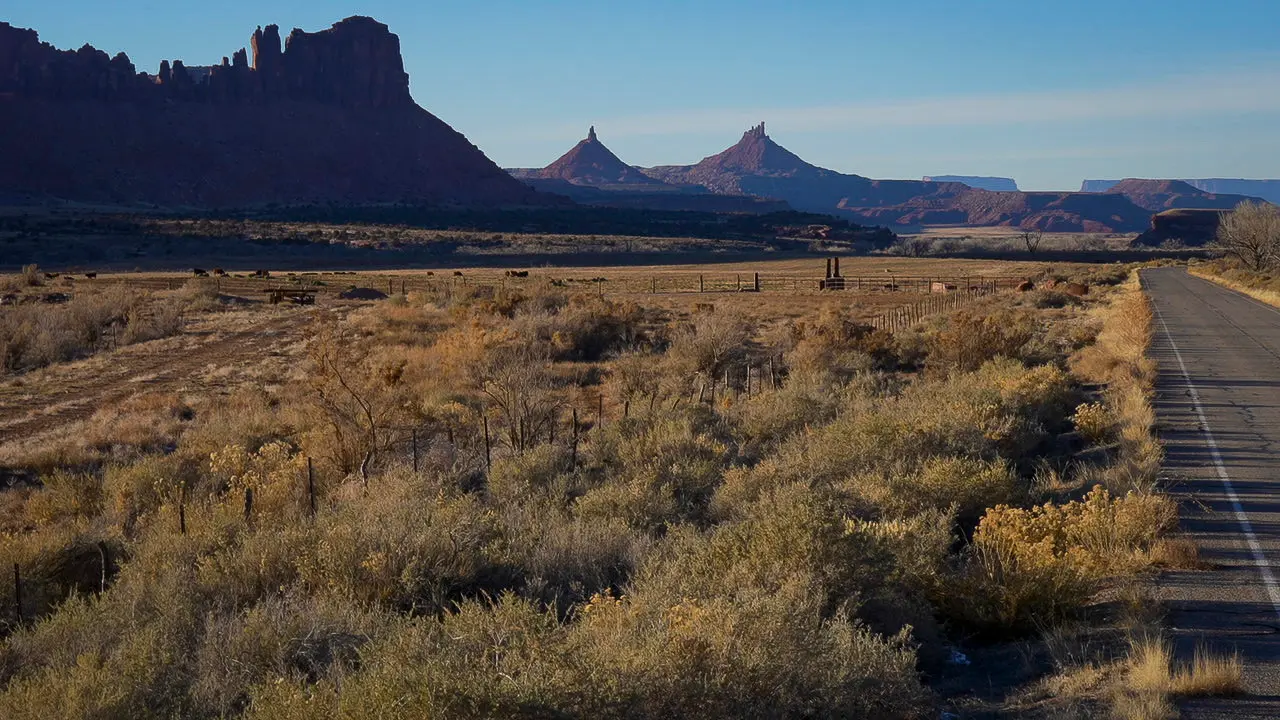
The reduction of these protected lands marks one of the most significant reversals of federal land conservation in American history. Bears Ears National Monument, which covered roughly 1.35 million acres, has been reduced to approximately 121,000 acres. Grand Staircase-Escalante, previously spanning nearly 1.9 million acres, has been whittled down to just over 181,500 acres. The administration’s justification for the cuts centers on the "public interest," specifically the potential for extracting critical minerals such as copper, nickel, and uranium, as well as returning "multiple-use" access to local stakeholders.
The Disconnect Between Political Rhetoric and Public Sentiment
The primary tension surrounding the executive orders lies in the stark contrast between the statements of elected officials and the findings of nonpartisan researchers. During the signing ceremony in the Oval Office, Representative Celeste Maloy, a Republican representing Utah’s 2nd District, asserted that the cuts were a response to "locals who are worried about losing multiple uses on these federal lands." She claimed the president was "listening to the people of Utah" by shrinking the boundaries. Trump echoed this sentiment, describing the original designations as "very unfair" to the state’s population.
However, data from Utah State University (USU) and other polling institutions tell a different story. In surveys conducted throughout 2024 and early 2025, researchers at USU found that 61 percent of Utahns supported or strongly supported the preservation of Bears Ears as a national monument. Only 19 percent expressed opposition. When asked specifically about reducing the size of the monument, 53 percent of respondents were opposed, while only 26 percent supported the idea.
"It is very contradictive of our findings," said Michaelann Nelson, a professor of environmental rhetoric at Utah State University’s Price campus. Nelson, who led the polling efforts, suggested that political leaders are "picking and choosing which Utahns they’re paying attention to."
The sentiment is not limited to urban centers like Salt Lake City. To ensure a representative sample, USU researchers engaged sociologists in rural parts of the state to avoid overrepresenting the more liberal Wasatch Front. Jessica Schad, a professor of sociology and director of USU’s Community and Natural Resources Institute, noted that attitudes have remained remarkably stable. "It seems like this issue has become really politicized, and our politicians aren’t taking into account what residents are preferring," Schad observed.
A Chronology of Conflict: From Clinton to Trump
The battle over Utah’s red rock country has been brewing for decades, characterized by a "ping-pong" effect of executive designations and revocations.
- 1906: The Antiquities Act is signed into law by Theodore Roosevelt, granting presidents the authority to protect "objects of historic or scientific interest" as national monuments.
- 1996: President Bill Clinton designates the Grand Staircase-Escalante National Monument, covering 1.7 million acres (later expanded to 1.9 million). The move is met with immediate hostility from Utah Republicans.
- 2016: President Barack Obama designates Bears Ears National Monument, encompassing 1.35 million acres of land sacred to five Native American tribes.
- 2017: During his first term, President Trump drastically reduces both monuments following a review by then-Interior Secretary Ryan Zinke.
- 2021: President Joe Biden restores the original boundaries of both monuments, citing the need to protect cultural resources and biodiversity.
- 2024-2025: Trump, returning to office, issues new executive orders to shrink the monuments once again, citing the need for domestic mineral production.
The legal crux of the argument used by Utah Governor Spencer Cox and Senator Mike Lee rests on a specific clause in the 1906 Antiquities Act, which directs presidents to limit monument designations to the "smallest area compatible with the proper care and management of the objects to be protected." Governor Cox argued that "multimillion-acre monuments that are bigger than the state of Delaware" do not fit that legal definition.
Economic Incentives and the Mineral Rush
While the administration has framed the cuts as an issue of "fairness" and "access," the underlying economic drivers are tied to the soil itself. The region is home to significant deposits of minerals that the U.S. government has classified as "critical" for national security and the transition to renewable energy technologies.
Uranium, in particular, has been a major factor in the lobbying efforts surrounding Bears Ears. Internal records from 2017 showed that energy companies, specifically those involved in uranium milling, had lobbied the administration to alter monument boundaries to facilitate easier access to mining claims. The latest executive orders explicitly cite the need to secure domestic supplies of copper, nickel, and uranium as a primary justification for the reduction.
Opponents of the cuts argue that the economic benefits of mining are outweighed by the burgeoning "outdoor economy." Southern Utah has seen a massive influx of tourists drawn to the pristine landscapes of the monuments. However, state officials argue this popularity is a double-edged sword. A statement from the Utah Senate noted that the surge in visitors has put an unsustainable strain on local law enforcement and land management agencies, leading to "degradation" of the very sites the monuments were intended to protect.
Fact-Checking Claims on Land Use and Recreation
One of the more contentious aspects of the debate involves the definition of "multiple use." During the signing ceremony, President Trump claimed that monument designations prevented residents from enjoying traditional outdoor activities. "You can’t do anything. You can’t go hunting. You can’t go fishing… You can virtually not even walk on it," Trump stated.
Fact-based analysis of the management plans for both Bears Ears and Grand Staircase-Escalante contradicts these claims. Unlike National Parks, which have more restrictive rules, National Monuments managed by the Bureau of Land Management (BLM) generally allow for hunting, fishing, and the use of off-road vehicles on designated trails. Grazing rights for local ranchers are also typically maintained under the original monument proclamations. The primary activities prohibited by the designations are new mining claims and large-scale industrial development.
The Impact on Tribal Sovereignty
Perhaps the most significant casualty of the new executive orders is the dissolution of the Bears Ears Intertribal Commission. The monument was unique in that it was the first created at the specific request of a coalition of tribal nations—the Hopi Tribe, Navajo Nation, Ute Indian Tribe, Ute Mountain Ute Tribe, and the Pueblo of Zuni.
The commission provided a formal mechanism for federal agencies to consult with tribal leaders on the management of ancestral lands, ensuring the protection of thousands of archaeological sites and traditional gathering grounds. By shrinking the monument and disbanding this body, the administration has effectively ended a landmark experiment in collaborative federal-tribal land management.
Polling suggests this move is also out of step with the public. A December 2024 survey by New Bridge Strategies found that nearly 90 percent of Utahns support Native American tribes having a strong role in managing ancestral lands. Furthermore, 81 percent of respondents believed the administration should keep existing agreements with tribes in place for the management of Bears Ears.
Broader Implications for the Mountain West
The decision to shrink the Utah monuments has sent ripples across the Mountain West, where public lands are a central component of regional identity and the economy. The annual "Conservation in the West" poll conducted by Colorado College found that 91 percent of voters in eight Western states (AZ, CO, ID, MT, NV, NM, UT, WY) wanted existing national monuments kept in place.
This support transcends party lines. According to Lori Weigel, a principal with the Republican research firm New Bridge Strategies, 87 percent of Republicans and 87 percent of MAGA-identifying voters in the West support maintaining monument designations. "What we have seen very consistently in the data is that people want additional protections for these public lands," Weigel said.
The survey also indicated that Westerners increasingly prioritize conservation, recreation, and renewable energy over fossil fuel development on public lands.
Future Outlook: Legal Challenges and Policy Shifts
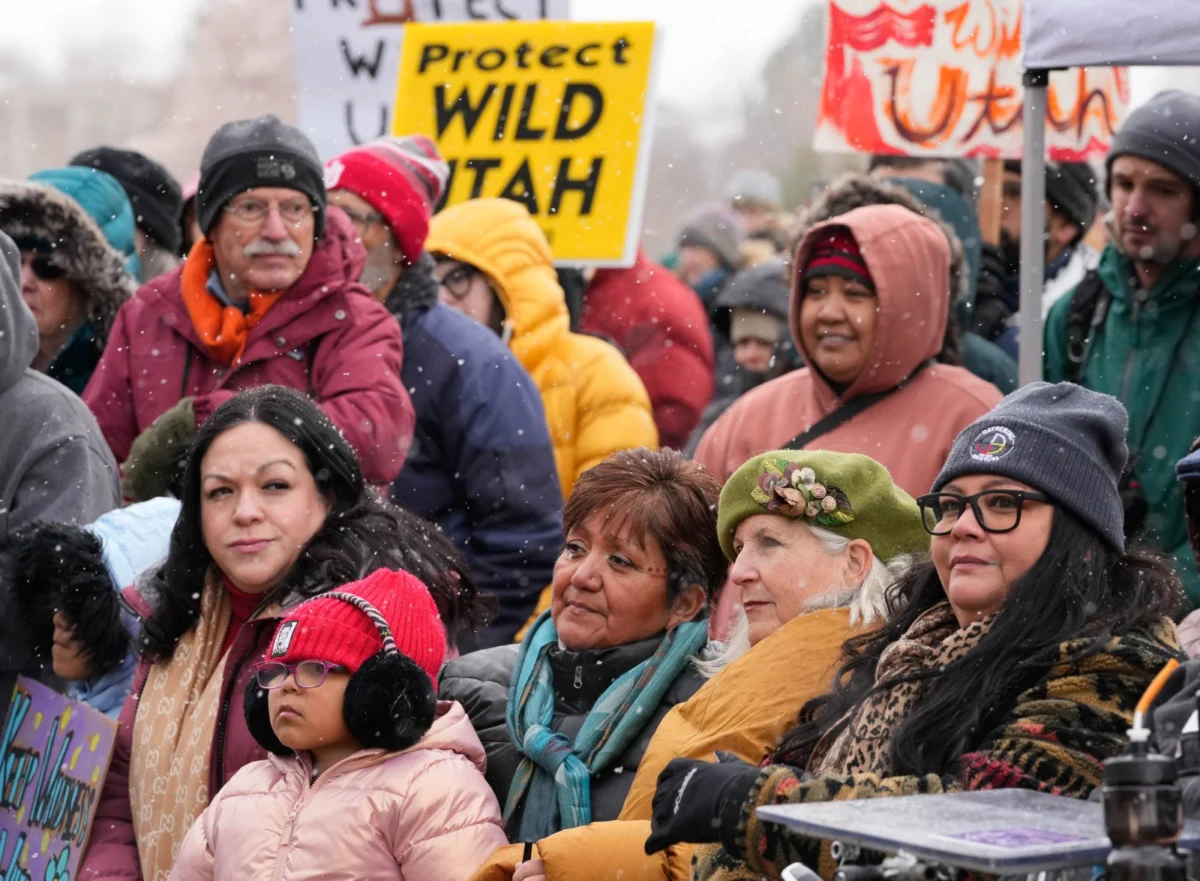
The reduction of Bears Ears and Grand Staircase-Escalante is almost certain to face immediate legal challenges. Organizations like the Southern Utah Wilderness Alliance (SUWA) have already begun organizing protests, including a recent gathering of hundreds of activists outside the Governor’s Mansion in Salt Lake City.
Legal experts suggest that the central question will once again be whether the Antiquities Act gives a president the power to reduce or abolish a monument created by a predecessor, or if that power resides solely with Congress. While the Act explicitly grants the power to create monuments, it is silent on the power to diminish them.
As the legal battle unfolds, the landscape of southern Utah remains in a state of uncertainty. For the tribes who consider the land sacred, the conservationists who view it as a biological necessity, and the industries that see it as a source of raw materials, the fight over Bears Ears and Grand Staircase-Escalante is far from over. The data suggests that while the political leadership in Utah and Washington may be moving in one direction, the "public interest" they claim to represent may be heading in the opposite one.

