
Washington – The U.S. House of Representatives on Wednesday adopted a Republican-backed budget blueprint, a significant legislative maneuver poised to allocate up to $95 billion in federal funding towards a contentious ongoing conflict in Iran, crucial aid for American farmers, and key provisions of President Trump’s "SAVE America Act," a comprehensive voting regulations bill. The resolution, a critical first step in the party-line reconciliation process, passed with a narrow margin of 216 to 214 votes, underscoring the deep partisan divisions permeating the current legislative session. The opposition included all Democrats, two dissenting Republicans, and one independent member who caucuses with the Republican majority.
This vote represents the latest, and perhaps most aggressive, attempt by the Republican-controlled House to advance President Trump’s core policy objectives in a legislative landscape increasingly defined by gridlock and the breakdown of traditional bipartisan appropriations processes. Democrats have vocalized vehement opposition to the continued prosecution of the war in Iran, citing concerns over its strategic efficacy, human cost, and financial burden, as well as the stringent new voting requirements championed by the president, which they argue could disenfranchise eligible voters.
A Strategic Legislative Gamble: The Reconciliation Pathway
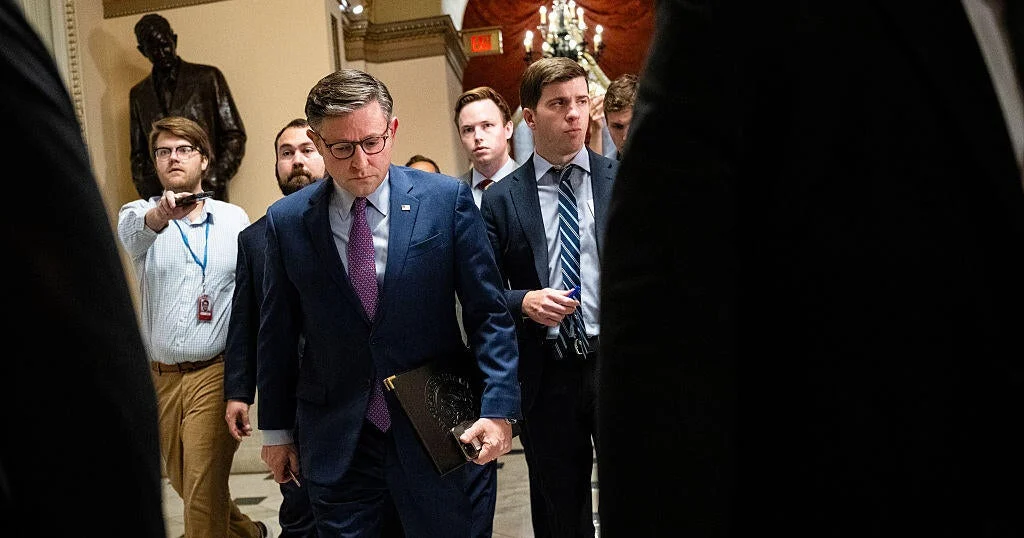
House Speaker Mike Johnson, a Republican from Louisiana, framed the budget resolution as the GOP’s "best shot" to integrate "as much of the SAVE America Act into law as possible." The choice of the budget reconciliation route is a deliberate strategic decision, reflecting the Republican Party’s intent to bypass anticipated Democratic filibusters in the Senate. Unlike most legislation, reconciliation bills can pass the Senate with a simple majority (51 votes), circumventing the traditional 60-vote threshold often required for major policy initiatives. This procedural advantage has historically been employed for significant fiscal policy changes, such as tax cuts and immigration enforcement measures, allowing a majority party to enact its agenda without needing broad bipartisan consensus.
The process initiated by Wednesday’s vote is multi-staged. The House’s adoption of the budget resolution is merely the first procedural hurdle. The Senate must also approve an identical or similar budget resolution. Once both chambers agree on the overall fiscal framework, the resolution then provides "reconciliation instructions" to specific committees, directing them to draft legislation that aligns with the allocated spending limits. These individual committee recommendations are then consolidated into a single omnibus reconciliation package, which must subsequently be passed by simple majorities in both the House and the Senate. This complex legislative dance is fraught with potential pitfalls, particularly in the Senate, where procedural rules governing reconciliation can be stringent.
Detailed Funding Allocations and Policy Directives
The adopted budget resolution meticulously delineates the spending caps for various House committees, signaling the administration’s priorities. The House Armed Services Committee is instructed to draft legislation increasing spending by up to $60 billion, a substantial sum primarily earmarked for the ongoing military operations and strategic objectives related to the conflict in Iran. Concurrently, the House Intelligence Committee is tasked with crafting measures that would boost spending by an additional $13 billion, reflecting an emphasis on intelligence gathering, analysis, and covert operations in support of the war effort.
Beyond national security, the resolution also addresses domestic priorities. The House Agriculture Committee received a $12 billion limit, designated for farmer aid, which could encompass a range of programs from commodity support and crop insurance to conservation efforts and rural development. This allocation appears designed to shore up support among agricultural constituencies, a key Republican demographic. Finally, the House Administration Committee was allocated a $10 billion cap, a significant portion of which is expected to fund the implementation of the SAVE America Act’s voting regulations.
The SAVE America Act: A Controversial Overhaul of Voting Regulations
The SAVE America Act, a signature initiative of President Trump, proposes a sweeping overhaul of federal voting procedures, drawing considerable debate and opposition. Key provisions include requiring proof of citizenship for voter registration and mandating a photo identification to cast a ballot. Proponents argue these measures are essential to safeguard election integrity and prevent voter fraud, asserting that they will instill greater public confidence in election outcomes. They point to the need for standardized, verifiable identification processes to ensure that only eligible citizens participate in elections.
Conversely, opponents, primarily Democrats and civil rights advocates, contend that such stringent requirements disproportionately impact marginalized communities, elderly voters, students, and low-income individuals who may face barriers in obtaining the necessary documentation. They argue that these measures amount to voter suppression, creating unnecessary hurdles to exercise the fundamental right to vote. The debate over voter ID laws and proof of citizenship requirements has been a recurring flashpoint in American politics, with various states implementing similar laws that have often faced legal challenges based on their potential discriminatory effects. The inclusion of these provisions in a reconciliation bill, which typically deals with budgetary matters, adds another layer of controversy, raising questions about the appropriateness of the legislative vehicle.
The Iran Conflict: An Escalating and Unsanctioned Engagement
The allocation of up to $73 billion ($60B from Armed Services + $13B from Intelligence) for the "Iran war" highlights a deeply entrenched and increasingly controversial military engagement. While the specific genesis and detailed chronology of this conflict are subject to ongoing political debate, the article indicates it is an "ongoing" war that continues "without congressional authorization." This suggests a prolonged military involvement initiated under executive authority, possibly through a presidential declaration or a broad interpretation of existing authorizations for military force, but lacking a specific, contemporary congressional mandate.
The lack of explicit congressional authorization has been a persistent point of contention, with critics arguing it undermines constitutional checks and balances and risks entangling the U.S. in protracted conflicts without adequate public and legislative debate. The humanitarian and geopolitical implications of such a conflict are profound, potentially including regional destabilization, a refugee crisis, and significant economic repercussions both domestically and internationally. For the United States, the costs extend beyond financial outlays to include military casualties, diplomatic strain, and the diversion of resources from other pressing global challenges. The decision to funnel substantial new funding into this unsanctioned war via reconciliation is likely to intensify calls for greater transparency, accountability, and a reassertion of congressional war powers.
Challenges in the Upper Chamber and Internal GOP Dissent
Despite the House’s success, the budget blueprint faces formidable obstacles in the Senate. The SAVE America Act, in its current form, has languished in the upper chamber for months, indicating a fundamental lack of broad support, even for a simple majority. Furthermore, the voting regulation provisions face a critical procedural hurdle known as the "Byrd Rule." This rule, named after former Senator Robert Byrd, prohibits the inclusion of "extraneous" provisions in reconciliation bills – typically those that do not primarily have a budgetary effect. Since the voting requirements are fundamentally policy-driven rather than fiscal, there is significant doubt whether they will survive a challenge under the Byrd Rule, which could lead to their removal from the final package.
Beyond procedural challenges, the funding for the Iran war could also encounter significant pushback from within the Republican ranks. The article notes that a "handful of GOP senators have voted in recent months to rein in Mr. Trump on Iran," indicating a faction of Republicans who are wary of the president’s foreign policy approach and the escalating costs of the conflict. These senators may express concerns about the lack of a clear strategy, the long-term commitment, or the constitutional implications of continuing an unauthorized war, potentially jeopardizing the simple majority needed for the reconciliation package.
Adding to the internal dissent, some House conservatives have expressed frustration over the budget plan’s lack of provisions to offset the substantial spending increases. Representative Warren Davidson, an Ohio Republican, voiced this concern ahead of the vote, stating, "I think the problem is there’s no plan to pay for it. A no-offset plan is dead on arrival." This sentiment reflects a persistent tension within the Republican Party between its fiscal conservative wing, which advocates for budget austerity and deficit reduction, and those who prioritize specific spending initiatives or presidential agendas, even if they add to the national debt.
Presidential Influence and Administration Lobbying
The passage of the resolution in the House was not achieved without significant pressure and lobbying from the executive branch. Former President Trump himself publicly weighed in on Monday, utilizing his Truth Social platform to call on House Republicans to "unify behind the budget resolution and ‘fight’ for the SAVE America Act." This direct appeal from the former president underscores his continued influence within the Republican Party and his determination to see his legislative priorities enacted.
Further demonstrating the administration’s commitment, Vice President JD Vance traveled to Capitol Hill last week to rally House members behind the plan, engaging in discussions and persuasive efforts to secure the necessary votes. On Tuesday morning, Office of Management and Budget (OMB) Director Russ Vought met with House Republicans, providing detailed briefings and addressing concerns as the administration worked tirelessly to guide the resolution across the finish line. These concerted efforts highlight the critical role of presidential and administration support in marshaling votes for contentious legislation, particularly when internal party divisions threaten its passage.
Broader Implications and Future Outlook
The adoption of this budget blueprint carries profound implications for American domestic and foreign policy. Should it successfully navigate the complexities of the Senate and reconciliation, it would significantly reshape federal spending, fundamentally alter voting access nationwide, and deepen U.S. involvement in the Iran conflict.
The fiscal implications are substantial. Adding $95 billion in un-offset spending would contribute to the national debt, a point of concern for fiscal conservatives and economists alike, potentially impacting future generations and government programs. The debate over whether to pay for new initiatives or rely on increased borrowing remains a central theme in congressional budget battles.
For democratic processes, the SAVE America Act’s provisions, if enacted, could lead to a wave of legal challenges and protests, as civil rights organizations and voting rights advocates mobilize against what they perceive as restrictive measures. The implementation of such laws could alter the electoral landscape, potentially affecting voter turnout and the demographics of the electorate in future elections.
Globally, continued funding for the Iran war signals a sustained and potentially escalating U.S. military commitment in the Middle East. This could have far-reaching consequences for regional stability, international relations, and global energy markets. It also reignites the perennial debate over presidential war powers versus congressional authority, a constitutional question that has frequently tested the balance of power in American governance.
The narrow margin of victory in the House and the anticipated hurdles in the Senate underscore the deeply polarized political environment. The reliance on budget reconciliation, while procedurally efficient for a majority party, often bypasses the consensus-building necessary for durable legislation and can further entrench partisan divisions. As the legislative journey of this ambitious budget blueprint continues, it will serve as a critical test of Republican unity, presidential influence, and the efficacy of a deeply divided Congress in shaping the nation’s future. The coming months will reveal whether the House’s "best shot" can withstand the scrutiny and opposition it is sure to face in the upper chamber and beyond.

