
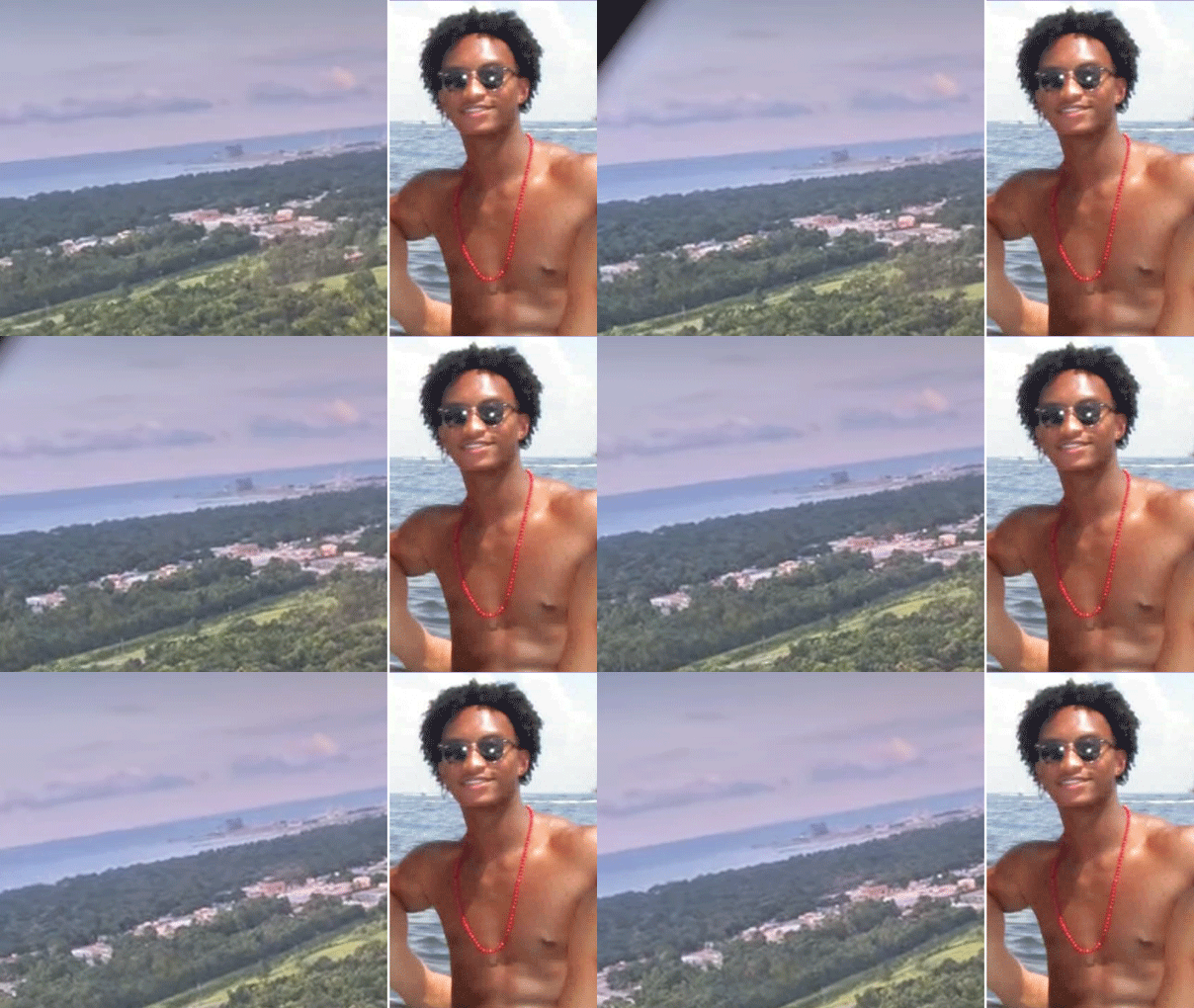
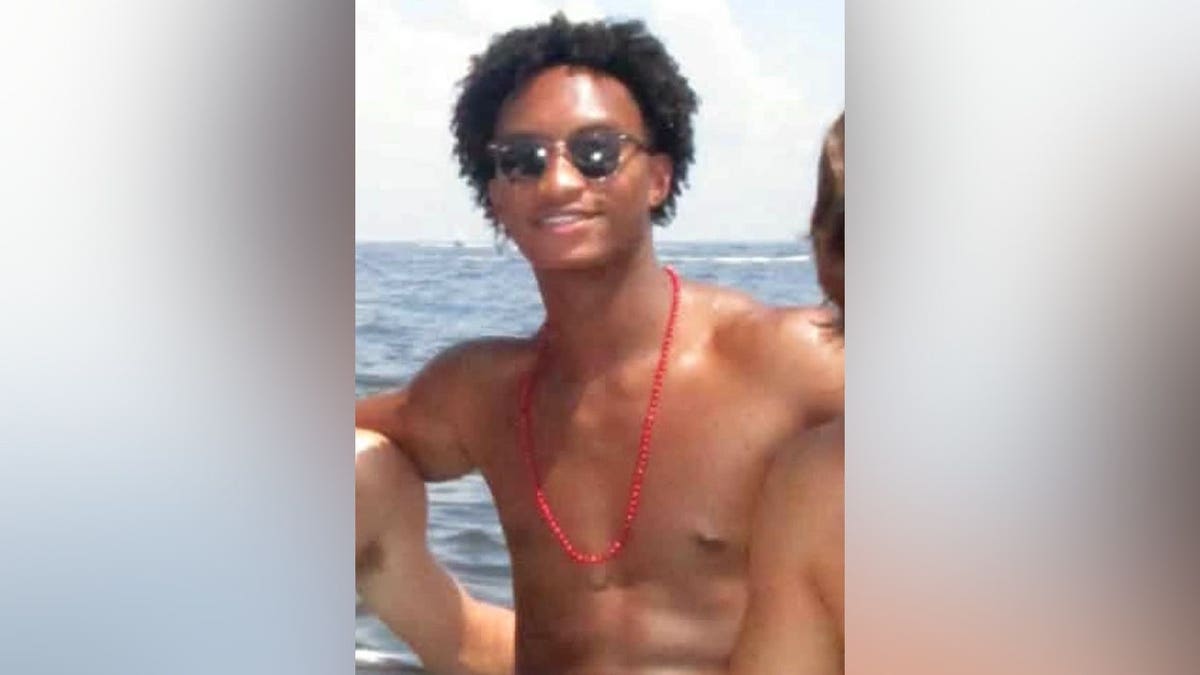
A tragic incident on Mississippi’s Gulf Coast has left an 18-year-old dead and a community grappling with unanswered questions, as a leader from the United Cajun Navy, involved in the search, highlighted the treacherous "washing machine" currents notorious in the area where Nolan Wells’ remains were discovered. The water conditions on the fateful day of his disappearance, July 4, were reportedly far from ideal, adding a layer of complexity to the unfolding investigation.
Nolan Wells, an active and athletic young man, vanished after a boat excursion with friends to Horn Island, a remote barrier island off the Mississippi coast. His remains were located on the island’s northwestern tip two days later, on July 6, by a National Park Service ranger after an extensive search operation. Authorities, including Jackson County Sheriff John Ledbetter, initially suggested Wells may have chosen to remain on the island when his friends returned to the mainland that afternoon. It was only later that night, when his mother was informed by one of Wells’ friends, that the alarm was raised, prompting a formal report to authorities.
A Perilous Stretch of Water: The "Washing Machine" Currents
The stretch of water separating Horn Island from its neighboring Ship Island is colloquially known among locals as the "washing machine." This chilling moniker is attributed to the area’s deadly and unpredictable rip currents, a phenomenon that has tragically claimed lives in the past. Brian Trascher, Vice President of the United Cajun Navy, a volunteer search and rescue organization, shed light on this perilous reputation in an interview, stating, "Yeah, there is some kind of nickname for it, and it’s because they’ve had a lot of drownings in that area and on that island. And to the west, there’s Ship Island, just another few miles to the West. And in between those two islands, there’s a strong divergent occurrence. And that area is called the washing machine by locals."
Rip currents, often misunderstood, are powerful, narrow channels of fast-moving water flowing away from the shore. They can be incredibly dangerous, sweeping even strong swimmers out to sea quickly. According to the United States Lifesaving Association (USLA), rip currents account for over 80% of rescues performed by surf lifeguards and are the cause of more than 100 drownings annually in the U.S. These currents typically form in breaks in sandbars or near structures like jetties and piers, where water piled up on the shore by waves finds an escape route back to deeper water. The area between Horn and Ship Island, with its specific geographical features and dynamic tidal flows, creates an environment particularly susceptible to these dangerous conditions.
Trascher further elaborated on the specific conditions on July 4, based on conversations with individuals present on Horn Island that day. He noted that the rip current was "extremely strong," and highlighted another dangerous characteristic of the waters off the island’s northwest tip: the sudden transition from shallow to deep water within just a few steps. This abrupt change can disorient swimmers and make it difficult to regain footing or orient oneself, especially when combined with a powerful current.
The Disappearance and Discovery: A Chronology of Events
The timeline of Nolan Wells’ last known hours and the subsequent search has been a central point of the investigation and a source of concern for those seeking clarity.
- July 4, Afternoon: Nolan Wells embarks on a boat trip to Horn Island with friends. Horn Island, part of the Gulf Islands National Seashore, is a pristine, undeveloped barrier island accessible primarily by private boat or ferry, known for its natural beauty and remote beaches. Around 4:00 PM to 4:30 PM, Wells is last seen by his friends.
- July 4, Late Afternoon/Evening: Wells’ friends depart Horn Island and return to the mainland, reportedly believing Wells had chosen to stay on the island.
- July 4, Late Night: Wells’ mother receives a call from one of his friends, informing her that Nolan is missing. She promptly reports his disappearance to authorities, initiating an urgent search.
- July 5: Search and rescue operations commence, involving multiple agencies including the Jackson County Sheriff’s Department, the U.S. Coast Guard, and later, volunteer organizations like the United Cajun Navy. Search efforts focus on Horn Island and the surrounding waters, battling challenging conditions.
- July 6: A National Park Service ranger discovers Nolan Wells’ remains on the northwestern tip of Horn Island, the same area known for its treacherous currents. The discovery brings an end to the active search but marks the beginning of a deeper investigation into the circumstances of his death.
Despite Wells being known as a capable swimmer who swam regularly, Trascher emphasized that even experienced individuals can be overcome by a powerful rip current, particularly if factors like panic, prolonged sun exposure, or alcohol consumption are involved. These elements can rapidly diminish a swimmer’s endurance and ability to fight against strong natural forces.
The Unanswered Questions: A "Gaping Hole" in the Narrative
While foul play has been largely dismissed by authorities, Trascher, echoing the sentiments of many, pointed to a significant gap in the timeline of events that continues to trouble investigators and the public. "I’ve heard virtually no explanation, no eyewitness accounts. Nobody seemed to see him after that… there don’t seem to be any photographs or videos of him after that time. So what happened? It wasn’t dark yet. There was still a lot of people on the island… why did he just vanish and show up dead two days later?" Trascher questioned. "That is a question that needs to be asked. And I’m not suggesting that means that there was foul play involved. I’m just saying that there is a gaping hole in the story that needs to be filled."
This "gaping hole" refers to the period between approximately 4:00 PM on July 4, when Wells was last seen, and his discovery two days later. The island, while remote, is a popular destination, especially on holidays like the Fourth of July, meaning there would have likely been other visitors present. The absence of any further sightings, photographs, or confirmed interactions during this window raises critical questions about what transpired and how an 18-year-old could disappear so completely.
Forensic Investigations and Conflicting Interpretations
The pursuit of answers has led to both official and independent forensic examinations, yielding findings that have, in some respects, added to the complexity rather than providing definitive closure.
Attorney Ben Crump, representing Wells’ family, revealed during a news conference that an area of "red discoloration" was observed on Wells’ head during an independent autopsy. This examination was conducted by Dr. Roger Mitchell, a former chief medical examiner. While Dr. Mitchell’s report noted the discoloration, he was unable to definitively conclude a cause or manner of death, pending further investigation. Crucially, Mitchell’s report indicated that he "couldn’t rule out the possibility that non-accidental factors contributed to or caused the death" without additional information. This cautious wording underscores the ambiguity surrounding the injury and the overall circumstances.
Conversely, forensic pathologist Dr. Michael Baden, when asked for his expert opinion on the case, suggested that the head injury described might not necessarily point to foul play. "So that could be from bumping into something in the water. There’s a lot of debris in the water, for example. It depends how deep it is, but it’s describing a really superficial impact that could have happened before death or after death," Baden explained. He concluded, "What he’s describing is a minor injury that could be… totally innocent."
The discrepancy in these interpretations highlights the challenges inherent in forensic pathology, especially when dealing with bodies recovered from water, where post-mortem changes and environmental factors can complicate findings. An official autopsy into Wells’ death by state authorities is still pending, and its findings will be crucial in potentially reconciling these perspectives or providing a clearer picture of the events leading to his death. The distinction between "cause of death" (the injury or disease that produced the physiological disruption leading to death) and "manner of death" (the circumstances under which the death occurred, typically natural, accidental, suicide, or homicide) is vital here. Dr. Mitchell’s inability to definitively assign a manner of death without ruling out "non-accidental factors" is what fuels the ongoing questions.
Community Response and Calls for Clarity
The tragic death of Nolan Wells has deeply affected the community of Ocean Springs, Mississippi, where he was from. Wells was a student and a wide receiver for Southwest Mississippi Community College, remembered by friends and family as a vibrant and promising young man. His parents, Elmore and Christine Wonsley, along with attorney Ben Crump, have been vocal in their pursuit of a comprehensive and transparent investigation. A memorial service, attended by community leaders and activists like Rev. Al Sharpton, underscored the collective grief and the shared desire for answers.
Local officials have largely rallied behind Sheriff John Ledbetter, defending the integrity of the initial investigation despite criticisms from some quarters regarding the handling of the case. The complexities of conducting a search and investigation on a remote, uninhabited island like Horn Island, which lacks infrastructure and is subject to dynamic marine environments, present unique challenges for law enforcement agencies. These challenges include logistical difficulties in deploying personnel and equipment, the rapid alteration of evidence by natural forces (currents, tides, wildlife), and the absence of surveillance or easy access for witnesses.

Broader Implications: Navigating Coastal Dangers and Investigation Challenges
The death of Nolan Wells serves as a stark reminder of the inherent dangers associated with recreational activities in coastal waters, particularly in areas known for strong currents. It underscores the critical importance of water safety awareness, even for experienced swimmers. Education campaigns often advise swimmers caught in a rip current to remain calm, conserve energy, and swim parallel to the shore until they are out of the current, rather than trying to swim directly against it. The incident also highlights the need for clear communication regarding hazardous marine conditions, especially in popular but potentially dangerous recreational spots.
Furthermore, the case brings to the forefront the challenges faced by both families and law enforcement in investigations where definitive answers are elusive. The "gaping hole" in the timeline, coupled with the nuanced forensic findings, illustrates how complex it can be to reconstruct events without direct eyewitness accounts or clear physical evidence. The involvement of independent experts and high-profile attorneys often arises in such situations, reflecting a family’s deep-seated need for thoroughness and transparency, particularly when official pronouncements do not fully address their concerns.
As the community awaits the official autopsy results and further details from the ongoing investigation, the story of Nolan Wells remains a poignant example of the unpredictable power of nature and the enduring quest for truth when tragedy strikes on the open waters of the Mississippi Gulf Coast. The hope is that a complete understanding of the circumstances will not only bring closure to his grieving family but also enhance safety measures for future visitors to these beautiful, yet sometimes treacherous, barrier islands.

