
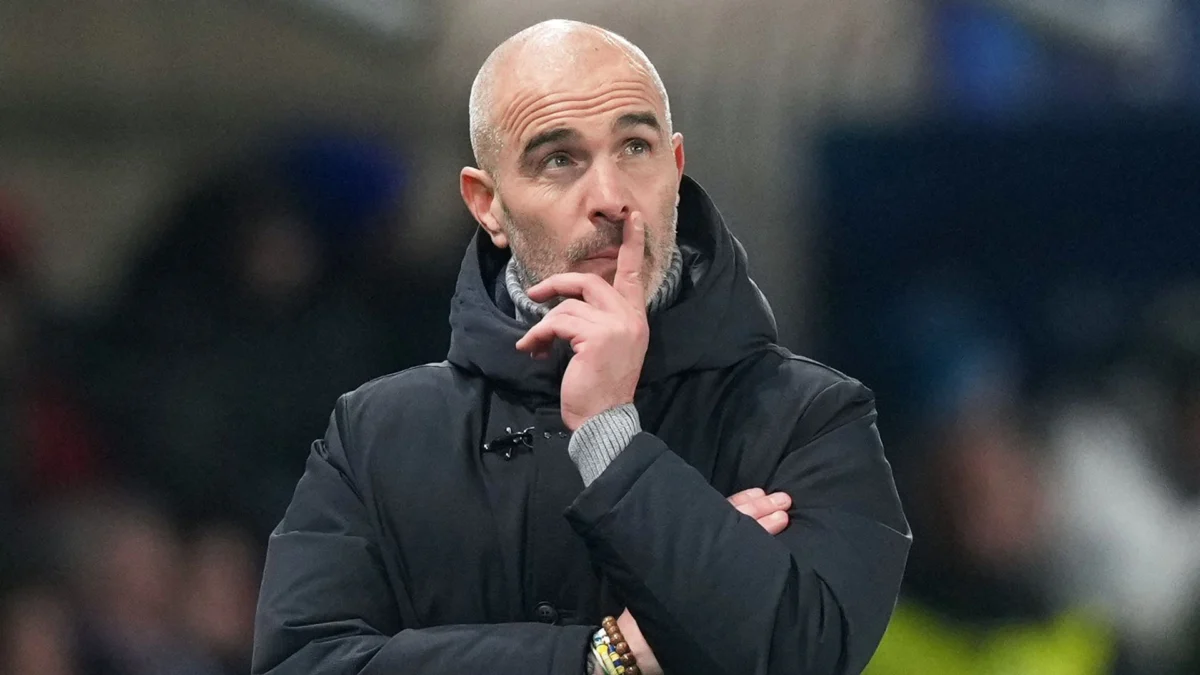
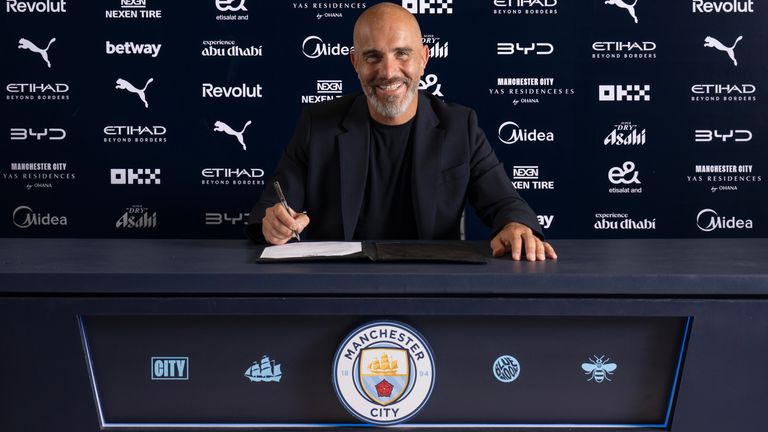
The appointment of Enzo Maresca as the successor to Pep Guardiola at Manchester City marks the beginning of a transformative era for the reigning champions of English football. In his inaugural press conference since taking the helm at the Etihad Stadium, the 46-year-old Italian tactician moved quickly to distance himself from the notion that he would merely serve as a continuation of his predecessor’s methodology. While acknowledging the profound influence Guardiola has had on his career and the club’s identity, Maresca insisted that he is not a "copy and paste" coach, promising instead to implement a vision that is distinctly his own.
The task facing Maresca is widely regarded as one of the most daunting in modern sports. He follows a manager whose decade-long tenure redefined the parameters of success in the Premier League. Guardiola’s departure concludes a record-breaking spell that yielded six Premier League titles—including an unprecedented four-year consecutive run—and the club’s long-awaited first Champions League trophy as part of a historic Treble in 2023. Despite the shadow cast by such a legacy, Maresca appeared composed and resolute, emphasizing that while he shares a similar footballing philosophy with Guardiola, his daily approach and tactical nuances remain unique.
A Strategic Return to the Etihad
This appointment represents Maresca’s third stint at Manchester City, a factor that likely influenced the board’s decision to entrust him with the post-Guardiola transition. His history with the club began in 2020 when he took charge of the Elite Development Squad (EDS), leading them to a Premier League 2 title. After a brief and challenging spell at Parma, he returned to the Etihad in 2022 to serve as Guardiola’s assistant manager. During that 2022-23 season, he was a key architect behind the scenes as City secured the Treble, gaining firsthand experience of the internal mechanics that drive the world’s most successful club.
Maresca’s subsequent departures to Leicester City and Chelsea further refined his managerial credentials. At Leicester, he demonstrated his ability to handle the pressure of expectation, guiding the Foxes to the Championship title and an immediate return to the top flight. His tenure at Chelsea, though brief, showcased his capacity to manage high-profile squads and implement a structured, possession-based system in a volatile environment. These experiences, he argues, have prepared him for the scrutiny that comes with the Manchester City job.
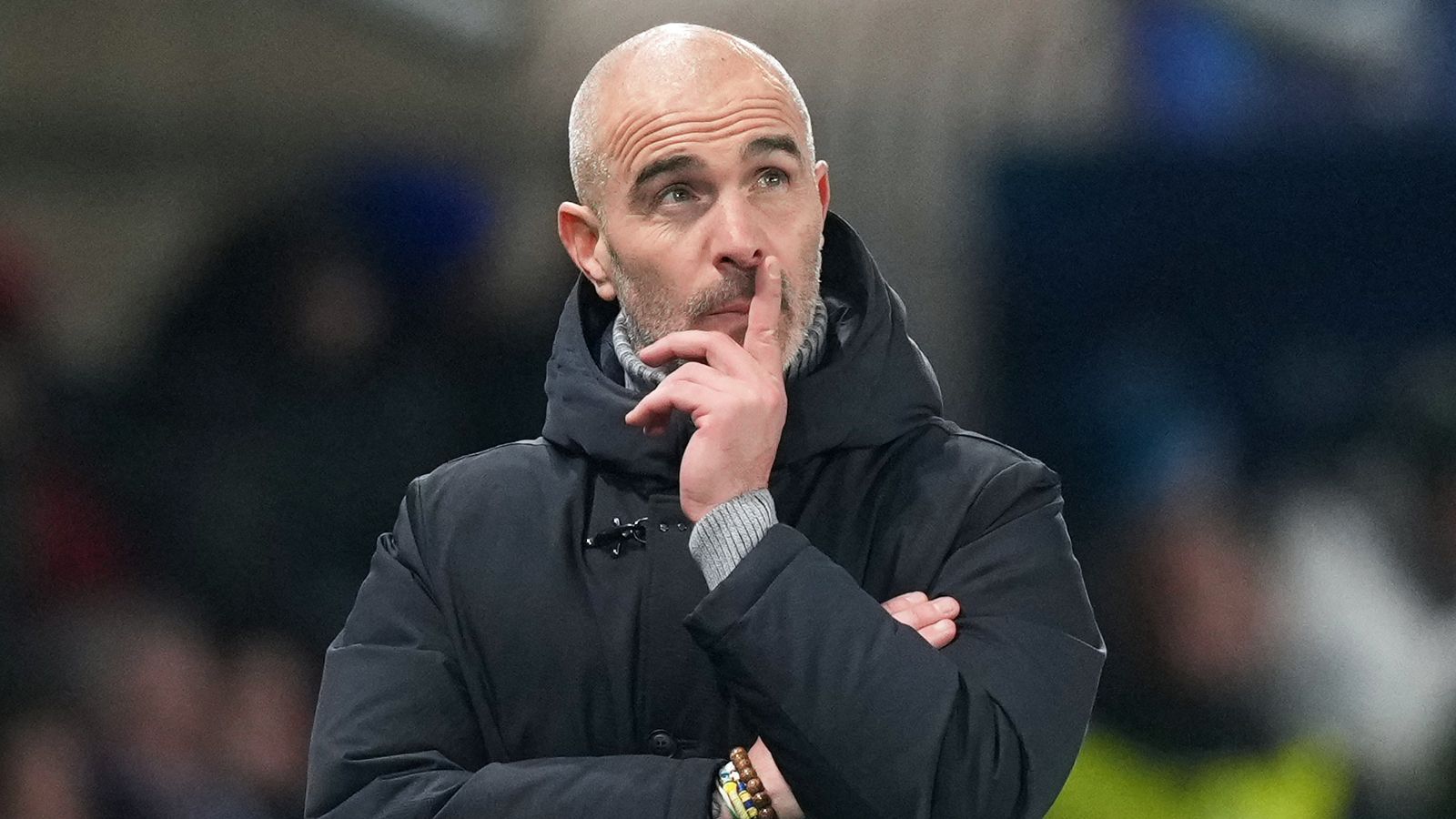
"I think there is a clear identity at the former clubs I have joined," Maresca told reporters. "That is probably the reason the club decided on me; they can see a similar concept with the previous manager. But every manager is different in their day-to-day approach to games. We are seeing which way we need to tweak some concepts. I don’t think you can just copy and paste. I don’t see football in the same way as the previous manager."
Navigating the Shadow of a Legend
The history of football is littered with examples of elite clubs struggling to maintain momentum after the departure of a long-serving, iconic manager. The struggles of Manchester United following Sir Alex Ferguson’s retirement in 2013 and Arsenal’s transition after Arsène Wenger in 2018 serve as cautionary tales. Maresca, however, rejected the assertion that following Guardiola is the "toughest job in the world," choosing instead to view it as a privilege afforded by a robust organizational structure.
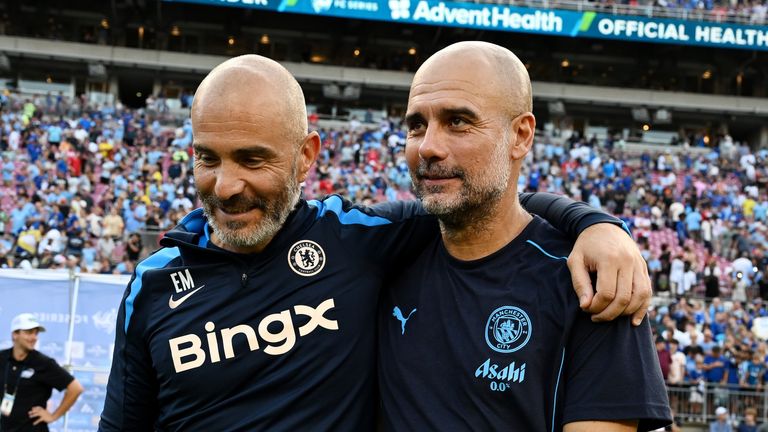
The Italian confirmed that he has remained in close contact with Guardiola since the Spaniard’s departure was finalized. Guardiola’s parting advice to his former protégé was simple: "Just be yourself." It is advice that Maresca intends to follow as he balances the need for continuity with the necessity of evolution. He noted that after ten years of the relentless "every three days" schedule, Guardiola deserved a period of relaxation, while Maresca himself must now find "solutions for myself" in the face of a changing squad.
The Rodri Situation and Squad Evolution
One of the most pressing challenges facing the new manager is the fitness and future of Rodri. The Spanish midfielder, widely considered the most influential player in the City lineup, is set to undergo back surgery following a grueling campaign that culminated in a World Cup victory with Spain. Maresca confirmed that the surgery is scheduled for next week, and while no definitive return date has been set, the club is hopeful for a full recovery after a period of mandatory rest.
The situation is complicated by persistent transfer speculation linking Rodri with a move to Real Madrid. Having recently won the World Cup and established himself as a Ballon d’Or contender, Rodri’s stock has never been higher. However, Maresca was firm in his desire to keep the midfielder at the Etihad.
"Around a big player, there is always speculation, so I’m not worried about that," Maresca stated. "I think it’s normal because he won the World Cup. He was one of the best players, and I think every manager wants to have Rodri because he’s a top player. But now he needs surgery, he needs a holiday, and he needs to recover. Then he will be back here with us."
The squad is also facing a leadership vacuum following the departure of long-term servant Bernardo Silva. Maresca revealed that a decision on the new captaincy has not yet been finalized. While a core leadership group consisting of Ruben Dias, Rodri, and Erling Haaland remains, the manager suggested that the group needs further expansion before a permanent successor to Silva is named.
Tactical Philosophy and the "Day-by-Day" Mantra
Maresca’s tactical approach is expected to mirror the positional play (Juego de Posición) that has become City’s trademark, yet with subtle shifts in defensive transition and final-third execution. During his time at Leicester, Maresca utilized a 3-2-4-1 hybrid system that saw full-backs inverting into midfield—a hallmark of the Guardiola school—but he often emphasized a more direct verticality when breaking down low blocks.
Despite the pressure to maintain City’s trophy-winning streak, Maresca is focused on the process rather than the prizes. "With this kind of club, you need to win titles. But if you just focus on the final target, you miss all the previous parts," he explained. "I am a manager who loves the day-to-day—preparing sessions and spending time with my players. I am not thinking about May or June; I am thinking about now and tomorrow."
This micro-focus is intended to insulate the players from the external noise surrounding the post-Guardiola era. The club has already shown signs of long-term planning, with star forward Phil Foden recently extending his contract for another four years. Foden’s commitment is a significant boost for Maresca, providing a bridge between the previous era’s success and the new project’s ambitions.
Analysis: The Institutional Strength of City
The confidence Maresca displays is likely bolstered by the "City Football Group" (CFG) infrastructure. Unlike the situations at Manchester United or Arsenal during their respective transitions, Manchester City’s sporting direction is overseen by a stable executive team, including Director of Football Txiki Begiristain and CEO Ferran Soriano. This "wider organization," as referenced by club analysts, is designed to ensure that the manager is supported by a consistent recruitment strategy and a unified playing philosophy from the academy upward.
However, the 2026-27 season will be a litmus test for whether a system-based approach can survive the exit of the world’s most celebrated individual coach. Maresca must prove that he is more than a "Pep-lite" alternative. His success will depend on his ability to manage the egos of a world-class squad while introducing the "tweaks" he mentioned to keep opponents from decoding City’s playstyle.
As the Premier League landscape shifts—with rivals like Arsenal, Liverpool, and a rejuvenated Chelsea looking to exploit any perceived vulnerability at the Etihad—Maresca’s "day-by-day" philosophy will be tested immediately. The Italian’s first task will be navigating the early weeks of the season without the injured Rodri and integrating any new arrivals before the transfer window closes.
Conclusion
Enzo Maresca’s first address as Manchester City manager was a masterclass in balanced rhetoric: respectful of the past, but fiercely protective of his own professional identity. By rejecting the "copy and paste" label, he has set a clear expectation for his tenure. He is not there to be a placeholder or a shadow; he is there to lead.
The coming months will reveal the true nature of "Maresca-ball" and whether the Italian can maintain the relentless standards set by Guardiola. With a squad containing the likes of Haaland, Foden, and De Bruyne, the tools for success are undoubtedly present. For Maresca, the challenge lies in proving that while the "concept" may remain familiar, the execution will bear his unique signature. As he prepares for his first training sessions, the message to the fans and the footballing world is clear: the Guardiola era is over, but the Manchester City project is only moving forward.

