

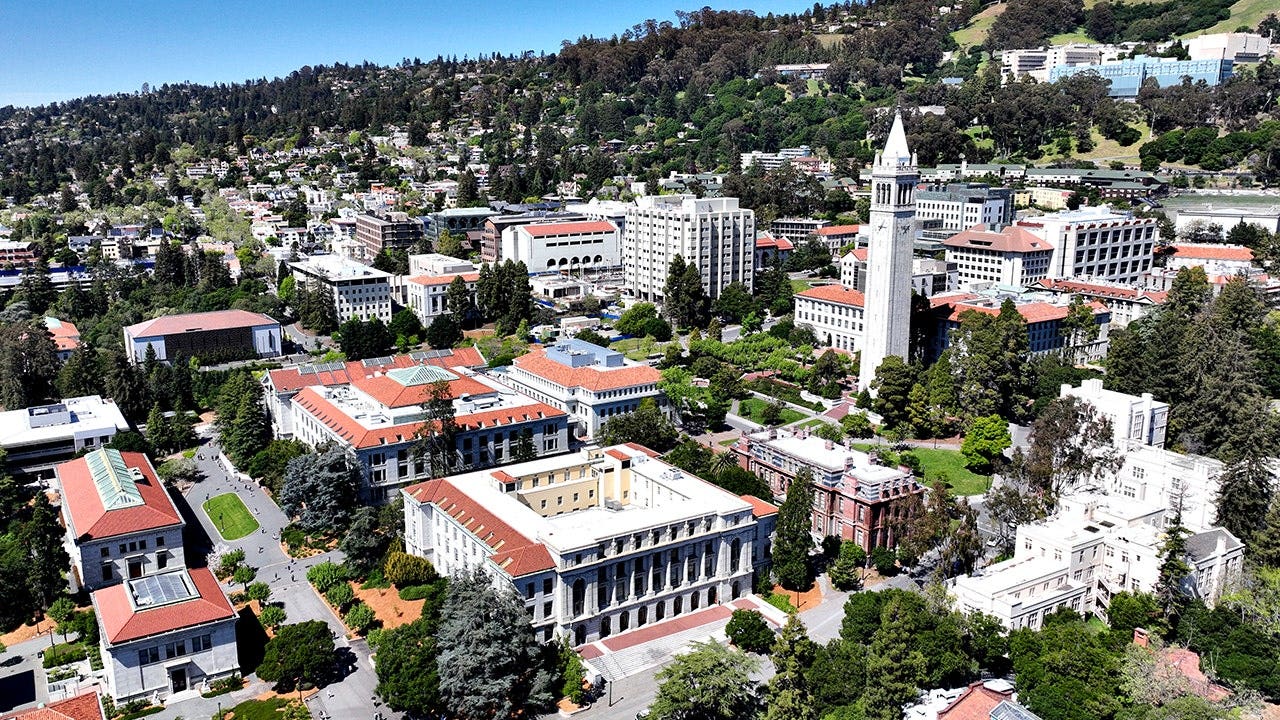
The United States Department of Justice, in coordination with the Department of Education, has leveled formal allegations against the University of California, Berkeley, School of Law, claiming the institution has violated Title VI of the Civil Rights Act of 1964. The federal inquiry, which follows a rigorous compliance review launched in March 2025, asserts that the law school’s admissions practices have systematically disadvantaged Asian and White applicants while disproportionately favoring Black candidates. This action represents a significant escalation in the Trump administration’s broader efforts to dismantle race-conscious admissions policies across the American higher education landscape, particularly in the wake of landmark judicial rulings that have reshaped the interpretation of equal protection in academia.
The Federal Investigation and Findings
The federal investigation centered on a comparative analysis of admission outcomes, LSAT scores, and demographic data spanning from 2021 to 2025. According to the findings released by the Department of Justice (DOJ), the statistical disparity between the admission odds for different racial groups is significant. The report explicitly states that Black applicants in the 2025 admissions cycle possessed 5.8 times higher odds of being granted admission to the prestigious law school than white applicants with comparable academic credentials.
The DOJ’s investigative team utilized a granular breakdown of standardized testing data to bolster their case. An analysis of LSAT performance among admitted students for the 2024 and 2025 cycles revealed that 37% of admitted Black applicants scored below the 99th percentile of admitted white students. Furthermore, the report highlights that half of the Black applicants admitted during this period had LSAT scores that fell below 95% of the admitted white population. These figures, federal officials argue, serve as objective evidence that the school has been employing race as a primary factor in its decision-making processes, thereby violating federal mandates against racial discrimination in any program or activity receiving federal financial assistance.
Historical Context and the Regulatory Landscape
To understand the gravity of the DOJ’s accusations, one must view them through the prism of both state and federal law. California has maintained a unique position on this issue for nearly three decades. In 1996, the state enacted Proposition 209, a constitutional amendment that prohibited state governmental institutions, including public universities, from considering race, sex, or ethnicity in public employment, public contracting, and public education. For years, Berkeley Law and other University of California institutions have operated under the assumption that their efforts to foster diversity were compliant with this strict mandate.
However, the national legal environment shifted dramatically in 2023 when the U.S. Supreme Court issued a historic ruling striking down race-conscious admissions programs at institutions across the country. That decision, which largely curtailed the use of affirmative action, effectively signaled that the era of using race as a "plus factor" in holistic admissions was over. The DOJ’s current crackdown on Berkeley Law is an attempt to enforce this post-Supreme Court standard, scrutinizing whether schools are using proxy variables—such as socioeconomic background or personal experience narratives—to achieve racial outcomes that are otherwise prohibited by law.
Comparative Data and Admissions Trends
The DOJ’s letter to attorney Tania Faransso, who represents the law school, emphasizes a persistent, multi-year trend in median LSAT scores. From 2021 through 2025, the data indicated that Black admits consistently recorded median LSAT scores of approximately 165, while Asian and white admitted students maintained median scores around 172. Hispanic applicants held a median score of approximately 169.
These figures illustrate a consistent five-point gap between the median Black admit and their Asian or white counterparts. Federal regulators argue that such a gap, when coupled with the high admission-odds ratio, points to a deliberate policy of institutional bias. As of October 2025, the enrollment figures at Berkeley Law further underscore the demographic composition the DOJ is questioning: out of 1,128 enrolled students, 516 identified as white, 293 as Asian, 130 as Hispanic, and 51 as Black. While the raw numbers show a clear majority of white and Asian students, the DOJ maintains that the proportionality of these groups relative to the applicant pool is where the illegal discrimination occurs.

Official Responses from Berkeley Law
Berkeley Law has categorically denied any wrongdoing, framing the federal investigation as a misunderstanding of the school’s commitment to diversity within the strict bounds of the law. In an official statement provided to media outlets, representatives for the university emphasized that their admissions policy is designed to be race-blind.
"Our admissions policy is clear that race is not considered in any way in admissions decisions," the university stated. "Proposition 209, federal statutes, and the Supreme Court’s decisions do not preclude schools from pursuing diversity so long as they give no preferences based on race. Berkeley Law does not do so."
The university’s central administration echoed this sentiment, asserting that all admissions decisions are made on the basis of individual merit, regardless of race, sex, color, ethnicity, or national origin. The school has pledged full cooperation with the federal inquiry, stating that it intends to provide extensive documentation to prove its compliance with all relevant regulations. The school maintains that the disparities in standardized testing scores are a reflection of broader societal factors and not the result of discriminatory admissions policies.
Broader Implications for Higher Education
The investigation into Berkeley Law is not an isolated event; it is part of a growing trend of federal oversight targeting elite universities. Recent reports indicate that the DOJ has also set its sights on the University of California, Los Angeles (UCLA), and other institutions regarding similar allegations of illegal Diversity, Equity, and Inclusion (DEI) admissions practices.
The implications for higher education are profound. If the DOJ successfully demonstrates that Berkeley Law’s admissions process violates Title VI, it could set a binding precedent for every public university in the United States. This would likely force a comprehensive overhaul of how universities collect and utilize demographic data during the admissions cycle. Schools may be forced to abandon not just race-conscious policies, but also any internal diversity metrics that could be construed as "quotas" or "preferences" by federal investigators.
Furthermore, this crackdown puts immense pressure on the American Bar Association (ABA), which accredits law schools. With Congress and the Department of Justice both scrutinizing the role of DEI rules in accreditation, there is a mounting push to decouple social engineering goals from academic standards. Law schools, which are often the gatekeepers to the legal profession, are now finding themselves at the epicenter of a national debate regarding the definition of meritocracy in the 21st century.
Future Outlook
As the investigation proceeds, the legal battle will likely hinge on the definition of "comparable applicants." The DOJ’s case relies on the premise that candidates with similar LSAT scores and GPA ranges should have statistically similar chances of admission. Berkeley Law, conversely, will likely argue that their holistic review process considers qualitative factors—such as an applicant’s life story, socioeconomic challenges, and leadership potential—that are entirely permissible under the law.
The resolution of this case will likely take years to wind through the administrative court system and potentially the federal judiciary. In the meantime, the scrutiny facing Berkeley Law serves as a warning to other institutions of higher learning that the federal government is shifting toward a highly aggressive enforcement posture. For the students and faculty at Berkeley, the coming months will be a period of significant uncertainty as they defend their admissions practices under the watchful eye of a federal administration determined to enforce a colorblind standard across all federally funded programs. The outcome will undoubtedly be a defining chapter in the history of American legal education and the ongoing national conversation about equality, merit, and the role of race in the modern university.

